
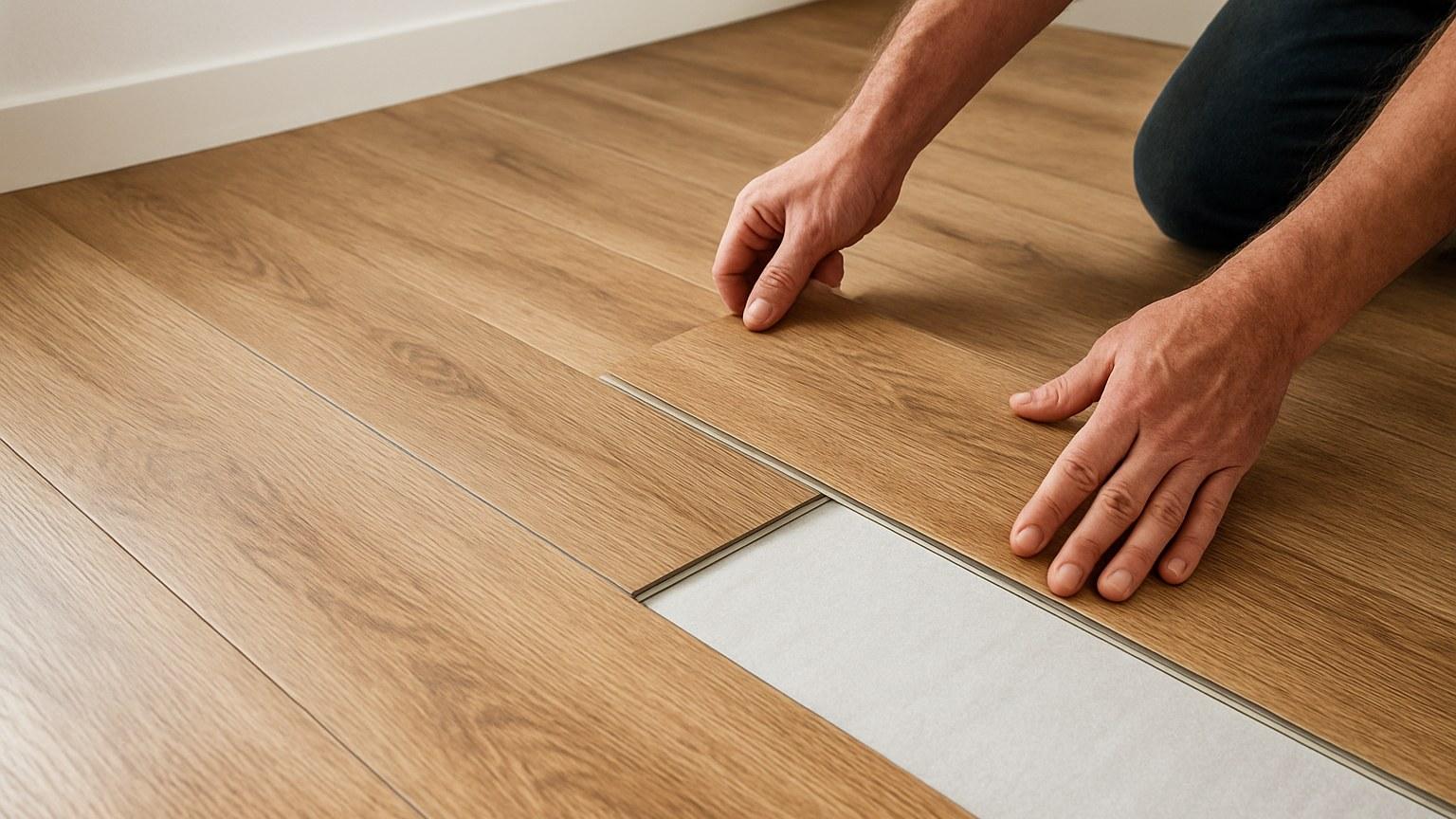
According to nedesestimating.com, installed vinyl plank flooring runs about $3-5 per square foot at the budget tier, $5-8 for mid-range LVP (luxury vinyl plank), and $8-13 or more for rigid-core, material and labor combined. The trouble is most quotes lump material and labor into one number, so a padded labor line hides in plain sight. This guide splits them apart and runs a real 800 sq ft bid past the math so you can test your own.
Key takeaways
- Fully installed vinyl plank runs about $3-5/sq ft budget tier, $5-8 for mid-range LVP (luxury vinyl plank), and $8-13+ for rigid-core SPC/WPC, per nedesestimating.com.
- Labor alone is usually $1.50-4/sq ft for floating/click-lock, with a national average of $1.50-2.40/sq ft; glue-down, stairs, and bad subfloors push it higher.
- A real 800 sq ft job ran ~$3,200 in Karastan material plus $3,300 quoted labor; experienced installers pegged fair labor nearer $2,500, so 'within range' can still be the high end.
- Removing old carpet and baseboards yourself can swing a quote by about $1,000.
- Always get material and labor as separate line items, and ask what flatness the crew will bring the subfloor to before they lay a plank.
How Much Does Vinyl Plank Flooring Installation Really Cost?
Fully installed, vinyl plank lands around $3-5 per square foot at the budget tier, $5-8 for mid-range LVP, and $8-13 and up for rigid-core, according to nedesestimating.com, which pulls together figures from Forbes Home and Angi.
Don't read it as one number. Material is one range and labor is a separate range. A fair quote shows both as line items, not a single lump "cost to install vinyl plank flooring" that you can't take apart.
The published spreads back that up. Forbes Home puts an installed job at $2.50-13 per square foot. Angi reports an average project around $2,561, inside a $1,009-4,115 band. That band is wide because tier, room, and subfloor all push the number around. That spread is wide enough that pinning down the average cost of LVP per square foot for your own project means comparing at least a few real quotes.
Treat the ranges below as your yardstick. Then hold your own quote against them, which is exactly what the last section does with a real bid.
| Tier | Material/sq ft | Labor/sq ft | Installed/sq ft |
|---|---|---|---|
| Entry-level vinyl | $1.50-3 | $1.50-4 | $3-5 |
| Mid-range LVP | $3-5 | $1.50-4 | $5-8 |
| Rigid-core SPC/WPC | $6-12 | $1.50-4 (more for glue-down) | $8-13+ |
Source: nedesestimating.com's vinyl plank cost breakdown
Vinyl plank cost per square foot by tier, split into material, labor, and fully installed.
Material Cost by Vinyl Tier (Entry, Mid, Rigid-Core)
On the material side, luxury vinyl plank runs about $1.50-3 per square foot for entry vinyl, $3-5 for mid-range LVP, and $6-12 for rigid-core SPC/WPC, climbing to around $15 at the top tier, per nedesestimating.com.
What moves the price inside a tier is usually the wear layer. That's the clear top skin on the plank, and its thickness is measured in mils. A thin wear layer suits a guest room; a thicker one is what holds up in a kitchen or hallway. The maker publishes that mil rating for each line, so quote the product's own number instead of guessing from the category.
The core matters too. SPC stands for stone-plastic composite, which is harder and shrugs off dents. WPC stands for wood-plastic composite, a bit softer and warmer underfoot. Brand lines you'll see priced across these tiers include COREtec, Shaw Floorte, Mohawk SolidTech Plus, and Karastan. If you're price-shopping, clearance vinyl plank flooring is where last-season colors of those same lines tend to land cheapest.
One standing warning: a waterproof core is not a waterproof floor. The plank body can be rated waterproof, but water still slips under a floating floor at the seams and edges and sits on the subfloor. The box's claim is narrower than most shoppers read it to be, which is why finding waterproof vinyl flooring on clearance is about the core, not a promise the seams stay dry. Those vulnerable seams are the click-lock joints themselves, and understanding how the click-lock joint works explains why water finds a way through them in the first place.
Labor Cost per Square Foot by Install Method
Labor for floating or click-lock vinyl plank usually runs $1.50-4 per square foot, with a national average near $1.50-2.40, per nedesestimating.com. High-cost metro crews can reach as much as $10 per square foot. Whether floating makes sense at all also depends on the room, since a kitchen or basement often calls for a different method than a bedroom or living room, a split covered in this glue-down versus floating vinyl plank by room comparison.
Underlayment and supplies add roughly $0.30-0.60 per square foot when the product calls for them, per nedesestimating.com. Many rigid-core planks already have a pad attached, though, so you often don't buy separate underlayment. Stacking a second pad under one of these planks can run against that specific line's installation instructions, and some manufacturers tie warranty coverage to following them exactly, check your plank's own install sheet before adding anything underneath.
This labor figure is what people mean by "vinyl flooring installation labor cost per square foot." Keep it separate from material on every bid. You can't tell if a quote is fair until the two numbers stand apart. Part of that swing comes down to method, since glue-down, floating, loose-lay, and full-spread sheet vinyl each take different skill and time, something this step-by-step guide to all four installation methods lays out in detail.
Glue-Down vs Click-Lock Labor Cost
Click-lock floating is also the method most DIYers can realistically handle in a weekend with basic tools, which is part of why its labor rate sits lowest, you're often paying for less time, not less skill. Glue-down takes longer and more skill because the planks have to set into adhesive with no do-overs, so labor runs higher per foot, and it's the kind of job I tell homeowners to hire out unless they've done it before. A start-to-finish vinyl plank installation guide walks through exactly what that weekend of click-lock work involves, step by step.
Full-spread sheet vinyl, stairs, and detailed layouts cost more again since they're slower and less forgiving, stairs in particular are worth paying a pro for. If you want to run your own square footage against these rates, a vinyl plank flooring installation cost calculator does the per-foot math for you. Diagonal runs, herringbone, and other staggered patterns chew through more planks and cutting time than a simple straight layout, so it helps to weigh those tradeoffs against this vinyl plank layout patterns guide before you settle on one.
Hidden Cost Drivers: Subfloor Prep, Flatness, Stairs, and Patterns
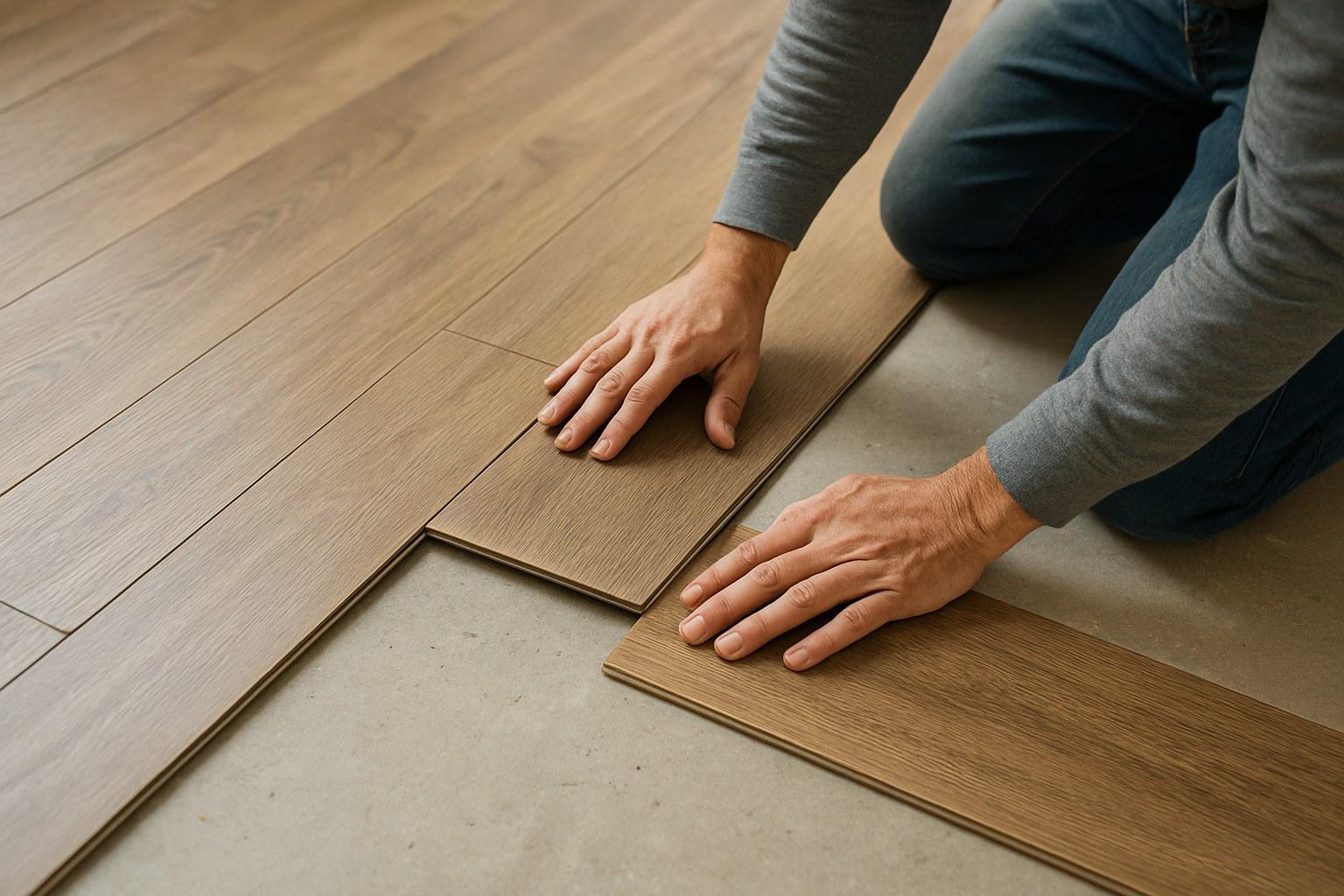
The base per-foot price almost never includes the extras, and that's where two quotes on the same room drift hundreds of dollars apart. Subfloor prep is the biggest one.
Flatness comes first. A common benchmark pros use before laying resilient flooring is keeping the subfloor flat within about 1/8 inch over a 5-foot span, a tolerance installers on sawmillcreek.org point to, and rigid-core telegraphs every hump underneath instead of hiding it. People assume vinyl flexes over a bad floor. It doesn't. I've watched seams peak over a lump a customer insisted was flat. Getting that flatness right is only the prep stage, and a luxury vinyl plank installation walkthrough covering the method and layout choices that follow fills in the rest of the job.
On concrete slabs and in basements, a moisture check comes before anything is laid. A floating floor over a damp slab is a problem that comes back, not a finished job. Slabs and basements also run higher than an open main-floor room for exactly these reasons. Picking a product built for consistently damp conditions is part of what determines how long vinyl flooring lasts in a basement in the first place.
Then come the line items a base price leaves off:
- Stairs are priced per step, not per square foot, and they add up fast.
- Herringbone or diagonal layouts mean more cuts and added plank waste compared with a straight layout, budget extra material for the pattern.
- Baseboard removal and reinstall is its own labor charge.
- Transition strips at doorways and between rooms get added per piece.
I learned the prep lesson the hard way on a Dayton job. The homeowner swore the subfloor was brand new, so I didn't pad the quote for it. When I pulled the old vinyl, there were hardened adhesive ridges across the whole room, half a day of scraping I hadn't charged for. Now I lift a corner and look before I ever set a start date.
Real Quote Check: Is $3,300 for 800 Square Feet Fair?
Here's a real case from a sawmillcreek.org thread, run line by line. The homeowner bought about $3,200 of Karastan Artisan Reserve LVP at $3.99 per square foot, then got quoted $3,300 for labor on 800 square feet. That labor works out to about $4.13 per square foot.
On paper it checks out. According to sawmillcreek.org, the This Old House install range is $3-7 per square foot, so $4.13 sits inside it. Many homeowners stop there and sign.
But experienced installers on that same thread pegged fair labor closer to $2,500, or about $3.13 per square foot. So this quote is at the high end of the range, not the middle. "Within range" and "a good price" are not the same thing, and that's the gap people miss.
Going line by line is how you catch it. The material price should match the product's shelf price. And a removal add-on of around $1,000 can appear on the bid if you don't pull the old carpet and baseboards yourself first.
| Line item | Figure |
|---|---|
| Material: Karastan Artisan Reserve LVP | $3.99/sq ft x 800 = ~$3,192 |
| Labor quoted | $3,300 ($4.13/sq ft) |
| Labor, experienced-installer estimate | ~$2,500 ($3.13/sq ft) |
| This Old House install range (800 sq ft) | $2,400-5,600 ($3-7/sq ft) |
| Add if carpet/baseboard not removed by owner | +$1,000 |
Source: an 800 sq ft quote and installer replies on a sawmillcreek.org thread
An actual 800 sq ft quote broken into material and labor, checked against published ranges.
The takeaway for your own bid: get material and labor as separate line items, and ask what flatness the crew will bring the subfloor to before they lay a single plank. If either answer is vague, so is the price. For material, it's also worth checking a vinyl flooring sale before you lock in, since the same plank at a lower shelf price shrinks the whole job. Knowing what that flatness standard should look like in practice gets a lot clearer after working through a step-by-step LVP installation guide that spells out the prep work a fair quote accounts for.
Sources
- NWFA Life Cycle Cost Analysis sales sheet (2024)
- NWFA 2023 Life Cycle Cost Study
- Carpet and Rug Institute: Life Cycle Cost Analysis for Floor Coverings in School Facilities
- Carpet and Rug Institute: Carpet Is a Cost-Effective Flooring Choice
- EPA WARM Model: Vinyl Flooring life-cycle data
- An 800 sq ft quote and installer replies on a sawmillcreek.org thread
- Nedesestimating.com's vinyl plank cost breakdown
- An 800 sq ft quote and installer replies on a sawmillcreek.org thread