
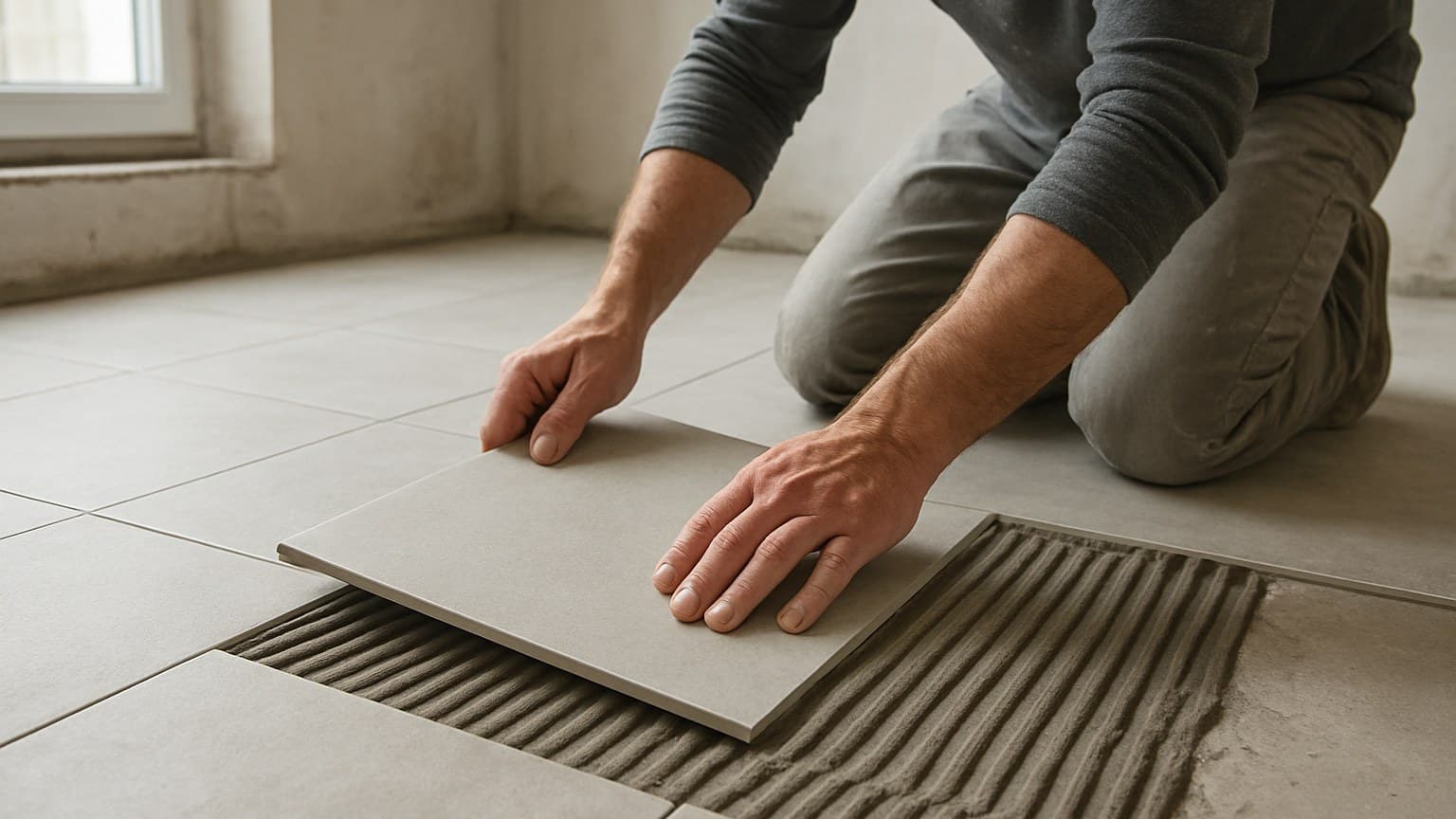
The sticker number at the top of a tile installation cost quote almost never survives demo day. Installed tile runs about $8 to $75 per square foot, and the lines that blow up your budget aren't the tile itself, they're the stuff hiding underneath it that nobody prices until the old floor is gone. This walks you through a real bid, line by line, so you can tell a fair number from one that doubles once demo starts.
Key takeaways
- All-in tile installation runs about $15-$75 per square foot; most whole-room jobs land between $1,200 and $6,500, with small jobs as low as $400.
- Labor alone is $5-$22 per square foot, and the average pro rate works out to about $54 an hour.
- Material prices split wide: ceramic $1-$8, porcelain $4-$14, and natural stone $7-$25 per square foot.
- The lines that balloon are demo ($2-$7/sq ft), subfloor leveling ($2-$5/sq ft), waterproofing, and a $200-$500 minimum service fee, not the tile itself.
- Order 10% extra tile for a simple straight floor and 15-20% for herringbone, diagonal, or large-format layouts.
What Tile Installation Actually Costs All-In
Tile runs about $8 to $75 per square foot installed, simple ceramic sits at the low end, stone and heavy prep sit at the top. Most whole-room jobs land between $1,200 and $6,500, and a small job like a tiny backsplash can come in as low as $400.
You'll see two different "national" totals floating around online, and they don't quite agree. One source puts whole jobs at $1,200 to $6,500. Angi pegs the average closer to $2,000, with a range of $400 to $4,250. They're both right, just measuring different things. The low floor is small backsplashes with cheap ceramic. The high ceiling is big stone floors with heavy prep.
Don't trust any single number. Budget to the wider band, because every quote hides the same handful of variables, and you won't know which ones bite until someone pulls up your old floor.
One more thing the averages bury: a basement or a staircase costs more than an open room of the same size. Stairs are slow, finicky cuts. Basements add moisture work. Small rooms cost more per square foot than big ones too, because of a minimum service fee I'll cover later.
| Scope | Typical total |
|---|---|
| Backsplash (small) | $400-$1,500 |
| Bathroom floor (~40 sq ft) | $600-$3,000 |
| Shower surround | $1,800-$5,000 |
| Kitchen floor (~150 sq ft) | $2,250-$6,500 |
| Open living floor | $3,000-$6,500+ |
Typical all-in installed cost by project scope.
All-in installed price per square foot, from simple ceramic at the low end to stone at the high end.
How to Read a Tile Quote Line by Line
A fair tile bid breaks the job into parts you can actually see: tile material, labor per square foot, demo, subfloor leveling, waterproofing, trim and transitions, and the minimum fee. A bid that reads "tile floor, $4,000" and stops there is hiding every one of those.
The one-line quote isn't a gift. It's a pro keeping his options open. If the subfloor turns out wavy or the old mortar bed fights him, that lump sum grows, and you have no itemized paper to argue with.
So before you sign, make sure the quote spells out the tile cost and the waste percentage he's ordering, the labor as either a per-foot rate or a total, demolition and haul-off of the old floor, subfloor leveling with a moisture check, waterproofing in any wet area, and the trim, transitions, and minimum service fee.
Prep, demo, and haul-off are the lines pros tend to leave vague, because those are the ones that move. Get the waste factor, the subfloor condition, and who carries the old tile to the dumpster in writing. Ask now and it's a conversation. Ask after demo and it's a change order at the price he picks.
Cost by Tile Material
Material alone, before any labor, splits wide: ceramic runs $1 to $8 per square foot, porcelain $4 to $14, and natural stone $7 to $25. That spread is why two "tile floors" can cost double each other before a single tile is set.
| Material | Range (material only) |
|---|---|
| Ceramic | $1-$8 |
| Porcelain | $4-$14 |
| Natural stone | $7-$25 |
Material-only price per square foot, before labor or prep.
Material-only price per square foot by tile type.
Ceramic and Porcelain
Porcelain is denser and soaks up less water than most ceramic, which is why it costs more and gets picked for floors and wet rooms. But don't buy on the name. Check the tile's own water-absorption number and its use rating on the spec sheet, because "porcelain" alone doesn't promise a floor-rated tile. If you want the full breakdown, the porcelain tile guide digs into the ratings, and the overview of tile types sorts the whole lineup.
Natural Stone, Marble, and Slate
Stone is the priciest material and it carries a cost most quotes skip: sealing. Marble and slate need resealing on a schedule to stay stain-resistant, and that's a recurring expense, not a one-time line. If you love the look, read the marble floor tile guide and the slate flooring guide before you commit, so the sealing routine doesn't surprise you. Not every stone tile handles a wet bathroom the same way, and the guide ranking stone bathroom tiles by water resistance breaks down which ones actually hold up best.
Wood-Look and Stone-Look Porcelain
Want the look of stone or wood without the price or the sealing? Porcelain fakes both now, and it does it well. A wood-look tile gives you plank visuals on a floor-rated, no-seal body, and limestone-look porcelain does the same for stone. You pay porcelain money, not stone money, and skip the yearly sealer.
Labor Cost Per Square Foot and Hourly Rates
Labor alone runs $5 to $22 per square foot, and the average pro rate works out to about $54 an hour. That band is wide for a reason: a straight ceramic floor in an empty square room sits near the bottom, and a tiled shower sits near the top.
| Basis | Rate |
|---|---|
| Per square foot | $5-$22 |
| Per hour (average pro) | about $54 |
| Typical install time | 3-5 days |
Two common ways tile labor gets priced, plus typical job length.
What pushes labor to the top of the band is detail work: lots of small cuts, patterns like herringbone, leveling for large-format tile, and the slow, careful work in wet areas. Each one adds hours.
Use the time to sanity-check a quote. A typical install is 3 to 5 days. At roughly $54 an hour, a two-person crew over four days is a real chunk of labor, and that should line up with the per-foot number. If an hourly quote and a per-foot quote are miles apart, ask why.
One hard rule from my own jobs: build drying time into the schedule. I grouted a floor once and let the homeowner walk it that same evening against my gut. The footprints pressed into the fresh joints, and I was back the next morning raking out and regrouting a whole path. Now I keep everyone off a fresh floor, no matter how badly they want the room back. That lost day is real labor, and a good crew plans for it instead of eating it.
Cost by Room: Floor, Shower, Backsplash, Wall
A tiled shower averages around $2,700 and runs $1,800 to $5,000, per HomeAdvisor's project data. Floors scale with square footage. Backsplashes are small jobs, but they still carry the minimum fee, so they rarely come in as cheap as the per-foot math suggests.
| Room | Installed total |
|---|---|
| Backsplash | $400-$1,500 |
| Bathroom floor | $600-$3,000 |
| Shower surround | $1,800-$5,000 (avg ~$2,700) |
| Kitchen floor | $2,250-$6,500 |
Source: HomeAdvisor's shower project data
Typical installed cost by room.
Bathroom and Shower
A shower costs far more per foot than an open floor, and it's not the tile driving it. It's the waterproofing, the dozens of small cuts around the valve and corners, and the slow detail work on the walls and curb. You're paying for hours, not square footage. If you're still choosing the look, the bathroom tile ideas guide helps once the budget is set.
Kitchen Floor and Backsplash
A kitchen floor scales straight off square footage, so a 150 sq ft room lands in that $2,250 to $6,500 window depending on material and prep. The backsplash is a separate, smaller job that still trips the minimum fee. Planning a kitchen refresh? The kitchen tiles guide covers layout, and if your tile meets a wood floor at the doorway, the kitchen tile-to-wood transition guide handles that seam.
Walls and Living Areas
Dry walls and open living floors are the cheapest tile you'll buy per foot, because there's no waterproofing and fewer fussy cuts. Big, simple, square rooms let a crew move fast, which pulls the per-foot labor toward the bottom of the band. The catch is the opposite of a shower: the room is so open that layout and flatness over a large area become the thing that matters.
Subfloor Prep and Leveling: The Line That Balloons
Self-leveling or subfloor leveling adds $2 to $5 per square foot on top of your base quote. It's the line that turns a clean bid into a surprise, because you can't always see it coming until the old floor is up.
A tile job is only as good as what's under it. Flatness and moisture control, checked before anything goes down, decide whether your grout cracks and your tile edges develop lippage, that's when one tile sits higher than the one next to it, enough to catch a bare foot, within a year. The tile is almost never the thing that fails. The slab or wood under it is.
So ask two questions before you sign. How did you check the subfloor is flat, and how did you check for moisture? A straightedge and a moisture reading are quick, and a pro who skips both is guessing.
Then get leveling written in as a named "if needed" line with a price per square foot, not a blank space he fills in on demo day. An unlevel slab under large-format tile is exactly where lippage, those uneven tile edges you stub your toe on, and cracked grout start.
Demolition and Old Tile Removal
Tearing out and hauling old tile runs $2 to $7 per square foot, and it climbs if the tile is set in a thick mortar bed instead of thinset. That's heavy, slow, dusty work, and it's often where a quote goes quiet.
Haul-off is the vague part. I learned this the hard way early on: I used to rip the old floor out first thing and figure out disposal later, until a garage full of ripped carpet and broken tile sat for a week waiting on a dumpster. Now I schedule the haul-away before I lift a single board. Make sure your quote says who carries the debris off and when.
You can sometimes skip demo entirely by tiling or laying new flooring over the existing floor. It works when the old floor is solid, flat, and well bonded. It's a bad idea when the old tile is loose, cracked, or hollow-sounding, because you'd be building on a bad base. If you're weighing vinyl plank instead, see whether you can put LVP over tile and how to do LVP (luxury vinyl plank) over tile right.
One more hidden cost: if the old tile comes up but the thinset stays stuck to the slab, grinding or skimming that off becomes its own leveling charge. Ask how stubborn thinset gets handled.
Waterproofing: The Line Nobody Quotes Until It Leaks
Waterproofing in any wet area is a real line item, and plenty of quotes leave it out until water finds its way behind the tile. In a shower or a splash-heavy floor, a waterproof membrane behind the tile is what actually keeps water out, not the tile face.
This is the tile version of a trap I see all the time in other floors. People assume the tile is waterproof, so the assembly must be. It isn't. Grout joints let water through over time, and the membrane behind them is the real barrier. The tile sheds most of it; the membrane stops the rest.
A membrane or waterproofing system adds to the bid, usually priced by the square foot of wet area. It's cheap compared to tearing out a rotted shower wall two years later. If a shower quote doesn't name a waterproofing method, that's the first question to ask, before tile color or grout.
Layout and Pattern: How Design Drives the Labor Line
The pattern you pick moves the labor line as much as the material does. A straight, grid layout is the fastest to set. A diagonal, herringbone, or large-format layout is slower, needs more cuts, and tightens the flatness tolerance, so labor climbs. Hexagon tile sits in that slower-pattern camp too, and the hexagon tile decision guide walks through the shape-specific choices that drive its labor and waste up.
Herringbone is the clearest example. Every piece is an angled cut, waste goes up, and a crooked start line shows across the whole floor. If that's your look, read how to lay herringbone tile without wasting tile or crooked lines before you price it.
Large-format and plank-style tile look great but punish an uneven subfloor, because long tiles ride over dips and leave lippage. Wood-plank tile in particular leans on flatness; the wood-plank porcelain tile guide covers what that layout asks of the floor underneath. Pricing and ordering plank-format tile works a little differently than square tile too, since box counts and overage run by the plank rather than the square foot, and the plank tile flooring cost and ordering guide breaks that down separately.
Waste Factor: How Much Extra Tile to Order
Order 10% extra tile for a simple straight floor, and 15% to 20% extra for herringbone, diagonal, or large-format layouts. That overage covers cuts, breakage, and the few tiles you'll want on hand years later for repairs. Hexagon tile carries that same higher waste factor, and getting the starting line right before the first cut is what keeps the pattern from drifting crooked across the room, a planning step covered in laying out hexagon floor tile without bad cuts.
Skip the overage and you risk a mid-job stop while you chase matching tile from a different dye lot, which rarely matches. The waste percentage belongs in your quote, in writing, because you pay for it in material. A pro who orders exactly the square footage is setting up a bad week.
For odd-shaped rooms, lots of doorways, or a busy pattern, lean toward the high end. The extra box is cheaper than a delay.
Trim, Transitions, and Edges
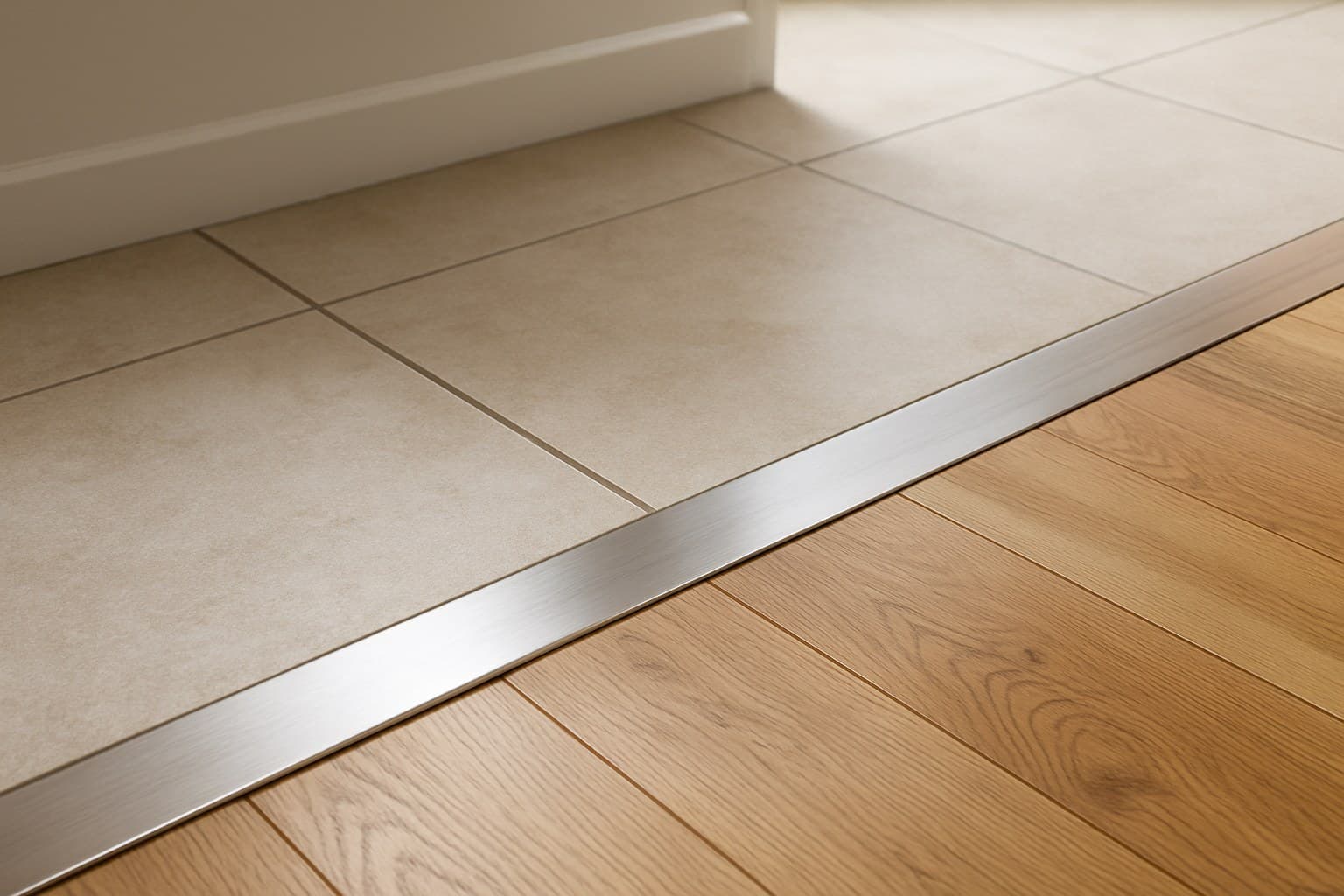
Trim pieces, edge profiles, and transitions to other floors are small lines that add up fast, and they're easy to forget until the main field is done. Bullnose, metal edge trim, and thresholds all cost extra per linear foot, plus the labor to cut and set them.
The transition where tile meets another floor is its own small project. A tile-to-wood seam has to let the wood move, so the detail follows the wood floor's needs, not just the look you want. The tile-to-hardwood transition options lay out which strip matches which height gap, and the wood-to-tile transition strip guide covers the hardware. Price these before the job, because a missing threshold holds up the finish.
The Minimum Service Fee: Why Small Jobs Cost More Per Foot
Most tile pros charge a minimum service fee of about $200 to $500, which is why a tiny job costs more per square foot than a big one. A 15 sq ft backsplash doesn't take a full day, but the crew still shows up, sets up, and hauls tools, and that has a floor price.
So the per-foot math breaks down on small jobs. On a 15 sq ft backsplash, a $400 minimum works out to more than $25 a foot before material. That's normal, not a ripoff. It's the cost of getting a skilled crew to your door at all.
If you've got a few small tile jobs, bundling them into one visit spreads that minimum across more work and lowers your per-foot cost.
Basements and Stairs: Where the Price Climbs
Basements and stairs cost more than an open room of the same size, every time. A basement adds moisture work, because a concrete slab below grade can push dampness up into the assembly, so you're paying for moisture testing and sometimes a membrane before tile. Flatness on an old slab usually needs leveling too.
Stairs are slow by nature. Every tread and riser is a custom cut, nosings need special trim, and the crew works one small piece at a time. Tiled stairs can cost several times the per-foot rate of a flat floor, so get them quoted as their own line, not blended into the floor number.
DIY or Hire It Out
Be honest with yourself before you pick up a trowel. A small, straight ceramic floor or a simple backsplash on a flat, dry wall is a realistic DIY if you're patient and rent a decent wet saw. That's where you save the most, because labor is the biggest line.
Hire it out for showers, large-format and herringbone layouts, stairs, and anything that needs waterproofing or real subfloor leveling. Those are the jobs where a mistake doesn't just look bad, it leaks or cracks, and the fix costs more than the install would have. If you're torn between tile and a click-together plank that's friendlier to DIY, the LVP over tile guide and peel-and-stick floor tile guide show the easier routes and their real tradeoffs. And if the real question is tile versus vinyl plank from the start, the LVP vs tile comparison guide walks through which one actually fits your room.
The deciding question isn't "can I set a tile." It's "can I keep the floor flat, the lines straight, and the wet areas sealed over the whole job." If any of those is shaky, the labor you'd pay a pro is cheap insurance.
Work Out Your Own Tile Estimate
You don't need a calculator app, you need the arithmetic. A quote boils down to this formula:
Total = ((tile cost per sq ft × (1 + waste %)) + labor per sq ft + prep add-ons per sq ft) × area in sq ft
Name every piece: tile cost is your material price, waste is 10% to 20%, labor is $5 to $22, and prep add-ons are demo ($2-$7) and leveling ($2-$5) only if your floor needs them.
Worked example, a 150 sq ft kitchen in mid-grade porcelain:
- Tile: $5 × 1.10 waste = $5.50/sq ft
- Labor: $9/sq ft
- Demo of old floor: $3/sq ft
- Leveling: $2/sq ft
Add those: $19.50/sq ft × 150 = about $2,925, or roughly $19.50 a foot all-in. That lands right inside the kitchen-floor range above. Swap in stone and skip the leveling and the number moves. The point is you can see which line moved it.
| Room size | Simple ceramic (~$15/sq ft) | Mid porcelain + prep (~$19.50/sq ft) | Stone or complex (~$65/sq ft) |
|---|---|---|---|
| 40 sq ft | $600 | $780 | $2,600 |
| 100 sq ft | $1,500 | $1,950 | $6,500 |
| 150 sq ft | $2,250 | $2,925 | $9,750 |
| 250 sq ft | $3,750 | $4,875 | $16,250 |
All-in installed cost by room size and tile tier; add the minimum service fee on the smallest jobs.
Read your own room off that table, then check any quote against it. A number far above the stone column needs an explanation, and one below the ceramic column is probably missing prep.
How to Get Quotes That Actually Compare
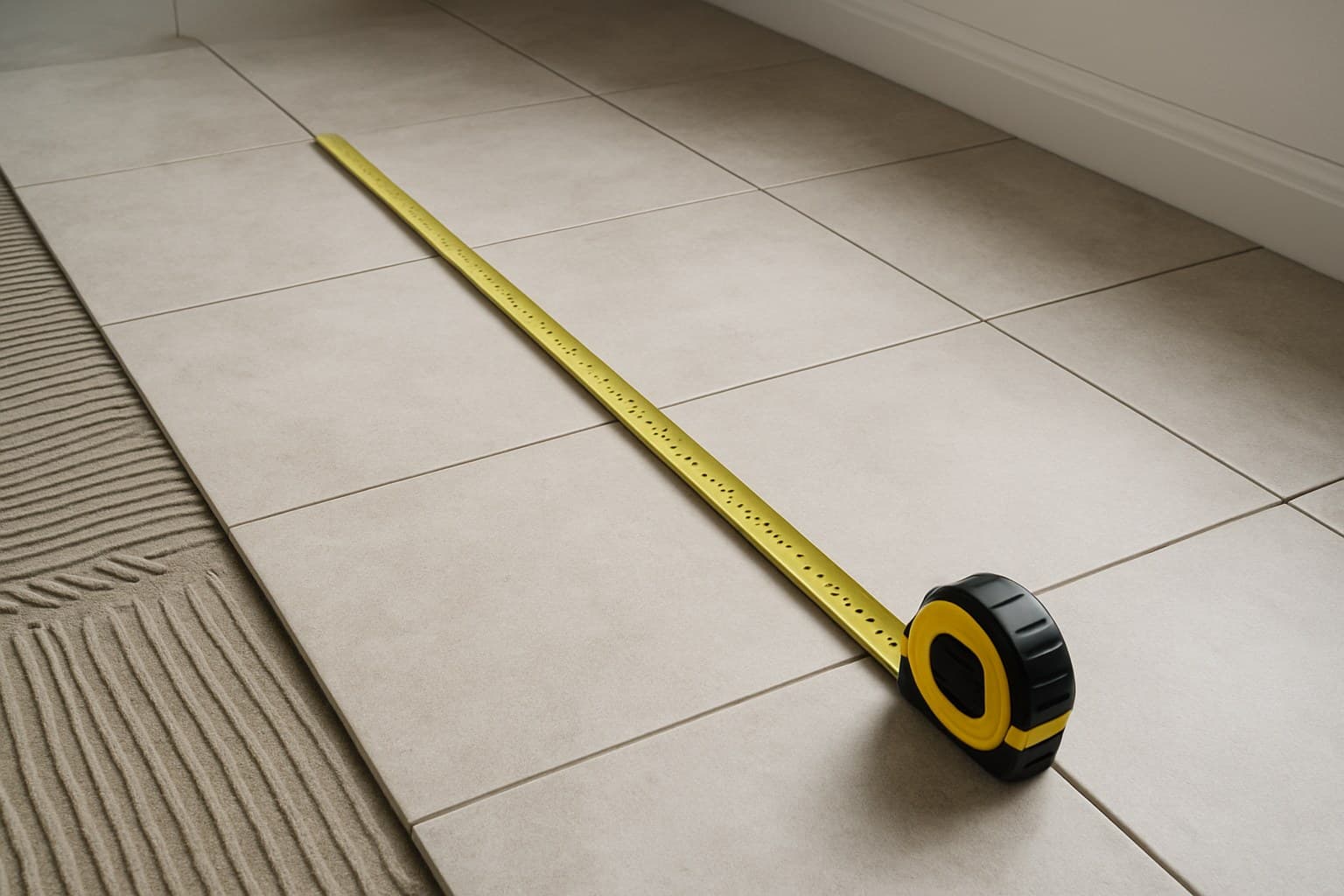
Get three itemized quotes, and make each one break out tile, labor, demo, leveling, waterproofing, trim, and the minimum fee. A lump-sum bid can't be compared to anything, which is the whole point of a lump sum.
Hand every pro the same square footage, the same tile, and the same waste percentage so you're comparing the work, not the guesses. When one quote is far lower, it's usually leaving out prep that'll come back as a change order. When one is far higher, ask what it includes that the others don't.
And push on the "if needed" lines. Ask each pro to price leveling and demo even if they think they won't need it, so a surprise on day one has a number you already agreed to. The goal isn't the cheapest bid. It's the one with no blank spaces left for demo day to fill in.
Is Tile Worth It? Life-Cycle Cost vs. Other Flooring
Sticker price is only half the story. According to the National Wood Flooring Association's Life-Cycle Cost Analysis, ceramic tile averages roughly $0.97 per year and porcelain tile about $0.98 per year once its installed cost is spread across a 75-year service life, among the longest NWFA (National Wood Flooring Association) tracks for any flooring category. Engineered wood, by comparison, averages about $1.05 per year, but over a service life of just 25 years, so you're likely paying for two or three replacements in the time one tile floor lasts.
The Tile Council of North America's Tile Initiative makes a similar case: tile's higher upfront price looks steep next to cheaper flooring, but its durability can push the true cost per year of use below materials that wear out and need replacing sooner. If you're weighing tile against a floor that costs less to install, it's worth running the math over decades, not just over the receipt.