
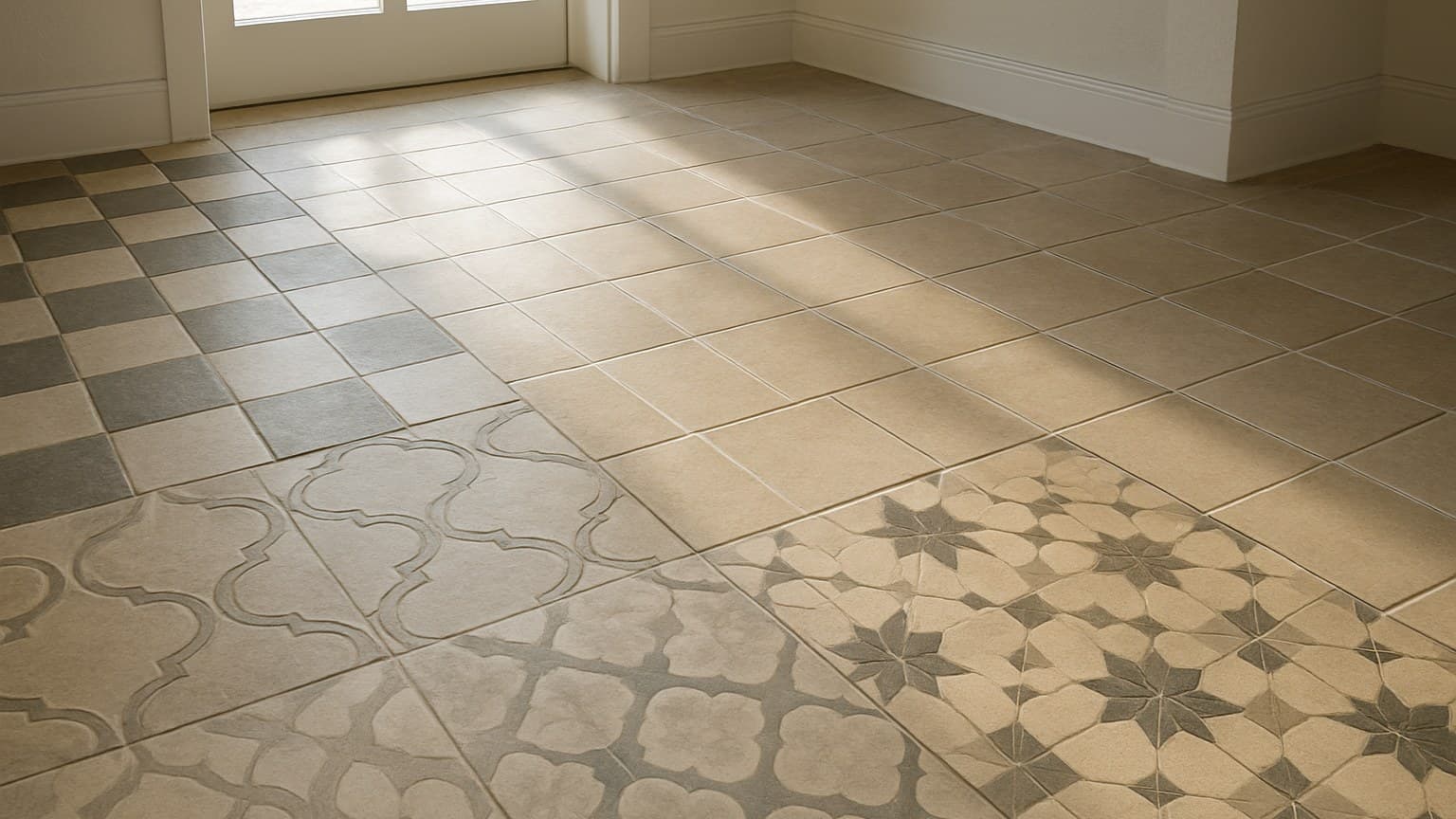
Of the eight types of tile worth knowing, porcelain fails the least across the most rooms, because the spec that actually sorts tile is water absorption, not price or looks. The tricky part is that two tiles can sit side by side, look identical, and behave nothing alike once they're down. Most of what comes back as a problem starts at the grout and seams, not the tile face.
Below I walk through all eight types of tile, ranked by what fails first in a real room: cracks, chips, stains, and slips. I judge each one by what I've seen hold up and what I've had to tear out, not by the showroom display.
Key takeaways
- Porcelain is officially any tile that absorbs 0.5% water or less (Tile Council of North America). That absorption line, not price, is the real split between porcelain and ceramic.
- Natural stone (marble, travertine, limestone) needs a periodic penetrating sealer and etches or stains more than fired tile. It's the priciest, highest-maintenance group.
- Cement and encaustic tile verdict: fine on a sealed powder-room or kitchen floor, but keep it off wet shower floors and unheated slabs in cold climates.
- For a floor, check the PEI abrasion class (PEI 3 or higher for whole-home) and the R slip rating, not just the look.
- Most tile failures start at grout and seams, not the tile face, so a flat subfloor and proper waterproofing matter as much as the material you pick.
The 8 Types of Tile, and the Spec That Sorts Them
Most lists name six core materials: ceramic, porcelain, glass, natural stone, cement (or encaustic), and mosaic. I add two more that trip people up, terracotta/brick and terrazzo, for eight that actually matter in a house.
The one spec that sorts all of them is water absorption. According to the Tile Council of North America (TCNA), the industry group that writes U.S. tile standards, porcelain tile is defined by a water absorption rate of 0.5% or less; anything that soaks up more than that is classified as non-porcelain ceramic. That absorption line, not the price tag, is the real split.
One more word you'll see on spec sheets is "rectified." Per the Tile Council of North America, a rectified tile has its edges cut precisely after firing, so the tiles butt together with thin, even grout lines. A non-rectified tile has slightly rounded, uneven edges and needs wider grout to hide the small size differences between pieces.
Watch out for the word "tile" getting borrowed, too. Vinyl composition tile and luxury vinyl plank and tile are sold as "tile" but behave nothing like fired clay or stone. They're their own thing, and I keep this guide to real tile. If you're still deciding between the two categories, LVP vs Tile: Which One Comes Back as a Callback? lays out where each one holds up and where it doesn't.
| Material | Made of | Water resistance | Sealing | Best use |
|---|---|---|---|---|
| Ceramic | Glazed clay, fired at a lower temp | Good on the glazed face, body soaks more | None (glazed) | Walls, light-traffic floors |
| Porcelain | Dense clay, fired hotter | High (0.5% absorption or less) | None | Floors, showers, outdoors |
| Natural stone | Quarried marble, granite, slate, etc. | Varies, mostly porous | Periodic penetrating sealer | Floors, walls (sealed) |
| Glass | Fused colored glass | Non-porous, waterproof face | None | Backsplashes, wet walls, pools |
| Cement / encaustic | Pressed cement, color in the body | Porous, absorbs readily | Seal and re-seal | Dry or light-wet floors, feature walls |
| Terracotta / brick | Low-fired clay | Very porous | Must seal | Rustic floors, feature walls |
| Terrazzo | Stone/glass chips in cement or resin | Varies by binder | Cement type needs sealing | Floors, seamless looks |
| Mosaic | Small pieces on mesh, any material | Follows the material used | Follows the material | Shower floors, accents |
How the eight tile materials compare on what they're made of, how they handle water, sealing needs, and where each one belongs.
Ceramic Tile
Ceramic is the budget fired-clay tile, glazed and baked at a lower temperature than porcelain. It's a solid pick for walls and light-traffic floors, where the glazed surface does the water work and the softer body underneath never gets tested.
Here's what fails in a real room. Chip a ceramic edge and you'll see a different-colored clay body show up under the glaze, so chips stand out. The glaze itself can scratch or develop fine surface cracks (crazing) over the years. The softer body is wrong for heavy traffic or anywhere it'll freeze and thaw outdoors, where it cracks.
Ceramic is the cheapest fired tile, which is why it still holds a place on bathroom walls and kitchen backsplashes. The color and style range is also wide, from plain white subway to marble-effect prints and bold geometrics, because the whole design lives in that printed glaze layer.
Porcelain Tile, and the Official Difference From Ceramic
Porcelain is the tile that absorbs 0.5% water or less, by the Tile Council of North America's own line. It's denser and fired hotter than ceramic, so it handles floors, showers, and outdoor use that ceramic can't.
There's a second split inside porcelain worth knowing. Through-body porcelain carries its color all the way through the tile, so a chipped edge barely shows. Glazed porcelain, like glazed ceramic, wears its color as a surface layer, so a deep chip reveals the body underneath. If you're putting porcelain somewhere it'll take knocks, through-body hides the damage better.
Wood-look and stone-look porcelain are what most clients show me on their phone now when they're picking a floor, and a good plank or stone print fools most people from standing height. If that's the look you're after, dig into the plank tile flooring guide, the wood-look tile guide, and the limestone-look porcelain guide.
Porcelain is my default for showers and kitchens because the body itself resists water. But I'll say this plainly: the planks being waterproof does not make the floor waterproof. Water gets in at the grout and the seams, so the shower pan and walls still need proper waterproofing underneath. I've torn out "waterproof" tile floors that failed because nobody waterproofed what was behind them.
Cost depends on the line, size, and finish you pick, so there's no single number for porcelain. As a rule it runs above ceramic and below natural stone, and the tile installation cost guide breaks down the materials and labor split for a real job. If you're weighing porcelain against a cheaper laminate option instead, the tile vs laminate flooring guide breaks down where the lower sticker price ends up costing more over time.
Natural Stone Tile: Marble, Granite, Travertine, Slate, Limestone
Natural stone is the priciest, highest-maintenance group. All of it needs a periodic penetrating sealer, a liquid that soaks into the stone and blocks stains, to survive a real kitchen or bath. Skip the sealing schedule and the stone is the first thing that comes back as a problem.
Here's what fails, stone by stone. Marble and travertine etch, meaning they get dull spots from anything acidic, so a splash of lemon juice or wine on a kitchen floor leaves a mark. Limestone and travertine are porous and stain easily. Softer stones scratch under grit. Granite and slate are harder and hold up better underfoot.
I had a client in Dayton, Karen, who put polished marble on a kitchen floor and called a few months later about cloudy patches by the sink. That was etching from everyday cooking splashes, not a flaw in the stone. Nothing to do but hone it back.
For a bathroom, honed (matte) stone grips better than polished, and slate's natural texture gives real traction. So the short answer for stone bathroom tile is yes, but sealed and honed, never polished.
Stone looks like nothing else. But if you want that look with a fraction of the upkeep, stone-look porcelain gets you most of the way there for less money and zero sealing.
Glass Tile
Glass is a wall and accent material, not a floor. It's slippery, and it can scratch or crack under foot traffic, so keep it on backsplashes, wet walls, and pool surrounds where feet don't land on it.
The upside is real: glass is non-porous with essentially zero water absorption, so it resists mold and stains better than almost anything. That's why pools and steam showers use it.
One install note. Thinset is the cement-based adhesive that sticks tile to the subfloor, and glass is see-through, so sloppy thinset coverage and trowel marks show right through the tile. You use white thinset, you work clean, and you expect a fussy job. Of all the tile types, this is the one I'd tell most homeowners to hire out.
Cement and Encaustic Tile (and the Bathroom-Floor Verdict)
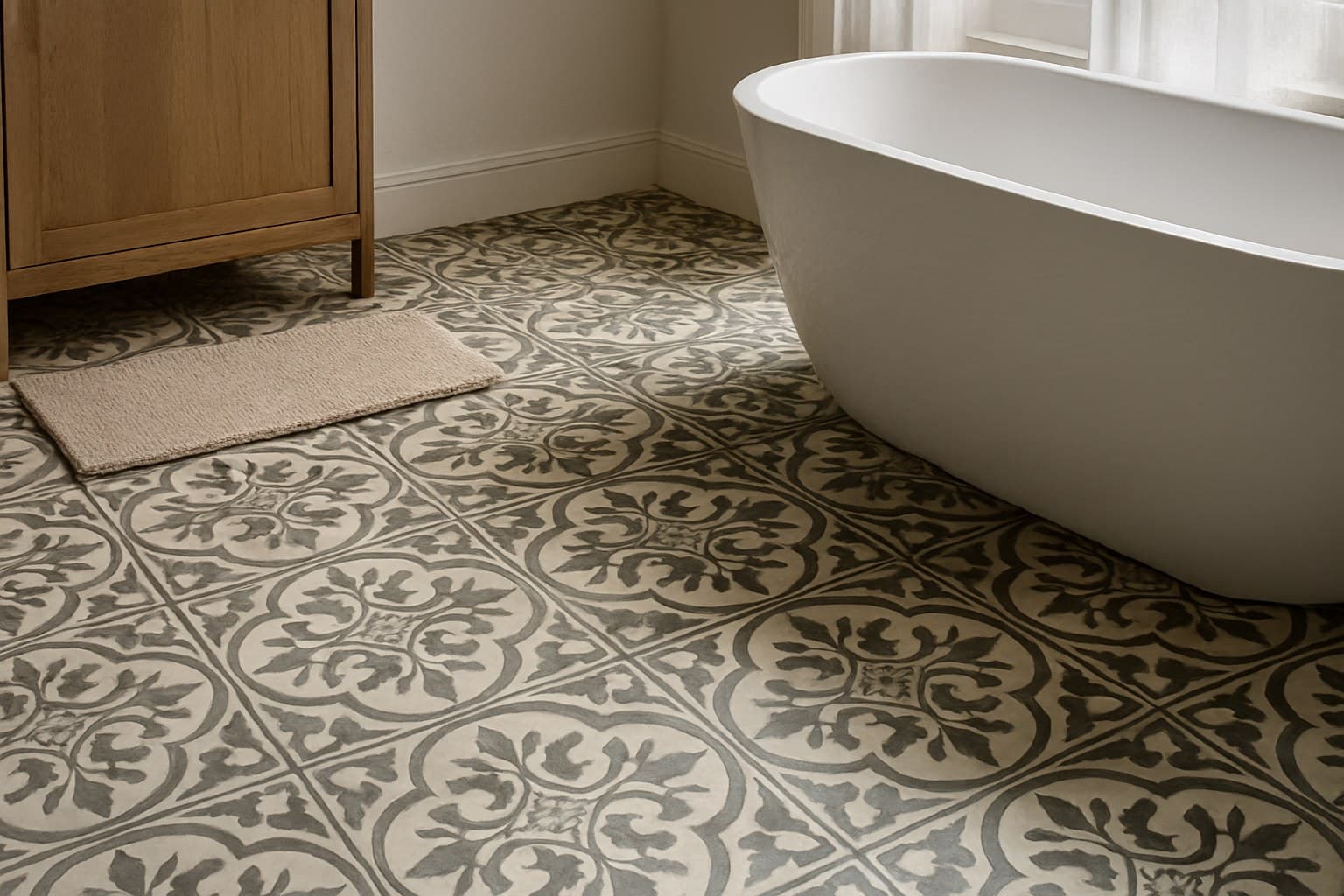
Let me clear up the contradiction first. Cement tile is porous and must be sealed, no exceptions. "Encaustic" just means the pattern is pressed into the body as colored cement rather than printed on a glaze, so the design wears beautifully as the tile ages. But that same tile still drinks water and stains if you let it go unsealed.
The verdict: cement and encaustic tile is fine on a powder-room floor or a kitchen, as long as you seal it and re-seal it on schedule. Keep it off constantly-wet shower floors, and keep it off unheated slabs in cold climates. Trapped moisture and the freeze-thaw cycle crack it.
Some guides push cement for wet floors because unglazed cement does have natural grip. The grip is real. It just doesn't cancel out the fact that a porous tile sitting in standing water is a staining and cracking problem waiting to happen. Grip and water tolerance are two different questions, and this tile only answers the first one.
Terracotta and Brick Tile
Terracotta and thin brick pavers are low-fired clay, the most porous tile on this list. They give you that warm, rustic, old-world floor nothing else matches, but they soak up water and oil fast, so they have to be sealed before use and kept sealed.
What fails is staining and, outdoors in a cold climate, cracking from freeze-thaw. Indoors on a sealed, dry or light-wet floor, terracotta holds up well and only looks better with age. I'd keep it to entryways, kitchens, and sunrooms, and I'd never put it anywhere it stays wet.
Because it's soft and irregular, terracotta usually wants wider grout lines and a patient install. It's not a tile to rush.
Terrazzo Tile
Terrazzo is stone and glass chips set into a binder, then ground smooth, so you get that speckled, seamless look in a single tile. The binder is the catch: cement-based terrazzo is porous and needs sealing, while resin-based terrazzo is denser and more stain-resistant out of the box.
What fails depends entirely on that binder, so read the spec sheet before you fall for the look. Cement terrazzo that never got sealed will stain in a kitchen. Resin terrazzo handles water and spills better.
I'm getting more terrazzo calls than I used to, for both floors and feature walls, because the chip-in-binder look reads as both retro and modern. Cost runs from around ceramic up near natural stone depending on the binder, with resin costing more than cement; the tile installation cost guide has the materials and labor split. The heavier cement versions are also a two-person lift, which makes it a hire-it-out install.
Mosaic Tile
Mosaic isn't a material, it's a format: small pieces, usually under 2 inches, mounted on mesh sheets. The sheet can be any material, so a mosaic's water resistance and durability follow whatever it's made of, porcelain, glass, or stone. Hexagon-shaped pieces are one of the most common mosaic cuts, and the hexagon tile decisions guide covers the sizing and layout calls that shape look gets you into.
The reason I reach for mosaic on shower floors is traction. All those small pieces mean a lot of grout lines, and grout lines are what your feet grip on a wet slope. A large tile can't drain and grip the way a mosaic can on a shower pan. For the how-to on keeping those joints straight, the mosaic tile guide walks through layout.
So yes, you can use mosaic on a floor, as long as the underlying material is rated for floor traffic. Check that before you buy a glass mosaic for a floor, because a lot of them aren't.
How to Pick a Tile for a Floor (PEI and Slip Rating)
For a floor, two numbers matter more than the look: the PEI abrasion class and the slip rating. Check those first, because a beautiful tile that scratches or turns into an ice rink is a bad floor no matter how it photographs.
PEI stands for the Porcelain Enamel Institute, and the PEI rating tells you how much foot traffic a glazed tile's surface can take before it wears. It runs from 1 (walls only) to 5 (heavy commercial). For a whole-home floor, want PEI 3 or higher. A PEI 1 or 2 tile belongs on a wall.
Slip resistance shows up as an R rating, where a higher R means more grip. For a bathroom or any floor that gets wet, you want more texture and a higher R number, which is why honed and textured finishes beat polished ones underfoot.
And none of those numbers save you if the prep is wrong. On the floors I've pulled up, tile failures started at the grout and seams, not the tile face, and that traces back to two things: a subfloor that wasn't flat, and waterproofing that wasn't done. Before any tile goes down, the subfloor has to be checked for flatness and for moisture, and wet areas have to be waterproofed. The material you pick matters, but the prep underneath is what the tile's life actually hinges on. For what that prep adds to a job, the tile installation cost guide breaks down which quote lines balloon after demo day, and basement and stair tile always runs more than an open room.