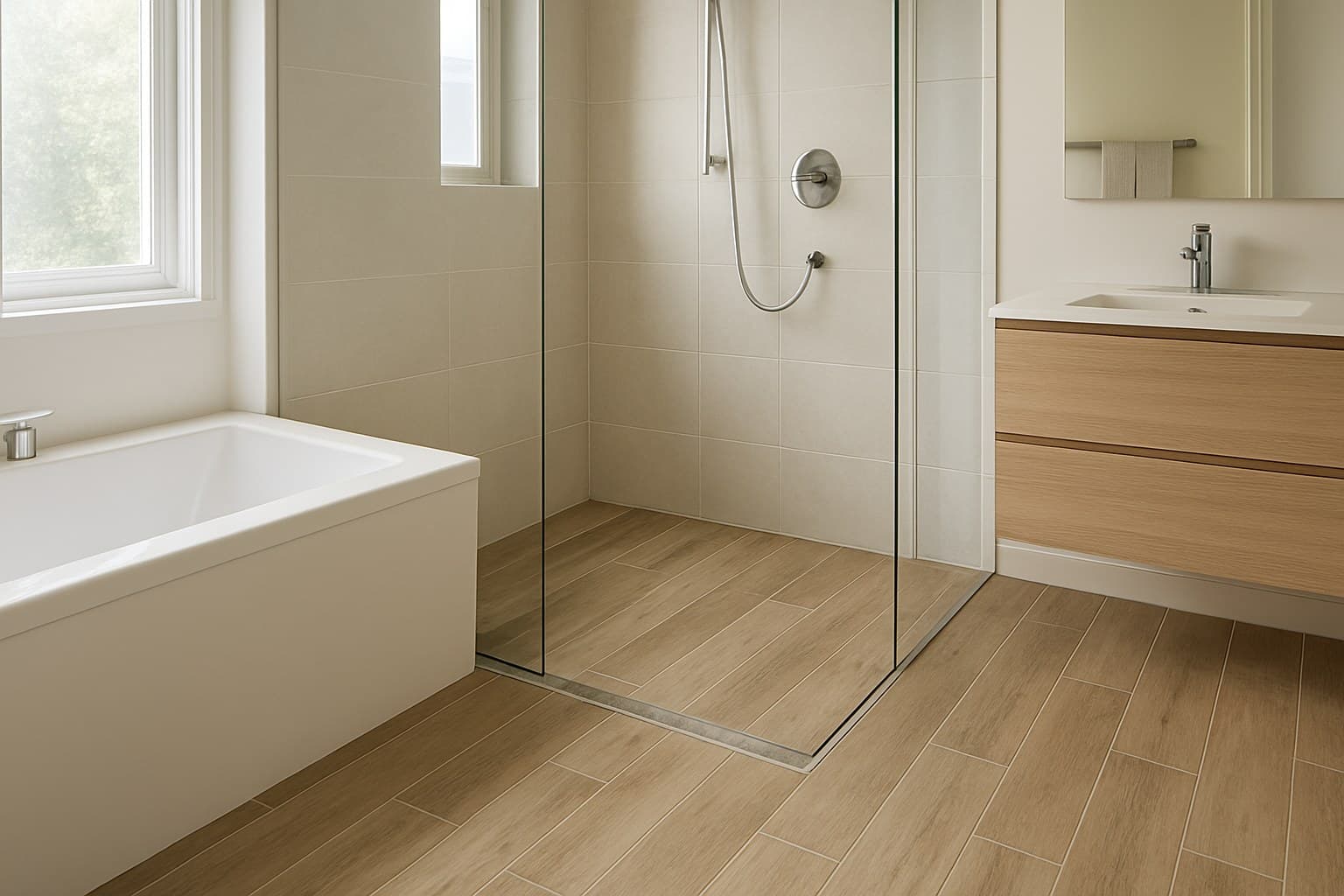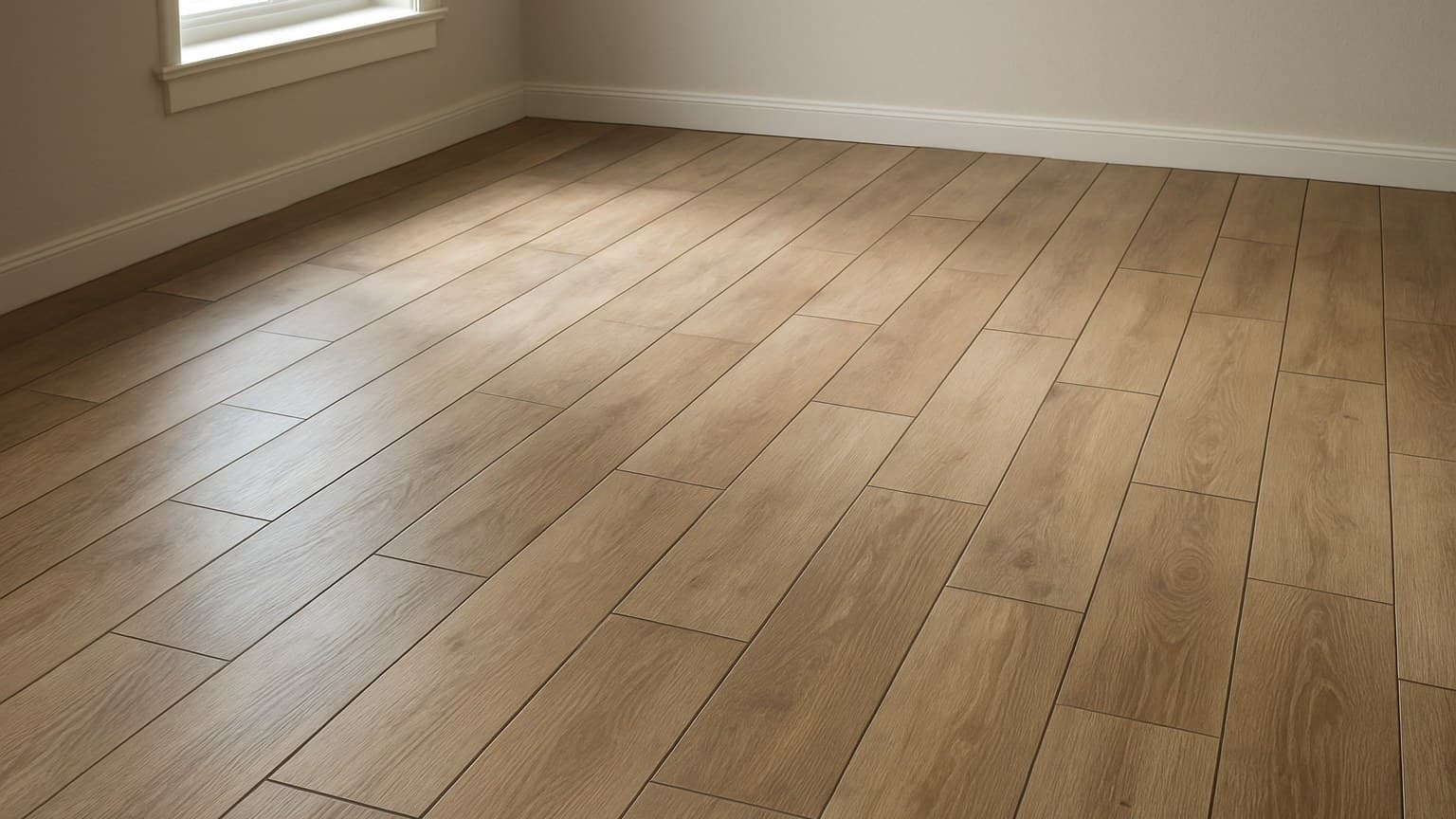
Plank tile flooring confuses most buyers because the per-square-foot price hides what really drives the cost: plank size, pattern waste, and labor nobody lists upfront. A full installed floor typically runs $13.50 to $30 per square foot, tile, extras, and labor combined, with basements and stairs landing above that range. Guess wrong on the layout and you can still overspend by hundreds, or run short of tile mid-install. Below, I walk through how I price a real room on the job, step by step.
Key takeaways
- Plank tile itself sells for about $5 to $13 per square foot: cheap listings start near $4.99 (Native 8x48 Birch) and chevron cuts reach about $12.95 (Taverna 4x19 Chevron Honey).
- Add extras (thinset, grout, underlayment) of roughly $1.50 to $3 and labor of about $7 to $14 per square foot, so an installed plank tile floor usually lands around $14 to $30 per square foot.
- Order 10% extra tile for a straight linear layout and 15-20% extra for chevron or herringbone, because angled cuts waste more.
- Long 8x48 planks suit big open rooms but need a very flat subfloor; short 2x12 and 6x36 formats fit small baths and tight spaces.
- Porcelain plank bodies are waterproof, but the grout lines are only water-resistant, so seal grout in bathrooms, mudrooms, and basements.
What Plank Tile Flooring Is, and When It Beats Wood and LVP
Plank tile flooring is porcelain or ceramic tile shaped long and narrow and printed to look like a wood board. You'll see it sold as wood-look tile, wood-plank tile, or tile plank flooring. It behaves like tile, and it looks like wood from a few feet away.
Against real hardwood, the tradeoff is simple. Tile is harder, the body is waterproof, and it shrugs off dog nails, spills, and sun. But it feels colder and harder underfoot, and you can never sand and refinish it the way you can a wood floor.
Against vinyl, the picture flips a little. Plank tile resists scratches and heat better and lasts longer, but it costs more than a comparable vinyl plank floor, feels colder, and gives you grout lines a vinyl floor doesn't have.
So who should buy it? Wet rooms, homes with pets, and heavy-traffic entries are where plank tile earns its money. If you want warmth and a little give underfoot, or you're on a tight DIY budget, look harder at wood or vinyl first.
Step 1: Measure the Room and Add for Waste
Start with the floor area. Length times width gives you square feet. For an L-shaped room, split it into rectangles, figure each one, then add them together. Include closets and doorways you plan to floor.
Then add a waste factor on top. For a straight linear layout, add 10%. For chevron or herringbone, add 15-20%, because angled cuts throw away more tile. Order full boxes, round up, and keep the leftover for repairs down the road.
Before you order a single box, check two things under your feet. Lay a straightedge across the floor and look for dips, and run a moisture check if you're over a slab. Long planks telegraph every low spot, and tile set over a floor that flexes or stays damp will crack or lift at the grout. I've pulled up more than one floor in Dayton that failed for exactly that reason, and the tile itself was fine.
| Step | What to do |
|---|---|
| Floor area | length (ft) x width (ft) |
| L-shaped room | measure each rectangle, then add them together |
| Straight / linear layout | add 10% waste |
| Chevron or herringbone | add 15-20% waste |
| Tile to order | floor area x (1 + waste %), rounded up to full boxes |
| Example | 12 ft x 15 ft = 180 sq ft; +10% = 198; order 200 sq ft |
How to turn room size into the amount of tile to order, with one worked example.
Step 2: Match Plank Size and Pattern to the Room
Pick the plank size to fit the room, not just your taste. Longer planks read calm and clean in big open spaces. Short planks suit small baths and borders. If a hexagon shape feels like a better fit for that small bath than another plank border, hexagon tile decisions around size and grout count are worth weighing before you order.
Longer planks also need a flatter subfloor. Any high or low spot shows up as lippage, where one plank edge sits proud of the next, and you feel it with a sock or a bare foot. On long planks, keep the stagger offset modest so you don't chase dips across the whole floor.
Pattern drives cost too. Linear wastes the least tile and looks quietest. Chevron and herringbone add a real feature, but they cost more in both waste and labor.
| Size | Look | Best for | Note |
|---|---|---|---|
| 8 x 48 in | long, few seams | large open living, kitchens | needs a very flat subfloor |
| 6 x 36 in | medium plank | bedrooms, hallways | forgiving all-rounder |
| 4 x 24 / 4 x 19 chevron | angled feature | entries, accent floors | 15-20% waste, extra labor |
| 2 x 12 in | short and narrow | small baths, borders | more grout lines |
Plank tile formats matched to room type, with the catch for each.
For an entryway I like a defined tile field that runs into the wood with one clean straight line, not a fussy border. Grit gets tracked in there, and a simple line is far easier to keep looking sharp. If you'd rather the floor read as stone than wood, limestone-look porcelain tile comes in the same plank formats.
Step 3: Price the Tile From Real Per-SF Listings
Plank tile itself runs about $5 to $13 per square foot. According to Wayne Tile's online pricing, a plain long plank like Native 8x48 Birch lists near $4.99 per square foot, and Metrowood 8x48 Light Oak sits around $5.95. At the top, a cut style like Taverna 4x19 Chevron Honey reaches about $12.95 per square foot. Chevron and rectified styles sit at the high end.
Go with porcelain over ceramic for floors and wet rooms. Porcelain is denser and less porous, which is why it's the usual pick where water and traffic are in play. Check the specific tile's water absorption rating rather than trusting the name. For the full breakdown of the material, see this porcelain tile guide.
Rectified means the edges are machine-cut square. That lets you run a tight grout joint, Daltile recommends a 3/16-inch minimum on rectified-edge tile, so the floor reads more like wood and less like tile.
| Tile | Price ($ per sq ft, tile only) |
|---|---|
| Native 8x48 Birch | 4.99 |
| Metrowood 8x48 Light Oak | 5.95 |
| Taverna 4x19 Chevron Honey | 12.95 |
Tile-only prices from real listings; chevron and rectified styles sit at the top of the band.
One warning: that per-square-foot tile price is just the tile. It does not include thinset, grout, underlayment, trim and transition pieces, or labor. Those come in Step 4.
Step 4: Add Installation Cost, Then Total It
Break the money into three buckets. Tile runs about $5 to $13 per square foot. Extras like thinset, grout, and underlayment add roughly $1.50 to $3. Labor runs about $7 to $14 per square foot. Add it up and an installed plank tile floor usually lands around $13.50 to $30 per square foot.
| Cost bucket | $ per sq ft installed |
|---|---|
| Thinset, grout, underlayment | 1.50 - 3.00 |
| Tile (material) | 5.00 - 13.00 |
| Labor | 7.00 - 14.00 |
| All-in installed | 13.50 - 30.00 |
Each cost bucket as a floating bar from its low to its high, with the all-in range built from them.
On install method, be honest about what you can do yourself. Traditional thinset-set porcelain plank is a pro job, because controlling lippage on long planks is hard and slow. Newer groutable click-lock porcelain plank is more DIY-friendly for a small straight bath. Chevron, big open floors, and long 8x48 planks are worth hiring out.
Basements and stairs cost more per square foot than an open room. You get more cuts, more prep, and on a slab, more moisture work before a single plank goes down. Don't price a basement off an open-room number.
Picture how that adds up on a real room. A 180 square foot living room in a straight 8x48 layout needs about 200 square feet ordered. Tile at $6 comes to $1,200. Extras at $2 add $400. Labor at $10 for 200 square feet adds $2,000. That's about $3,600 all in, or roughly $18 per square foot installed.
Best Rooms for Plank Tile: Wet Baths, Kitchens, Basements, Outdoors, and Heated Floors
Bathrooms, mudrooms, and kitchens are where plank tile shines. The porcelain body is waterproof, but the grout lines are only water-resistant, so seal the grout in any wet room. For floors that get wet, pick a slip-rated tile. Daltile rates its StepWise tiles about 50% more slip-resistant than standard tile. For more layout ideas in a wet room, see these bathroom tile ideas.
Basements over a slab are a strong pick, as long as the slab is flat and dry. Moisture-test it first. Keep the waterproof-body versus water-resistant-seam line straight in your head: the plank won't soak up water, but the grout joints can, so they need sealing. Just know a basement floor reads hard and cold underfoot.
Outdoors and under heat are their own rules. Use thicker 2CM pavers like Daltile's TREAD line outside, never indoor floor tile. And before you run radiant heat under a floor, confirm that exact tile is rated for radiant heat, since tile moves warmth well but not every tile is built for the cycling. Running through that short list first, slab flat and dry, a slip-rated tile, sealed grout, 2CM pavers outside, and a heat rating confirmed, saves you from the failures I get called back to fix.