
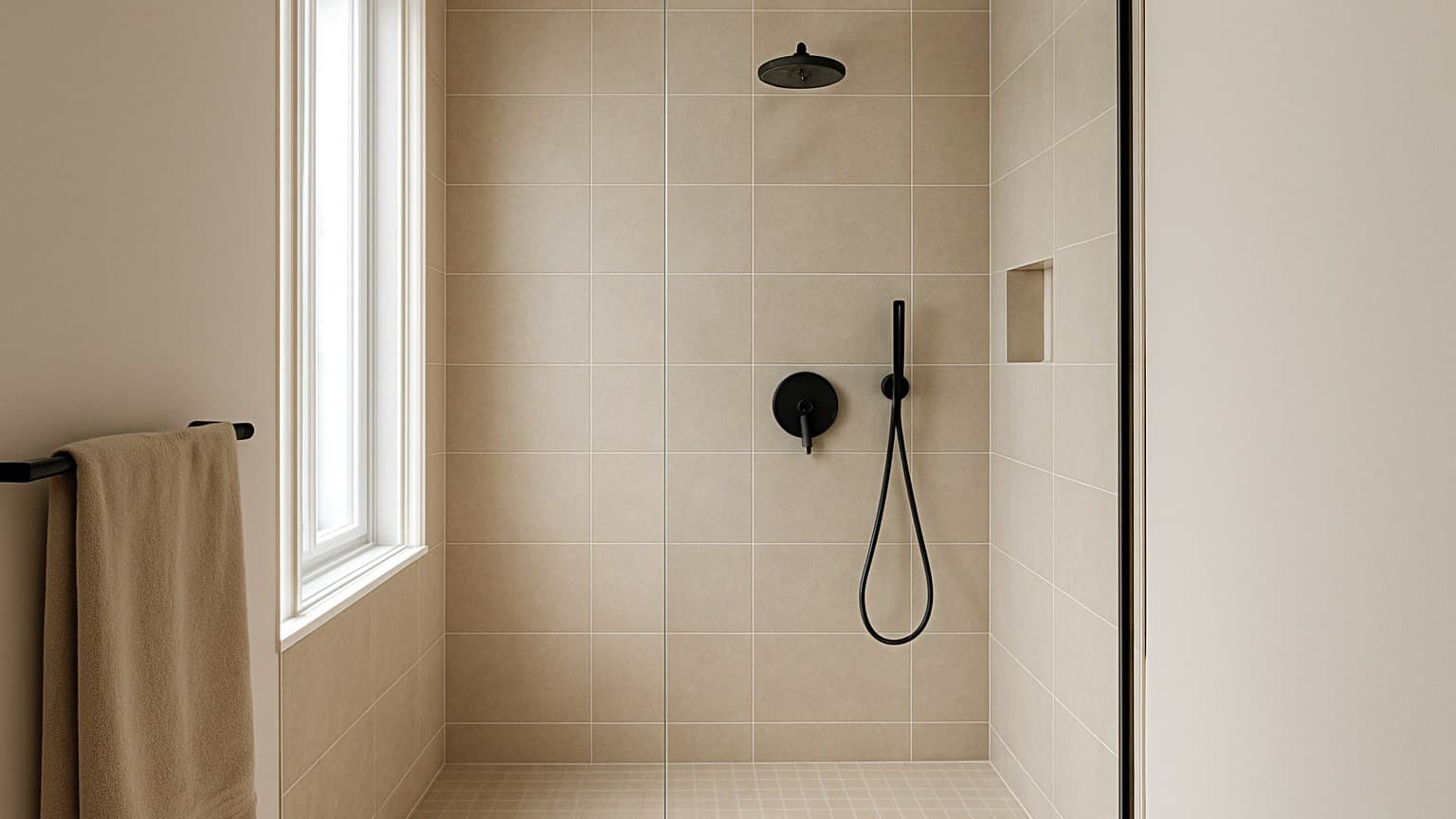
Most bathroom tile ideas look great on day one. The ones that come back to me a year later fail in the same few spots: the floor, the grout, and the slick polished finishes. This list ranks the looks by what survives daily water, not by what photographs best.
Key takeaways
- Porcelain with a water absorption rate below 0.5% is the safest all-around bathroom tile; polished marble on a wet floor etches and turns slick.
- In a small bathroom, large-format porcelain with thin grout lines looks bigger and leaves grout less room to stain.
- Penny round, hexagon, and mosaic grip best underfoot but add the most grout seams to scrub; ask for epoxy grout to cut the cleaning.
- Plan on roughly $1-$8 per square foot for ceramic-to-porcelain material and $8-$18 for labor, with showers and walls costing more per foot than an open floor.
How I Decide If a Bathroom Tile Will Hold Up
Before I care what a tile looks like, I read three numbers off its spec sheet. Those numbers predict almost every problem I get called back for.
First is water absorption. According to the Tile Council of North America's Tile: The Natural Choice guide, porcelain typically falls below 0.5% water absorption, which means it barely drinks moisture, and that is why it is my default in a wet room. Plain ceramic is more porous, so it belongs on walls and light-use floors.
Second is the PEI rating, a 1-to-5 score for how hard the glazed surface is. A soft, low-PEI ceramic is fine on a wall but wears down on a busy floor.
Third is the DCOF slip rating (dynamic coefficient of friction, which is just a measured grip number). You want 0.42 or higher on a wet floor, a benchmark the Tile Council of North America cites in its tile standards guidance as the widely used threshold for wet-area flooring.
Then I match the tile to where it goes. A slick polished finish can go anywhere except underfoot. A soft ceramic can go anywhere except a busy floor.
The prettiest options, real marble and handmade tile, cost the most to maintain, and that's the tradeoff I walk every customer through before they pick a look. That maintenance bill is what drives the redo two years later, not the tile breaking.
| Material | Water absorption | Best use | Durability and upkeep verdict |
|---|---|---|---|
| Porcelain | below 0.5% | floors, walls, showers | My default. Dense, shrugs off moisture, hard to chip. |
| Ceramic (non-porcelain) | higher, more porous | walls, light-use floors | Great on walls, softer underfoot on busy floors. |
| Natural marble | porous unless sealed | walls, low-traffic floors | Etches from acids, slick when polished, needs resealing. |
| Terrazzo | varies by binder | floors, walls | Tough but pricey; check the specific product's sheet. |
How the common bathroom tile materials compare on moisture, best use, and upkeep.
If you want the deeper reasoning on why porcelain's density matters, I break that down separately.
1. Large-Format Porcelain: The Floor That Rarely Comes Back
Large-format porcelain is the floor I install the most, and it's the one that still looks right years after I set it. Big tiles mean fewer grout lines, so there is less grout to stain, and the dense porcelain surface takes daily water without complaint.
There is a bonus in a small bathroom. A large tile with thin grout lines reads bigger and calmer, which makes a tight floor feel more open. Sizes now run up to 48x48 inches, so you can tile a powder room with just a handful of pieces. Hexagon shapes scaled up to that same large format keep the open, calm look, though the geometry brings its own layout tradeoffs, which is exactly what the large hexagon floor tile guide walks through room by room.
But big tile punishes a floor that is not flat. On a job over in a Kettering master bath, the slab looked flat to the eye, but a straightedge found a low spot. The tile bridged the dip and the corners lipped up just enough to catch a bare foot and the mop every single time. Small tile would have forgiven that floor. Large format did not.
So before a single tile goes down, I run two checks. A moisture check on the slab or subfloor, and a flatness check with a long straightedge, usually six feet. If there is a high spot or a dip, I grind it or pour leveler until the floor is true. That prep is what the manufacturer's warranty rides on.
The best tile for a bathroom floor
The safest bathroom floor tile is porcelain with a water absorption below 0.5% and a DCOF of 0.42 or higher. That combination shrugs off moisture and holds grip when the floor gets wet. Everything else on this list is a style choice layered on top of that baseline.
2. Zellige and Handmade-Look Wall Tile
Zellige is the glazed, slightly uneven Moroccan-style tile with a glossy, hand-shaped face that catches the light differently across every piece. It's one of the strongest looks in bathrooms right now, and it earns that on a wall or a shower surround.
On a floor, I steer people away from it. The irregular edges create wider, uneven grout joints, and every one of those joints is a place for water to sit. That's a wall tile in my book, not a floor tile.
Budget and timing are real here too. Handmade lines cost more than machine-made subway, and they often carry a lead time of weeks. Because the sizes vary piece to piece, order with a generous waste allowance before you book the install, or you will stall the job waiting on a second box.
Beautiful on a shower wall, poor on a floor, and always a slower, pricier install than flat subway.
3. Marble Looks Without the Etching
Real polished marble on a bathroom floor is the job I end up redoing most often. It etches, meaning it dulls into cloudy spots, from anything acidic. It stains if the seal lapses. And polished stone turns slick the moment it is wet.
The fix that actually holds up depends on how badly you want genuine stone. If you do, use honed (matte) marble and keep it on walls and low-traffic spots, and plan to reseal it on a schedule. If you just want the look, buy a marble-look porcelain that gives you the veining with none of the sealing or etching.
For the stone look on a floor that takes daily water, I usually point people to a limestone-look porcelain tile, which handles moisture the way real limestone can't without constant care.
Want the marble look with no upkeep penalty? Buy the porcelain. Want real stone? Hone it, seal it, and keep it off the wet floor.
4. Subway, Herringbone, and Rectangular Layouts
Subway tile is the safe classic, and the look lives or dies on layout and grout, not the tile itself. A straight stack reads modern. A running bond, where each row shifts halfway, reads traditional.
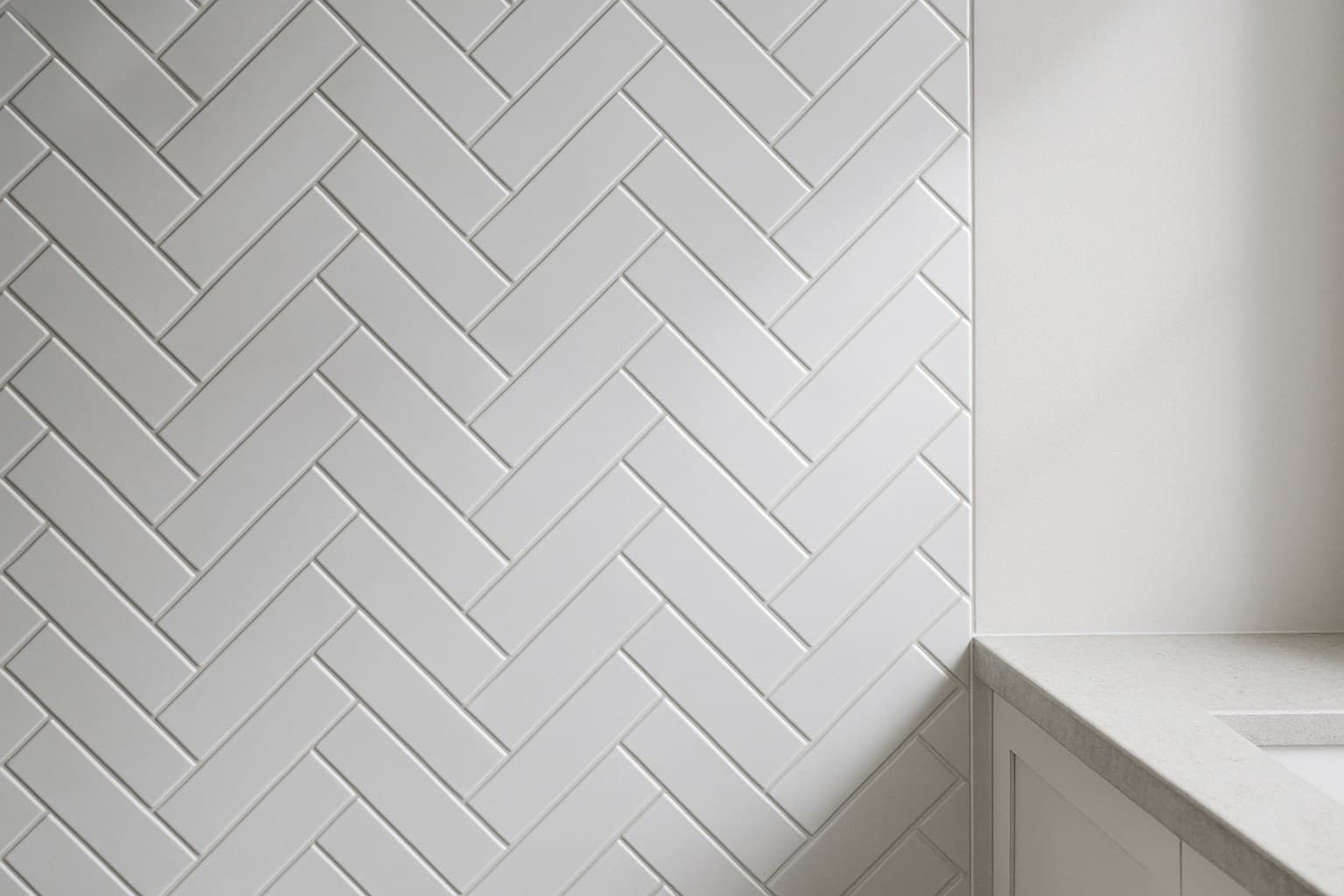
Herringbone and tight offsets add movement, but there's a trap with long rectangular tiles. They bow slightly end to end, so a 50 percent offset can leave the center of one tile standing proud of its neighbor's end. The Tile Council of North America's guidance on rectangular tile installation addresses this directly: offsetting long tiles by the traditional 50 percent running-bond pattern can exaggerate natural warpage into visible lippage, so a reduced offset, often around one-third, lays noticeably flatter than a half-tile running bond.
If you want to run herringbone, the herringbone tile guide walks through the waste factor and whether it's a job worth doing yourself.
Want the warmth of a wood plank instead of a square? A wood-look tile gives you that plank look in a porcelain that's safe in a shower. If you're pricing that look out, the plank tile flooring guide breaks down what it costs and how to order it.
5. Penny Round, Hexagon, and Mosaic Floors
Small tiles like penny round, hexagon, and mosaic grip wet feet better than anything else, which is exactly why they show up on shower floors. All those tiny tiles pack in grout joints, and grout gives bare feet traction the way a smooth large tile cannot.
That grip comes with a tradeoff you should walk in knowing. More joints means more grout to scrub and more seams that can stain. Mosaic sheets also hide small alignment problems during install that show up later as a wavy grid, so they reward a careful setter.
The upkeep fix is simple: ask for epoxy grout on a mosaic or penny-round floor. The Tile Council of North America's guide to keeping bathroom tile and grout clean points out that standard cement grout is porous enough to let moisture and soil work into the joint over time; epoxy grout resists that far better, and on a floor with this many seams, it pays for itself in cleaning time saved.
Color is just as much a maintenance call as the grout type. White and other light grout shows soap scum, mildew shadowing, and general discoloration the fastest, sometimes within a year even with regular cleaning, simply because there's nothing in the tone to hide it. A mid-tone or color-matched grout hides that same buildup far longer, which makes it the easier, lower-callback choice on a floor with this many joints to maintain.
For the full range of patterns and where each one works best, the mosaic floor tile guide covers the options.
6. Floor-to-Ceiling Tile and Color Drenching (Light vs Dark)
Running tile floor to ceiling reads as more finished and protects the walls from splashes, and it's a look both Daltile and Fireclay push hard. It also costs more, because you're tiling a lot more square footage than a half-wall job.
Settle the light-versus-dark question with a rule, not a trend. Pick light, single-color tile when you want a small bathroom to feel bigger and brighter. Pick dark, drenched color, such as charcoal, deep blue, or black, when you want mood over a sense of space. Both work. Choose by the effect you're after.
Going full wet room, where the entire room is tiled as one waterproof box with no shower curb, is the highest-cost and highest-upkeep version on this list. It leans entirely on flawless waterproofing under the tile, so it's a hire-it-out job every time. One seam done wrong there doesn't stain a grout line; it rots a wall.
What These Ideas Cost, and When to Hire It Out
Tile cost always splits into two lines: the material and the labor. Treat anyone who quotes you one flat number with suspicion.
For material, plain ceramic through quality porcelain runs roughly $3 to $10 per square foot. Natural marble and handmade zellige climb well above that, sometimes topping $30. For labor, a straightforward floor runs about $9 to $25 per square foot in my area, which puts a full floor job at roughly $12 to $35 per square foot installed. Showers and walls cost more because of the cuts, the niches, and the waterproofing, labor there often runs $20 to $45 per square foot. Across the full range from basic ceramic to stone and mosaic, installed bathroom tile typically lands between $8 and $75 per square foot.
It's worth budgeting a little beyond the tile itself, too. The EPA's WaterSense program notes that bathrooms account for more than half of all indoor household water use, so if you're already opening up the walls and floor, pairing the new tile with a low-flow shower head or faucet is a cheap add that pays back fast.
| Surface | Material (ceramic to porcelain) | Labor | Why |
|---|---|---|---|
| Open bathroom floor | $3-$10 / sq ft | $9-$25 / sq ft | Fewest cuts, simplest layout |
| Shower walls and pan | $3-$10 / sq ft | $20-$45 / sq ft | Waterproofing, niches, more cuts |
| Full floor-to-ceiling | $3-$10 / sq ft | $9-$25 / sq ft | Same per-foot labor rate as the floor, but far more square footage, so the total job costs much more |
Cost ranges for bathroom tile by surface, split into material and labor; figures reflect typical southwest Ohio pricing, not a national flat rate.
On DIY versus hiring out, my rule breaks down by job. A flat powder-room floor with click-together or straightforward thinset tile is doable for a patient first-timer, and click-lock tile flooring lowers the bar further. A shower, a full wet room, or any large floor that needs real leveling is where I tell people to hire a setter. The waterproofing and the flatness work are where a weekend job turns into a leak.
If you're weighing tile against a cheaper waterproof plank, the LVP tile comparison lays out where vinyl wins on cost and where tile still wins on life span. For an even lighter-duty, more DIY-friendly option than full LVP (luxury vinyl plank), the peel-and-stick floor tile guide is worth a look for a quick powder-room refresh.