
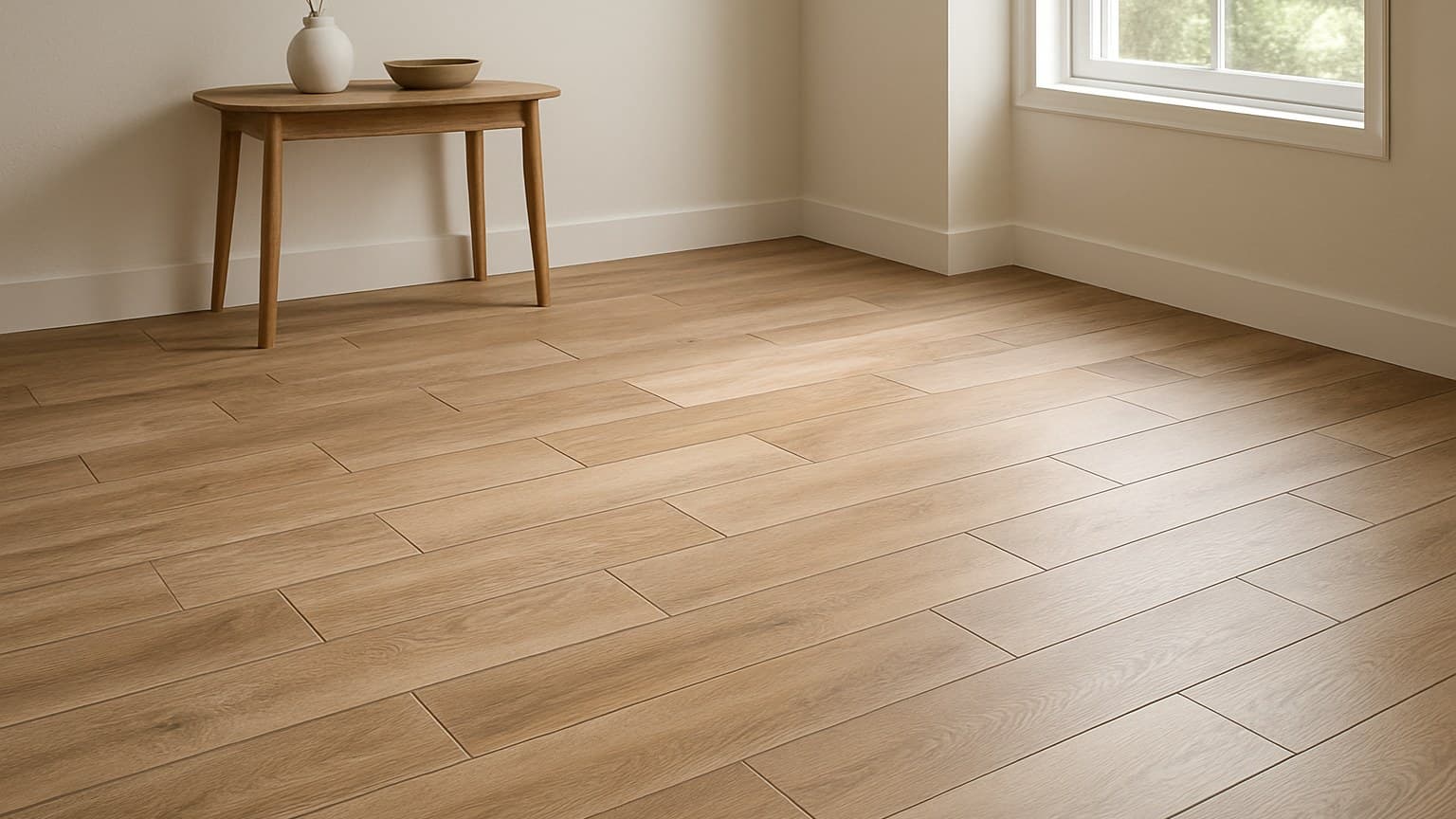
Wood-look tile is porcelain or ceramic made to look like wood planks, and it runs about $13.50-$30 per square foot installed. The real tradeoff: it beats hardwood, LVP (luxury vinyl plank), and laminate on water and scratch resistance, but it's harder and colder underfoot, and it costs more to install than any of them. Pick the wrong one for the room and you pay for the floor twice.
Key takeaways
- Wood-look tile is porcelain or ceramic printed to look like wood: materials run about $5-$13/SF (Wayne Tile collection pricing), and installed it lands roughly $10-$25/SF depending on layout and room.
- Only wood-look tile and LVP truly shrug off standing water; laminate swells at the seams and real hardwood needs babying near sinks and tubs.
- Wood-look tile wins on scratch and water resistance; real hardwood still wins on resale and underfoot warmth; LVP is the budget-friendly middle; laminate is cheapest but weakest around moisture.
- Click-lock LVP and laminate are realistic DIY jobs; wood-look tile is a glue-and-grout job over a flat, dry subfloor and is usually worth hiring out, with stairs and basements costing more than open rooms.
- Before any install, check the subfloor is flat and dry: tile cracks over flex, and every floating floor warps over a bad slab.
What Wood-Look Tile Actually Is
Wood-look tile is porcelain or ceramic that's been printed and textured to mimic wood grain, then sold in plank shapes like 8x48 and 6x36 instead of the old square tiles. From a few feet away it reads as a wood floor. Underfoot it behaves like tile. The same printing and texturing process lets manufacturers mimic natural stone just as convincingly, which is why limestone-look porcelain tile has become such a popular alternative to real stone floors.
Porcelain is denser and less porous than most ceramic, which is why installers reach for it on floors and in wet rooms. Don't buy on the word alone, though. Check the tile's own water-absorption number and its use rating, the rating on the spec sheet that says whether the tile is made for light residential foot traffic or can take heavier, commercial-level traffic, because both numbers vary by line. Natural marble floor tile looks denser still but is actually far more porous, which is why it needs regular sealing to hold up the way porcelain does in those same wet rooms.
You'll also see ceramic plank flooring, which is the same plank look in a ceramic body. It usually costs a little less and is a little softer than porcelain, so it holds up fine in a bedroom but I'd think twice about it in a hard-use entry. For an even lighter-duty bedroom budget, peel and stick floor tile skips the grout and labor entirely, though it won't take hard traffic the way ceramic plank does.
One term worth knowing: rectified edges. That means the tile is machine-cut dead square after firing, so installers can run very tight grout joints, as narrow as 3/16 inch on some Daltile lines. Tighter joints make the floor read like real planks instead of a grid of tiles.
Wood-Look Tile vs. Hardwood, LVP, and Laminate
Short version: wood-look tile wins on water and scratches, hardwood wins on warmth and resale, LVP is the forgiving middle, and laminate is the cheapest but the weakest around moisture. The right call depends on the room.
| Material | Installed cost ($/SF) | Water tolerance | Scratch resistance | Comfort underfoot | Resale |
|---|---|---|---|---|---|
| Wood-look porcelain/ceramic tile | $13.50-$30 | Waterproof body; seal grout and edges | Excellent | Hard and cold (warms with underfloor heat) | Good |
| Solid/engineered hardwood | $8-$15 | Poor; fails near sinks and tubs | Fair; dents and scratches show | Warm, soft, quiet | Best |
| Luxury vinyl plank (LVP) | $3-$10 | Waterproof core; seams water-resistant, not sealed | Good | Warmer and softer than tile | Fair |
| Laminate | $3-$8 | Weakest; edges swell when wet | Good surface; weak at seams | Firm, warmer than tile | Fair |
Installed cost, water tolerance, scratch resistance, comfort, and resale for the four plank-look floors.
A porcelain tile face is waterproof, but your floor is not just tile. Grout lines and tile edges still need a good install and sealing, and that's where water actually sneaks in. The plank won't fail; a sloppy seam will. It's the same split as LVP, where the core is waterproof but the seams are only water-resistant. If you're weighing the vinyl route instead, the LVP tile cost and performance breakdown digs into that. That seam-versus-core tradeoff is really the heart of the broader LVP vs tile decision homeowners end up weighing room by room.
What Wood-Look Tile Costs to Install
Expect roughly $13.50-$30 per square foot installed, with basements and stairs landing toward the top of that. Materials typically run about $6.50-$18 per square foot across the category. According to Wayne Tile's published collection pricing, material costs run closer to $4.99-$12.95 per square foot, a narrower, single-line figure, not the category-wide estimate above. Labor adds roughly $7-$12 per square foot on top.
| Cost piece | Range ($/SF) |
|---|---|
| Labor | $7-$12 |
| Materials | $6.50-$18 |
| Installed, all in | $13.50-$30 |
Materials, labor, and all-in installed cost for wood-look tile, in dollars per square foot.
What pushes the labor end up is extra hand-work: narrow grout joints, herringbone or chevron layouts, and any subfloor leveling the room needs. Basements and stairs run higher per foot than an open room because of moisture barriers, dozens of cuts, and slow, careful setting.
This is where I steer most homeowners toward hiring it out. Click-lock LVP and laminate are fair DIY jobs, but wood-look tile is a glue-and-grout job over a dead-flat, dry subfloor, and the margin for error is thin. A fellow in Kettering called me after his den planks cracked in a straight line across the middle. The tile was fine; the subfloor flexed, and once tile sits over movement it splits. The DIY savings vanished the day we tore it back out.
So before anyone sets a single plank, check two things: that the subfloor is flat within the tile maker's tolerance, and that it's dry. Tile cracks over flex, and no floor survives a wet slab.
Durability, Water, and Everyday Maintenance
The reason people switch to wood-look tile is that it shrugs off scratches, stains, and water better than real wood, and you clean it like any tile floor. No refinishing, no waxing, no sanding down scratches every few years.
Day to day it's a broom and a damp mop. The only recurring chore is resealing the grout lines now and then, since grout is the porous part that stains.
Skip the harsh stuff. Acids and abrasive pads chew up grout, and oil soaps leave a film that dulls the finish. Stick to a pH-neutral tile cleaner and the floor stays looking right.
In bathrooms and entries, slip matters. Some lines are built for it, like Daltile's StepWise, which the manufacturer says is "50% more slip-resistant than standard tile." That's worth paying for in a shower threshold or a mudroom that gets wet boots all winter.
Styles, Sizes, and Patterns Worth Knowing
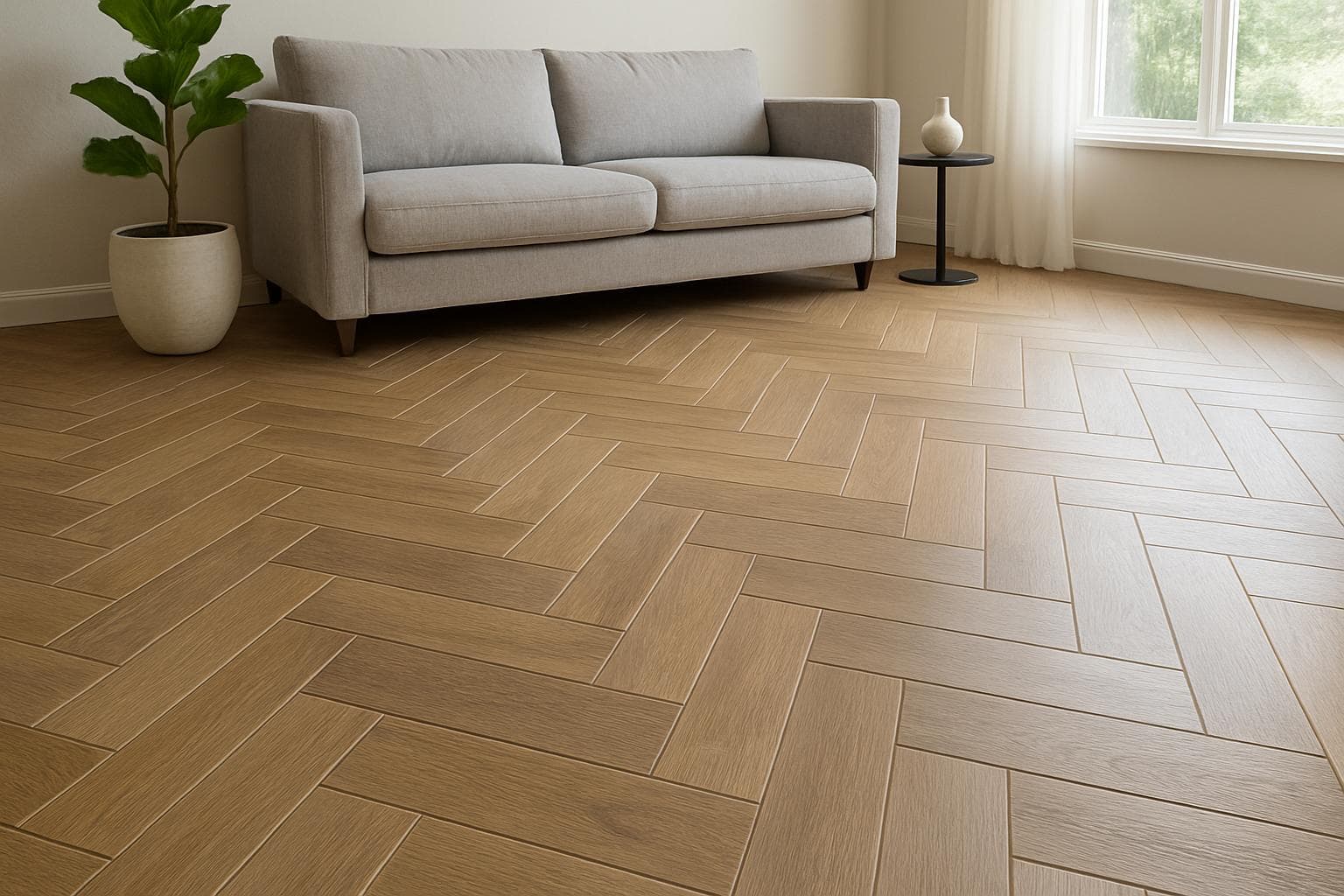
Most wood-look tile comes in long plank formats, commonly 8x48 and 6x36, plus chevron and parquet pieces for fancier layouts. Large plank tile flooring, those longer boards, means fewer grout lines and a more seamless wood look, which is why I lean long whenever the budget allows.
Pattern drives labor as much as looks. A straight lay is the simplest and cheapest to set. Herringbone, chevron, and parquet look great but add a lot of cutting and time, so expect the labor end of your quote to climb with them.
Finishes run from smooth to heavily textured, including charred-wood looks like Emser's Shou Sugi Ban style. Texture hides wear well, but it also grabs more grit, so a rougher finish needs sweeping more often.
For an entryway I like a clean, defined tile field running in a straight line into the wood, not a fussy inlaid border. Grit gets tracked hard right at the door, and a simple line is easier to keep looking sharp. If you want true plank formats and the full range of hardwood-tile looks, the wood tile flooring guide goes deeper.
Which One for Which Room and Budget
Bathrooms, mudrooms, laundry rooms, and covered patios: wood-look tile. The water tolerance and the slip-rated options settle it.
Living rooms and bedrooms, where warmth and resale carry the most weight: real hardwood if the budget's there, or LVP if money's tight or there's any moisture risk below.
Whole-house on a budget, or anywhere over a slab that might hold moisture: LVP is the forgiving pick. Save laminate for dry, low-moisture rooms only, because its edges swell the first time water sits on a seam.
Kitchens: I lean toward wood-look tile or a waterproof-core LVP here, not hardwood. The sink and dishwasher lines leak slow and quiet for weeks before anyone spots it, and tile or LVP shrug that off where hardwood swells and cups. If you want real wood warmth badly enough to accept that risk, go engineered hardwood with a tight finish and wipe up spills fast. For most kitchens, though, tile or LVP is the safer call.