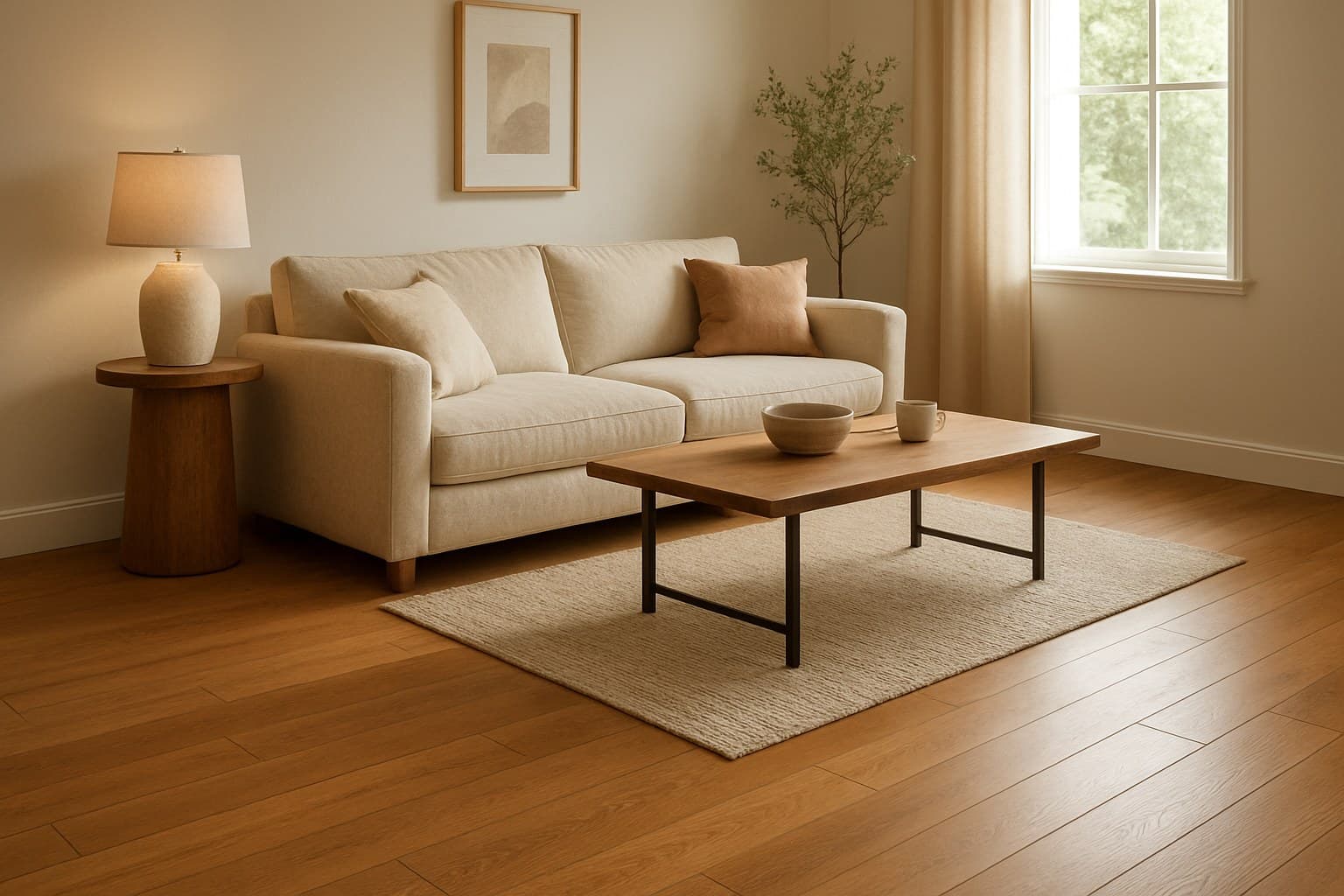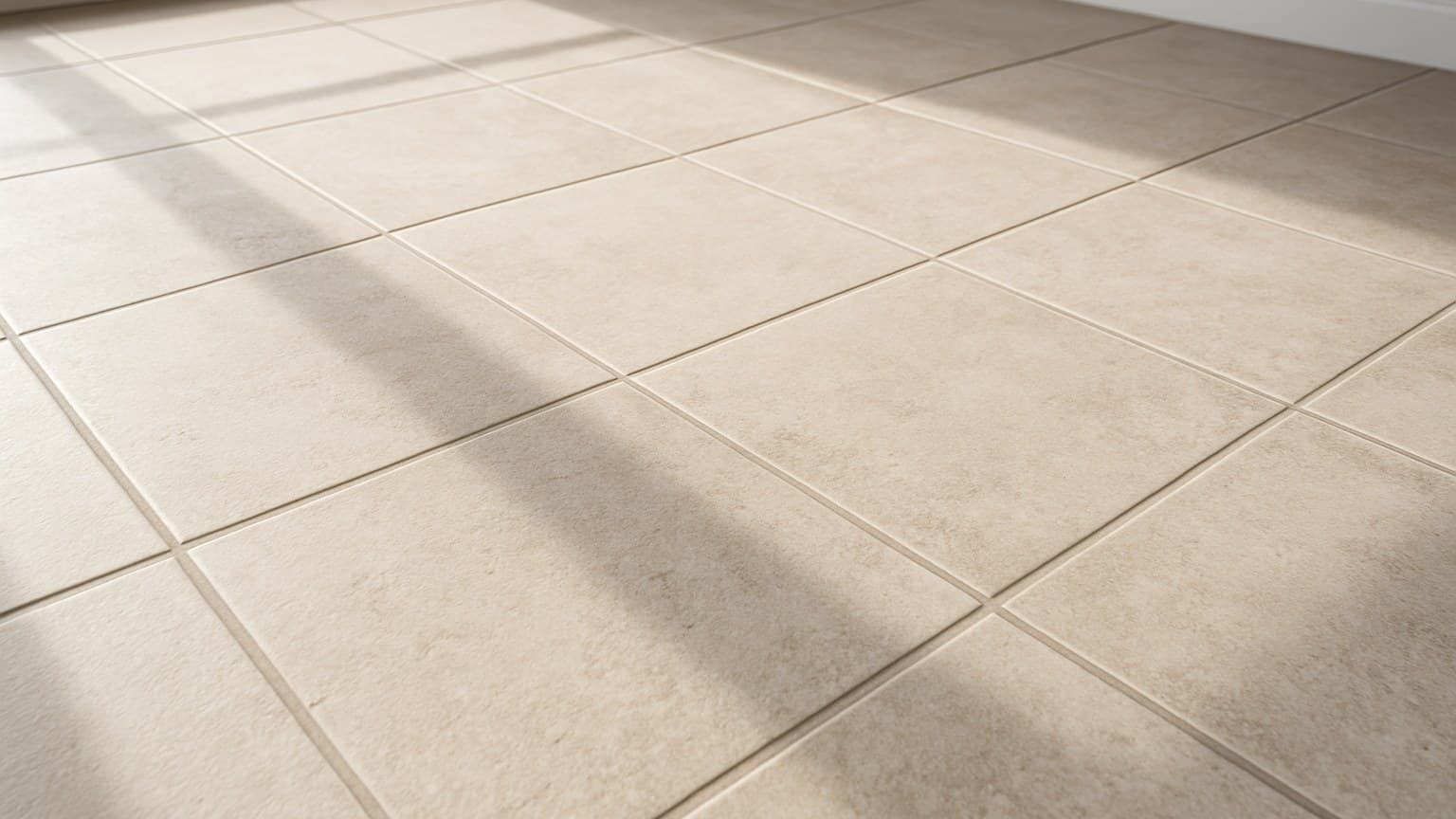
Tile runs $7-30 per square foot installed, while laminate runs $3-7.50 per square foot installed. The real tradeoff: tile shrugs off water and can last 75-100 years, while laminate costs less and goes down faster but fails quick once water reaches the seams. That's the full picture, the rest of this article breaks down the numbers room by room.
Key takeaways
- The NWFA/TCNA Life Cycle Cost Analysis puts tile at about $0.95-0.98 per sq ft per year over 75 years; laminate lasts only 15-25 years (BuildDirect), so you buy it 3-4 times in the same span.
- Laminate runs about $3-7.50/sq ft installed ($2-4.50 material plus $1-3 labor); porcelain tile costs more ($2-20 material plus $5-10 labor) but can outlast laminate 3-5 times over.
- Tile's weak spot is the grout; laminate's is the seams. Laminate has a water-resistant surface, not a waterproof core, and wet rooms can cut its real life to a few years.
- Click-lock laminate is a realistic DIY job on a flat subfloor; tile, stairs, and big open-plan moisture transitions are worth hiring out.
- Laminate wins on upfront price, warmth, and DIY; tile wins on lifespan, water tolerance, and cost per year once a room sees real moisture.
Tile vs Laminate: What Actually Wins Each Room
Tile wins wet rooms, long life, and resale value. Laminate wins dry rooms, a warmer feel under your socks, a tighter budget, and a DIY weekend. That's the whole fight in one sentence, and the rest of this article backs it up with real numbers.
The real tradeoff is simple. Laminate buys you a lower price and an easier install right now. Tile buys you a floor that can still be sitting there in 50 years.
| Category | Tile | Laminate |
|---|---|---|
| Upfront installed cost | $7-30/sq ft | $3-7.50/sq ft |
| Lifespan | 75-100 yr (porcelain 50+) | 15-25 yr |
| Water tolerance | High; grout is the weak point | Surface water-resistant only; seams swell |
| Comfort underfoot | Hard and cold | Warmer, a little softer |
| DIY difficulty | Pro job | Click-lock is DIY-friendly |
| Cost per year over 75 yr | ~$0.95-0.98/sq ft/yr | Higher once you re-buy it |
Tile and laminate compared on the six factors that decide most rooms.
Sticker Price Lies: The True Cost Per Year
Here's the number almost no store will show you. According to the National Wood Flooring Association's (NWFA) Life Cycle Cost Analysis, developed with the Tile Council of North America (TCNA), tile runs about $0.95-0.98 per square foot per year over 75 years. Solid wood lands near $1.01. Tile is that cheap per year because it almost never gets replaced. If you love the warmth of wood but not that price gap, it's worth exploring wood-look porcelain tile options that split the difference between the two materials.
Laminate can beat that in the right room. At about $5 per square foot installed and a 20-year life in a dry bedroom, you're at $0.25 per square foot per year. That undercuts tile.
The catch is that laminate only hits that number if it reaches full life. Put it in a kitchen or basement where the seams meet water, and a plank floor can fail years before its rated lifespan, sometimes in well under a decade. Add the tear-out and the redo, and the same floor's annualized cost can climb well past tile's per-year figure.
The sticker price also hides the disruption. Over 75 years you buy laminate three or four times, each round with its own demo, dust, and days of your house torn up. Tile you lay once.
| Scenario | Math | Cost per year |
|---|---|---|
| Porcelain tile, full life | Lasts 75+ years, laid once | $0.98/sq ft/yr (NWFA/TCNA) |
| Laminate, dry bedroom | $5/sq ft installed divided by 20 yr | $0.25/sq ft/yr |
| Laminate, reaches 15 yr | $5/sq ft divided by 15 yr | $0.33/sq ft/yr |
| Laminate, early water failure | $5/sq ft divided by a shortened lifespan, plus a redo | roughly $0.90+/sq ft/yr (illustrative) |
The same floor spread over how long it actually survives, not the sticker price.
Upfront Cost: Materials, Labor, and Removal
Split every quote into materials and labor, because one flat number hides where your money goes. Laminate material runs about $2-4.50 per square foot and install about $1-3 per square foot. Tile material swings wide at $2-20 per square foot, with install at $5-10 per square foot.
Then there are the lines people forget on quote day. Pulling up old laminate runs about $400 for 200 square feet. Subfloor prep can add about $550 for 300 square feet. Tile floor prep tacks on $2-4 per square foot, and removing old tile costs $1-2 per square foot if you DIY it, or about $4 per square foot by a pro.
Basements and stairs cost more per foot than an open room on both floors. Basements need moisture control under the floor. Stairs mean a cut and a nosing (the rounded trim edge that caps the front of each stair tread) on every tread, so the labor per square foot climbs on either material.
If you want the tile lines that balloon after demo day broken out one by one, the full tile installation cost breakdown walks through waterproofing, leveling, and the minimum service fee that makes small jobs cost more per foot.
| Item | Low | High |
|---|---|---|
| Laminate install | $1.00 | $3.00 |
| Laminate material | $2.00 | $4.50 |
| Tile install | $5.00 | $10.00 |
| Tile material | $2.00 | $20.00 |
Material and labor cost ranges per square foot; tile's material range is wide because a basic field tile (the plain, standard tile that covers most of a floor, as opposed to a decorative accent piece) and a premium porcelain are miles apart on price.
Durability and Water: Where Each One Fails
Each floor has one weak spot, and knowing it tells you which room it survives. Tile's weak spot is the grout. Laminate's is the seam between planks. Vinyl plank has its own failure point worth knowing before you pick a third option, so see how LVP stacks up against tile on durability and cost.
Let's be precise on water, because this is where most laminate regret starts. Tile itself has a waterproof body. Porcelain is denser and less porous than most ceramic, which is why it gets picked for wet areas, but the real number to check is the published water absorption rating on that specific tile. Even then, the grout lines and any waterproof membrane under the tile are what actually keep water out of the room, not the tile face. If you're narrowing down the actual tile shape for that wet room, hexagon tile flooring decisions covers slip resistance and grout spacing worth weighing before you buy.
Laminate is where the two words get blurred, so separate them. A water-resistant surface is not a waterproof core. The top of the plank can shrug off a spill you wipe up. But water that works down through a seam reaches the HDF (high-density fiberboard) core, and that core swells and lifts. It does not shrink back when it dries.
On scratches, both hold up to daily grit and shoes. Tile pulls ahead on the stuff that dents a cheaper floor: a dropped pan, a dog's nails over the years. Those will eventually dull a thin laminate wear layer that tile never notices.
Installation: DIY Weekend vs Pro Job
Before either floor goes down, check two things, every time. First, subfloor flatness: high and low spots telegraph straight through, stressing the locking joints on laminate and cracking tile over time. Second, moisture: test the slab or subfloor, because a wet base voids most product warranties and ruins the install no matter how clean your work is.
DIY vs. hire breaks down like this. Click-lock laminate on a flat, dry, prepped subfloor is a realistic weekend job for most homeowners. Tile is a pro job once you factor in thinset, layout, cutting around every obstacle, and waterproofing a wet area.
There are also jobs worth hiring out on either material. Stairs are one, because every tread needs a clean cut and a nosing, and a sloppy edge is the thing people trip on and notice daily. Large open-plan floors with a moisture transition, where the room changes from dry to wet across one span, are another. That's where a pro earns the fee.
One more thing people skip: acclimation time and the exact expansion gap vary by product. Read the sheet in the box, not a rule of thumb someone posted online. If you're leaning laminate, it's worth knowing which rooms laminate flooring actually works in before you buy, so you don't put it where the seams will meet water.
Comfort, Warmth, Noise, and Maintenance
Underfoot, laminate feels warmer and a touch softer than tile. Tile is hard and cold, which is exactly why it pairs so well with radiant floor heat and why laminate often does not. If you plan to heat the floor, check that specific plank's own rating first, because not every laminate is rated to sit over heat.
Noise follows the subfloor and the underlayment. Cheap laminate over a bad subfloor sounds hollow and clacky; a good underlayment quiets it down fast. Tile is dead silent, though it's unforgiving on a dropped glass.
Maintenance is a real tradeoff, not a tie. Tile's chore is the grout, which stains and needs sealing to stay clean. Laminate asks for almost nothing day to day, but you can't wet-mop it like tile, and you can't refinish it. Once the wear layer is gone or a plank swells, that plank is done.
Laminate asks less of you up front and over the week. Tile asks for grout care but keeps going long after the laminate would have been torn out. If you're weighing these two against a wet-room tile install specifically, the LVP tile cost breakdown by wear-layer tier covers the vinyl option that often sits between them on price and water tolerance.