
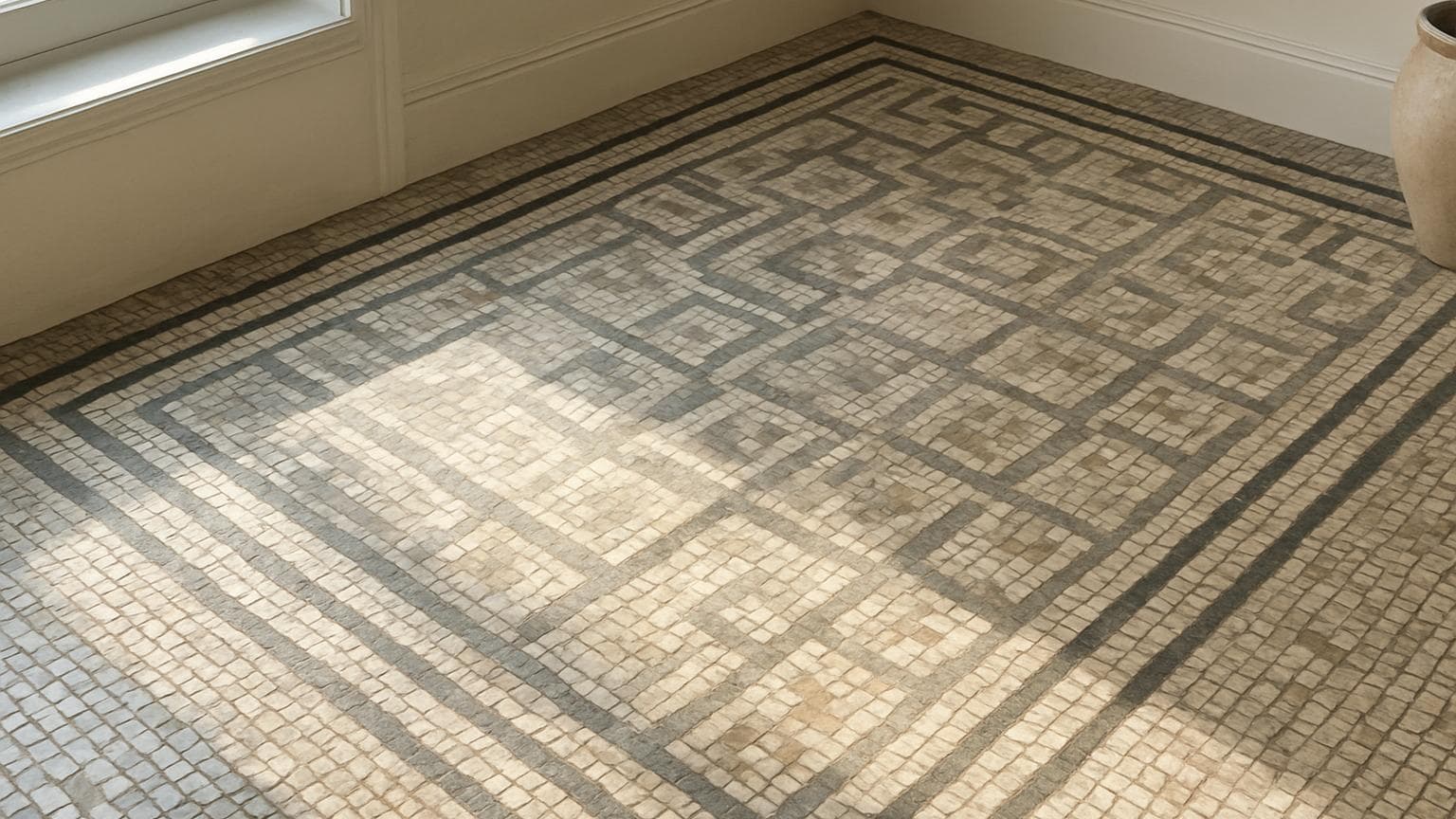
Pick a mosaic floor tile off a showroom wall and you're judging the pattern. Put it underfoot and the grout between those little tiles is what really decides whether it works. Get that part wrong and you either slip or spend weekends scrubbing. Hexagon shapes are one of the most common versions of that pattern choice, and the specific trade-offs they bring are covered in the hexagon tile decisions guide.
Key takeaways
- Grout-line density is the whole decision: more tiny grout lines mean better grip underfoot but more surface to seal and scrub.
- Porcelain mosaic is the toughest floor pick; glass, metal, and mirror belong on walls or accents, not underfoot.
- Mosaic shines on shower floors because the mesh sheets bend to the drain slope and the dense grout grips wet feet.
- Expect to pay more than field tile: labor runs higher because there are far more seams to set and grout.
- Use epoxy grout for floors and check subfloor flatness and moisture before any sheet goes down.
What Mosaic Floor Tile Is, and Why the Grout Lines Decide Everything
Mosaic floor tile is just a lot of small tiles, usually under 2 inches each, held on a mesh backing sheet so a whole grid of them sets at once. Manufacturers such as Stonebridge Mosaics, listed in the Tile Council of North America's (TCNA) industry directory, produce these mesh-mounted sheets in materials ranging from glass to natural stone. For the full basics on how those sheets are built and sold, the guide to what mosaic tiles are walks through it.
On a floor, the real decision isn't the pattern, it's grout-line density. All those little tiles add up to a lot of grout lines per square foot, and that density drives both the good and the bad that follow.
The good is grip. Every grout line is a tiny ridge, and dozens of them give wet feet something to catch on. That's why mosaics show up so often on shower floors.
The bad is upkeep. Every one of those grout lines is also a seam that holds dirt and, with cement grout, needs sealing. More lines means more surface to clean for the life of the floor.
Not to scale. The dense mosaic trades easy cleaning for grip; the large tile does the reverse.
If you want a stone or wood look without all that grout to maintain, a larger plank tile, a long tile shaped like a wood board, usually 6 by 36 inches, with far fewer seams, or a wood-look tile covers the same floor with a fraction of the grout lines.
Floor Mosaics vs. Tiles for Mosaic Art
Don't confuse the two. Loose tiles sold for craft mosaics, like glass gems and broken-china pieces, are chosen for color, not for walking on. A floor mosaic has to carry a floor rating, survive a dropped pan, and grip a wet foot. If a sheet isn't rated for floor use, it belongs on a wall or a tabletop, not underfoot.
How Each Mosaic Material Scores on a Floor
Porcelain is the toughest, least porous option, especially in a textured or unglazed face that grips better than a shiny one. Ceramic is close behind for dry rooms as long as you check the tile's own rating.
Natural stone grips well and looks the part, but it drinks up water and stains, so it needs sealing on a schedule. Glass, metal, and mirror are slick and chip underfoot, so keep those three on walls and accents, not on the floor. If you like that stone look but want to skip the sealing schedule, a limestone-look porcelain tile option gives you the same soft, chalky finish without the upkeep.
| Material | Grip on floor | Wet-area fit | Maintenance | Relative cost |
|---|---|---|---|---|
| Porcelain | Good (pick textured/unglazed) | Excellent | Low | $ |
| Ceramic | Fair to good | Good (check the tile's rating) | Low to medium | $ |
| Natural stone | Good but varies by stone | Good, but must be sealed | High (sealing + staining) | $$$ |
| Glass | Poor, slick when wet | Walls and accents only | Medium | $$$ |
| Metal | Poor | Accent only | Medium | $$$$ |
| Mirror | Poor, scratches | Walls only | High | $$$ |
Source: watching which mosaic materials hold up on the floors I pull back up
Mosaic materials scored for floor use, with grip, wet-area fit, upkeep, and relative price.
If it's going on a floor you'll walk on wet, porcelain or a textured stone are your two real picks. Everything below them on the list is a look, not a floor.
Mosaic on Shower Floors and Other Wet Areas
Mosaics show up on shower floors for two reasons. The mesh sheets flex to follow the slope down to the drain, where a big rigid tile would never sit flat. And the dense grout gives grip right where water pools and feet are bare.
On slip resistance, be careful what you believe. There's no single industry number that covers all mosaics, so check the specific tile's DCOF rating on its spec sheet. DCOF is the dynamic coefficient of friction, a lab score for how much grip a wet tile gives. The other guides that list "best shower tiles" rarely print a figure, so don't trust a blanket "it's slip-proof" claim.
One thing the tile can't do is save a bad shower base. Waterproofing and a properly sloped pan come first. Mosaic grips wet feet, but it won't fix a leak, and shower leaks often start at the seams and the pan, not at the tile face.
Before any sheet goes on a shower floor: confirm the tile's own floor and DCOF rating instead of a general promise, waterproof and slope the pan to the drain, plan for epoxy grout at the seams, and lean toward the smaller tiles because they follow a curve and a slope better. When you're pairing that floor with the walls, the bathroom tile ideas guide is the place to work out the combination.
Installation: Subfloor, Thinset, Grout, and Whether to DIY
Start under the tile, not at it. Run a straightedge across the subfloor to check flatness, because a mosaic telegraphs every dip and hump more than a big tile does. Then run a moisture check on the slab or subfloor, since a damp base wrecks the bond and no grout grip makes up for a sheet that's lifting.
For adhesive, use thinset mortar on any floor or wet area, setting methods like this are the ones published by the Tile Council of North America (TCNA), the trade group behind North America's standard reference for tile installation. The premixed bucket paste, PVA, short for polyvinyl acetate, a glue-like adhesive, is for dry walls only. It doesn't belong on a floor, and it won't cure right in a shower.
Set the sheets with a flat trowel and keep each one lined up with the last, or the little grout lines drift and the whole grid looks crooked. On a floor, I use epoxy grout over plain cement grout, because it resists water and stains at the seams where mosaics fail first.
On DIY versus hiring, be straight with yourself. A small dry backsplash or a flat mudroom patch is a reasonable weekend job. A sloped shower floor, a big open layout, or anything with cuts around a drain is where the sheets have to bend and align at once, and that's usually worth hiring out.
Sealing and Cleaning: The Real Maintenance Load
Grout is the whole maintenance story. Cement grout needs sealing and then resealing on a schedule, while epoxy grout skips most of that and shrugs off stains. That's the main reason I steer floor mosaics to epoxy.
Natural stone adds a second chore: you seal the tile itself, not just the grout, on the maker's schedule. Skip it and the stone drinks in every splash and spill.
A job in a Dayton bathroom taught me the contrast trap the hard way. A customer paired a light tile with a dark grout, and within months the grout had lightened unevenly right where the mop hit it most and the sealer wore thin. High-contrast grout on a mopped floor is a standing commitment to upkeep, and I tell people that before they fall for the look.
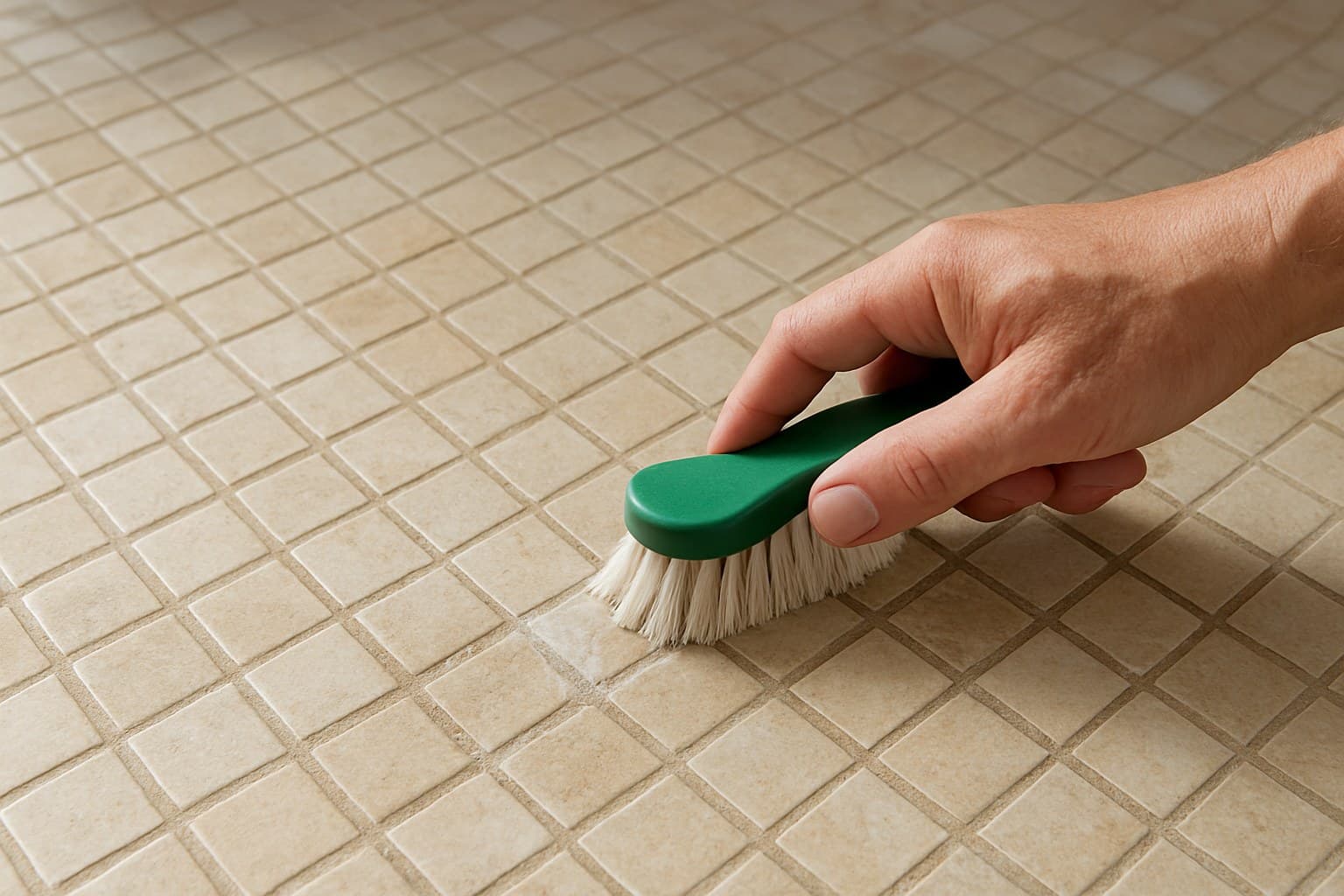
A mosaic takes more cleaning than a large-format floor. There are more joints to reach, and dirt settles into the low lines, not on the tile faces. To keep one looking new: pick epoxy grout to skip most resealing, reseal any cement grout on schedule, seal stone tiles as well as the grout, avoid high-contrast grout on traffic you mop, and scrub the joints rather than just wiping the tops.
What Mosaic Floor Tile Costs, and Why It Costs More
Mosaic runs higher than plain field tile, and it's mostly the labor line. There are more seams per square foot to set and grout, plus more waste on cuts, so an installer spends more hours per square foot than they would on big tiles.
Below are working ranges split into materials and labor so you can price your own room. These are ranges, not one national number, and your region, tile, and layout move them.
| Mosaic material | Materials ($/sq ft) | Labor ($/sq ft) | Installed ($/sq ft) |
|---|---|---|---|
| Ceramic | $4-$12 | $10-$20 | $14-$32 |
| Porcelain | $5-$15 | $10-$20 | $15-$35 |
| Natural stone | $10-$30 | $12-$24 | $22-$54 |
| Glass (accent) | $15-$40 | $12-$24 | $27-$64 |
Source: the mosaic floors I've quoted and set around Dayton
Mosaic floor tile cost ranges by material, split into materials and labor per square foot.
Work a real example. A 40 square foot bathroom floor in porcelain mosaic at $10 materials and $15 labor runs about $400 in tile and $600 in labor, so roughly $1,000 installed before prep.
Now the premium nobody quotes up front: showers, curved areas, small rooms, basements, and stairs all cost more per foot than an open floor. The cuts are fussier, the setter moves slower, and small jobs carry a minimum fee, so don't price a shower, a basement, or a staircase off an open-floor rate.
If those numbers push past your budget for a wet room, a sheet vinyl or LVP (luxury vinyl plank) tile floor covers the same space for less with fewer seams to maintain; the LVP tile guide is the useful next read because it prices out that cheaper wet-room route the same way, materials and labor split.
Mosaic Floor Tile FAQ
Sources
- Tile Council of North America: Stonebridge Mosaics directory listing
- Tile Council of North America: "Tile, the Natural Choice" (2026)