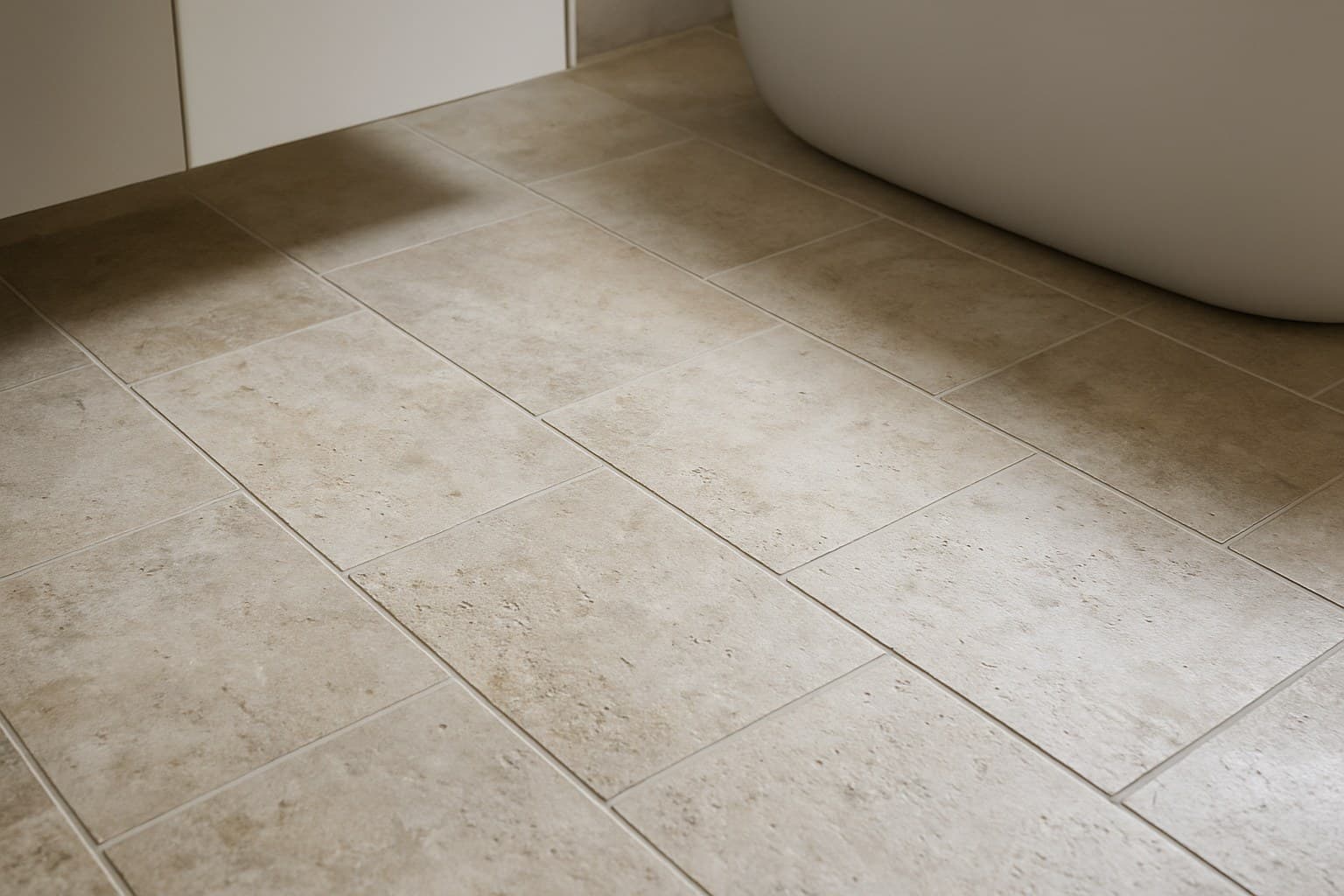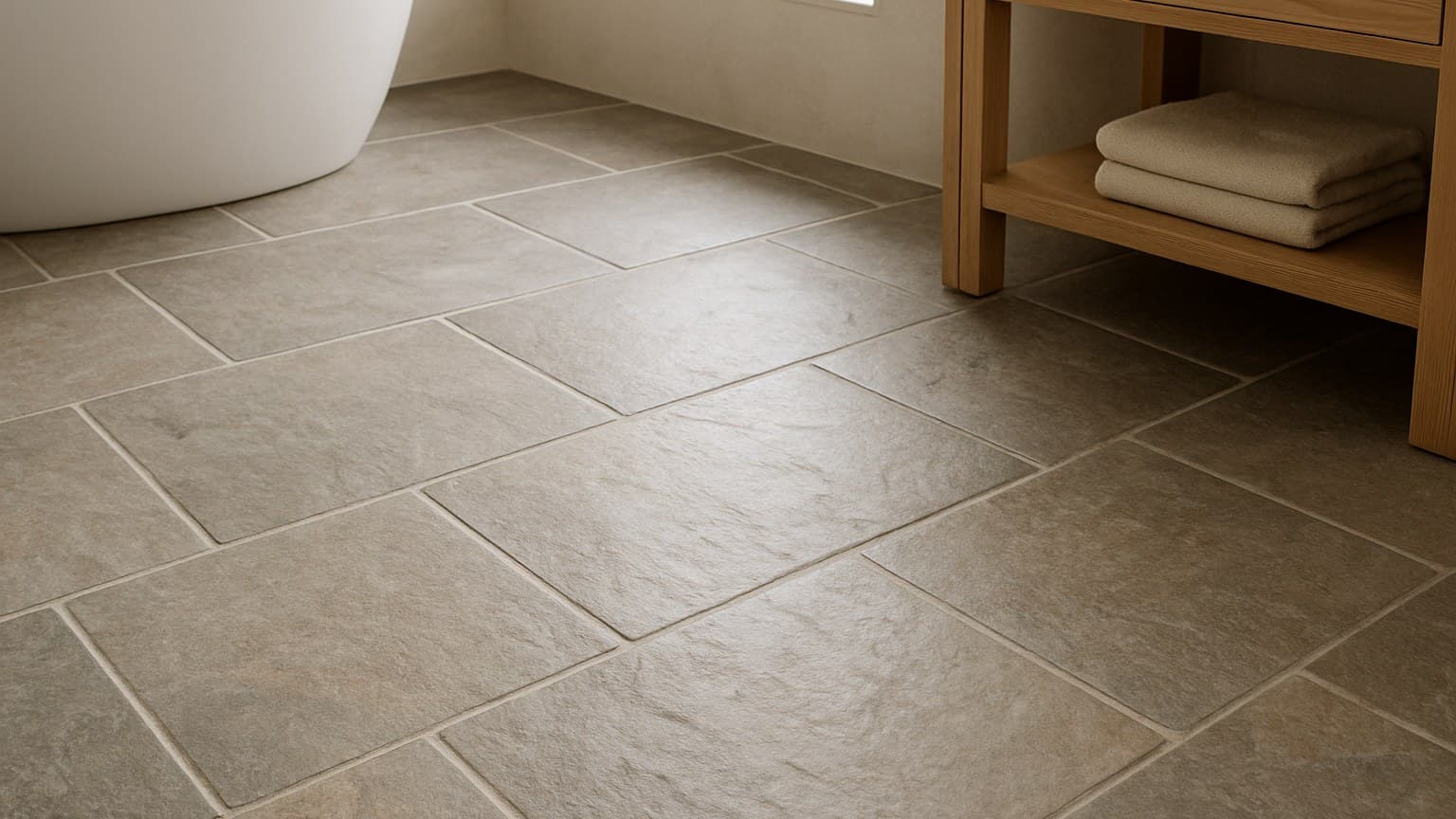
For most wet bathroom floors, porcelain stone-look tile wins: no sealing and a slip-rated option you can actually walk on. Among real stone bathroom tiles, slate grips best when wet and sandstone is the worst pick. The catch is that a polished stone that dazzles on a wall turns a shower floor slick, so finish and placement matter as much as the stone itself.
Below I rank six options by the only things that count in a wet room: grip, sealing upkeep, and installed cost. I'll tell you what belongs on the floor, what belongs on the wall, and what I'd skip.
Key takeaways
- For most bathroom floors, porcelain stone-look tile is the easy pick: no sealing, slip-rated options, and materials around $3-8 per sq ft versus more for real stone.
- Real stone turns slick when polished. Use a honed or textured finish on any wet floor and save polished stone for walls.
- Among natural stones, slate grips best when wet; sandstone is the worst choice for a wet room.
- Natural stone needs resealing (roughly every 1-2 years for marble and travertine, and it varies by sealer); porcelain needs none, though its grout still does.
- Installed cost runs about $11-23 per sq ft for porcelain stone-look versus $14-38 for most natural stone, and small bathrooms cost more per sq ft than open floors.
How I Judge a Stone Tile for a Wet Bathroom
Every bathroom job, I run the same three tests: does it grip a wet foot, how often do I have to reseal it, and what does it cost per square foot once it's down. Those three answers sort the good picks from the regrets faster than the color does.
Finish decides grip. A honed (matte, slightly rough) or textured surface keeps traction when it's wet. A polished stone looks like glass and acts like it too once there's water and soap film on top. I've pulled hardworking marble out of a shower floor because someone chose the polished version and it was a fall waiting to happen.
The second thing people mix up: the stone body shrugging off water is not the same as the floor being sealed. Even a dense tile is only as waterproof as its weakest joint, and that's almost never the face of the tile. It's the grout lines and the unsealed cut edges. Water and stains get in there first.
So when you read "waterproof" on a stone or stone-look product, read it as "the plank or tile body resists water." The seams still need sealing and the grout still needs maintaining. That gap is where wet-room failures start.
If you're also weighing stone for other rooms, I cover the whole house in my guide to stone flooring ranked by cost, upkeep, and slip risk. This article stays inside the bathroom, where water never takes a day off. When that bathroom floor opens directly into a living room finished in hardwood, combining tile and wood flooring successfully comes down to a handful of transition decisions made early.
Not to scale; the drawing shows finish, not thickness.
1. Porcelain Stone-Look Tile: My Default for Bathroom Floors
Porcelain stone-look tile is the easy pick for most bathroom floors. It needs no sealing, you can buy a textured slip-rated version made to be walked on wet, and the day-to-day upkeep is the lowest of anything here. If you later want to swap in vinyl plank without tearing the porcelain out, putting LVP over existing tile is possible but depends on a few conditions first.
Porcelain is denser and less porous than most ceramic, which is why it gets chosen for floors and wet areas. But don't trust the name alone: the water absorption and the use rating, a rating the tile maker gives to show how tough and slip-resistant a tile is for the job it's meant for, are published per tile, so check that tile's own number rather than assuming "porcelain" means rated for your shower floor. That density comes from how the clay is fired rather than from being quarried, which answers the common question of whether porcelain counts as natural stone.
The "virtually maintenance-free" line you'll see is fair next to real stone, with one catch. The tile face needs nothing. The grout between the tiles still needs sealing and cleaning, and that grout is where a neglected floor goes wrong.
It works on floors, shower walls, and powder rooms. For anything you walk on wet, pick a matte or textured finish, not a polished one. And if you want more water tolerance for less money and are open to leaving stone looks behind, LVP tile and its wear-layer tiers is another route worth weighing before you commit. Choosing between the two more broadly often comes down to which flooring causes more callbacks after years of water exposure.
2. Slate: The Grippiest Real Stone
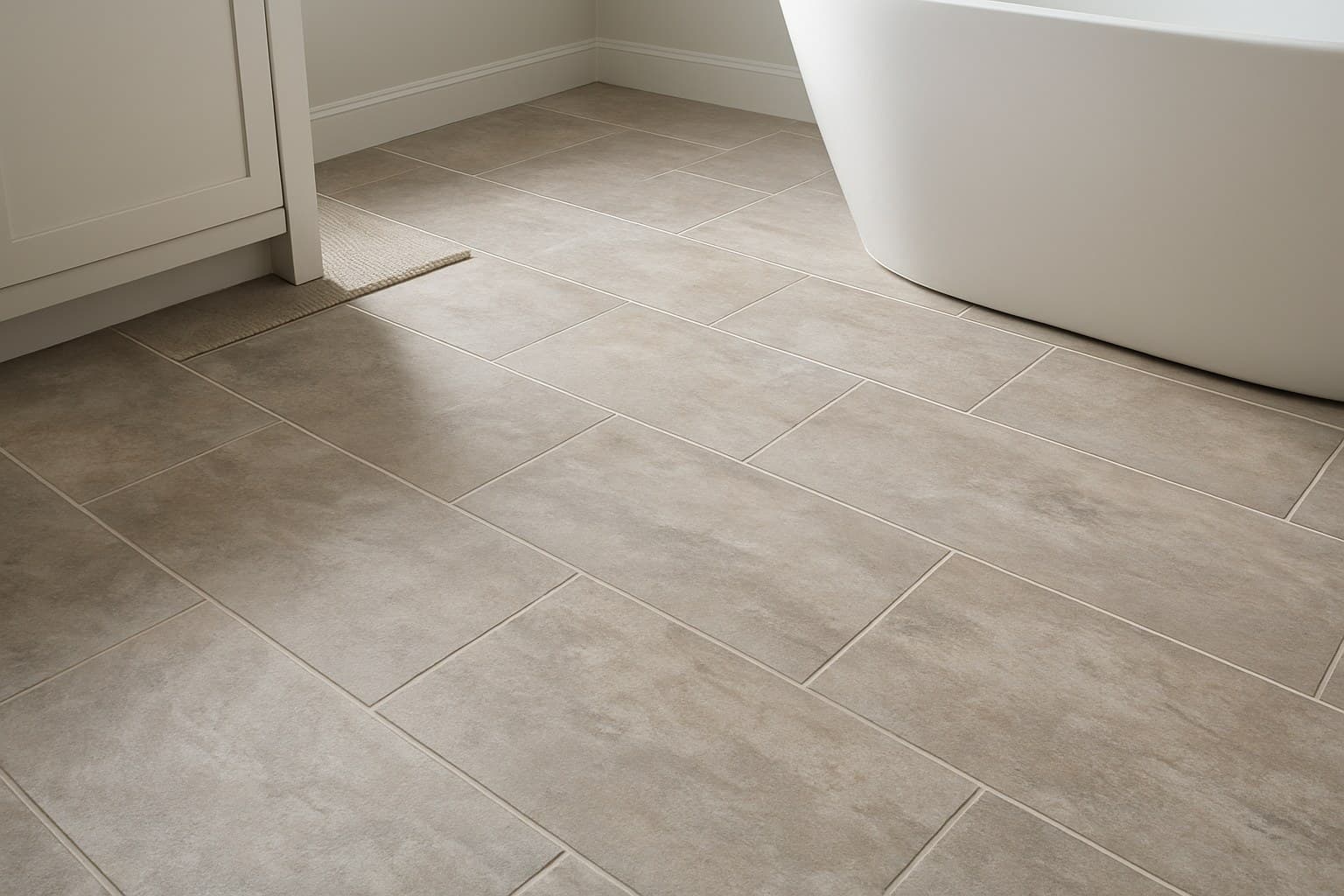
If you want real stone underfoot in a wet room, slate is the one I reach for. It's naturally cleft, meaning its surface splits into rough, uneven layers instead of a smooth plane, and textured, so it grips well when wet, the best traction you'll get out of a natural stone on a shower floor or bathroom floor.
The downsides are real. Softer grades can flake and spall, meaning thin layers lift off the surface over time. Color varies a lot piece to piece, so you'll want to dry-lay a batch and blend it before anything gets set. And like all natural stone, it still needs sealing.
Verdict: slate is the real-stone pick when you want texture and traction, floor or shower. Buy from a consistent lot and seal it properly.
3. Honed Marble: The Look, If You Keep Up the Sealing
Marble earns its reputation, but only honed marble belongs on a bathroom floor, never polished. Polished marble is slick when wet, and it etches dull from everyday cleaners, turning glossy spots into cloudy ones.
Even honed, marble needs regular sealing, and it still stains from soap, shampoo, and anything acidic. It's a stone that rewards people who actually maintain their floors and punishes people who don't.
I had a homeowner in Columbus, Dana, set on polished marble across a master bath floor. We walked a wet sample tile in socks right there in the showroom, and she switched to honed on the spot. That two-minute test saves a lot of regret.
Verdict: honed marble is great on shower walls and in a low-use powder room, and fine on floors only if you'll keep up the sealing.
4. Travertine: Warm Underfoot but Thirsty
Travertine gives you that warm, earthy look full of natural holes, and it feels good underfoot. Those holes are also the problem in a wet room: unfilled, they trap water and grime and turn into little dirt cups.
It's a soft, absorbent stone, so it needs sealing, and the holes need filling before it goes in a bathroom. Honed or tumbled travertine grips reasonably well, so traction isn't the weak point here, water handling is.
Verdict: travertine is fine on walls and floors if it's filled and sealed and you stay on top of it. It wouldn't be my first choice for a wet floor.
5. Limestone: Soft Stone That Needs Babying
Limestone is one of the softest and most absorbent stones on this list. It stains, scratches, and etches easily, and in a wet bathroom that adds up fast.
It does far better on walls than on a wet floor, and wherever it goes it needs frequent resealing to keep up.
Verdict: limestone works on powder room walls where it stays mostly dry. If you love the color but not the babysitting, a limestone-look porcelain tile gives you the same soft, chalky look with none of the sealing cycle.
6. Sandstone: Last Place in a Wet Room
Sandstone is the most porous stone here, and it's simply not built for constant wet. It soaks up water, the opposite of what a bathroom floor needs.
Textured versions can grip okay, so slip isn't the dealbreaker. The sealing and upkeep are. It's the heaviest-maintenance option on this list, and in a shower it never gets a break.
Verdict: last place for a bathroom. Sandstone earns its keep as an outdoor paver or a dry accent wall, not a wet floor.
Where Stone Belongs: Floor, Shower, or Powder Room
The short version: honed or textured stone on floors, polished stone on walls, and the softest stones only where it stays dry. Match the stone to the spot and most problems disappear.
On a bathroom floor, stick to honed or textured finishes, full stop. On a sloped shower floor, small mosaics help, because all those grout lines add grip right where water sheets toward the drain. That's one place more grout is a feature, not a flaw. Hexagon-shaped floor tiles are a popular small-format choice for exactly this kind of grippy shower floor mosaic.
Walls and shower surrounds handle polished stone fine, since nobody walks on them, and the smoother face is easier to wipe clean. This is where polished marble or a glossy slate actually makes sense.
A low-use, dry powder room is the most forgiving spot in the house for softer stones like limestone. Leftover tile also reads well on a fireplace surround or an accent wall, so a short box from the bathroom job doesn't have to go to waste.
Sizes and Formats: From Mosaics to Large-Format Slabs
Stone and stone-look tile run from small mosaics up to big slabs, and the format changes both the look and the labor. Common sizes go from 12 x 12 and 12 x 24 inches up to large-format pieces around 48 inches (sizes per Daltile).
Mosaics like penny round, hexagon, and basketweave add a lot of grout lines. On a shower floor that's exactly the grip you want, which is why I'll push a mosaic there even when the rest of the bath is big tile. If you've never set them, knowing how to keep mosaic grout lines from going crooked is worth reading before you buy the sheets. If hexagon is the shape calling to you specifically, there's a separate set of pattern and grout-color decisions worth settling first, covered in 8 hexagon tile decisions that come back as callbacks.
Large-format means fewer grout lines and a cleaner look, but it's demanding. It needs a dead-flat subfloor and proper bathroom waterproofing underneath, and the pieces are heavy and slow to set. That's hire-it-out work for most people.
Before any tile goes down, large or small, two checks come first: the subfloor has to be flat within the tile maker's tolerance, and the moisture has to be controlled. Skip either one and the best tile on the market will still crack, lip up, or let water travel where it shouldn't.
Sealing and Maintenance: How Often You'll Really Reseal
Natural stone gets a penetrating sealer before grouting and then resealing on a cycle for the life of the floor. Porcelain stone-look skips the stone sealing entirely. The exact resealing timing depends on the sealer, the stone, and the traffic, so treat the numbers below as ranges, not hard rules.
Porcelain itself needs no sealing. Its grout joints still do, so even the low-maintenance pick isn't zero-maintenance.
For daily care across all of it: use a pH-neutral cleaner only. Keep vinegar and other acidic cleaners off marble, travertine, and limestone, because the acid etches the surface dull and no sealer stops that.
| Material | Before use | Reseal |
|---|---|---|
| Porcelain stone-look | None needed | Never (seal grout only) |
| Slate | Penetrating sealer | About every 1-3 years, varies by sealer |
| Honed marble | Penetrating sealer | About every 1-2 years, sooner in showers |
| Travertine | Seal and fill holes | About every 1-2 years |
| Limestone | Penetrating sealer | Roughly yearly (soft, absorbent) |
| Sandstone | Penetrating sealer | Often; heavy upkeep in a wet room |
Resealing timing is a range, not a rule; the sealer, the stone, and the traffic all move it.
What It Costs: Natural Stone vs Stone-Look Porcelain
Porcelain stone-look is the cheapest route all-in, and marble and limestone land at the top. Natural stone labor runs higher because it sets slower, pieces need sorting and blending, and a lot of it gets sealed on site before anyone can walk on it.
| Material | Materials | Labor | All-in |
|---|---|---|---|
| Porcelain stone-look | $3-8 | $8-15 | $11-23 |
| Slate | $5-10 | $10-18 | $15-28 |
| Honed marble | $7-18 | $12-20 | $19-38 |
| Travertine | $5-12 | $10-18 | $15-30 |
| Limestone | $6-15 | $11-19 | $17-34 |
| Sandstone | $4-9 | $10-18 | $14-27 |
Installed cost per square foot, split materials from labor; figures are typical ranges, not a flat national price.
One thing these numbers don't show: small bathrooms and showers cost more per square foot than an open floor. Minimum service fees, shower niches, sloped pans, and all the tight cuts around a toilet and vanity eat labor hours a big open room never does. It's the same reason stairs and basements run higher elsewhere in a house, just concentrated into a small wet room.
On DIY versus hiring: a simple porcelain floor in a square bathroom is realistic for a confident DIYer who preps the subfloor right. Shower floors, large-format stone, and anything that needs waterproofing are where I'd hire a pro. The waterproofing especially, because a leak you can't see is the most expensive mistake in the whole job.
When you're ready to hire a natural-stone specialist, the Tile Council of North America's installer directory lists independent fabricators such as StoneImpressions/Artisan Stone Tile and Elon Tile & Stone, useful starting points for sourcing and installation beyond what any single tile manufacturer's catalog can offer.
Stone Bathroom Tiles FAQ