
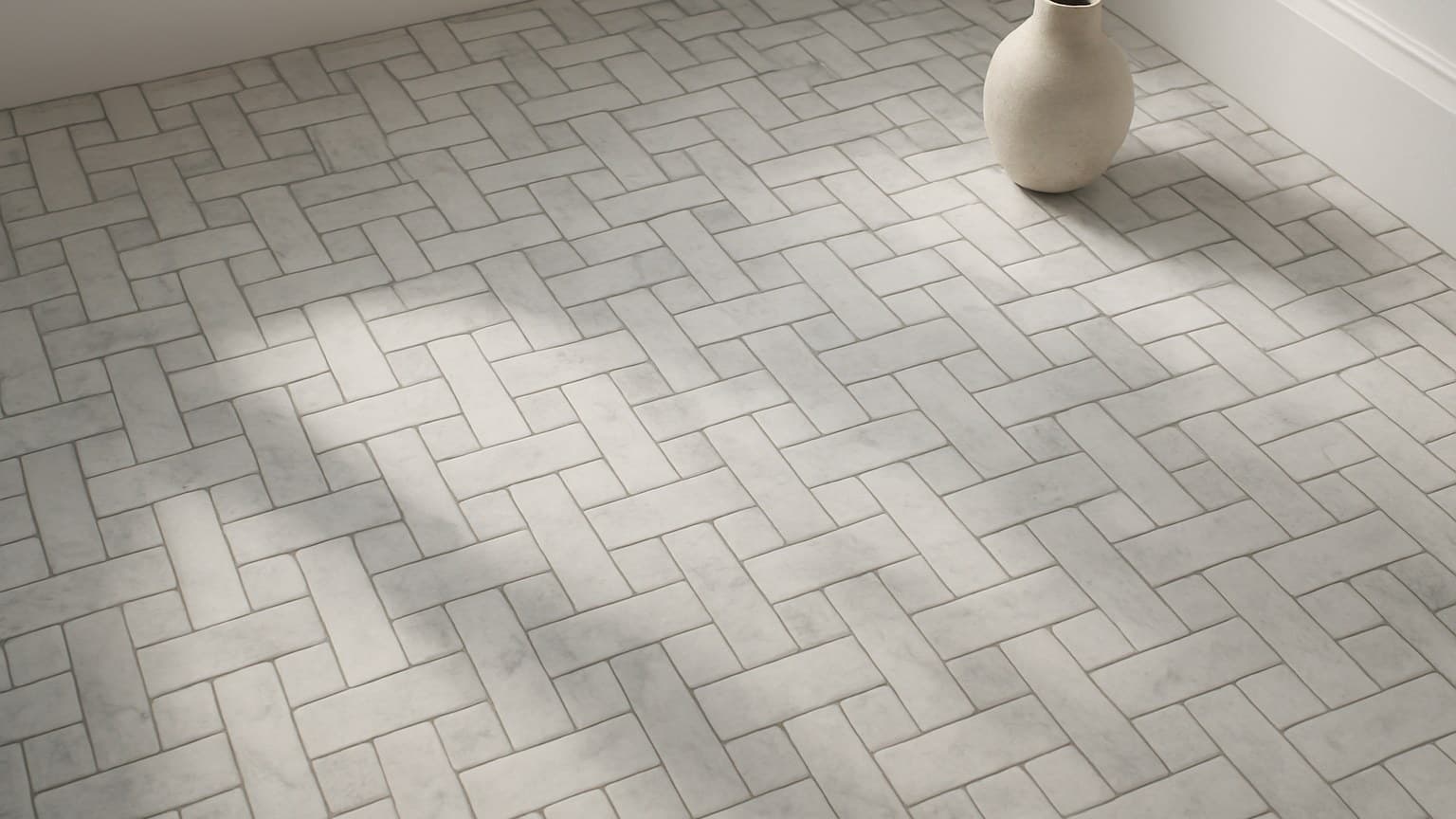
Two marble basketweave tile floors can cost the same per sheet and still look nothing alike, because three things no SKU page spells out decide the result: weave scale, finish, and marble grade. Get one wrong and the floor reads busy, slick, or just cheap. Each of those choices changes the room in a way you can't undo once it's grouted.
Key takeaways
- Weave scale is the single biggest looks decision: mini pieces (5/8"-1") read busy and shrink a room, while standard 1x2 or jumbo and 12x24 plank weaves calm a small bath down.
- Honed (matte) marble grips better and kills glare, which is why it wins on floors and in wet areas; polished is shiny but slicker when wet and shows every acid etch mark.
- Marble basketweave materials typically run about $8-18 per sq ft and sheeted-mosaic install labor about $10-18 per sq ft, higher than plain field tile; bathroom floors, showers, and stairs cost more than open rooms.
- Judge grade before you order: lay several sheets side by side for veining match, check edges for chips, and confirm the mesh backing holds every piece tight and flat.
- To order, divide floor area by coverage per sheet (about 0.96 sq ft for a 12x12) and add 10-15% waste, then round up to full boxes.
What Marble Basketweave Tile Is and Why Two Floors Look So Different
Marble basketweave tile is small marble pieces set in a woven over-under pattern, sold on mesh-backed sheets about 12x12 inches. The weave scale, the finish, and the grade of marble are what actually separate a floor that reads calm and expensive from one that reads busy and cheap. Everything else, grout color, sealing schedule, is detail you sort out once those three are locked in.
Think of weave scale the way you'd think of pattern scale on wallpaper. The same woven pattern reads tiny and busy with little pieces, or big and calm with large ones.
Marble is natural stone, so no two batches match exactly. Most basketweave sheets are white Carrara or Calacatta with gray veining, though you'll find grays and black accents too. If you're still weighing stone against everything else, it helps to see where marble sits in the broader picture of stone flooring types ranked by cost and upkeep.
Two sheets priced the same can differ in scale, finish, and quality of the cut. On paper they look identical. On the floor they finish completely differently.
Weave Scale: Mini vs Jumbo Against Your Room Size
Match the weave scale to the room. Mini pieces read busy and make a big floor look cluttered; larger pieces and jumbo weaves calm a small bathroom down with fewer grout lines.
The common sizes run like this. Mini uses 5/8" to 1" pieces. Standard uses 1"x2" bricks, the classic look most people picture. Jumbo or large pieces step it up, and 12x24 plank-style weaves make a bold, modern pattern. If a big plank weave is the direction you're leaning, the ordering and cost math for plank-format tile is worth a look before you commit. That same plank-length format is also exactly what gives convincing wood-look tile flooring its believable, board-like scale.
Large marble basketweave tile wins on open floors and bigger baths. Fewer, larger pieces cut down on grout lines and visual noise, so the floor feels like one surface instead of a thousand little chips.
Smaller scale means more grout lines, and more grout lines means more cleaning. That matters in a shower or a kitchen, where grout joints catch grime and never look as clean as the day you sealed them.
| Weave Scale | Effect | Best Room |
|---|---|---|
| Mini (5/8"-1" pieces) | Busy, lots of grout lines | Small accents, niches, feature strips |
| Standard (1"x2" bricks) | Classic, balanced look | Bathroom floors up to mid-size |
| Jumbo / large pieces | Calmer, fewer grout lines | Larger floors and open baths |
| 12x24 plank-style weave | Big, modern pattern | Large rooms and feature floors |
How weave scale changes the look and which room each one suits.
Honed vs Polished: Slip, Glare, and Upkeep
Honed marble is matte with more grip and no glare. Polished is shiny, slicker when wet, and shows every etch mark and scratch. For a floor, honed is the safer pick.
Honed marble basketweave tile belongs underfoot, especially in wet areas. Polished looks good on walls and backsplashes where you don't walk on it and water isn't pooling under your feet.
Both finishes need sealing because marble is porous. The difference is what they hide. Polished shows acid etching far more clearly, and etching comes from everyday stuff like citrus, wine, or the wrong cleaner. One splash of something acidic leaves a dull spot on polished marble that stands out across the room.
Glare is the other quiet problem. Polished marble bounces bathroom light around and can make a busy weave look even busier. Honed takes that glare out, so the pattern settles down.
| Finish | Grip | Glare | Etching | Best Use |
|---|---|---|---|---|
| Honed (matte) | Better underfoot | None | Hides it better | Floors, showers, wet areas |
| Polished (shiny) | Slicker when wet | Reflects light | Shows every mark | Walls, backsplash, dry low-traffic |
How the two finishes compare on grip, glare, etching, and where each belongs.
How to Judge Marble Grade Before You Order
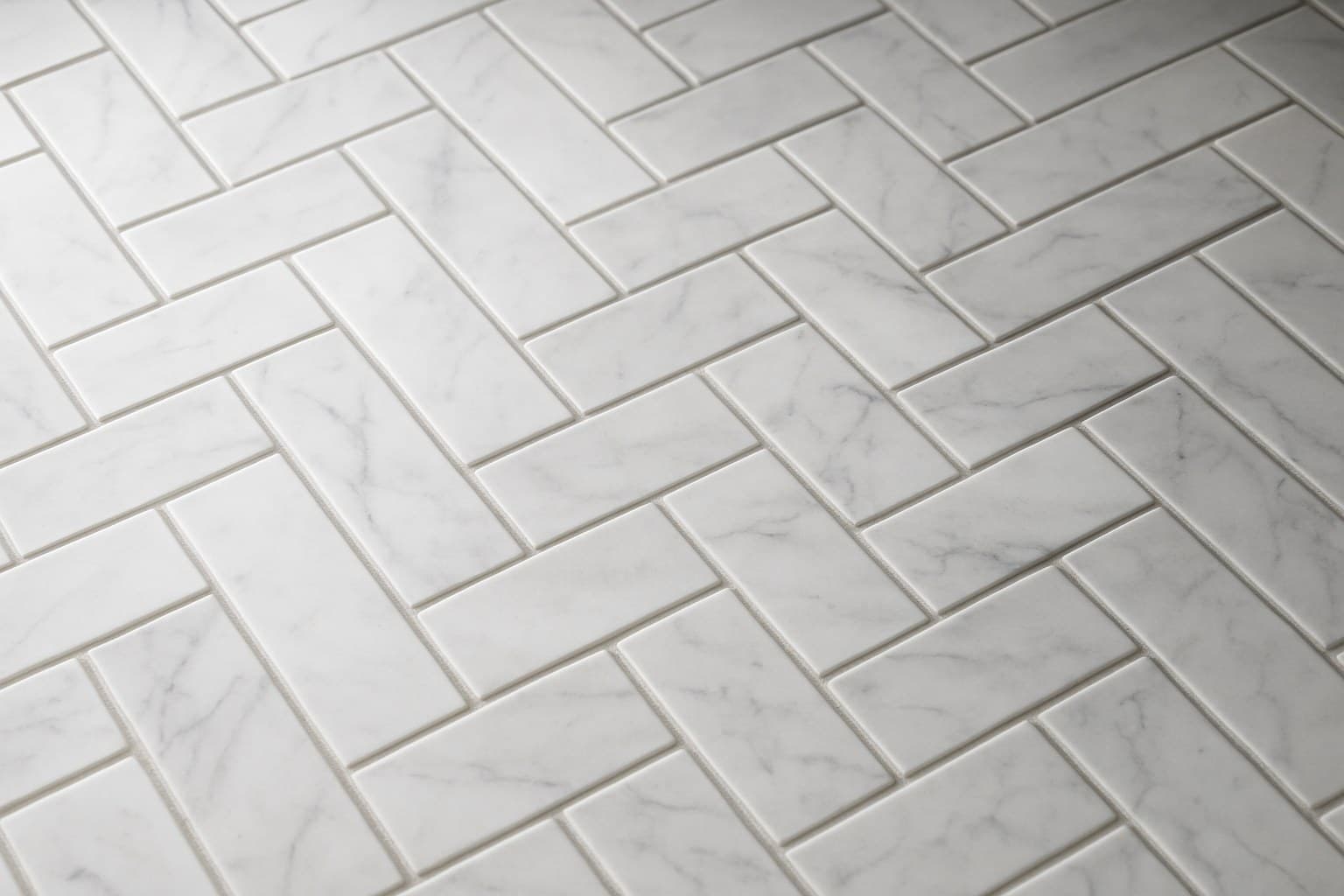
Judge grade by veining consistency sheet-to-sheet, chipped or rough edges, and backing quality, not by price alone. Two sheets at the same price can be very different stone.
Order a sample or ask to inspect several sheets together before the whole order ships. Lay three or four sheets side by side and see whether the veining matches or wanders. Run a finger along the edges to catch chips and rough cuts, and check that the mesh or dot backing holds every piece tight and flat. Confirm every box is the same dye-lot, the batch of stone cut and colored together at the quarry, so color and veining match, before anyone opens them, because mixing lots mid-floor shows.
That backing check matters more than people think. Loose, crooked, or poorly set pieces turn into uneven spots once they're down. That's lippage, where one edge sits higher than the next, and it catches your toe and looks sloppy under raking light.
Don't trust the name to do the work. Carrara quality varies a lot from one seller to the next. The same label is no guarantee of the same stone, so inspect what's actually in the box.
Carrara, Calacatta, and Black-and-White Options
Carrara is the soft, gray-veined classic and usually the cheapest of the bunch. Calacatta has bolder, more dramatic veining and costs more for it. Bardiglio is a gray marble that gives you a moodier, darker base, and Nero adds black dot accents into a white weave. If you want that same veined look spread across a bigger floor without marble's upkeep, limestone-look porcelain tile copies the veining in a tougher, more forgiving material.
Grout color changes everything with a basketweave. Gray grout hides dirt in all those joints and stays looking decent. Bright white grout looks crisp the day it's done, then shows every scuff and shadow. Pick the marble for the mood you want, then match the grout to how much upkeep you're actually willing to do.
Black-and-White Basketweave
The white marble with small black dots is the look most people mean by black-and-white basketweave. It's a timeless powder-room and small-bath pattern that reads vintage without trying too hard. The black dots pull your eye through the weave, so keep the scale smaller here and let the pattern do the talking in a tight space. Hexagon floor tile is the other small-scale geometric pattern worth weighing for that same powder room before you commit to the weave.
What It Costs and How Much to Order
Marble basketweave materials typically run roughly $8-18 per sq ft, and sheeted-mosaic install labor typically runs roughly $10-18 per sq ft, actual prices vary by retailer, region, and marble grade, so treat these as a rough starting range rather than a quote. That labor is higher than plain field tile (the big single tiles that cover open floor) because the sheets need careful alignment to keep the weave from drifting.
Rooms matter too. Bathroom floors, shower pans, and stairs cost more per foot than an open room because of all the cuts, the slope on a shower pan, and the tight corners. An open bedroom floor is the cheap version of this job; a small bath cut up with a toilet flange, a vanity, and a threshold is the expensive one.
Keeping the sheet grout lines straight across a floor is its own skill, not a given. The seams between sheets want to wander, and once the weave drifts it reads crooked. For most homeowners this is a job worth hiring out, a pro who sets mosaic sheets every week can hold that line, where a first-timer usually starts fighting drift by the third or fourth row. If you've set regular tile before and still want to try it, practice on a small powder room floor first, not a big open room, so any wander stays small and fixable.
Here's the order math. Take your floor area and divide by the coverage per sheet, which is roughly 0.96 sq ft for a 12x12 sheet (exact coverage can vary slightly by manufacturer). Add 10-15% for waste, then round up to full boxes. Below is that worked out for a small bathroom.
| Step | Value |
|---|---|
| Floor area | 40 sq ft |
| Coverage per 12x12 sheet | about 0.96 sq ft |
| Sheets before waste | 40 / 0.96 = ~42 sheets |
| Add 15% waste | 42 x 1.15 = ~48 sheets |
| Order | 48 sheets, rounded up to full boxes |
Worked order calculation for a 40 sq ft bathroom floor at 15% waste.
Material and labor cost ranges per square foot for marble basketweave, installed as sheeted mosaic.
Before any of that goes down, handle the two things the warranty quietly hinges on: a flat subfloor and a moisture check. Sheeted mosaic shows every dip as lippage, so you level the floor first and, in a wet room, test for moisture before you spread any thinset. Skip the flatness and the weave telegraphs every low spot right through the finished floor. If that subfloor is actually an old vinyl floor rather than bare substrate, those same flatness and moisture checks decide whether you can tile directly over existing vinyl flooring.
One more from the field. I grouted a marble floor once and let the customer walk it that same evening against my better judgment. The footprints pressed into the fresh joints, and I spent the next morning raking out and regrouting a path across the room. I hold the line now and keep everyone off a fresh grout floor, no matter how badly they want the room back.
Where It Belongs: Rooms and Uses
Marble basketweave earns its keep in bathrooms and powder rooms, where a small floor can carry a dressy pattern without going overboard. Honed finish on the floor, a smaller or standard weave in a tight space, and gray grout if you don't want to be scrubbing joints every week.
In a shower, go honed for grip and know you're signing up for regular sealing. Water and soap sit in the grout, and marble stays porous no matter how you finish it. On a backsplash or a wall, polished is fine because nobody's walking on it and etching is less of a risk up out of the splash zone.
I'd think twice about it in a busy kitchen. Dropped citrus, vinegar, and acidic cleaners etch marble, and a kitchen floor takes all of that plus heavy traffic. If you love the look but not the upkeep, a vinyl plank or LVP tile that mimics stone handles the same room with far less babysitting, for less money.
If you're carrying the floor up to a wood threshold, the transition has to let the wood side expand and contract. That detail follows the wood floor's requirements, not just what looks tidy, so leave the movement the wood needs at the joint.
For the part that trips up most people laying these sheets, the guide to installing mosaic tile without the grout lines going crooked walks through keeping the weave straight across a whole floor, which is the skill that separates a clean basketweave from a wavy one.