
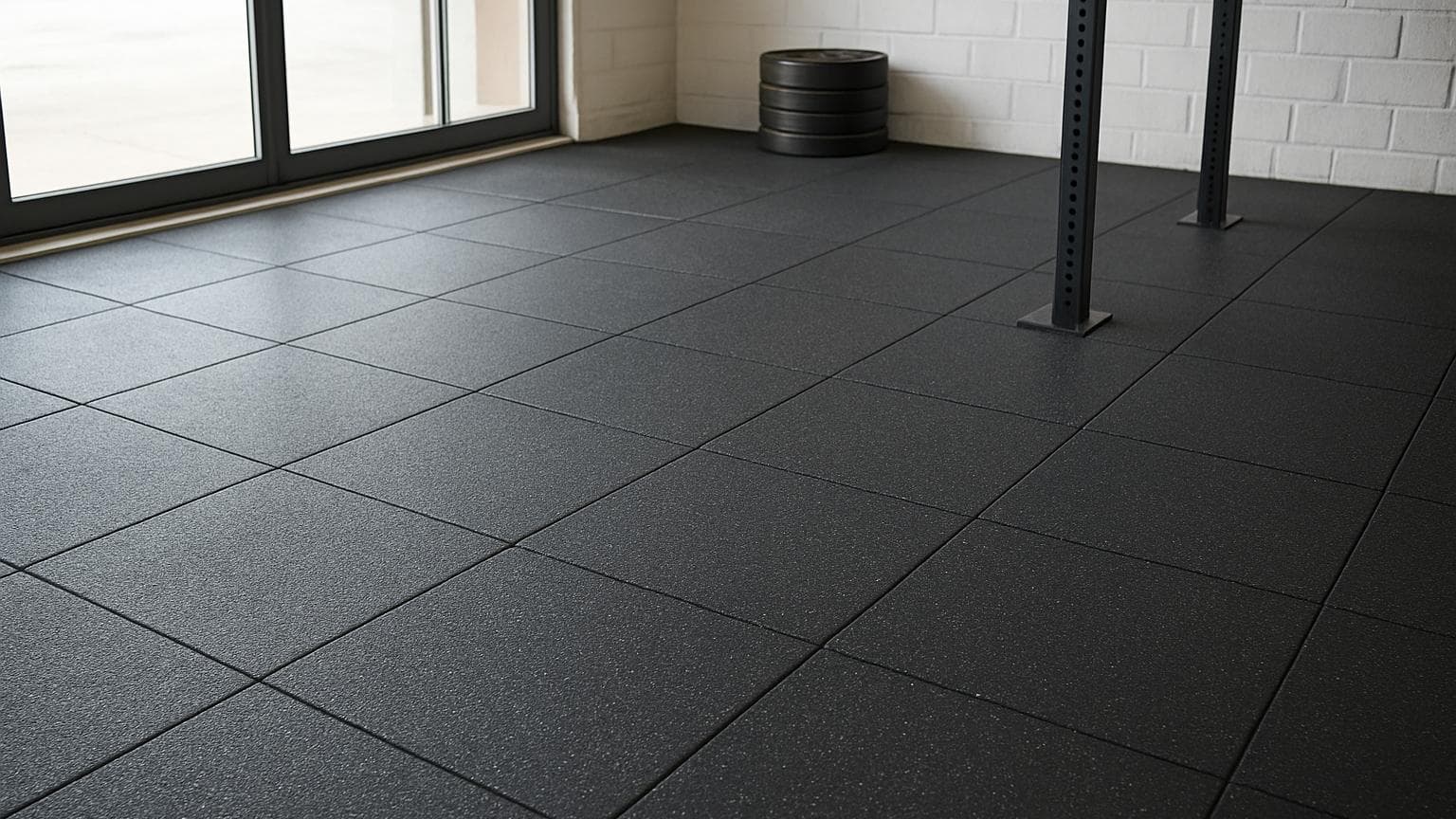
Ray in Tulsa called me back six months after I helped him spec his home-gym floor, kicking himself for buying thin closeout tiles because they looked good online. His squat rack punched straight through them inside a month. The fix isn't a fancier brand, it's matching the rubber's format, type, and thickness to what your room actually does to the floor, whether that's a gym, garage, or kennel.
Key takeaways
- Thickness follows impact, not looks: about 8mm handles foot traffic and light weights, while 3/8 inch and up is what you want where heavy weights get dropped.
- Interlocking tiles are a realistic DIY loose-lay job; glued-down rolls, ramps, and kennel seams are usually worth hiring out.
- Materials run roughly $1.50-$8 per square foot depending on type, and pro labor adds about $1-$3 on top; basement and stair jobs cost more than open rooms.
- Recycled crumb rubber (from old tires) can smell at first; the odor fades with ventilation, so plan to air the room out.
- The floor lasts only as long as the prep under it, so check the subfloor for flatness and moisture before anything goes down.
What Rubber Flooring Is (and What It's Made From)
Rubber flooring is rubber pressed into rolls, tiles, or mats. It's made either from recycled tire crumb (the trade calls this SBR, basically ground-up old tires) or from virgin rubber like EPDM (a weatherproof synthetic) and vulcanized rubber (heat-treated so it's denser and tighter).
People reach for it because it cushions your joints, shrugs off dropped weight, wipes clean, and protects whatever subfloor sits under it. That part matters more than folks think.
Plenty of it uses recycled content, and USA-made options are out there. But neither of those facts tells you whether a given roll fits your room. The right pick is driven by the space you're covering, not the brand on the box. That's what the rest of this guide sorts out.
Rolls, Tiles, or Mats: Pick the Format First
Before you think about rubber type or thickness, decide the format. It changes the whole job.
Rolls give you the fewest seams and cover big open floors fast, like a full gym. The catch is they're heavy and awkward, so you usually want a second set of hands or a pro to move and cut them.
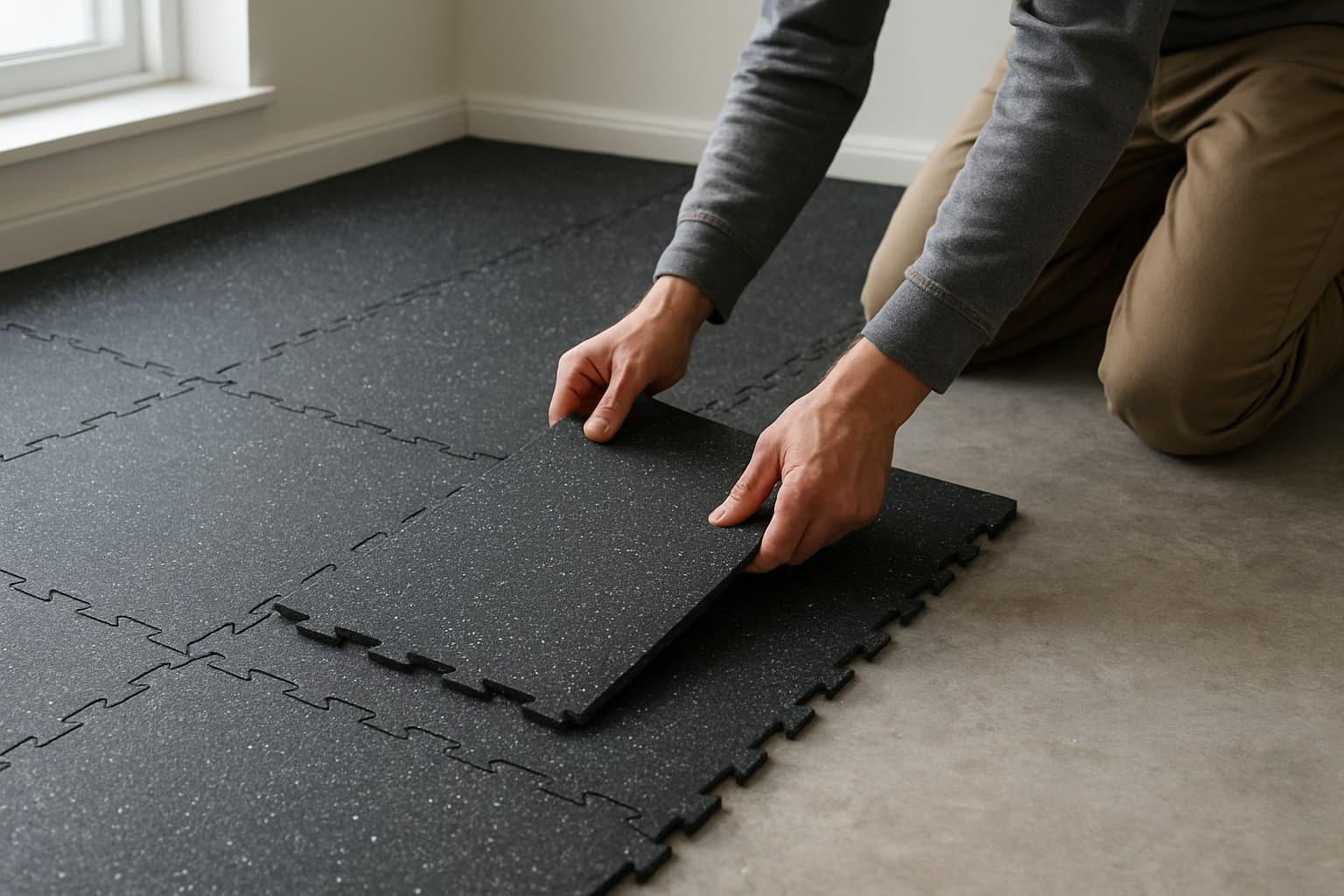
Interlocking tiles are the DIY-friendly pick. They loose-lay, meaning they just click together and sit on the floor with nothing gluing them down, and you can pull one up to swap it out. The trade-off is more seams.
Mats are for spot protection, like a slab under a squat rack or a machine. They loose-lay too and they're the cheapest way in.
Rubber also comes in a cleaner plank shape if you want something that reads more like real flooring; the rubber plank flooring guide digs into that format on its own.
EPDM, SBR, or Vulcanized: What the Rubber Type Changes
Here's the part vendors dance around. Recycled SBR (the tire crumb) is the cheapest, and it's genuinely fine for most gyms and garages. It just smells more at first.
Vulcanized rubber is denser with a tighter surface and less odor. It's worth paying up for in high-traffic or lower-smell rooms. EPDM is colorfast and handles sun and weather, which is why it tops playgrounds and outdoor surfaces. It's the priciest of the three.
| Type | Made from | Best for | Odor | Relative cost |
|---|---|---|---|---|
| Recycled SBR (crumb) | Ground-up old tires | Gyms, garages | Noticeable at first, airs out | Lowest |
| Vulcanized | Heat-treated rubber | High-traffic, lower-odor rooms | Low | Mid to high |
| EPDM | Virgin synthetic rubber | Playgrounds, outdoor, wet areas | Very low | Highest |
Source: the EPDM and recycled-rubber spec sheets I read before ordering for a job
How the three common rubber types compare on material, use, odor, and relative price.
For a home gym or garage, recycled SBR is all the room needs, and paying for EPDM there is wasted money. Save the upgrade for a room that's outdoors, wet, or one where you can't live with any break-in smell.
Match Your Space to the Right Setup
Match the space to its thickness, format, type, and install, and you buy once.
Thickness follows impact, not looks. Around 8mm handles foot traffic and light weights; 3/8 inch and up is what you want where heavy weights hit the floor.
| Space | Thickness | Format | Rubber type | Install |
|---|---|---|---|---|
| Home gym (free weights) | 3/8 in and up | Interlocking tiles | Recycled SBR | Loose-lay interlock |
| Home gym (cardio) | ~8 mm | Tiles or rolls | Recycled SBR | Loose-lay |
| Garage | 1/4 to 3/8 in | Coin tiles or rolls | Recycled or PVC-blend | Loose-lay or glue |
| Dog kennel / vet | 1/4 to 3/8 in | Rolls or tiles | EPDM or sealed recycled | Glue-down, seams sealed |
| Playground | 2 in and up | Tiles or poured | EPDM top layer | Glue or poured-in-place |
| Ramp (ADA, the Americans with Disabilities Act) | ~1/4 in | Textured rolls/tiles | High-grip recycled | Glue-down |
Each common space routed to the thickness, format, rubber type, and install method it calls for.
For a home gym, I steer people to thicker tiles under the squat-rack zone and thinner mat everywhere else. Paying for full thickness across the whole room is usually money you don't get back; the rubber flooring for home gym guide goes deeper on layout. For a garage, coin-pattern tiles or rolls handle traffic and spills well, and the rubber coin flooring guide covers that pattern.
One flag on basement gyms: a slab can feel bone-dry to your hand and still read damp on a moisture meter, the tool that measures how much water is in the concrete. Down there, moisture matters more than in an open room upstairs.
Installing It Without a Callback
Before any tile or roll goes down, check the subfloor for two things: flatness and moisture. On a home-gym job in Waukesha, the slab felt bone-dry to my hand but read wet on the moisture meter, so we held the install three extra days to let it dry before laying tile. Skip that check and you're gambling on edges that curl or seams that lift within a season.
On DIY versus hire, I'll be straight with you. Click-together interlocking tiles are realistic for most people. Glued rolls, ramps, and large open areas are usually worth hiring out, because a bad glue job or a wandering seam is hard to fix once it's set.
Loose-lay tiles just sit and lock together. Rolls and glued installs have their own prep, so the method drives how much work the whole thing really is. On kennel and vet floors, seal the seams so liquids can't creep underneath, and give recycled rubber time to air out before heavy use.
Odor, Slip, and Shock: The Specs Vendors Skip
Three things get glossed over in product listings, and they're the ones that decide whether you're happy a year later.
Odor: new recycled rubber smells, and how long it lasts depends on the product and your airflow, so ventilate the room. Look for low-VOC certifications like FloorScore or GREENGUARD (VOC just means the gases a material gives off as it sits).
Slip: for ramps and wet areas you want a textured surface with a high grip rating, and ADA ramps have their own traction rules you have to meet.
Shock: thickness drives how much impact the floor soaks up. That's exactly why playgrounds match thickness to fall height instead of to how it looks.
One bonus: rubber resists mold and mildew well, which is part of why it holds up in damp garages and basements where other floors sweat. When you shop, keep it simple: check for a low-VOC label, a grip rating on anything wet or sloped, thickness matched to the impact, and a plan to air out recycled rubber first.
What Rubber Flooring Actually Costs
Split it honestly. Materials run roughly $1.50-$8 per square foot depending on type, and pro labor adds about $1-$3 per square foot on top. Loose-lay tiles sit at the low end of labor; glue-down rolls, ramps, and basements push toward the high end because they take more prep. Basement and stair jobs cost more than an open room. These figures are general ballparks, not quotes, actual pricing varies by region, supplier, and project scope, so confirm current numbers with a supplier before budgeting.
| Type | Installed cost per sq ft (materials + labor) |
|---|---|
| Recycled rolls | $2.50-$7 |
| Interlocking tiles | $3-$8 |
| Coin/PVC tiles | $4-$9 |
| Vulcanized | $5-$10 |
| EPDM | $6-$11 |
Material cost per square foot by rubber type, shown as a low-to-high range; labor and prep are counted separately on top. Treat these as general estimates, they can vary by supplier, region, and season.
The cheapest way in is recycled rolls, loose-laid yourself, which skips the $1-$3 labor entirely. If you want the full labor picture with prep and premiums broken out, the rubber flooring installation cost guide is the useful next read, because it splits the job costs a materials table can't.