
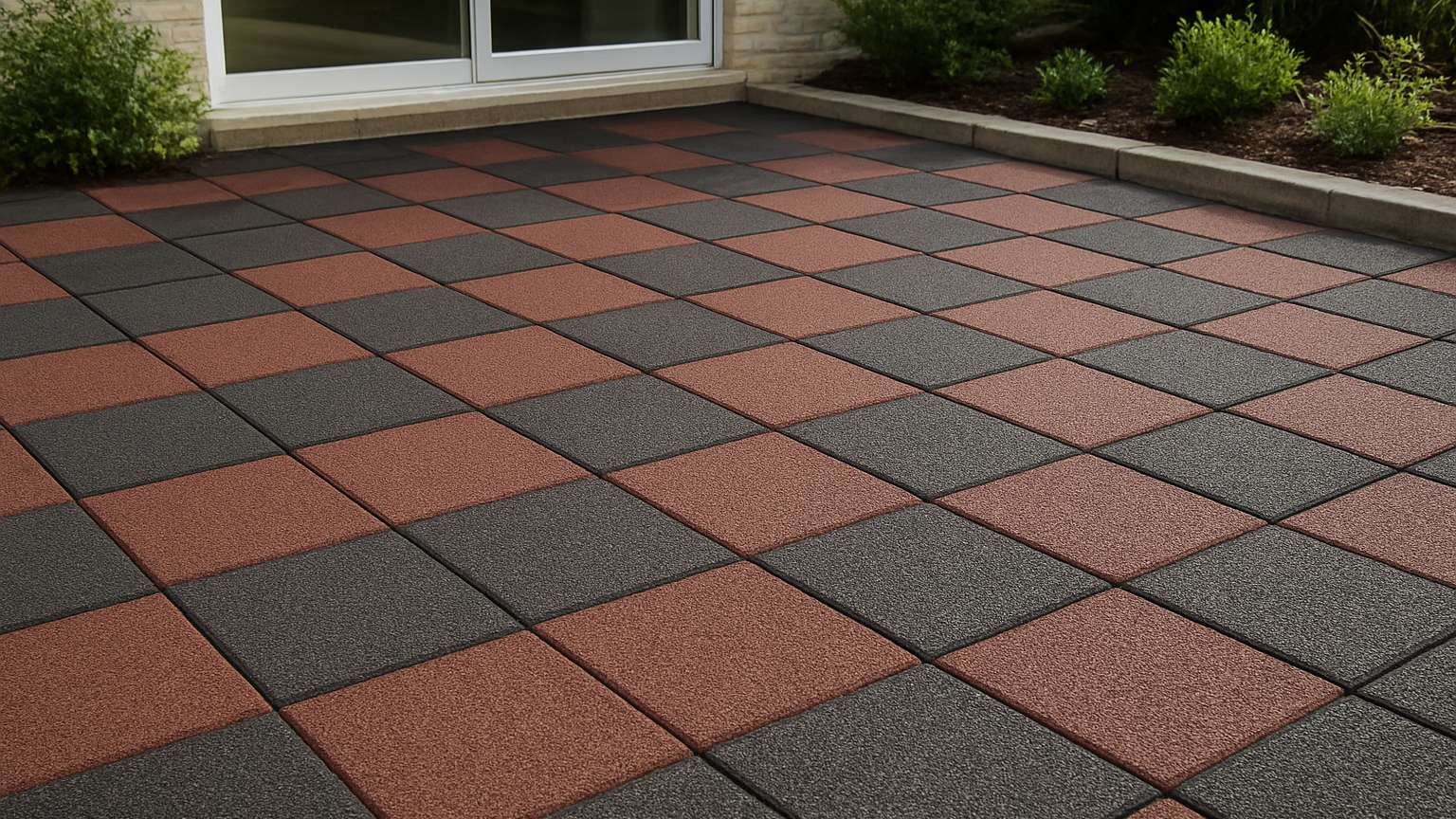
When Marissa in Boise called me about the rubber pavers she'd laid straight over her side yard, I already knew what I'd find before I got there: dirt that had swallowed half the path after one wet spring. Can you put rubber pavers directly on dirt? Sometimes, but the yards where it actually holds up are narrower than most sales blogs let on. The wrong soil or one freezing winter will heave a no-base install into a trip hazard fast, and I've pulled up enough of these jobs to know which ones make it.
Key takeaways
- Yes for a light-use decorative path over firm, sandy, well-draining soil in a mild climate; no for driveways, clay soil, or freeze-thaw regions without a gravel base.
- For a lasting install, dig out 4-6 inches, lay landscape fabric, then add and compact 2 inches of gravel in dry climates or 4 inches in wet or clay-heavy ground.
- Skipping compaction is the top reason pavers sink and pool water; one pass with a rented plate compactor (a machine that presses the base flat and tight) is not optional on a real base.
- Rough cost ranges: rubber pavers run about $5-$12 per sq ft in materials, gravel base $1-$3 per sq ft, and pro labor $3-$7 per sq ft.
- Landscape fabric under the base is the cheap step that stops weeds pushing through the seams, and both popular online guides leave it out.
The Short Answer: It Depends on Three Things
Yes, you can lay rubber pavers straight on dirt for a temporary or decorative path that only takes foot traffic, as long as the ground is firm, sandy, and drains well, and your winters stay mild. For a driveway, a patio you actually use, clay soil, or any region that freezes and thaws, the answer is no without a compacted gravel base underneath — and if a patio is specifically what you're building, the rubber tiles outdoor patio guide walks through what that base needs to look like.
Here's the conflict you'll run into online. Some paver retailers tell you to clear the ground and lay them down, no base needed — and if you're still at the stage of figuring out where to buy outdoor rubber tiles in the first place, you'll hear this advice a lot. An installer forum will tell you to dig out 4-6 inches and put gravel in. Both are right, for different yards.
Three things decide which camp you're in: the use case (a foot path versus something bearing a vehicle), the soil type (loose sandy dirt versus dense clay that holds water), and the climate (dry and mild versus wet or freezing). Get all three on the easy side and dirt is fine. Miss on any one and you're buying a base.
Just know the trade you're making. Going straight on dirt buys you a fast, cheap install in exchange for a shorter, less stable life. A gravel base is the opposite deal.
When Rubber Pavers Can Go Straight on Dirt (and When They Can't)
The clear win for straight-on-dirt is sandy, well-draining soil in a dry or mild climate under light foot traffic. That soil doesn't swell, doesn't trap water, and doesn't heave, so the pavers have nothing working against them from below.
Clay is the opposite. It holds water and swells as it takes on moisture, then shrinks as it dries, and that movement telegraphs right up through the pavers. Wet climates and freeze-thaw regions do the same through standing water and ice. All three need a gravel base no matter how light the use.
Use the table to find the row that matches your yard.
| Use case | Soil and climate | Straight on dirt? | What to do |
|---|---|---|---|
| Decorative light-foot path | Sandy, well-draining, mild/dry | Usually yes | Clear, level, lay; add fabric to block weeds |
| Patio or seating area | Clay soil or wet climate | No | Excavate and add 4 in compacted gravel |
| Play area | Mixed soil, mild climate | Borderline | 2-4 in gravel for a level, stable surface |
| Driveway or vehicle load | Any | No | Full excavation and 4-6 in compacted base |
| Any use | Freeze-thaw region | No | Gravel base for drainage to prevent heave |
When rubber pavers can sit on bare dirt versus when they need a compacted gravel base, sorted by use, soil, and climate.
One more distinction worth naming: interlocking rubber tiles are a different product from adhered pavers, and they can sit loose over flat, firm ground with far less fuss. If that's the route you're weighing, the outdoor interlocking rubber tile guide covers that install properly.
What Goes Wrong When You Skip the Base
Rubber pavers on bare dirt fail in four predictable ways, and none of them are really about the material, they're about what's underneath it.
Uneven sinking comes first. Dirt compresses at different rates across a yard, so some pavers settle into low spots while their neighbors stay put. Now you have lips and dips, which is a trip hazard.
Pooling water is next. Bare soil drains far slower than gravel, so rain sits on top instead of soaking through. The EPA's permeable pavement best-practice guidance calls for a well-draining base layer beneath permeable surfaces for exactly this reason, without one, water has nowhere to go but the surface.
Weeds push through the seams when there's no landscape fabric under the pavers. Roots find the gaps and grow straight up between them. Both of the popular online guides skip this step, and it's the cheapest one on the list.
Frost heave is the last one, and it's brutal in freeze-thaw country. Water in the soil freezes, expands, and lifts the edges. One or two winters of that and the run is buckled.
How to Prepare the Ground, Step by Step
I walked Marissa through this same five-step prep when we redid her side yard, and it's what keeps rubber pavers flat for good. Skip a step here and the ground underneath will show it within a year, no matter how good the pavers are.
Check flatness and drainage first. Look at where water goes now. Set a slight slope away from the house, about 1-2 percent, so runoff heads away from the foundation, not toward it.
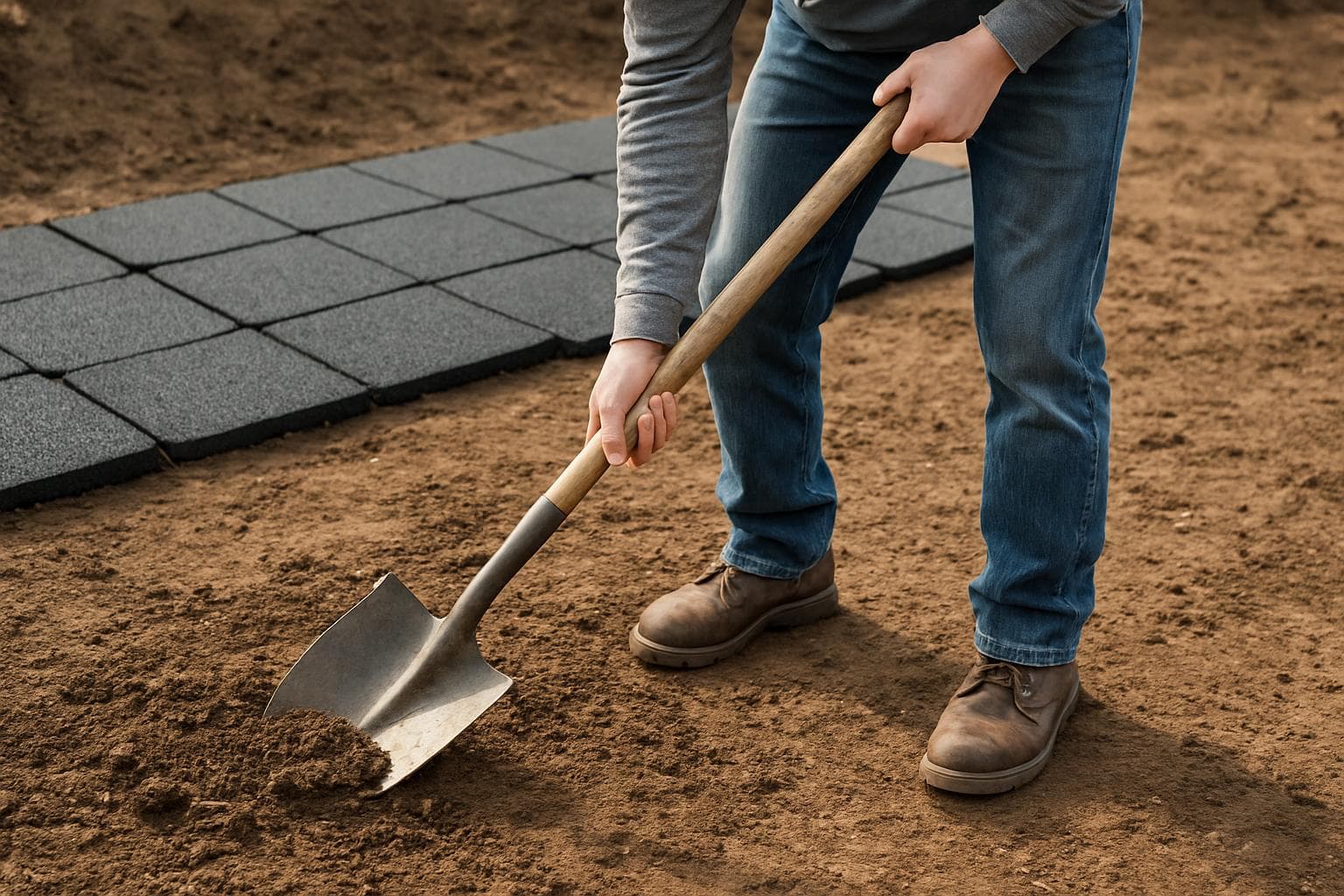
Excavate 4-6 inches. Pull out roots, rocks, and old debris, then rough-level the subgrade (the native ground you dug down to).
Lay landscape fabric, then gravel. The fabric blocks weeds and keeps your gravel from sinking into the soil below. Add crushed gravel on top, then screed it, which just means dragging a straight board across to level it out.
Compact it. Run a plate compactor over the base, a rented machine that presses the gravel flat and tight. This is the step people cut to save an afternoon, and it's the one that decides whether the surface stays level. On a real base it's not optional.
Set the pavers. Add a thin layer of bedding sand, about an inch, to fine-level each paver, then lay them and check level as you go. For a permanent, glued-down install, use polyurethane adhesive; for a removable path, you can leave them dry-set.
The finished layers, top to bottom, are the rubber paver, the bedding sand, the compacted gravel base, the landscape fabric, and the native soil you dug out and leveled. Each one has a job, and the base and fabric are the two most people leave out.
Gravel Base Depth by Climate and Soil
How deep you go depends on how much your ground and weather work against the pavers. Here are general starting depths to adjust for your specific site.
| Condition | Compacted gravel base |
|---|---|
| Dry, sandy soil (light use) | 2 in |
| Wet climate | 4 in |
| Clay soil | 4 in |
| Freeze-thaw or heavier load | 4-6 in |
Compacted gravel base depth by soil and climate; the last bar is a range, not a single figure.
One rule on the deeper bases: compact in layers, called lifts. A 6-inch base goes down as gravel added and tamped in two stages, not dumped all at once. Compact it in one thick pile and the bottom half never really tightens up.
Rubber Pavers vs. Stone and Brick Pavers
Rubber and stone answer different problems. Rubber is softer, slip-resistant, and quiets footsteps, and it rides over minor dips in the ground better than anything rigid. According to the EPA, rubber pavers are typically made from ground rubber recovered from scrap tires, so the material can flex and fade over years, and when it's new it carries an odor that airs out with time. Expect that smell up front so a normal thing doesn't turn into a complaint. Those same qualities carry indoors too — if you're weighing rubber flooring options for a home gym, the softness and slip resistance you get outside hold up just as well in the garage.
Stone and brick last decades and give you far more looks to choose from, but they're heavy, and they demand an exact, well-compacted base. A rigid paver over an uneven base cracks or rocks; rubber just flexes.
| Factor | Rubber | Stone or brick |
|---|---|---|
| Feel underfoot | Soft, slip-resistant, cushioned | Hard, can be slick when wet |
| Base demands | More forgiving over minor dips | Needs an exact compacted base |
| Lifespan | Long, but can fade or flex over years | Decades, very rigid |
| Weight and handling | Light, easy to cut and move | Heavy, harder to install |
| Made from | Recycled tire crumb rubber | Natural stone or fired clay |
How rubber pavers compare with stone and brick on feel, base needs, lifespan, weight, and material.
Base tolerance is the real split. Rubber forgives small imperfections, but it still needs drainage under it in wet or clay ground, so don't read "forgiving" as "no base ever." If you want a seamless surface instead of individual pavers, poured rubber is another route, and the rubber surfacing cost guide breaks down what that runs.
What It Costs and What You'll Need
Here's the short shopping list: rubber pavers, crushed gravel, landscape fabric, bedding sand, a level, a tamper or rented plate compactor, and polyurethane adhesive if you're gluing them down for good. If pavers aren't quite the format you need, rubber tiles for home guide covers interlocking options that skip most of this list entirely.
Now the money, split so you can see where it goes.
| Item | Cost range | Notes |
|---|---|---|
| Rubber pavers (materials) | $5-$12 per sq ft | Varies by thickness and brand |
| Gravel base (materials) | $1-$3 per sq ft | Depends on depth |
| Landscape fabric and bedding sand | under $1 per sq ft | The cheap step people skip |
| Pro labor | $3-$7 per sq ft | Higher for excavation-heavy or sloped sites |
Cost ranges for a rubber paver install, split into materials and labor; excavation-heavy or sloped yards land at the top of the labor range.
A straight, level path over sandy ground sits at the low end of labor. A sloped yard, a site with heavy excavation, or clay that needs a deeper base pushes toward the top. For a fuller breakdown by size and thickness, see how much rubber tiles cost.