
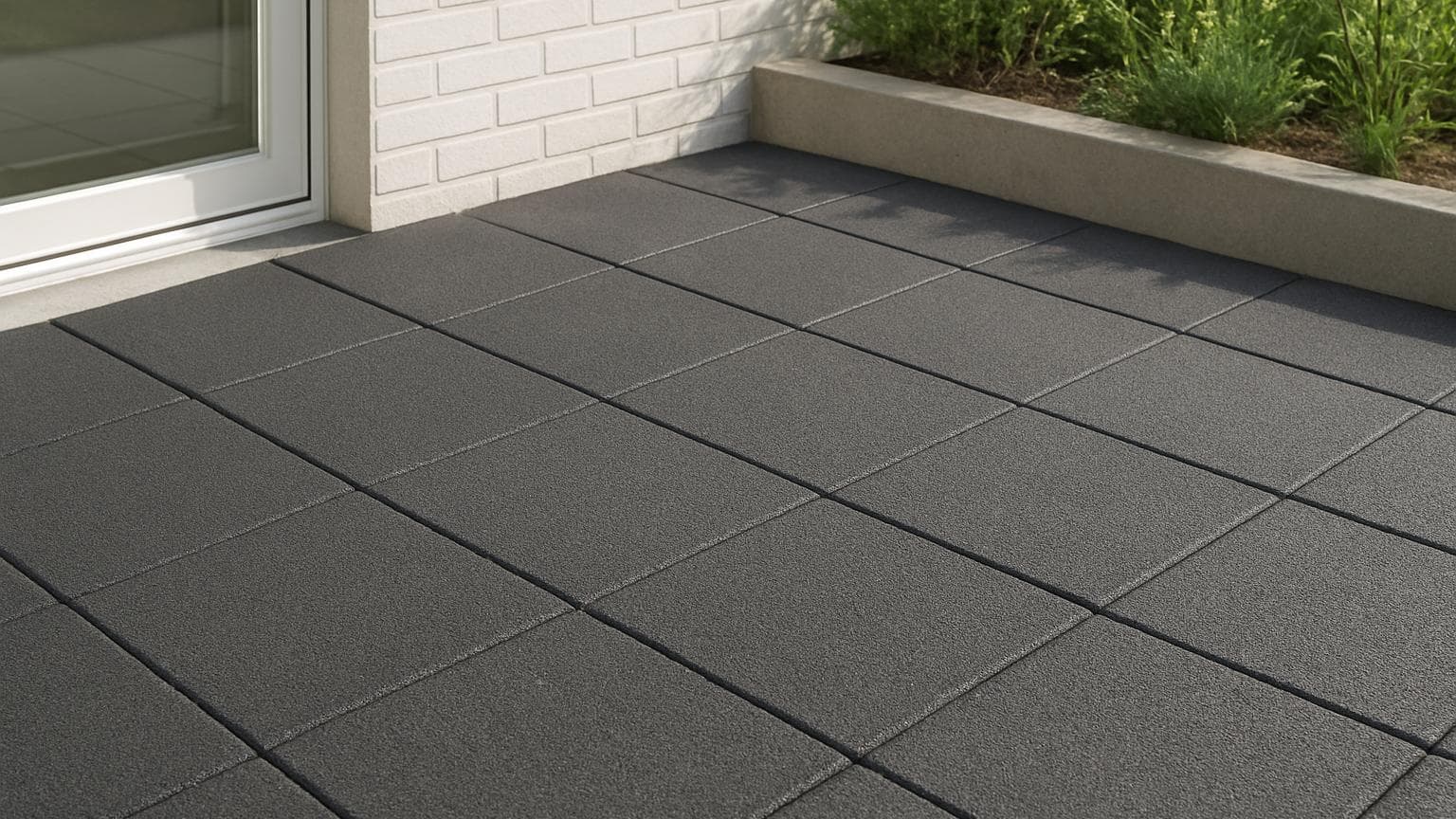
On a pool deck job in Mesa, Arizona, the homeowner had already ruined one set of tiles: garage-bought gym tiles that curled at the seams by the second summer, well short of the expected lifespan for rubber tiles outdoors. Yes, rubber tiles can work outside, but only if the rubber type is rated for sun and weather and you install it the right way for the spot. That mismatch, not the rubber itself, is the real problem behind almost every outdoor callback I see.
Key takeaways
- Yes, rubber tiles hold up outside if you match the material to your climate and install them right; cheap indoor gym tiles are not built for it.
- EPDM handles UV, color, and heat best for pool and play areas; black SBR is the cheapest but can reach 65-75C in direct sun, per Lanhe's figures.
- Glue down with polyurethane adhesive for permanent patios, pools, and windy or sloped spots; interlocking suits DIY or temporary layouts over flat, hard ground.
- Drainage decides cold-climate survival: ventilated tiles and a slightly sloped base let water escape so freeze-thaw doesn't lift or crack the tiles.
- Heavy-duty rubber floor tiles can contain up to 100% postconsumer recycled rubber, an EPA-recognized scrap-tire use.
Can Rubber Tiles Be Used Outside? The Short Answer
Yes, rubber tiles work outside, but only if two things line up: the rubber type is rated for sun and weather, and you fasten it down the right way for the spot.
By the next July, those garage-bought tiles had shrunk at the seams and gone soft underfoot. That is the number one callback I get on outdoor rubber: tiles built for a home gym rubber flooring setup pushed outside where they were never built to live. Buy tiles the maker rates for outdoor UV, and that failure mostly disappears.
The rest comes down to four things working together: heat, freeze-thaw, the rubber material itself, and how you install it. Get all four right and rubber is one of the toughest, grippiest outdoor surfaces you can lay.
Who it suits: patios, pool decks, play zones, walkways, and grill areas. Who should think twice: a shady corner that stays wet with no way to drain. Standing water with nowhere to go is the one condition rubber cannot beat. For indoor or covered spaces, the broader rubber tiles for home guide walks through those options separately.
How Outdoor Rubber Tiles Handle Rain, Snow, and Freeze-Thaw
Rubber shrugs off rain, snow, UV, ozone, and mold better than most surfaces you could put outdoors. The trouble is never water on top of the tile. It is water that gets trapped underneath and has nowhere to go.
Here is freeze-thaw in plain words. Water sits under or between tiles, then a cold night freezes it. Frozen water expands, and that pressure lifts tiles or splits the seam between them. When it thaws, the gap stays. Do that a few dozen times over a winter and a flat floor turns into a rippled one. So in cold climates, drainage matters more than any number on the tile's spec sheet.
That is why ventilated tiles exist. They have channels molded into the underside that raise the tile slightly and let water run out sideways instead of pooling. Pair them with a hard base that has a slight slope, and water leaves on its own.
Slip resistance holds up well when wet, because the textured top still grips even under a film of water. One rule I never break: a compacted, well-draining base beats bare ground every single time — if you're wondering whether rubber pavers can go directly on dirt, the honest answer is that skipping this base step is exactly how tiles fail. The base does half the work here, not the tile.
Do Outdoor Rubber Tiles Get Too Hot in the Sun?
Yes, dark rubber tiles get hot enough to matter. I've watched bare feet flinch off black SBR tiles, SBR is a black rubber made from recycled tires, the material most cheap tiles use, that can climb to scorching, sometimes-painful temperatures in full summer sun.
What drives the heat is color and material, not the brand on the box. Dark recycled rubber soaks up sun and holds it. Lighter EPDM, a colored synthetic rubber often used as the UV-resistant top layer, runs noticeably cooler under the same sky.
So treat heat as a placement decision, not a reason to skip rubber. A few practical moves:
- Use lighter EPDM for barefoot zones like pool decks and play areas.
- Keep dark tiles for shaded spots or shoe-only areas like a grill pad or shed floor.
- Before kids or pets step on it, press your hand flat on the surface for a few seconds. If you cannot hold it there, it is too hot for bare skin.
Placement handles the heat. You do not have to give up the material to avoid burned feet.
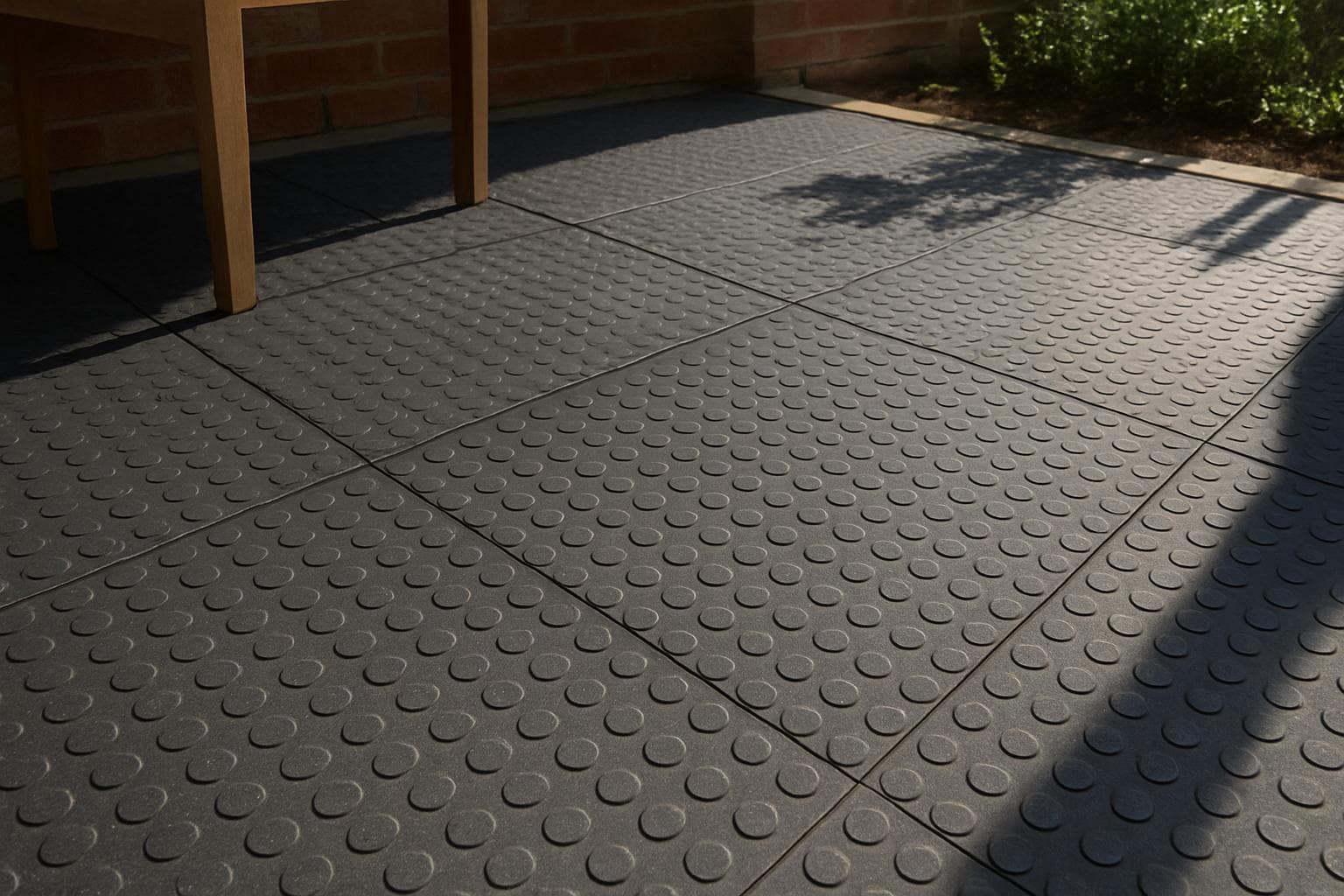
SBR vs EPDM vs Recycled Rubber Outside: The Suitability Matrix
First, the plain-word definitions, because vendors throw these around like everyone knows them. SBR is the black binder rubber made from recycled tires; it is what most cheap tiles are built from. EPDM is a colored synthetic rubber, usually used as the top layer where color and UV resistance matter. Recycled crumb is ground-up scrap tire, loose bits pressed into cushioning tiles.
The table below is the cross-reference I built from comparing these three materials job to job: each material against hot sun, wet and freeze conditions, and where it actually belongs outside.
| Material | In hot sun | Wet and freeze | Best outdoor use |
|---|---|---|---|
| EPDM (colored rubber) | Best; lighter colors run coolest and hold their color | Best; strong UV, ozone, and mold resistance | Pool decks, play areas, barefoot zones |
| SBR (black binder rubber) | Hottest; dark surface can get hot enough to burn bare feet in full sun | Good if drained, but can hold water | Shaded patios, gym sheds, walkways |
| Recycled crumb rubber | Hot in dark shades; choose shaded spots | Porous; needs drainage under it | Playground fall zones, high-traffic paths |
Source: pool-deck tile jobs I've surfaced, cross-checked against Lanhe's heat figures and EPA scrap-tire content notes
Outdoor suitability of the three common rubber tile materials by heat, moisture, and use case.
Short version: EPDM wins for UV, color hold, and cooler barefoot zones. SBR is the budget pick for shaded or shoe-only areas. Recycled crumb earns its spot under playground equipment where cushioning matters most.
One credibility note worth knowing: according to the U.S. EPA's Comprehensive Procurement Guidelines for construction products, heavy-duty rubber floor tiles can contain up to 100% postconsumer recycled rubber, and the agency lists rubber tiles among its recognized scrap-tire recycling applications. You are often walking on old tires that got a second life instead of a landfill.
Glue-Down vs Interlocking Outside
I get asked this on almost every outdoor bid, so here are the plain criteria I use instead of a flat rule. Glue down for anything permanent or exposed; interlock for anything temporary or DIY over flat, hard ground.
Glue down with a polyurethane adhesive on a flat, hard base when you are doing a permanent patio, a pool deck, a ramp, sloped ground, or a wind-exposed spot. Wind is the quiet killer here. A loose tile with an air gap under it can catch a gust and lift, and once one goes the rest follow.
Interlocking tiles suit DIY jobs, rentals, and temporary layouts over flat concrete. They are faster to lay and you can pull a single damaged tile and replace it, which is exactly why I like them for spaces that might change. The tradeoff is that they can shift or lift in wind, and they still need drainage underneath.
If the DIY interlocking route is where you are leaning, the deeper walk-through in Rubber Interlocking Tiles Outdoor covers base prep and layout in more detail than I can fit here.
Best Outdoor Uses: Patio, Deck, Pool, Playground, and Grill Areas
Rubber earns its keep in some spots more than others. Here is where it shines and where to watch out.
Playground fall zones. Thicker cushioning tiles rated to a fall-height standard like EN1177 (a European safety test for how far a child can fall onto a surface without serious injury). Recycled crumb rubber does this job well and is the reason it exists.
Pool decks. Lighter EPDM for cooler footing, good slip resistance when wet, and fast draining. This is the one place I always steer people away from black tiles.
Patios and decks. Rubber works great over flat concrete or a solid, stiff deck. A springy or bouncy deck is the problem; that flex telegraphs up through the tiles and pops the seams over time. Fix the deck's bounce first.
Grill and BBQ areas. Keep tiles clear of direct flame and hot grease. Both can stain or scorch rubber, and a grease burn does not come out. A pad under the grill or a shoe-only zone works fine.
Budget and lifespan swing a lot between EPDM and SBR, so it is worth running the numbers before you commit. The how much does rubber tile cost breakdown splits materials from labor so you can see where your money actually goes.