
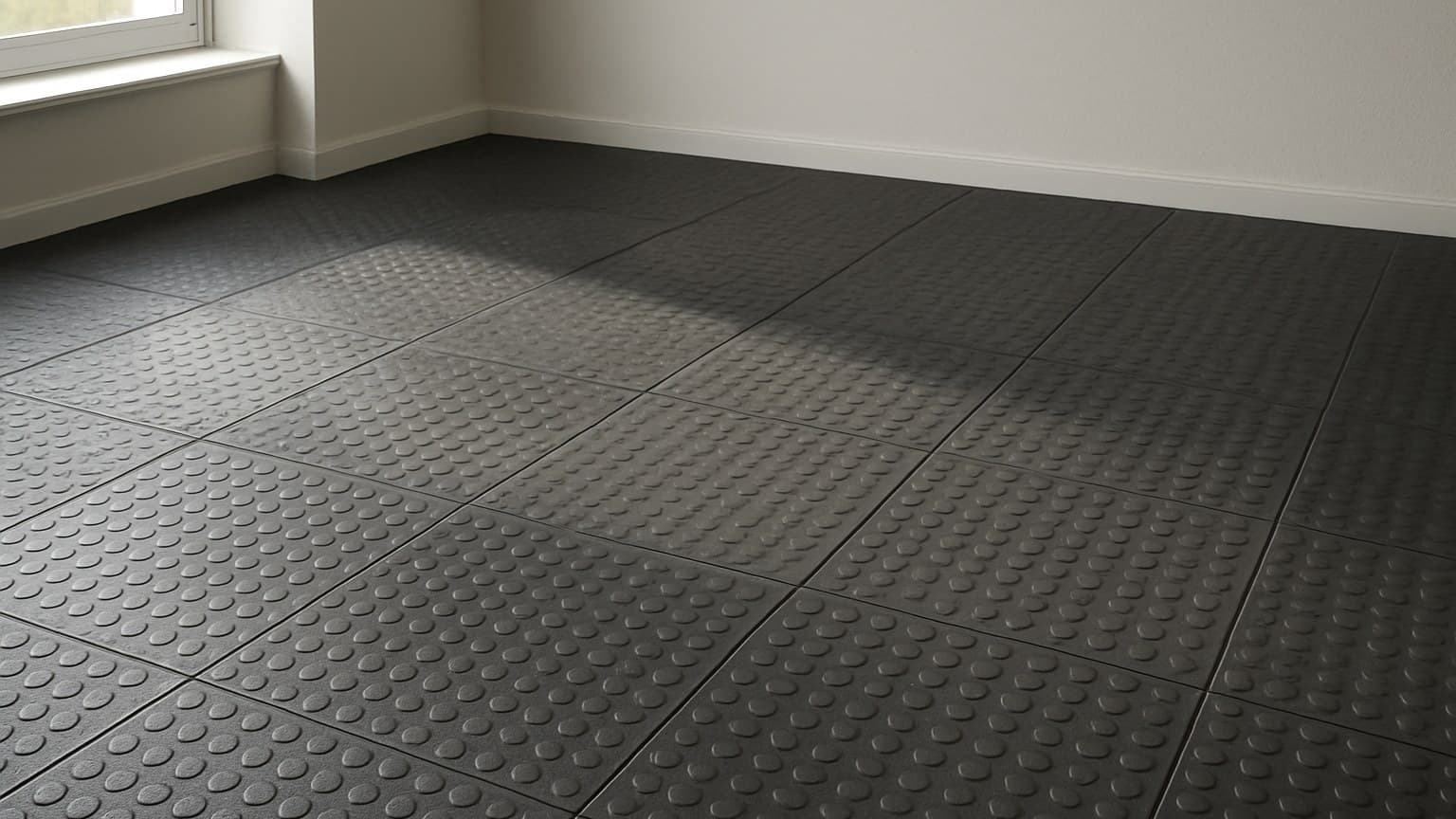
Most rubber tiles last 10 to 25 years. Light-traffic indoor floors in good shape can push toward 30, while tough outdoor or heavy-use setups often land closer to 8 to 12. Published numbers swing that wide because every source is measuring a different job, and the rest of this guide breaks down which range actually fits yours.
Key takeaways
- Most rubber tiles last 10-25 years; light-traffic indoor floors can reach 30, while heavy commercial and outdoor EPDM run closer to 8-15.
- Use drives the number: home gym 15-25 years, commercial gym 10-15, industrial 8-12, playground tiles about 10-15, outdoor EPDM 8-10.
- Poured-in-place rubber lasts 8-12 years (up to 15 with resealing every 3-5 years); interlocking tiles usually outlast it and let you swap one damaged tile.
- Install quality, thickness matched to load, and skipping harsh cleaners matter more to lifespan than the brand on the box.
- Warranties run 5-15 years, often shorter than real lifespan; replace when you see cracks, curling edges, lost cushion, or a fall-rating that no longer holds.
How Long Do Rubber Tiles Really Last?
Most rubber tiles last 10 to 25 years. Light-traffic indoor floors in good conditions can push toward 30, while tough outdoor or heavy-use setups run closer to 8 to 12.
The reason published numbers swing so wide is that each source measures a different job. A flooring supplier is picturing a quiet basement. A playground page is counting the day the surface stops passing a safety check, not the day the rubber wears out. A poured-rubber installer is watching the outdoor binder, the glue-like material that holds the rubber crumb together, break down under sun and rain. That same sun-and-rain exposure is the whole reason I get asked whether rubber tiles hold up outdoors at all.
So the real question isn't "how long," it's "how long for what." The same tile that gives you 20 years in a basement gym might give you 9 on a sun-baked patio. Here is how those claims line up side by side. If that patio is bare dirt rather than a slab, laying rubber pavers directly on dirt changes the lifespan math again.
| Source type | Claimed lifespan | Why it differs |
|---|---|---|
| Flooring supplier guides | 20-30 years | Counts light-traffic indoor floors in near-ideal conditions |
| Gym & commercial floor guides | 10-15 years | Heavy foot traffic and dropped weights speed up wear |
| Playground tile specialists | ~10 years | Replaced on safety limits, not because the rubber is gone |
| Poured-rubber installers | 8-12 years | Outdoor sun and weather break down the surface binder |
Lifespan claims compared by the kind of floor each source is actually counting.
Rubber Tile Lifespan by Use Case
Use drives the number more than anything printed on the box. Here are the ranges I'd trust: home gym 15 to 25 years, commercial gym 10 to 15, industrial 8 to 12, playground tiles about 10 to 15, and outdoor EPDM (ethylene propylene diene monomer) 8 to 10.
EPDM is the weather-grade colored rubber used outdoors and on playgrounds. It, along with recycled crumb-rubber tiles, the material the EPA has studied extensively as part of its recycled-tire-rubber research, fades and chalks under UV faster than an indoor floor does. That sun exposure is why the outdoor numbers sit at the bottom.
Don't read a short warranty as a short life. Product warranties commonly run 5 to 15 years, often shorter than the floor actually lasts. A maker warranting 10 years isn't telling you the tile dies at 10; they're telling you how long they'll stand behind it.
| Use case | Realistic lifespan |
|---|---|
| Outdoor EPDM | 8-10 years |
| Industrial | 8-12 years |
| Commercial gym | 10-15 years |
| Playground tiles | 10-15 years |
| Home gym | 15-25 years |
Realistic lifespan ranges by setting, in years.
Home gym life hangs on thickness matched to load. Thin mats under heavy dumbbells crack early; the right thickness for dropped weights can outlast the equipment. If that's your project, I walk through exact numbers in what thickness actually stops cracks and noise in a home gym.
Tiles vs. Poured-in-Place vs. Rolls: Which Lasts Longest?
Interlocking tiles usually last the longest and are the easiest to live with. Poured-in-place is the shortest-lived of the three, and glued rolls land in the middle. Picking the right one starts with matching the format to your space, which I walk through in choosing the right rubber flooring type.
Each format fails in its own spot. Tiles give out at seams and edges. Poured-in-place wears at the surface binder and needs resealing to keep going. Rolls have fewer seams but live or die on the adhesive bond under them.
That weak point decides your repair bill. A single damaged interlocking tile lifts out and a new one drops in. Poured rubber gets patched and resealed, and a glued roll is hard to patch cleanly, so you often redo a whole section. Over years, that difference changes the real cost, which I break down in how much rubber tiles cost.
On install: loose-lay interlocking tiles suit most DIYers, since they sit over a flat, hard surface. Poured-in-place and large glued roll jobs are worth hiring a pro for, where a bad bond or an uneven pour is expensive to fix later.
| Format | Typical lifespan | Weak point | Repair | Install |
|---|---|---|---|---|
| Interlocking tiles | 10-25 years | Seams and edges | Swap one tile | DIY-friendly |
| Poured-in-place | 8-12 years (15 with care) | Surface binder; needs resealing | Patch and reseal | Hire a pro |
| Rolls (glued) | 10-20 years (varies) | Adhesive bond; fewer seams | Hard to patch cleanly | Large jobs: hire out |
The three rubber formats compared by how long they last and how you fix them.
What Affects Lifespan and How to Make It Last
Install quality and maintenance move lifespan more than the brand on the box. After those come thickness (commonly 8mm to 15mm), climate and UV, then traffic.
Match thickness to load, not to price. Thicker rubber goes where weights drop; thinner is fine under foot traffic. Too thin under heavy use cracks early, and no warranty covers that.
Prep decides whether floating floors hit their full lifespan or fail early. Interlocking tiles need a flat, hard surface or the edges telegraph every bump. Glued tiles and rolls need a flat subfloor plus a moisture check first, because damp concrete lifts the bond and you'll never get the years you paid for.
For upkeep, keep it simple. Sweep, then damp-mop with plain water or a mild cleaner. Reseal poured and outdoor rubber every 3 to 5 years. Re-seat loose edge tiles before they curl.
And skip the harsh stuff. A Dayton homeowner once hit her rubber floor with a strong cleaner, figuring stronger meant cleaner. It left the surface tacky and streaked in a way plain water never fixed. I leave cleaning instructions in writing now, because the wrong bottle under the sink can undo a good install.
How to Tell When It's Time to Replace
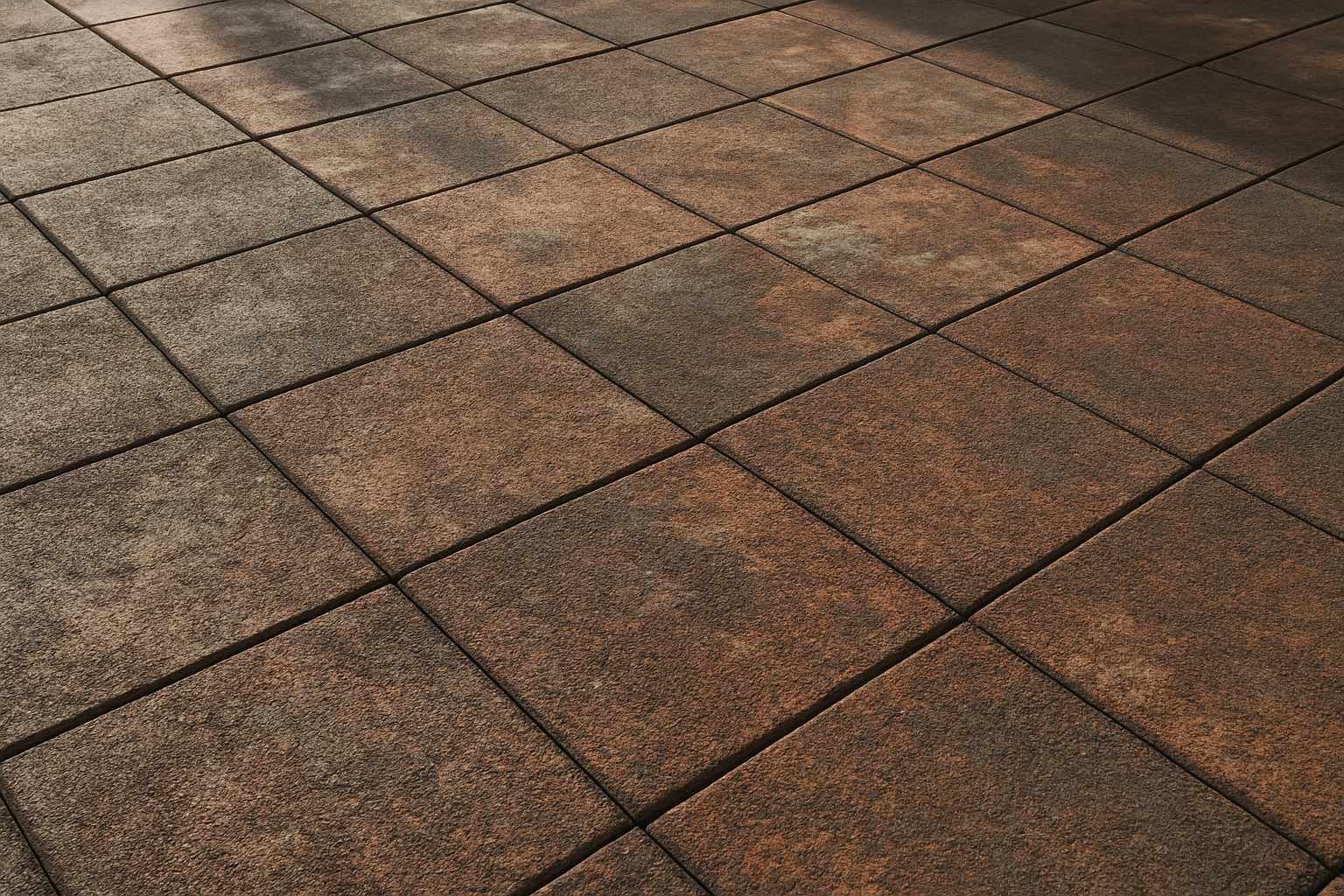
Replace, don't repair, when you see deep cracks, curling or shrinking edges, exposed subsurface, hardened spots that lost their cushion, or fading and odor that won't clear.
One early signal is normal, not a death sentence. New rubber, especially recycled crumb rubber, often smells at first and usually airs out within about 30 days. Odor on day three is not a reason to tear anything out.
For playground surfacing, there's a safety cue worth knowing. The U.S. Consumer Product Safety Commission (CPSC), the federal agency that studies and publishes guidance on playground surfacing, has flagged surfacing inspection and fall-height ratings as a key maintenance issue in its playground surfacing research. In practice, thicker tiles are generally rated for greater fall heights, commonly cited examples put roughly a 2.5-inch tile around 6 feet and a 4.25-inch tile around 8 feet, though exact ratings vary by product and should be confirmed against the manufacturer's certification. If the rating no longer holds for the equipment height, replace the surfacing even if the rubber looks fine.
It also helps to know what you're standing on. The U.S. Environmental Protection Agency (EPA), the federal environmental agency, has studied recycled tire rubber, which is what many of these tiles are made from, so you can weigh that before swapping them.
| Check | Verdict |
|---|---|
| Deep cracks, gaps, or exposed subsurface | Replace |
| Edges curling, shrinking, or lifting at seams | Re-seat or replace |
| Hard, flattened spots with no cushion left | Replace |
| Fall-height rating no longer met (2.5 in ~6 ft, 4.25 in ~8 ft) | Replace |
| Odor that won't clear after ~30 days of airing | Investigate |
Source: the CPSC Public Playground Safety Handbook's surfacing maintenance guidance
A quick replace-or-keep inspection, including the playground fall-height cue.
Sources
- CPSC Playground Surfacing Focus Group Report (2018)
- EPA GreenScapes: Recycled Rubber Materials Guidance
- EPA GreenScapes: Los Angeles Recycled Tire Reuse Case Study
- EPA Federal Research Action Plan on Recycled Tire Crumb Used on Playing Fields and Playgrounds (Status Report)
- CPSC Final Report: Screening-Level Risk Assessment of Playground Surfaces