
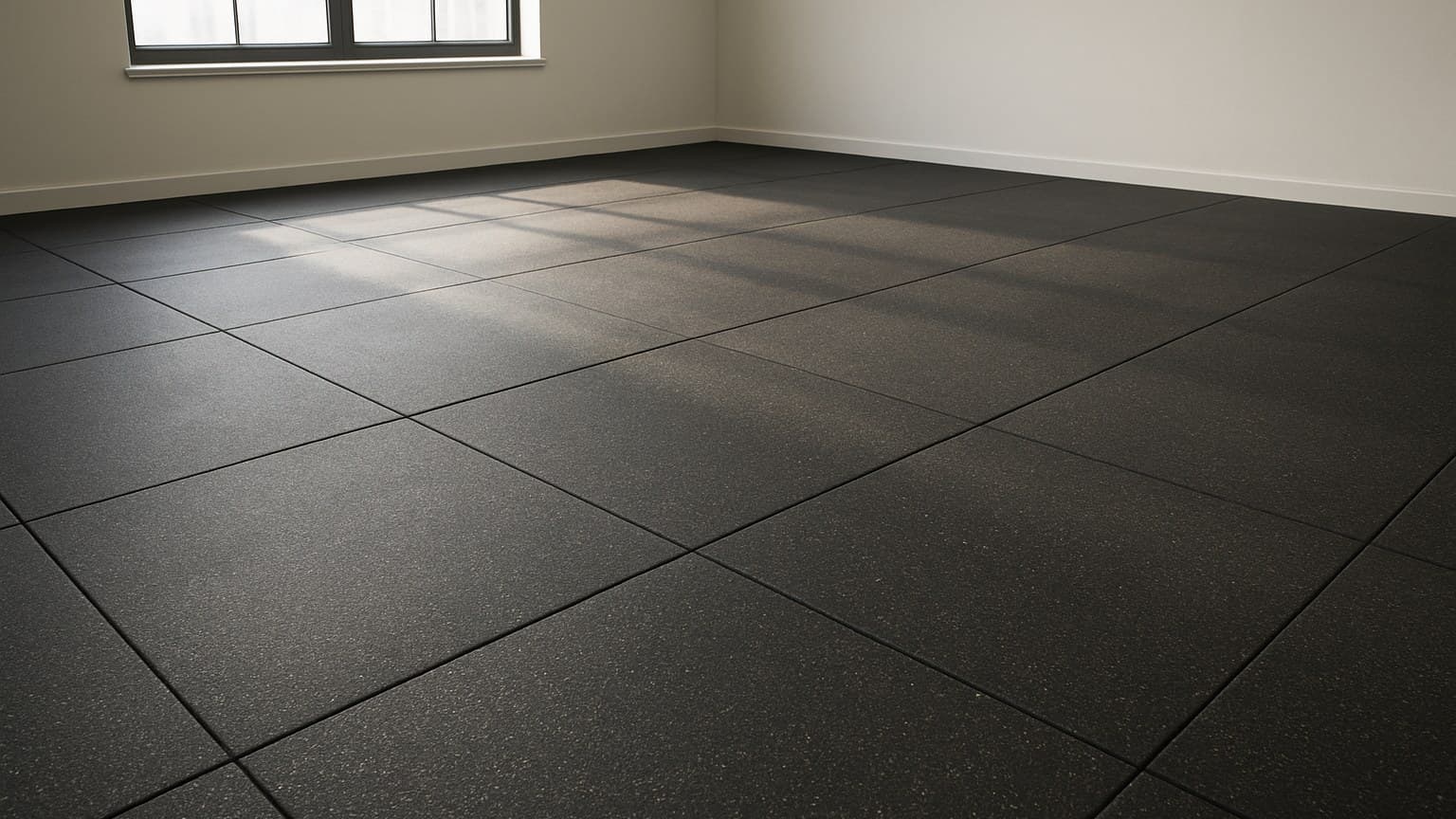
If you're deciding between rubber flooring options for spaces beyond the gym, my guide to rubber flooring types breaks down which one fits each room. But for most home gyms, the best rubber flooring is 3/4 inch interlocking rubber tiles. They lock together without glue, take a dropped barbell without cracking a slab, and let you swap out one damaged tile instead of tearing up the whole floor. Get the thickness or material wrong instead, and you either crack the slab underneath or pay for cushion you'll never use. Here's how I sort the real options on actual jobs.
Key takeaways
- For a barbell or CrossFit setup where you drop a loaded bar, go 3/4 inch thick rubber, or 3/4 inch over a plywood platform; 8mm rolls are plenty for cardio, yoga, and dumbbell work.
- Horse stall mats are the cheapest solid-rubber option at roughly $1.50-$2.50 per square foot in materials, but they are heavy, smell the strongest at first, and the edges don't lock together.
- In my plate-drop test, the 3/4 inch stall mat and 3/4 inch interlocking tile cut the impact noise the most; the 8mm roll helped some; foam puzzle mats barely changed it.
- Materials run about $0.50-$6 per square foot depending on type; loose-lay tiles and mats are DIY-friendly, while glue-down rolls and basement jobs cost more and are usually worth hiring out.
- Check subfloor flatness and moisture first, especially on a basement slab, before you lay a single mat.
What Rubber Flooring Actually Fixes in a Home Gym
Two fears drive most people to this search: cracking a concrete slab or denting a wood subfloor when a loaded barbell comes down, and the impact boom traveling to family upstairs or neighbors below. Rubber tackles both.
When you drop a plate, all that force wants to land on one small spot. A rubber mat spreads that load out so it doesn't punch through in one place. It also soaks up impact energy that would otherwise ring straight through the floor and into the structure.
Rubber grips so your rack and bench don't slide mid-set. It's easier on knees and joints. It protects your plates and bar too, not just the floor.
Here's the frame for everything below: the right choice is thickness plus material matched to three things, your workout type, your subfloor, and your budget. It isn't the priciest roll on the shelf.
The Five Options, Scored
There are five real choices for a home gym. I scored each one on how they held up across the gym floors I've laid, using a simple 1-to-5 scale.
| Option | Setup | Drop durability | First-week smell | Noise dampening | Versatility |
|---|---|---|---|---|---|
| Rubber rolls (8mm) | Hard (heavy, often glued) | 3/5 | Moderate | 3/5 | 4/5 |
| Interlocking tiles (3/4 in) | Easy (locks, loose-lay) | 5/5 | Moderate | 5/5 | 5/5 |
| Horse stall mats (3/4 in) | Hard (very heavy, cut to fit) | 5/5 | Strong | 5/5 | 3/5 |
| Puzzle foam mats | Very easy | 1/5 | Mild | 2/5 | 2/5 |
| Rubber planks / coin tiles | Moderate | 3/5 | Mild | 3/5 | 4/5 |
Source: how these held up across the home-gym floors I've laid
Setup, durability, smell, noise, and versatility scored 1 (worst) to 5 (best) for home-gym use.
Rubber rolls
Rolls give you the fewest seams, which looks clean and leaves fewer edges to trip on. The catch: an 8mm roll is thin, so it's built for cardio and light lifting, not dropped bars. Rolls are heavy to move and often need glue to stay put, which is where the job stops being a simple afternoon.
Interlocking rubber tiles
This is my go-to for most home gyms. The 3/4 inch tiles lock together like a jigsaw, sit loose on the floor, and you can cut the edge pieces with a sharp utility knife. They take a dropped bar, kill noise well, and if one tile gets chewed up you swap that one instead of the whole floor.
Horse stall mats
Stall mats are the cheapest solid rubber you can buy, and at 3/4 inch thick they shrug off heavy drops. But they are brutally heavy, often around 100 pounds each depending on size, so you'll want a second set of hands. The edges don't lock, so you get seams that can creep apart, and fresh ones carry the strongest tire smell of anything here.
Puzzle foam mats
These are the soft, colorful squares from the sporting goods aisle. They're easy to lay and fine under a yoga mat or a treadmill. Drop a loaded bar on them, though, and they crush flat and pass the shock straight through. I don't recommend them anywhere near a barbell.
Rubber planks and coin tiles
Rubber planks and coin-pattern tiles lean toward looks and lighter-duty rooms more than dropping loaded weight. They're a nice fit for a gym that doubles as a laundry, playroom, or garage corner. If you want the deeper dive, see my guides to rubber plank flooring and rubber coin flooring. And if the space also opens into a kitchen you're redoing, that's a whole different material question I cover in how to choose the right kitchen flooring.
How Thick Should You Go?
Match thickness to what you actually drop. That's the whole decision. Buy for your heaviest, from-height drop, not your average set.
| Workout type | Thickness | Why |
|---|---|---|
| Cardio, yoga, Peloton | 8mm roll or 1/4-3/8 in tile | No dropped weight; comfort and grip only |
| Dumbbells, bench, machines | 3/8-1/2 in | Absorbs occasional bumps and set-downs |
| Barbell / general lifting | 3/4 in | Handles a dropped loaded bar on a slab |
| CrossFit / Olympic overhead drops | 3/4 in over a plywood platform | Two layers spread the force from height |
Source: the drop loads that dented subfloors on my jobs versus the ones that didn't
Recommended thickness by what you drop, based on the loads that dented subfloors on my jobs versus the ones that didn't.
If you only spin, stretch, or lift light dumbbells, an 8mm roll or a thin tile is plenty. You're paying for grip and knee comfort, nothing more.
Start dropping a loaded bar and everything changes. On concrete, 3/4 inch is my floor, no thinner. For CrossFit or Olympic lifts where the bar comes down from overhead, put 3/4 inch rubber over a plywood platform. Two layers spread the force so a missed rep from height doesn't reach the slab.
EPDM vs SBR: Smell, Color, and Off-Gassing
Most gym rubber is one of two materials, and knowing which is which explains the smell and the price. SBR (styrene-butadiene rubber) is the plain black stuff, ground-up recycled tires, called crumb rubber. It's the cheapest and it's in most mats and rolls. EPDM (ethylene propylene diene monomer) is the colored fleck, a virgin rubber made in colors and mixed in for looks.
That fresh tire smell you get on day one is off-gassing, the odor releasing as the new rubber breathes. New SBR, and stall mats especially, hit hardest. How long it takes to fade varies by product and airflow, so plan to air the room out rather than expecting no smell at all.
Here's what I tell every customer before I leave: open the windows, run a fan, and give it a few days before you close the room up tight. The first thing people notice with new rubber is the smell. A surprise smell turns into an angry phone call; a smell you warned them about is just part of the job.
On color, the EPDM flecks cost more and look sharper, but they add zero durability. Pick your color percentage for how you want the room to look, not for performance.
My Drop Test: What Actually Cut the Noise
I dropped the same 45-pound plate from waist height onto four surfaces plus bare concrete, and ranked how loud each one hit. This is my own ear, not lab decibels I didn't measure, so treat it as a relative ranking.
| Surface | Relative loudness (1 quiet, 9 loudest) |
|---|---|
| 3/4 in interlocking tile | 3 |
| 3/4 in stall mat | 3 |
| 8mm rubber roll | 5 |
| Foam puzzle mat | 7 |
| Bare concrete | 9 |
Relative loudness I heard dropping the same 45-pound plate onto each surface, scored 1 (quiet) to 9 (loudest). Not to scale as lab data, just my ranking.
The pattern was clear. Bare concrete was the worst by far. The foam puzzle mat barely helped, because thin foam bottoms out and passes the shock straight through. The 8mm roll took the edge off. The 3/4 inch stall mat and 3/4 inch interlocking tile were the quietest by a wide margin, because thickness and dense solid rubber actually absorb the hit.
One honest flag for apartments: even the best mat cuts the airborne clap more than the thud through the structure. Downstairs neighbors will still feel heavy drops. A real fix is a lifting platform plus thick rubber, not rubber alone.
Subfloor Prep: Flatness and Moisture First
Before a single mat goes down, check two things: is the subfloor flat, and is it dry. On most floating floors, the finished job only lasts as long as the prep beneath it, and rubber is no exception.
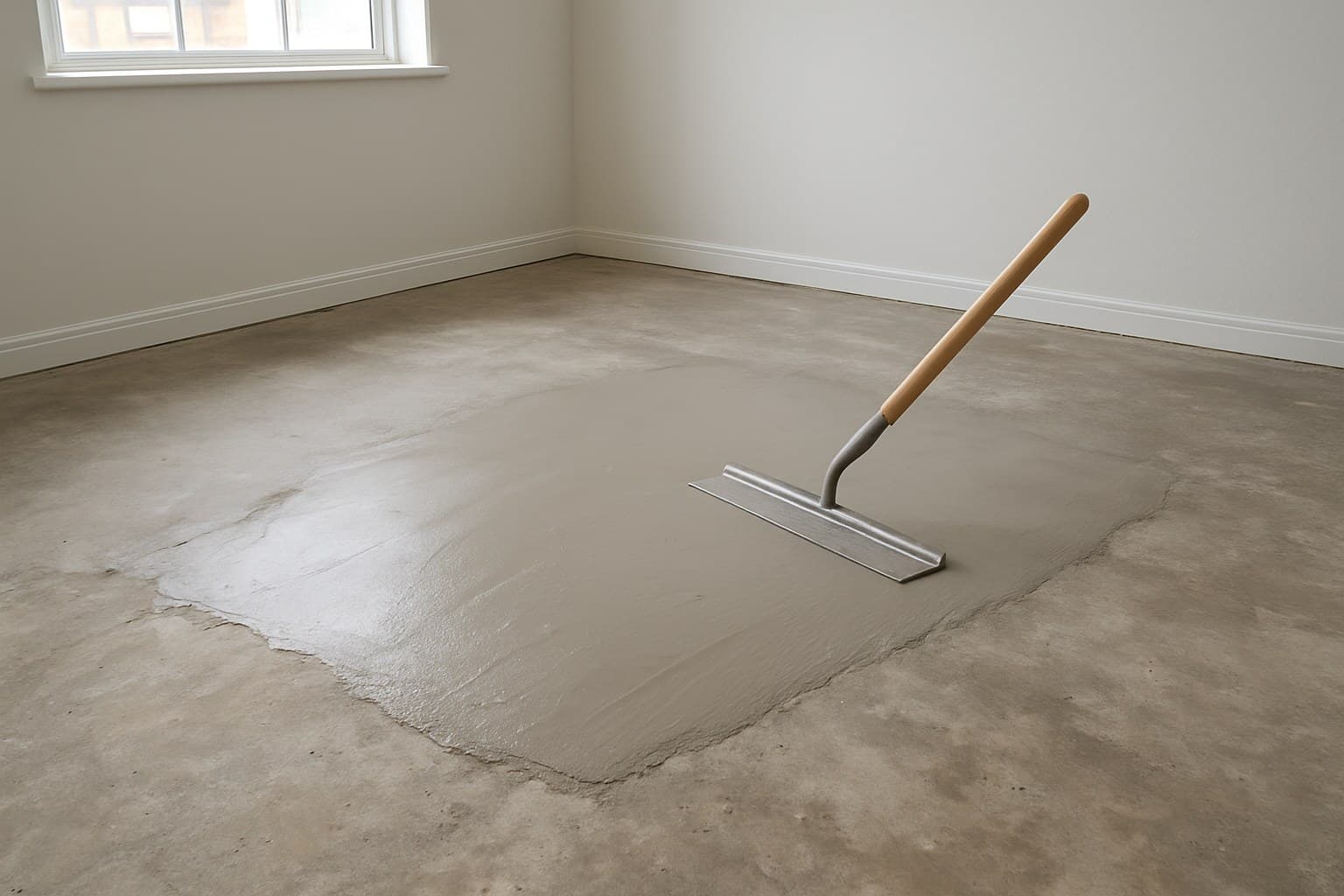
Interlocking tiles and loose stall mats can sit right on a flat, hard surface. But dips and humps telegraph through, and seams gap where the floor waves. Rolls and any glue-down install have their own prep needs, and glue on a dusty or damp slab lets go early.
Moisture is the one I never skip anymore, especially on a basement slab. Concrete can wick water up from the ground over time. Run a moisture meter (a handheld tool that reads how wet the slab is) before you commit. Rubber itself won't rot, but trapping moisture under a glued floor invites mold and adhesive failure.
I learned this the hard way on a basement gym job for Denise in Tulsa. She talked me out of running a moisture test to save the afternoon, and I let her skip it. The floor moved on her before the season was out, and I went back and relaid it on my own dime. That's the day I stopped treating the test as optional.
What It Costs: Materials vs Labor
Materials run roughly $0.50 to $6 per square foot depending on the type, though actual pricing varies by brand, retailer, and region. Labor only enters the picture if you hire out, and the glue-down jobs are where it adds up. Basement gyms cost more than an open room on grade, because of the moisture prep, and sometimes leveling, that a dry slab doesn't need.
| Option | Materials ($/sq ft) | Install if hired ($/sq ft) | DIY-friendly? |
|---|---|---|---|
| Puzzle foam mats | $0.50-$1.50 | Loose, rarely hired | Yes |
| Horse stall mats | $1.50-$2.50 | $1-$2 | Yes, but very heavy |
| Rubber rolls (8mm) | $1.50-$3 | $1.50-$3 (glue-down) | Usually hire |
| Interlocking tiles (3/4 in) | $2.50-$5 | $0.50-$1.50 | Yes |
| Rubber planks / coin tiles | $3-$6 | $1.50-$3 | Sometimes |
Source: material costs from home-gym floors I've priced
Typical US materials and hired-labor ranges by option; loose-lay products carry little or no labor cost if you do it yourself. Get a local quote before budgeting a specific project.
Here's the math on a real 400 square foot gym in 3/4 inch interlocking tiles. Materials at $2.50 to $5 per square foot run $1,000 to $2,000. Lay them yourself and labor is zero. Hire it and add roughly $200 to $600. Same room in glued rubber rolls, and the labor line alone can approach the material cost, because prep, adhesive, and rolling out heavy stock all take time.
DIY It or Hire It Out?
Click-together and loose-lay rubber is realistic for most people. Interlocking 3/4 inch tiles, puzzle mats, and stall mats all go down without special tools, though stall mats need muscle and a fresh utility blade to trim.
Where I'd hire out: glue-down rolls, anything on a basement slab that needs moisture correction, and big open rooms where a bad seam layout shows across the whole floor. Those are the jobs where a wrong move costs more than the labor you saved.
If you want the full breakdown before you buy, my rubber flooring installation cost guide walks the materials-versus-labor math out room by room so you can price your own space.