
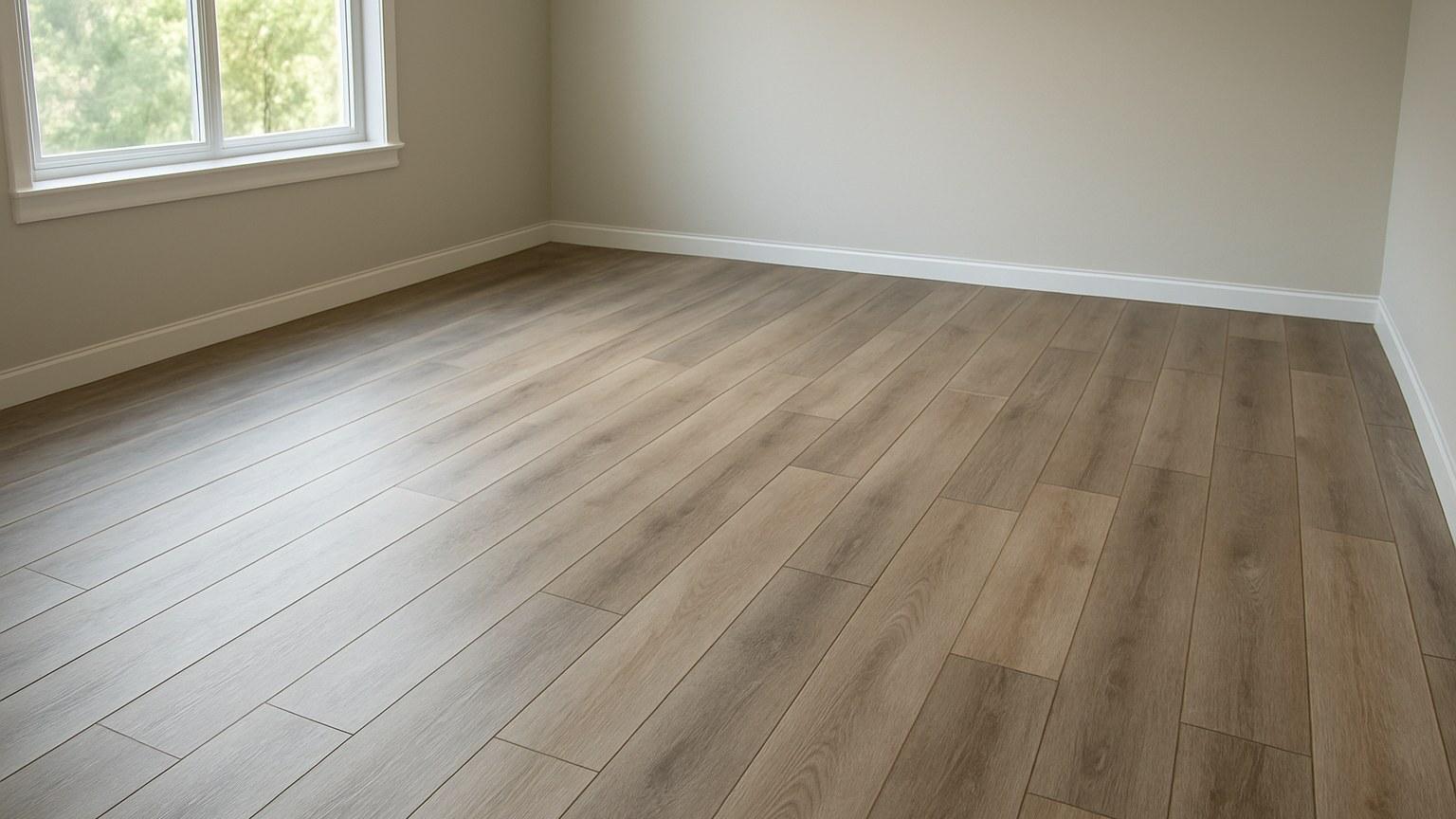
CoreLuxe flooring is LL Flooring's own SPC (stone plastic composite) rigid vinyl plank, and the right line depends on the room: Basic for quiet bedrooms, XD for kitchens and living rooms, Ultra for entries and heavy traffic. The trouble is all three look almost identical on the shelf, so people shop by price and end up with a bedroom-grade plank taking a beating in a busy kitchen. Getting a broader sense of what makes any vinyl floor last in a given room, whether it's a basement or a bedroom, helps explain why that mismatch matters so much, and it's covered well in this rundown of things that decide if vinyl flooring lasts 5 years or 20.
Key takeaways
- CoreLuxe is LL Flooring's own SPC (stone-plastic composite) rigid vinyl plank, sold through LL Flooring, not a third-party brand and not stocked at Home Depot or Lowe's.
- Basic suits low-traffic bedrooms and closets; XD and Ultra, with thicker wear layers, are the ones for kitchens, entries, and busy rooms.
- Pro install runs about $3.50-$6 per sq ft for standard, $4.50-$7.50 for XD, and $5.50-$8.50 for Ultra (dgfloors.com), on top of the plank cost; basements and stairs cost more.
- Flooring Clarity lists a 30-year residential warranty on CoreLuxe and 50 years on CoreLuxe XD.
- The SPC core is waterproof, but the click seams and perimeter are only water-resistant, so water getting under a floating floor is the real failure point.
What CoreLuxe Rigid Vinyl Plank Is, and Who Makes It
CoreLuxe is the house brand of LL Flooring, the company that used to be called Lumber Liquidators. It's an SPC rigid vinyl plank sold only through LL Flooring. You won't find it on the racks at Home Depot or Lowe's, and that matters later when we talk about where to buy and how much to trust the warranty. Knowing which retailers consistently deliver on price, selection, and service makes it worth comparing LL Flooring against the best places to buy vinyl flooring before you commit to a line.
SPC stands for stone-plastic composite. In plain terms, the core of the plank is a dense, stone-based mix that stays stiff and flat. That stiffness is the whole point. It lets the plank bridge over a subfloor that isn't perfectly smooth without flexing into every little dip, which is what a thin, bendy glue-down vinyl would do.
The other rigid-core type you'll see is WPC, wood-plastic composite. WPC runs a little softer and warmer underfoot, but it dents easier under a heavy chair leg or a dropped pan. SPC trades some of that softness for a harder, more dent-resistant body.
CoreLuxe carries a couple of certifications worth knowing. FloorScore is an indoor-air-quality test that checks how much chemical off-gassing a product gives off, and Greenguard tests the same kind of thing. CoreLuxe also lists as phthalate-free, meaning it leaves out a class of plastic softeners some shoppers want to avoid.
People land on CoreLuxe for one reason: it fakes a wood floor convincingly. It comes in oak, hickory, and walnut looks, in both straight plank and herringbone, for a fraction of what real hardwood costs to buy and keep up.
CoreLuxe Basic vs XD vs Ultra: Which Line Belongs in Your Room
Match the line to the traffic. Basic belongs in low-traffic bedrooms and closets. XD is the one for kitchens, hallways, and living rooms. Ultra, with the thickest wear layer, is built for entries, mudrooms, and homes with pets and heavy foot traffic.
The number that separates these lines is the wear layer, measured in mils. The wear layer is the clear top skin that takes all the scratching and scuffing. A thicker wear layer means more scratch and scuff tolerance. It doesn't make the plank more waterproof, so don't read a fat wear layer as a reason to skip moisture prep.
| Line | Wear layer | Residential warranty | Best room | Install |
|---|---|---|---|---|
| Basic | Thinner (around 6 mil) | 30-year residential | Bedrooms, closets, low-traffic rooms | Floating click-lock |
| XD | Thicker (around 12 mil) | 50-year residential | Kitchens, hallways, living rooms | Floating click-lock |
| Ultra | Thickest (around 20 mil) | Confirm on the product sheet | Entries, mudrooms, high-traffic, pets | Floating click-lock |
How CoreLuxe's three lines line up on wear layer, warranty, best room, and install method. Flooring Clarity lists the 30-year residential warranty on CoreLuxe and 50 years on CoreLuxe XD; confirm Ultra's term on its own product sheet.
Thicker lines usually come with better embossed-in-register texture too. That's the grain you feel under your fingers lining up with the grain you see printed, instead of a random stamped pattern. It's a big part of why Ultra reads as real wood from across the room and Basic reads as fine but a little flatter.
One more thing on format: herringbone costs more per square foot than straight plank and installs differently, with more cuts and a slower layout. Budget and plan for that if you want the pattern.
What CoreLuxe Costs: Materials, Labor, and a Worked Example
The plank price is whatever you pick off LL Flooring's shelf, and the install is a separate line on top. According to dgfloors.com's CoreLuxe installation estimate, pro install runs about $3.50-$6.00 per square foot for standard CoreLuxe, $4.50-$7.50 for XD, and $5.50-$8.50 for Ultra. Simpler floating jobs can come in lower, around $1.50-$3 per square foot per dgfloors.com, up to $2-$5 per flooringclarity.com.
| Line | Labor (per sq ft) |
|---|---|
| CoreLuxe standard | $3.50-$6.00 |
| CoreLuxe XD | $4.50-$7.50 |
| CoreLuxe Ultra | $5.50-$8.50 |
Source: dgfloors.com's CoreLuxe installation estimate
Here's the math on a real room. Say you're doing a 300 square foot kitchen in CoreLuxe XD. Labor alone runs 300 square feet times $4.50 to $7.50, which comes out to $1,350-$2,250. Then you stack the plank cost on top of that, whatever the sticker says on the style you picked.
The split is simple to keep straight: the labor figure above is the sourced range, and the plank price is the part that swings. It moves with the line, the style, and whatever LL Flooring has on sale that week, so confirm the sticker and add it to the labor. If you're covering a big footprint, it's worth pricing wholesale and bulk LVP (luxury vinyl plank) options against the retail sticker before you commit.
Two things cost more than an open room. Basements add moisture prep, and stairs add cuts, transitions, and a per-step charge, so a staircase in CoreLuxe adds up fast even though the plank is cheap. A confident DIYer doing a floating click-lock room skips the whole labor line, and that's where the real savings live.
Installing CoreLuxe: Click-Lock vs Glue-Down, and DIY vs Hire
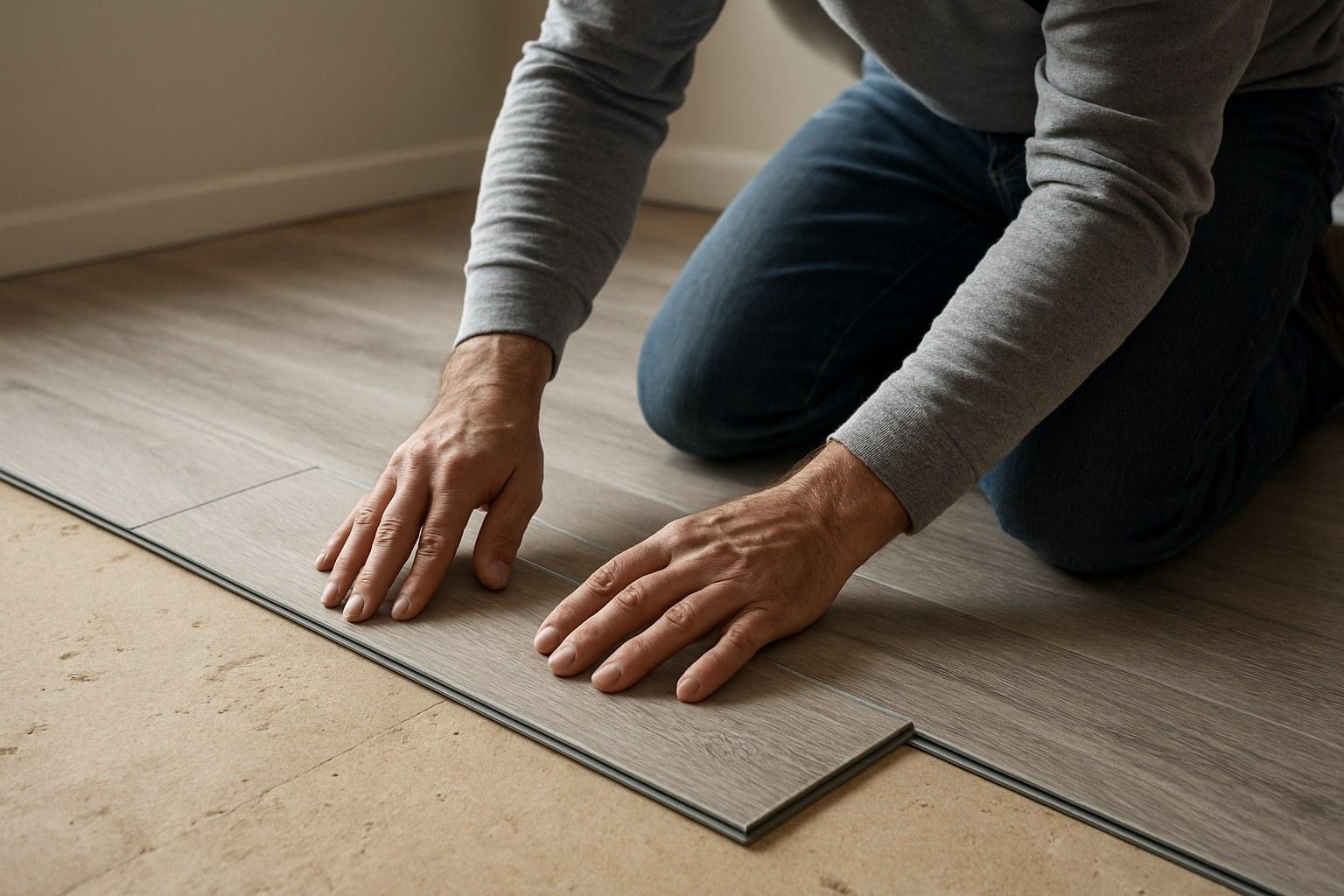
Most CoreLuxe is floating click-lock, which a careful DIYer can handle in a square bedroom or living room over a weekend. Glue-down, stairs, and big open-plan runs where the floor crosses from one room into another with a moisture transition are where paying an installer usually pays off.
Before any plank goes down, deal with the subfloor. It has to be flat, which you check by sliding a long straightedge across it and watching for gaps underneath. And on concrete it has to be dry, which means running a moisture test, not eyeballing it. Dips, humps, and a damp slab are exactly what open up gaps at the seams and telegraph lumps up through the planks months later.
Two settings come off the box, not off a video online: how long to let the planks acclimate, and how big an expansion gap to leave around the edge of the room. Those vary by product, so look them up on CoreLuxe's own sheet. Since many rigid-core planks feature pre-attached padding on their base, introducing an additional protective layer risks warranty forfeiture. Check what CoreLuxe says before you roll anything out.
Why seams, not the plank, are the real water risk
The SPC core of a CoreLuxe plank is waterproof. The click seams and the perimeter are only water-resistant. That's not word games, it's where floors actually fail.
I removed the floating floor in a Dayton basement last winter where the homeowner claimed the product was waterproof, and the plank bodies were fine. The problem was a slow seep at the perimeter. Water had run under the edge, spread across the slab, and sat there for weeks with nowhere to go. The planks couldn't help once the water was beneath them. So treat "waterproof" as a claim about the plank you're holding, not about the room or the gap around its edge.
CoreLuxe vs COREtec, NuCore, and Other LVP Brands
CoreLuxe is a budget house brand. COREtec is the premium benchmark sold through a lot of dealers, NuCore is Floor & Decor's house brand, and Shaw Floorté and Mohawk SolidTech Plus sit in the mid-to-upper tier and sell widely. If you're narrowing the search to just those budget-to-mid options, NuCore's full product lineup is worth checking against CoreLuxe since both are sold exclusively through their respective retailers.
Price tells the story of what you're really buying. COREtec materials run about $2-$7 per square foot according to floorboys.com, which overlaps CoreLuxe's budget range at the low end. The extra money on a premium plank doesn't buy a different base material, it buys a thicker wear layer, a better attached pad, and more convincing texture.
| Brand | Core | Sold through | Materials | You pay extra for |
|---|---|---|---|---|
| CoreLuxe | SPC | LL Flooring only | Varies by line and sale | Budget house-brand pricing |
| COREtec | SPC and WPC | Many dealers | About $2-$7 / sq ft (floorboys.com) | Thicker wear layer, better pad, texture |
| NuCore | SPC | Floor & Decor only | Varies by line | Wide in-stock selection |
| Shaw Floorté | SPC and WPC | Sold widely | Varies by line | Dealer and install support |
| Mohawk SolidTech Plus | SPC | Sold widely | Varies by line | Thicker wear layer, texture |
Source: floorboys.com's COREtec pricing
How CoreLuxe stacks up against other rigid vinyl plank brands on core type, where you buy it, and what a higher price actually gets you.
So the honest read: CoreLuxe competes on price, and the real gap versus COREtec or Shaw Floorté is wear-layer thickness, texture realism, and the dealer and install support behind it. None of that makes CoreLuxe a bad floor in a bedroom. It just shows up over years in a busy kitchen.
If you're shopping the bottom of the market to save money, know which planks to skip. Our guide to the worst vinyl plank flooring brands is the useful next read, because the cheapest LVP (luxury vinyl plank) is where thin wear layers and weak seams cause the failures you'll actually live with.
Sources
- DG Floors' CoreLuxe installation and pricing guide
- Flooring Clarity's CoreLuxe cost and warranty guide
- Floor Critics' CoreLuxe warranty breakdown
- Home Floor Expert's CoreLuxe warranty overview
- Floor Boys' COREtec pricing guide
- Carpets in Dalton's COREtec materials pricing
- Floor Freight's COREtec price range