
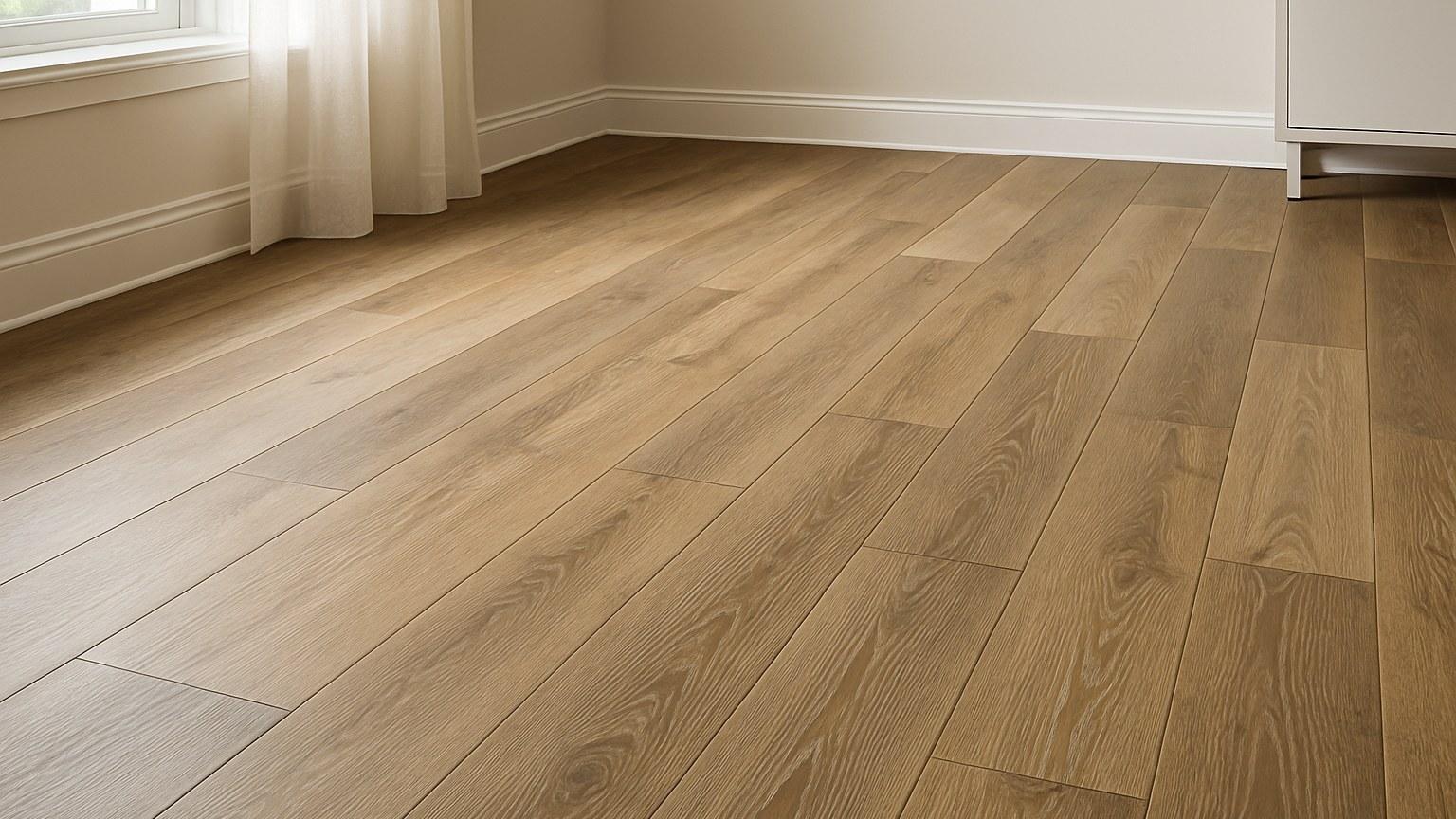
If you're searching for Forbo vinyl flooring, there's a wrinkle: only one Forbo line is truly vinyl, the Allura LVT (luxury vinyl tile) range (plus its acoustic sibling, Allura Decibel). The floor Forbo is famous for, Marmoleum, is linoleum, not vinyl. That mix-up costs people, because Forbo moves through commercial dealers, not big-box shelves, so price and warranty don't work the way they do with LVP (luxury vinyl plank) at the home center.
Key takeaways
- Forbo is mainly a commercial contract flooring brand; its only true vinyl line is Allura LVT (luxury vinyl tile), plus the acoustic Allura Decibel.
- Marmoleum, Forbo's most famous floor, is linoleum, not vinyl, made from linseed oil, cork, wood flour, and limestone on a jute backing.
- You usually buy Forbo through commercial flooring dealers, not big-box stores, so expect trade pricing and spec sheets instead of shelf tags.
- By published ranges, Marmoleum runs roughly $4-$12 per sq ft installed and Allura Decibel materials run about $1-$6.64 per sq ft at retail.
- Marmoleum Click is realistic for a DIYer; glue-down Allura, sheet goods, and stairs are jobs worth hiring out.
What Forbo Flooring Actually Is (and the Vinyl Myth)
Forbo Flooring Systems is a commercial-focused flooring supplier, and its only true vinyl is the Allura LVT line (luxury vinyl tile and plank). Its best-known product, Marmoleum, is linoleum. No PVC (polyvinyl chloride), so no vinyl.
This is where a lot of searches hit a wall. Most Forbo product moves through commercial and contract dealers, not Home Depot or Lowe's. A homeowner walking into a big-box store usually won't find it on a shelf at all. If you're weighing where to shop for vinyl more broadly, it helps to compare the best places to buy vinyl flooring before settling on one supplier.
Forbo is a European-based group. You'll see brand copy floating around about how long the company has been making floors. Treat those marketing lines as marketing, not a spec you can hang a buying decision on.
So for a homeowner, what actually matters here is what's vinyl versus linoleum, where you buy it, and what that does to your price, your warranty, and whether you can lay it yourself.
Forbo's Real Vinyl Lines: Allura LVT and Allura Decibel
Allura LVT is Forbo's actual luxury vinyl. It sells as glue-down tiles and planks, with click versions too, and it's built to commercial wear standards with realistic wood and stone looks. If you want genuine Forbo vinyl, this is the line. If you want that same level of realism from a residential-channel option you can buy tomorrow, it's worth comparing it against Shaw Pantheon HD Plus's specs and room fit.
Allura Decibel is the acoustic version. It carries a sound-dampening backing, which makes it a fit for noise-sensitive rooms, apartments, and any floor sitting over an occupied space below.
Flotex often gets grouped in with the planks, but it isn't true vinyl. It's a flocked textile floor: it feels like carpet underfoot but cleans like a hard floor. Don't shop it as LVP, because it isn't.
One spec gap to know going in. Forbo's public pages don't display plank thickness or wear-layer dimensions (in mils, or thousandths of an inch) the way consumer LVP brands do. So pull the spec sheet for the exact product you're looking at instead of trusting a number you found for the category.
| Line | Material | Install | Best for | Note |
|---|---|---|---|---|
| Allura LVT | Luxury vinyl (PVC) | Glue-down or click | High-traffic commercial and busy homes | Realistic wood and stone looks |
| Allura Decibel | Vinyl with acoustic backing | Glue-down / loose-lay | Noise-sensitive rooms, apartments, upper floors | Built for sound reduction |
| Flotex plank | Flocked textile (not true vinyl) | Glue-down | Comfort plus acoustics | Feels like carpet, cleans like a hard floor |
| Marmoleum | Linoleum (natural) | Sheet, click, or tile | Low-VOC homes, kitchens | Not vinyl; color runs through the body |
Forbo's main resilient flooring lines and how they differ by material and install.
Does Forbo Make Sheet Vinyl?
Forbo's big sheet-goods seller is Marmoleum Sheet, and that's linoleum, not vinyl. Its sheet-format vinyl shows up mostly on the commercial side of the catalogue rather than as a homeowner LVP product. If you want a residential sheet floor from Forbo, you're almost always looking at Marmoleum, so go in knowing you're buying linoleum. If you specifically need a wide-format vinyl sheet, like a 15-foot-wide roll for a seamless bathroom or basement, you'll likely need to look past Forbo's commercial catalogue to find who actually sells 15-foot-wide vinyl sheet flooring.
Marmoleum vs. Vinyl: Why Forbo's Famous Floor Isn't Vinyl
Marmoleum is linoleum, pressed from linseed oil, pine rosin, wood flour, cork, and limestone over a jute backing. There's no PVC anywhere in it, which is the whole reason it isn't vinyl.
You'll see it in a few forms. Marmoleum Sheet is the big roll-out product. Marmoleum Click is a floating floor that snaps together, Marmoleum Modular is tile, and there are named colorways like Marmoleum Cocoa.
It behaves differently from vinyl in one key way. The color runs all the way through the body of the material, so a scratch or a worn spot shows less over time than it would on a printed vinyl plank with a thin top image. The trade-off is upkeep: linoleum wants more careful cleaning and periodic sealing than a plastic floor that you mostly just wipe. A plank like CoreTec's Cairo Oak LVP flooring, for example, relies on exactly that kind of printed top layer to get its wood look, which is why wear-layer thickness matters so much on a floor like that.
The water story is the one that trips people up. Forbo's Allura LVT has a waterproof core, meaning the plank body itself won't swell from water. Linoleum is more sensitive to standing water and to subfloor moisture. So don't treat Marmoleum like a waterproof LVP you can flood and forget. Those same core and wear-layer differences are exactly what separate a vinyl floor that lasts twenty years from one that fails in five, especially in basements and bedrooms, as this guide to vinyl flooring longevity factors lays out.
And remember what "waterproof" even means on a vinyl box. It describes the plank material, not the seams and not the room. Water can still slip under a floating floor at the edges and sit on the subfloor. That's narrower than how most shoppers interpret it, and it's true for vinyl, never mind linoleum.
What Forbo Flooring Costs and Where to Buy It
There's no single Forbo price, because it swings hard by line, and Forbo itself doesn't publish pricing, these figures come from independent flooring-cost research. According to tryflume.ai, Allura Decibel materials run about $1 to $6.64 per square foot at retail. Marmoleum materials generally run about $2 to $5.50 per square foot, with installed costs often reaching $4 to $12. Flotex plank materials sit near $6.99 per square foot per carpetfloorandmore.com, rising to $8.80 per square foot per greengoodsusa.com.
| Product | Materials | Trade or installed |
|---|---|---|
| Allura Decibel LVT | $1-$6.64/sq ft (retail) | $0.65-$4.98/sq ft (trade) |
| Marmoleum | $2-$5.50/sq ft | $4-$12/sq ft installed |
| Flotex plank | $6.99-$8.80/sq ft | Installed varies by job |
Source: independent flooring-cost research
Read the Marmoleum row closely, because it shows you the labor piece. Materials run $2 to $5.50 according to selector.kurlon.com, but installed lands at $4 to $12. That gap, roughly $2 to $6.50 a foot, is the labor. And labor climbs on a basement slab or a staircase, where prep and cutting eat more time than an open room.
Where you buy matters as much as the number. You get Forbo through commercial flooring distributors and contract dealers, not the big-box store. That means trade pricing (the contractor rate) can sit well below retail. When you call a dealer, ask for both the retail and the trade number, because the spread is real.
To pick a color before anyone quotes you, Forbo publishes a digital catalogue, a color finder, and a floor visualizer online. Spec your color there first, then take it to a dealer.
If you're trying to tell whether a quote is a genuine deal or a marked-up sticker, it helps to understand how wholesale and trade LVP pricing actually works before you sign anything.
Forbo Vinyl Flooring Warranty: What to Check
Don't quote a warranty term off a forum. Pull the specific product's own sheet, because the covered years and the conditions differ by line, and a commercial warranty often reads differently from a residential one. The big thing buried in almost every warranty: it hinges on proper subfloor prep and moisture control, not on the plank. Skip the prep and you can void the coverage before the first scratch. If you ever need to match a color years later, know that lines get retired, so it's worth understanding how to find and match discontinued vinyl flooring before you need it.
Installing Forbo: Fast Flooring, Subfloor Prep, and DIY vs. Hire
Forbo's Fast Flooring approach is built around quicker loose-lay and click installs. Glue-down Allura and the sheet goods lean on Eurocol adhesives, and that's contractor territory, not a first weekend project.
Prep comes before any plank goes down. On a floating floor, check that the subfloor is flat across the whole room, and run a moisture test on any concrete slab. I had a job in a Columbus split-level where the homeowner wanted to start laying that afternoon; my meter read high on the slab near an exterior wall, and we stopped. Letting that floor go down over wet concrete would have cupped it and killed the warranty at the same time. The finished floor only ever lasts as long as what's under it.
Follow the product sheet on acclimation, too. Some lines ask for it, some say it's unnecessary, so the box governs, not a rule of thumb.
On underlayment, go careful. Forbo's Allura Decibel, for example, ships with an acoustic pad already attached, and stacking a second underlayment underneath it can void the warranty. Let the specific product's instructions decide whether you add anything at all, and over concrete that decision ties straight to your moisture reading.
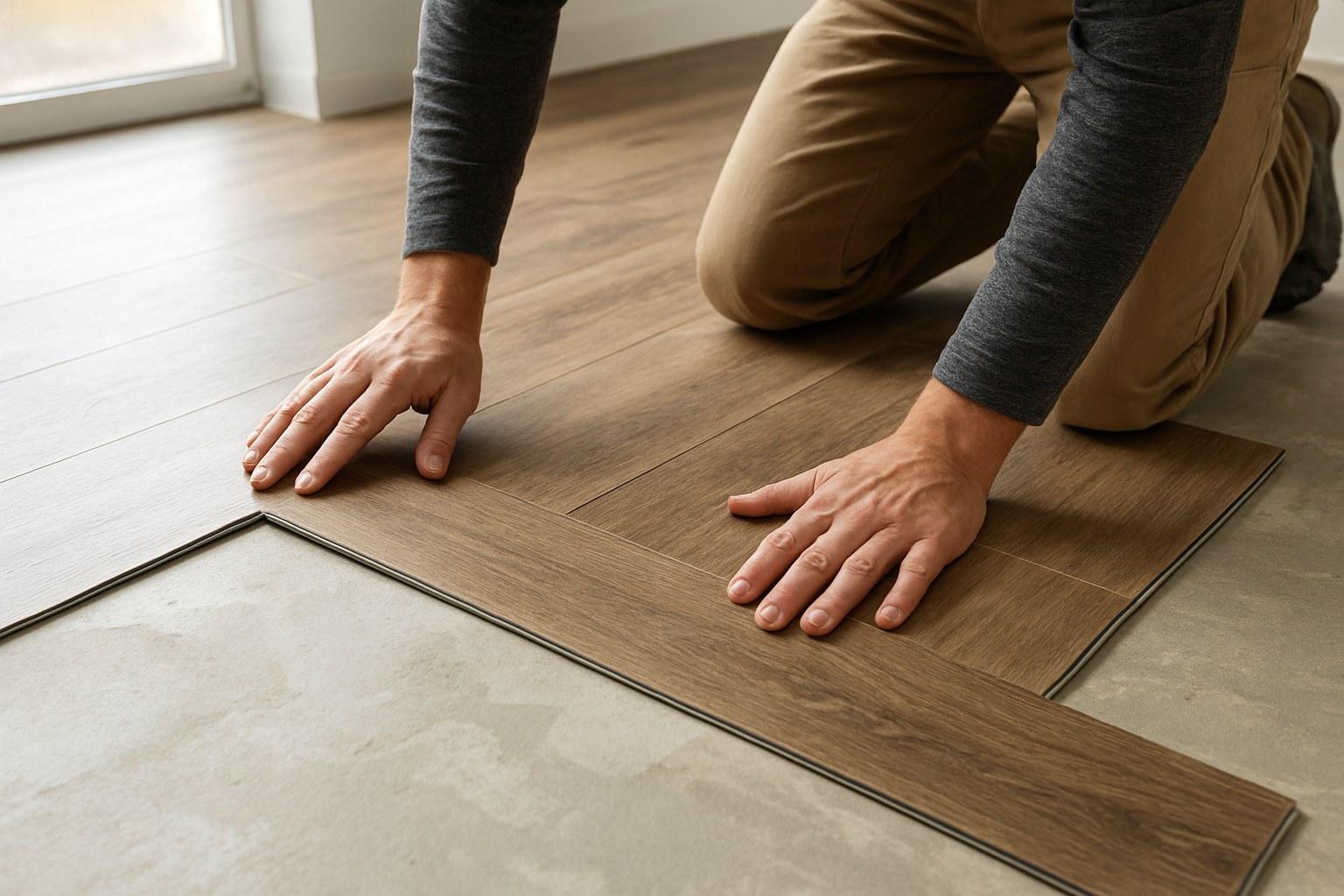
Now for the DIY-versus-hire call. Marmoleum Click and loose-lay are realistic for a confident DIYer with patient hands. I'd advise most people to hire professionals for glue-down Allura, sheet goods, and stairs. Glue work and stair nosings punish small mistakes, and a sheet seam done wrong shows forever.
Run through flatness across the whole room, a moisture test on any slab, and the product sheet's acclimation and underlayment rules before a single piece goes down. Keep the click and loose-lay jobs for yourself; hand the glue-down, sheet, and stair work to a pro.
Is Forbo a Good Brand? How It Compares
Forbo is a strong brand for commercial durability and for low-chemical floors, but it's a weaker fit for a homeowner who wants shelf availability and easy support. That's the real tradeoff.
On the plus side, Marmoleum is naturally low in VOCs (volatile organic compounds, the chemicals that off-gas from some floors), the color runs through so wear hides well, and the company pushes hard on sustainability tools. For a kitchen in a low-VOC-minded home, it's a genuinely good pick.
The weak spot is the buying experience. You're dealing through commercial dealers, lead times and minimums can be real, and you won't get the grab-it-today convenience of a consumer LVP brand. Allura is excellent vinyl, but for a straightforward busy-household floor you can buy tomorrow, a mainstream LVP line is often the easier road. Just steer clear of the bargain-bin names; it's worth knowing which vinyl plank brands every ranking warns against before you chase a cheap sticker.