
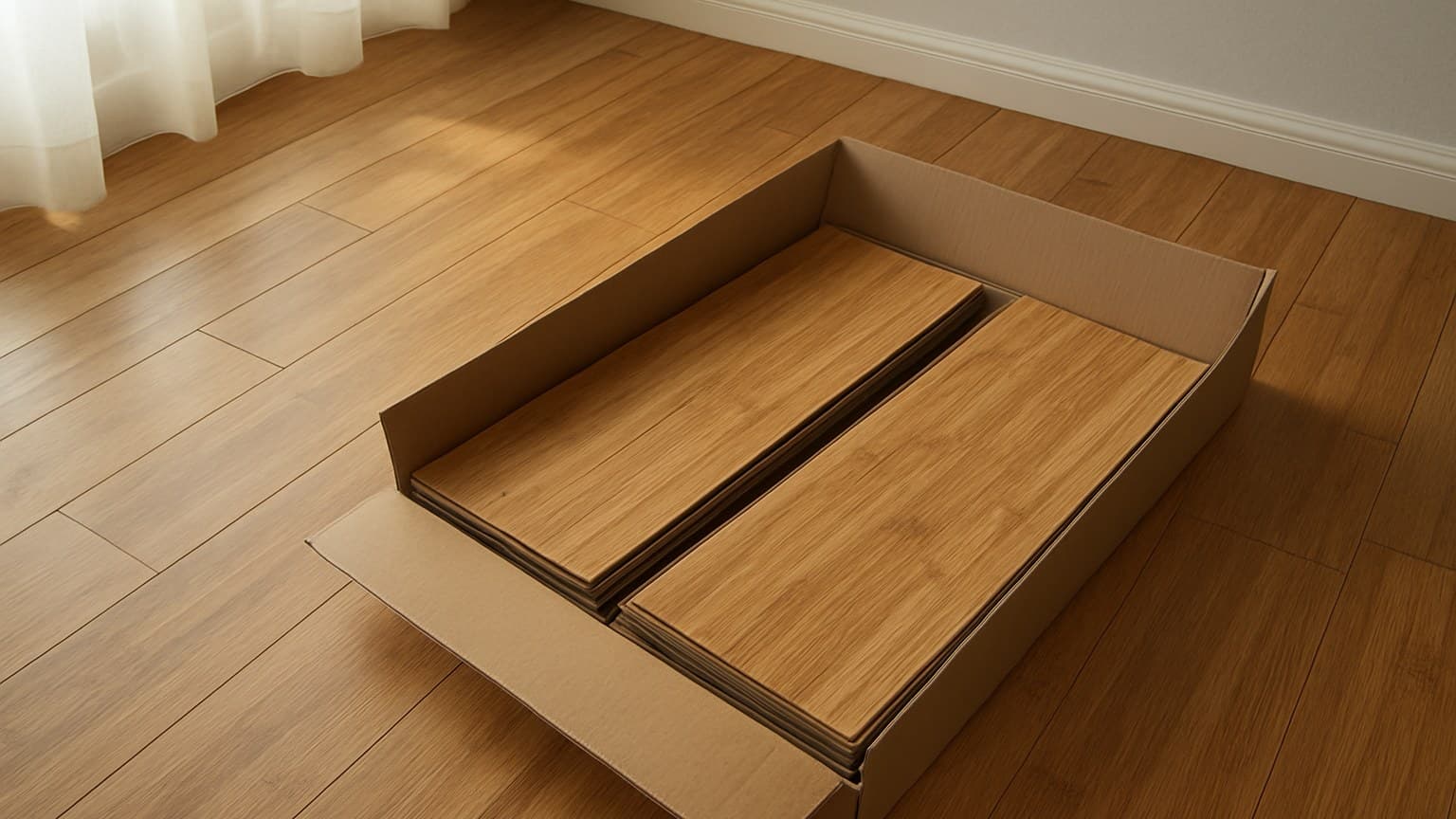
"Bamboo vinyl flooring" isn't one floor. Search that phrase and you'll get five products that behave nothing alike near water: real strand-woven bamboo (which has no vinyl in it at all), bamboo-look rigid vinyl plank, thin glue-down vinyl with a bamboo print, woven anti-slip vinyl, and engineered waterproof bamboo. Below I'll show you what each one really is, where its seams give out, and which to actually buy for a kitchen, a basement, or a whole-home job so you know what's in the box before you pay for it.
Key takeaways
- "Bamboo vinyl flooring" is not one product. It covers real bamboo, vinyl printed to look like bamboo, and woven vinyl with a bamboo pattern, and they behave nothing alike near water.
- A rigid SPC or WPC core is waterproof, but the seams and edges usually are not. Standing water finds the joints on any floating floor, which is where most callbacks start.
- Wear layer is the durability number that matters on vinyl. A 12 mil wear layer like Bamboo Breeze glue-down is fine for a home; thinner is rental-grade.
- Real strand-woven bamboo is a hardwood-style product, not vinyl, and it is not for a wet basement slab. Engineered or vinyl is the moisture-area pick.
- Budget materials and labor separately: vinyl plank runs roughly $2-7 per sq ft for materials plus $2-5 for install, with basements and stairs costing more.
1. Real Strand-Woven Bamboo (Not Vinyl at All)
This one is wood, full stop. Strand-woven bamboo is made by shredding bamboo into strands, then gluing and pressing them into dense planks. There is zero vinyl in it, so nothing on the plank is truly waterproof. If solid wood planks are what draws you to bamboo in the first place, it's worth comparing notes with my wide plank walnut flooring buying guide before you commit to either species.
It keeps showing up in a search for tough water-friendly floors because it's the hardest bamboo type and it wears like iron underfoot. But hard isn't the same as waterproof. It moves with moisture like any wood, so boards can cup or swell at the seams if the slab or subfloor reads wet, and that risk climbs fast with board width since wider planks have more surface area to pull moisture and telegraph any cupping. If you're weighing wider format bamboo or wood boards, my extra wide plank flooring cupping guide breaks down how wide is too wide before that happens.
Solid strand-woven bamboo doesn't belong on a below-grade basement slab, slab moisture makes solid wood cup and swell at the seams. If you want the real bamboo look somewhere damp, you jump to an engineered build (item 5) instead. For how solid and engineered wood products differ and where each belongs, see my guide to picking solid vs. engineered hardwood and the right species.
2. Bamboo-Look SPC or WPC Vinyl Plank (Click-Lock)
This is the floor most people actually picture when they type "bamboo vinyl flooring." It's rigid vinyl plank with a printed bamboo image over a waterproof stone-plastic core (SPC) or wood-plastic core (WPC). Per its listing on The Floor Store Direct, Cali Vinyl Plank offers a bamboo visual in click-lock, and according to its True Value product page, the Floorte Pro Tenacious HD+ is an SPC line that runs 7x48 inch planks at 18.91 sq ft per case. Bamboo is just one printed visual in that same rigid-core family, and if a darker wood look suits the room better, my guide to choosing dark walnut vinyl plank covers the wear-layer and finish details that keep it from scratching, fading, or reading as cheap.
Now separate the claims, because the marketing blurs them. The core is waterproof. The seams and edges aren't. On a click-lock floating floor, water that sits long enough wicks into the hairline joint where two planks meet, and that joint is the weak point, never the plank face. I've lifted "waterproof" floating floors that were perfect in the field and swollen at the seam under a leaky dishwasher.
This is the DIY-friendly pick. Click-lock is realistic for most homeowners with patience and a sharp utility knife. For wear-layer and core detail before you buy, my vinyl flooring buyer's guide walks through the nine things that decide if it lasts 5 years or 20.
3. Glue-Down Bamboo-Visual Vinyl
Same bamboo print, very different install. These are thinner planks with no rigid click core, bonded straight to the subfloor with adhesive. According to its product listing on Sam's Flooring, Bamboo Breeze glue-down carries a 12 mil wear layer, a genuine home-grade number, not the rental-thin stuff.
The upside is fewer moving seams and a solid feel underfoot, which helps in wide open rooms and in doorways where one floor meets another. Glued planks don't shift, so they hold flat across big spans.
The catch is that glue-down forgives nothing under it. A subfloor that isn't dead flat and clean telegraphs every ridge, stray staple, and grit speck straight through the thin plank, and lifting a mistake later tears up the adhesive and the board with it. That's why this is a hire-out job for most people. The glue choice and the prep matter more than the plank you picked.
4. Woven Anti-Slip Vinyl With a Bamboo Print
This is the odd one out. Woven vinyl, like U1 Floor's woven bamboo-pattern product, an anti-slip design, per its product page, is a textured, anti-slip surface. It's closer to a heavy-duty mat or roll than a plank floor.
It lands under this search because it looks like bamboo and it's technically vinyl. But it's built for grip and quick wipe-down, not for the warm look and feel of a wood floor. Run your hand across it and you feel weave, not plank.
Where it earns its keep is a mudroom, an entry, or a wet zone where slip resistance beats appearance. Where it disappoints is anyone expecting a living-room floor. One spec sorts it fast: check whether it's sold by the plank or by the roll. Roll means you're looking at a grip surface, not a floor you'll fall in love with.
5. Engineered Waterproof Bamboo
This is the hybrid that confuses everyone. It's a real bamboo veneer pressed over a stable engineered core, sold in waterproof lines such as OptiWood engineered waterproof bamboo, which ships around 11.59 sq ft per case according to its Home Depot Canada product listing. The top layer is genuine bamboo, so it looks and can refinish closer to real wood than any printed vinyl.
The engineered build is what lets it handle moisture areas that solid bamboo can't. As I said above, that's why engineered wins over solid on a slab.
Just watch the waterproof wording. "Waterproof" here describes the core, not the seams. Standing water still targets the joints, so treat this as water-tolerant, not bulletproof. It's the pick when you want real bamboo underfoot but the room rules out solid.
The Five Side by Side: The Specs That Actually Differ
Here's the spec sheet no marketing page bothers to build. The one number that decides durability on the vinyl options is the wear layer thickness, not the printed image on top. That same wear-layer math is what separates a pine-look plank that holds up from one that scuffs through in a year, which I break down species-specific in my guide to picking pine vinyl plank that resists wear.
| Product | What it really is | Core | Wear layer / veneer | Install | Waterproof? |
|---|---|---|---|---|---|
| Strand-woven bamboo | Wood, no vinyl | Bamboo strand | Refinishable wood surface | Nail, glue, or float | No |
| Cali Vinyl Plank (bamboo visual) | Vinyl | SPC | Printed wear layer | Click-lock | Core yes, seams no |
| Floorte Pro Tenacious HD+ | Vinyl | SPC, 7x48 in, 18.91 sq ft/case | Printed wear layer | Click-lock | Core yes, seams no |
| Bamboo Breeze glue-down | Vinyl | No rigid core | 12 mil printed | Glue-down | Core yes, seams weak |
| OptiWood engineered bamboo | Real bamboo veneer over core | Engineered, 11.59 sq ft/case | Bamboo veneer | Float or glue | Water-tolerant core |
| U1 Floor woven | Woven vinyl | Textured mat | Print only | Roll or tile | Water-resistant |
Rows one and five are wood wearing a bamboo name. The middle three are vinyl. Sort that first and half the confusion disappears.
Cost, Lifespan, and Which One to Buy for Your Room
Budget materials and labor as two separate numbers, always. Bamboo-look vinyl plank runs roughly $2-7 per sq ft for materials, plus about $2-5 per sq ft for install. Real strand-woven and engineered bamboo materials sit higher than that. Basements and stairs cost more than an open room, because of the cutting, the transitions, and the moisture prep. If you want to see those per-square-foot numbers turned into an actual room total, my cost breakdown for a 12x12 hardwood room walks through the full line-by-line math.
| Cost piece | Range ($/sq ft) |
|---|---|
| Vinyl plank materials | $2-7 |
| Install labor | $2-5 |
Ballpark cost ranges for bamboo-look vinyl plank; basement and stair jobs run higher.
Now the lifespan question. You'll see claims of 20-25 years next to 25-50 years, and both are half true because they're describing different products. Real strand-woven bamboo can reach the long end. A thin-wear-layer printed vinyl won't come close. Construction and wear layer drive that number, not the bamboo name on the box.
For rooms: a kitchen or bath wants a waterproof-core SPC or WPC vinyl. A basement slab takes engineered bamboo or vinyl, never solid bamboo. A whole-home warm look you plan to refinish someday points to real or engineered bamboo. If you're weighing whether to extend that hardwood look into the bedrooms, it's worth checking how hardwood in bedrooms affects resale value before you commit to material for every room.
And before any of these five goes down, check the subfloor for flat spots and take a moisture reading on the slab with a meter, not your hand. Early in my career a customer talked me out of that meter to save an afternoon, the floor cupped before the season was out, and I relaid it on my own dime. That one job is why I check the slab with a meter before I open a single box now.
Sources
- True Value: Floorte Pro Tenacious HD+ Accent bamboo vinyl plank, 18.91 sq ft/case
- Sam's Flooring: Modern Elements Bamboo Breeze glue-down vinyl
- The Floor Store Direct: Cali Bamboo Vinyl Plank click-lock collection
- Home Depot Canada: OptiWood Coventry engineered waterproof bamboo flooring, 11.59 sq ft/case
- U1 Floor: woven bamboo-pattern anti-slip vinyl (WV-5504)