
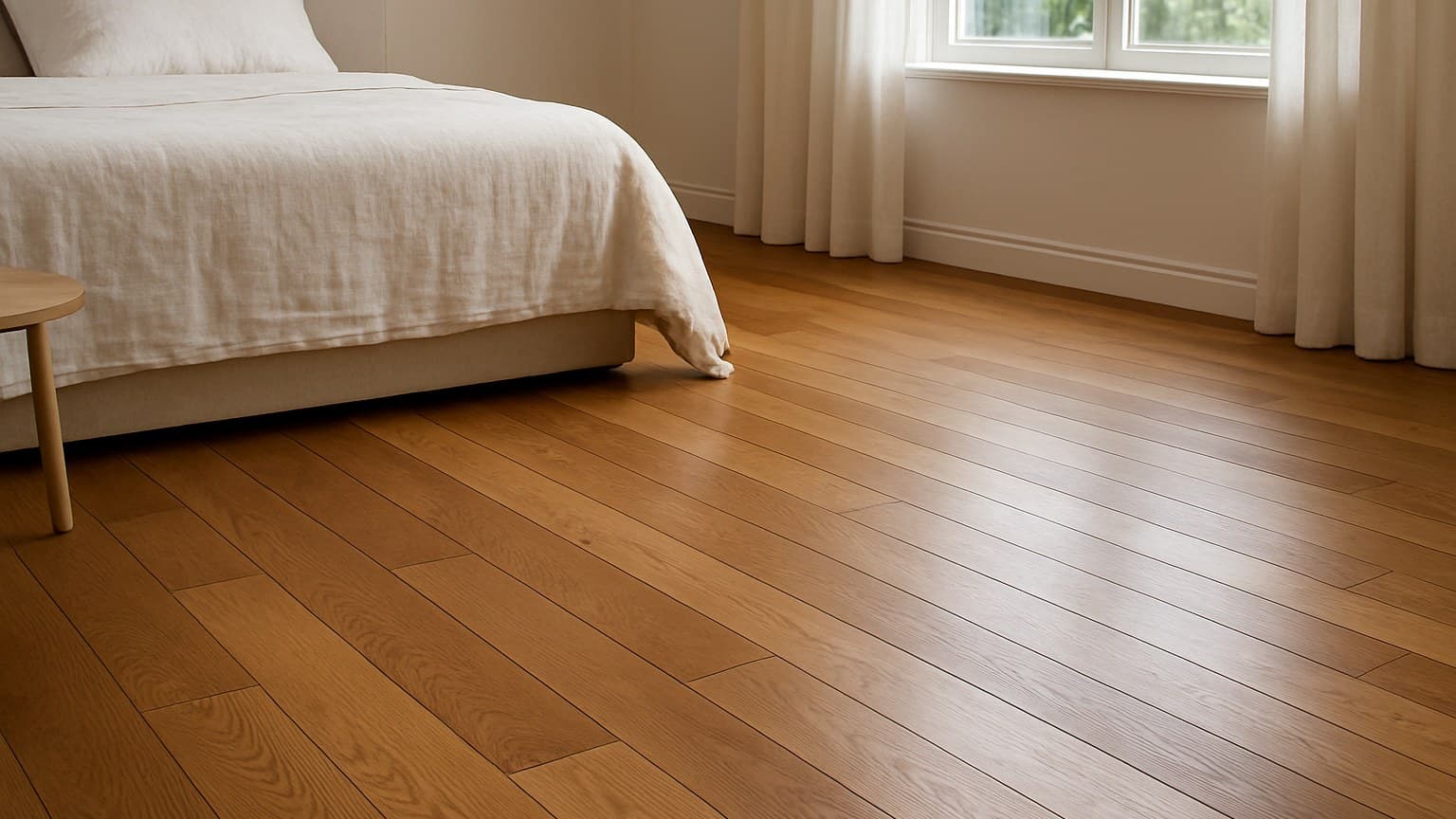
When Sarah Kowalski in Denver asked me if putting hardwood in her guest bedroom would pay off before she sold, the honest answer was: it depends on the room. Hardwood in a bedroom usually pays off in the primary bedroom of a mid-to-higher-priced home, but it usually doesn't in a kid's room or a budget house. Three things decide which side you land on: your home's price tier, whether it's the primary bedroom or a secondary one, and what's below the room. Get one of those wrong and you sink money buyers won't pay back.
Key takeaways
- In a primary bedroom and in mid-to-higher-priced homes, hardwood usually helps the sale; in kids' or secondary rooms and budget homes, clean carpet or LVP is often the smarter spend.
- NAR's Remodeling Impact Report puts new wood floors at about 118% cost recovery and refinishing existing wood at about 147%; the NWFA says wood can lift a sale price by up to 10%.
- Hardwood in a bedroom typically runs about $3-8 per sq ft in materials plus $3-5 per sq ft in labor, so a 120 sq ft secondary bedroom lands near $720-1,560 and a 250 sq ft primary near $1,500-3,250.
- The single thing that flips the answer for an upstairs bedroom is what sits below it: hardwood over a living room passes footstep noise that carpet would have muffled.
- Refinishing hardwood you already have almost always beats ripping out carpet to install new wood, dollar for dollar.
The Short Answer: Does Hardwood in a Bedroom Pay Off?
Sometimes, and one honest look at your situation decides it. Hardwood in a bedroom tends to pay off in the primary bedroom and in mid-to-higher-priced homes. It tends not to pay off in kids' rooms, secondary bedrooms, and budget homes, where clean carpet or vinyl plank is usually the smarter spend.
Three levers set the answer: your home's price tier, whether it's the primary bedroom or a secondary one, and whether the room sits over a living space. Change any one of those and the math can flip.
Here's the biggest money-saver: if there's already wood under the carpet, refinishing it beats ripping it out and installing new almost every time. On a job in a 1950s bungalow for Dave Reilly in Columbus, Ohio, I pulled up tired carpet and found solid oak underneath that just needed a sand and a fresh coat.
Buyers weigh kitchens, living rooms, and the entry far more than bedrooms. The bedroom floor is rarely the thing that makes or breaks a sale, so don't pour money into it expecting a headline return.
What the ROI Data Actually Shows
The return on wood floors is real but overstated by the people selling it. The National Association of Realtors' Remodeling Impact Report puts new wood floors at about 118% cost recovery and refinishing existing wood at about 147%, with reported added value near $6,500 and $5,000, which lines up with broader data on how much hardwood increases home value. Refinishing wins because you're paying only for sanding and finish, not new material, so the same dollar does more.
The National Wood Flooring Association (NWFA) backs that up with numbers homeowners rarely see next to a listing. According to NWFA's homeowner and industry data, wood flooring can command up to a 10% sale-price premium, 66-80% of homeowners say wood adds value, 61% prefer wood over other floors, and new wood floors scored a 9.1 out of 10 "Joy Score" in the 2025 report on owner satisfaction after the job.
One honest caveat: these are whole-home figures, not bedroom-only. A single bedroom captures a slice of that, not the full number. Wood everywhere else in the house does most of the lifting; the bedroom is along for the ride.
| Metric | Figure | Note |
|---|---|---|
| New wood floors, cost recovered | ~118% | reported added value near $6,500 |
| Refinishing existing wood, cost recovered | ~147% | reported added value near $5,000 |
| Possible sale-price premium | up to 10% | whole-home, not bedroom-only |
| Homeowners who say wood adds value | 66-80% | belief, not appraised value |
| Buyers/homeowners preferring wood | 61% | preference over other floors |
| 2025 Joy Score, new wood floors | 9.1 of 10 | owner satisfaction after the job |
Source: NAR's Remodeling Impact Report and NWFA homeowner data
Reported cost-recovery and homeowner-preference figures for wood flooring, whole-home basis.
Primary Bedroom vs. Kids' and Secondary Rooms
The primary bedroom is where wood earns its keep; secondary and kids' rooms are where it usually doesn't. Buyers linger in the primary bedroom and read wood there as an upgrade. They barely register what's underfoot in a spare room or a kid's room, so a wood floor there rarely changes what they'll pay.
Carpet in a kids' room isn't just a cost dodge. Warmth, softer landings, and quieter play are genuine selling points to families walking through. That's a real reason to keep good carpet, not an excuse.
The primary bedroom has one common objection worth clearing up: warmth. Many buyers still want a rug beside the bed even over wood, so cold feet in the morning isn't a reason to skip wood in the main bedroom.
One planning point that saves regret: mismatched flooring room to room can make a floor look unfinished. Decide by whole floors, not one room at a time. If the hallway and other upstairs rooms are wood, matching the primary bedroom reads clean. And if you've got a basement bedroom, check moisture first and lean toward engineered wood or vinyl plank, since solid wood isn't recommended below grade — weighing engineered hardwood vs hardwood is worth doing before you commit either way.
The One Thing That Flips the Math: What's Below the Room
On a job for the Ramirez family in Portland, this showed up fast: their upstairs bedroom sat right over the living room, and that's the detail that flips the whole calculation, what sits below the bedroom. An upstairs bedroom over a living room turns hardwood into a noise problem that carpet quietly solved.
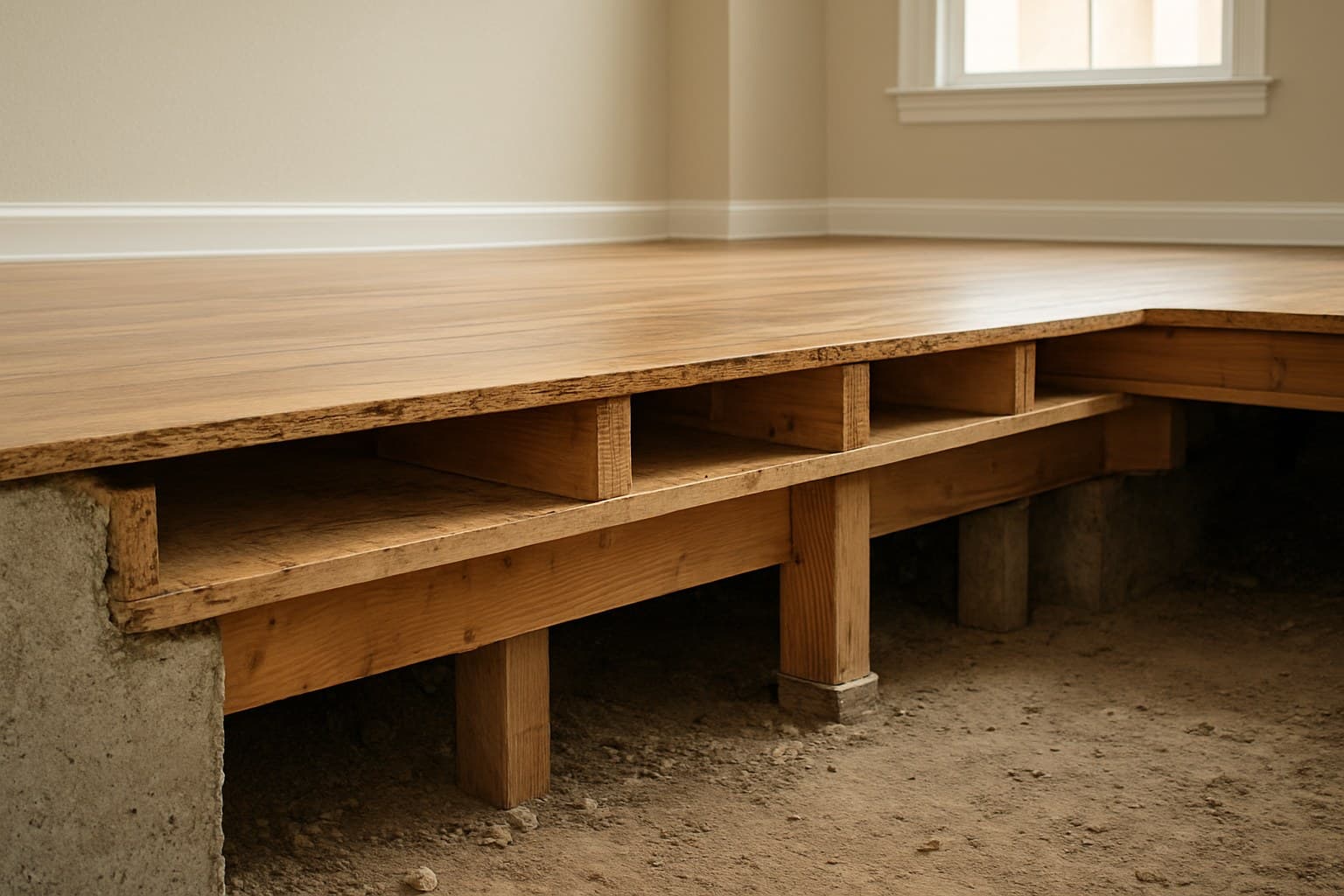
Follow the sound. Footsteps hit a hard surface with nothing to soften them, the thud drops into the open joist cavity between floors, and that space carries and amplifies it. The ceiling below vibrates and passes the noise straight into the living room, where people are trying to watch TV.
You can soften it. An acoustic underlayment under the wood helps, but it doesn't match carpet's dead-quiet feel, and it adds cost and a little height you'll notice at doorways. It's a real fix, not a magic one.
Tie that back to value. A buyer with young kids may look at wood over the living room and see a downgrade, not an upgrade. That's why this single factor can override the ROI stats above. If the room sits over a garage or another bedroom, the noise question mostly goes away and wood is an easier call.
Carpet vs. Hardwood vs. LVP: What Buyers Want Underfoot
For a bedroom, the choice comes down to cost, comfort and noise, durability, whether it can be refinished, and how buyers read it. Here's how the three stack up.
Luxury vinyl plank (LVP) is the middle path. It's cheaper than wood, shrugs off water, and is a realistic do-it-yourself job for click-lock planks. The trade-off: it can't be refinished, and some buyers read it as builder-grade in a nicer home.
For wood, the solid-versus-engineered call comes down to where the room sits. Engineered's plywood-style core makes it more stable over concrete and below grade, while solid can be sanded more times over its life. Species matters here too — if you're leaning toward something like wide plank hickory flooring's cost and movement, that's worth weighing before you pick solid or engineered. I've walked through the full breakdown in how to pick solid vs. engineered hardwood so I'll keep this bedroom-focused.
| Material | Installed cost | Comfort / noise | Durability | Refinish? | Buyer appeal |
|---|---|---|---|---|---|
| Carpet | $2-6/sq ft | warmest, quietest | wears, stains, shorter life | no | fine in kids'/secondary rooms |
| Solid hardwood | $6-12/sq ft | hard, carries sound | decades, refinishable | yes, several times | strongest in primary/main areas |
| Engineered hardwood | $5-10/sq ft | hard, carries sound | stable over concrete/below grade | once or twice, veneer-limited | reads as real wood to buyers |
| LVP | $3-8/sq ft | hard but warmer than tile | water-tolerant, dents | no | safe, some see as builder-grade |
Source: re-floors I've done
Installed cost and bedroom trade-offs across the three common bedroom floors.
On style, wide planks are the look buyers ask about right now, and the right one can nudge appeal in a primary bedroom. If that's the direction you're leaning, it's worth knowing whether wide plank floors are still in style and what flooring is on trend in 2026 before you commit. Just don't over-invest in a room buyers rank low.
Cost to Put Hardwood in a Bedroom, Room by Room
A bedroom hardwood job typically runs about $3-8 per sq ft in materials plus $3-5 per sq ft in labor. That's installed cost of roughly $6-13 per sq ft, before any subfloor repair.
The arithmetic is simple. Total = (materials per sq ft + labor per sq ft) x room square footage. A 120 sq ft secondary bedroom lands near $720-1,560, and a 250 sq ft primary bedroom near $1,500-3,250. Measure your own room's length times width and drop it into the same formula.
| Room / size | Materials | Labor | Installed total |
|---|---|---|---|
| Small bedroom, 100 sq ft | $300-800 | $300-500 | $600-1,300 |
| Secondary bedroom, 120 sq ft | $360-960 | $360-600 | $720-1,560 |
| Guest room, 150 sq ft | $450-1,200 | $450-750 | $900-1,950 |
| Primary bedroom, 250 sq ft | $750-2,000 | $750-1,250 | $1,500-3,250 |
| Refinish existing wood, 250 sq ft | minimal | $750-1,250 | $750-1,250 |
Bedroom-only material and labor ranges by room size, plus refinishing existing wood.
Two things move these numbers. Refinishing wood you already own skips the material cost entirely, which is why that bottom row is so much cheaper. And cut-heavy rooms cost more than the square footage suggests. I used to quote flat by the square foot until a job full of closets, doorways, and a bay window ate a whole extra day. The open middle of a room is never where the time goes. A basement bedroom also runs higher than an open upstairs room once you factor moisture prep.
Before anyone lays a plank, the subfloor gets checked for flatness and moisture. Skip that and the maker's warranty quietly walks away, no matter how good the wood is. Click-lock engineered planks are a fair DIY over a flat subfloor; glue-down and stairs are where hiring out pays for itself.