
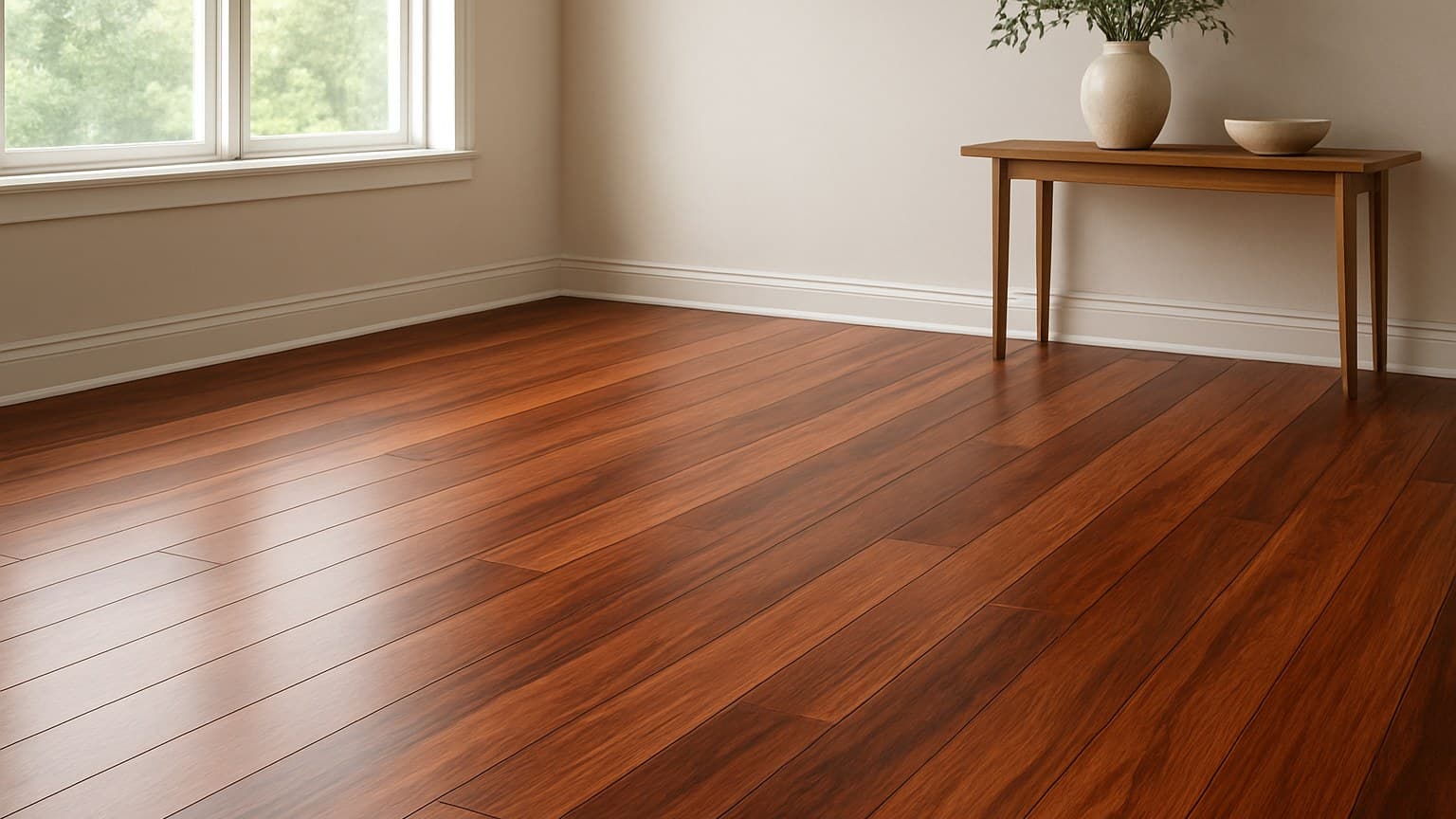
In a west-facing Denver living room, I pulled up brazilian cherry vinyl plank flooring that had gone gray in two summers, and the owner blamed the brand. It wasn't the brand. The red is a printed picture under a clear coat, and where you put it decides whether it lasts.
Key takeaways
- Vinyl's red is a printed layer under a clear wear coat; UV light fades and grays it, while real Jatoba darkens, so a UV-cured wear layer and a stated fade warranty on the specific product matter more than plank thickness.
- Expect vinyl material around $2-5 per sq ft plus labor around $1.50-4 per sq ft; real solid Jatoba runs roughly $5-10 material plus $4-8 labor, and basement or stair jobs cost more than open rooms.
- SPC (stone plastic composite) is denser and hides an uneven slab better; WPC (wood plastic composite) feels warmer and softer underfoot, so pick by room, not by hype.
- Check subfloor flatness (often near 3/16 in over 10 ft, per the plank's own guide) and slab moisture before you lay a single plank.
- Click-lock vinyl is a realistic DIY; glue-down, stairs, and big open-plan moisture transitions are usually worth hiring out.
Why Vinyl Brazilian Cherry Fades Gray When the Real Wood Just Gets Darker
Real wood and its vinyl copy age in opposite directions. Real Jatoba (the tropical wood sold as Brazilian cherry) has natural pigments that deepen and redden as sunlight hits it. The vinyl version is a printed photo layer sealed under a clear wear coat, and UV light slowly breaks that print down, so it fades and grays instead of going richer.
Real Jatoba gets richer in the sun. The vinyl copy gets grayer in the exact same light. If you want to see how the genuine article behaves over the years, read up on why real Brazilian cherry keeps getting darker after install, that darkening is the look your vinyl is trying to mimic.
So the goal here is narrow: keep that reddish-brown from washing out after a couple of summers. What decides that is the print and the wear layer on top of it, not a "waterproof core" sticker on the box. The fix comes in three steps: pick the right product, control the sun, and place the floor in the right room.
Step 1: Pick a Wear Layer and Core That Holds the Red
Fade resistance is a spec, not something that comes with every plank. The wear layer is the clear top coat that protects the printed red. Its thickness (measured in mil, or thousandths of an inch) fights scratches, but fade resistance comes from a UV-cured or aluminum-oxide top coat. Look for a stated fade warranty on the specific product you're buying, and don't assume it's baked into the price.
Separate the waterproof claim from the seams while you're at it. The core may shrug off standing water, but fading and moisture both show up at the plank edges and seams first, not in the middle of the plank. A "waterproof core" tells you nothing about how the join between two planks holds up.
WPC vs SPC vs standard LVP
The core changes how the floor feels and where it belongs. WPC (wood plastic composite) is warmer, softer, and quieter underfoot, which suits bedrooms and living rooms. SPC (stone plastic composite) is denser and more dent-resistant, and it bridges a slightly uneven slab better, so it's a safer pick for kitchens and entries. Standard flexible LVP is the thinnest and cheapest, and it follows every bump under it. If cherry's reddish cast isn't the look you're after, these same core tradeoffs apply when you're weighing hickory vinyl plank flooring instead.
| Core type | Feel underfoot | Best room | Watch for |
|---|---|---|---|
| Standard flexible LVP | Thin, follows the floor | Low-traffic, flat subfloor | Telegraphs every bump; thinner wear layers |
| WPC (wood plastic composite) | Warmer, softer, quieter | Bedrooms, living rooms | Dents easier under heavy furniture |
| SPC (stone plastic composite) | Firm, dense | Kitchens, entries, over slightly uneven slabs | Harder, colder; still needs flat subfloor |
How the three vinyl core types compare for a red-toned plank by feel, best room, and what to watch for.
Wear layer and UV coating
Match the wear layer to the traffic and match the UV coating to the sun. A busy kitchen wants a thicker wear layer for scratches; a sunny room wants the UV-cured top coat for fade. For the full rundown on how thickness and core decide how long a floor lasts, see the vinyl flooring buyer's guide. And if you're worried about a plastic-looking print, compare it against a cleaner light-wood option like blonde maple vinyl plank to train your eye on what a realistic grain actually looks like.
Step 2: Check Subfloor Flatness and Moisture Before You Lay a Plank
Do these two checks before a single plank goes down, the floor only lasts as long as what's under it. Flatness comes first. Run a long straightedge across the subfloor, grind down the high spots, and fill the low ones to the plank's own tolerance. Lifeproof's rigid vinyl plank installation guide, for example, calls for flatness within roughly 3/16 inch over 10 feet before you install, check the exact tolerance on your product's own installation sheet, since it varies by line. Skip it and the seams telegraph every dip, and click joints work loose and pop apart.
Moisture comes next. Test the slab or subfloor with a moisture meter, a small tool that reads how wet the material is, before you install anything. Too much moisture warps planks from below and quietly voids the warranty, and you won't see it until the floor is already down.
I learned that one the hard way. In Aurora, a homeowner named Denise talked me out of a moisture test to save an afternoon, and I let her. Her floor cupped before the season was out, and I relaid it on my own dime rather than argue about whose call it was. That's the day I stopped treating the test as optional.
Basement and slab-on-grade jobs need harder moisture attention than an open main-floor room, and they run pricier for it. A slab holds moisture you can't see, so budget for the extra prep down there instead of hoping.
Step 3: Stop the Sun From Washing Out the Red
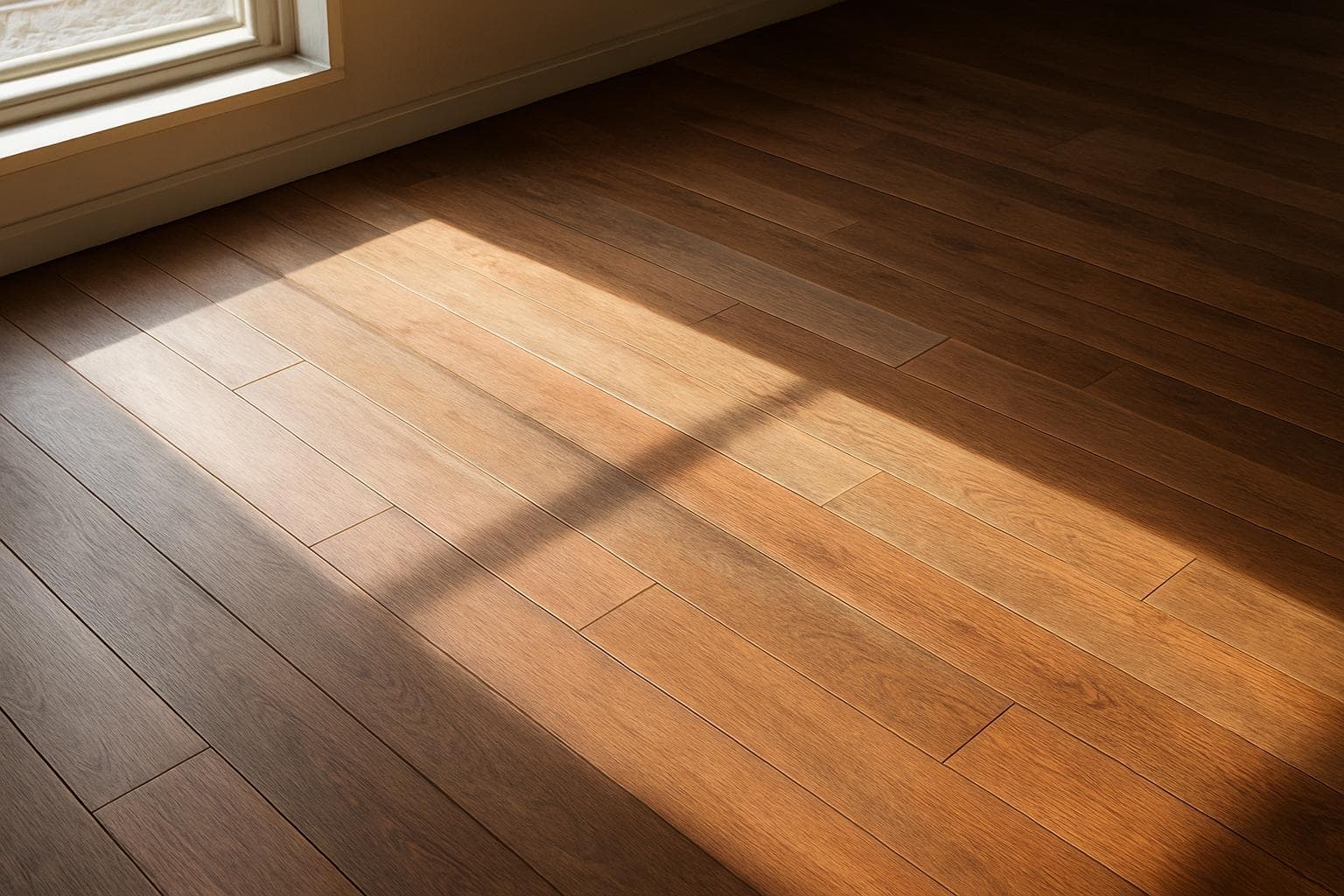
The same light that darkens real wood grays the vinyl print, so the job is to soften the sun, not chase it out. Add UV-filtering film to south- and west-facing windows, and drop sheer shades during the hard afternoon light. That alone buys the red years.
Then keep the fade even. Rotate rugs and shift furniture on a schedule each season, so a permanent shade line doesn't leave you with a two-tone floor where the covered strip stays red and the rest goes gray. A fixed rug sitting in a sun path is the classic way to burn a rectangle into a floor.
Placement matters too. This colorway holds up best in lower-UV rooms, bright sunrooms and big south-facing glass walls are where the red struggles most. If that's your room, either commit to the film and shades or pick a floor that isn't fighting the light. Before you swap colorways, it helps to weigh your options against floor colors that never go out of style, so whatever you pick next holds its look in that same room for good.
Finally, tune the room around it. Pair the reddish-brown with your trim and wall tone so it reads warm, not muddy. A darker floor usually wants lighter walls, and a light wood tone reads differently under the same window, so hold a sample up in the actual room before you commit. Before you lock in that reddish-brown for good, it's worth checking the most popular floor colors in 2026 to see how it stacks up against what buyers are actually choosing this year.
What Brazilian Cherry Vinyl Plank Costs vs Real Jatoba
Split the money into material and labor, that's where the real gap sits. See the table below for the exact per-square-foot ranges on vinyl plank versus solid Jatoba, and keep in mind basement or stair jobs cost more than an open room in both cases. If solid wood wins out and you're eyeing reclaimed boards to trim that cost, know how to verify reclaimed wide plank flooring before you buy.
| Floor | Material ($/sq ft) | Labor ($/sq ft) |
|---|---|---|
| Brazilian cherry vinyl plank | $2-5 | $1.50-4 |
| Solid Jatoba hardwood | $5-10 | $4-8 |
Material and labor cost ranges per square foot for vinyl plank versus solid Jatoba; basement and stair jobs run above these open-room figures.
There's more to the math than the sticker. Jatoba can be sanded and refinished several times and carries real hardwood resale value. Vinyl can't be sanded, so when it wears or fades you replace it rather than restore it. That changes what "cheap" means over 15 years. That refinishing edge really belongs to solid stock, so if resale value is what's driving you toward real wood, it's worth reading up on choosing between solid and engineered hardwood before you commit to Jatoba specifically.
On labor, be honest about your own limits. Click-lock vinyl is a realistic DIY for most homeowners with a flat, dry subfloor. Glue-down floors, stairs, and large open-plan rooms with moisture transitions are where hiring out pays off, because those jobs need tighter seam work and moisture control than most first-timers can nail under a deadline. Weigh the lifespan against the lower upfront price, so the cheaper floor isn't the one you're ripping out first. That upfront math shifts even further once you factor in resale, since real hardwood's return shows up clearly in the resale value hardwood adds to a home.