
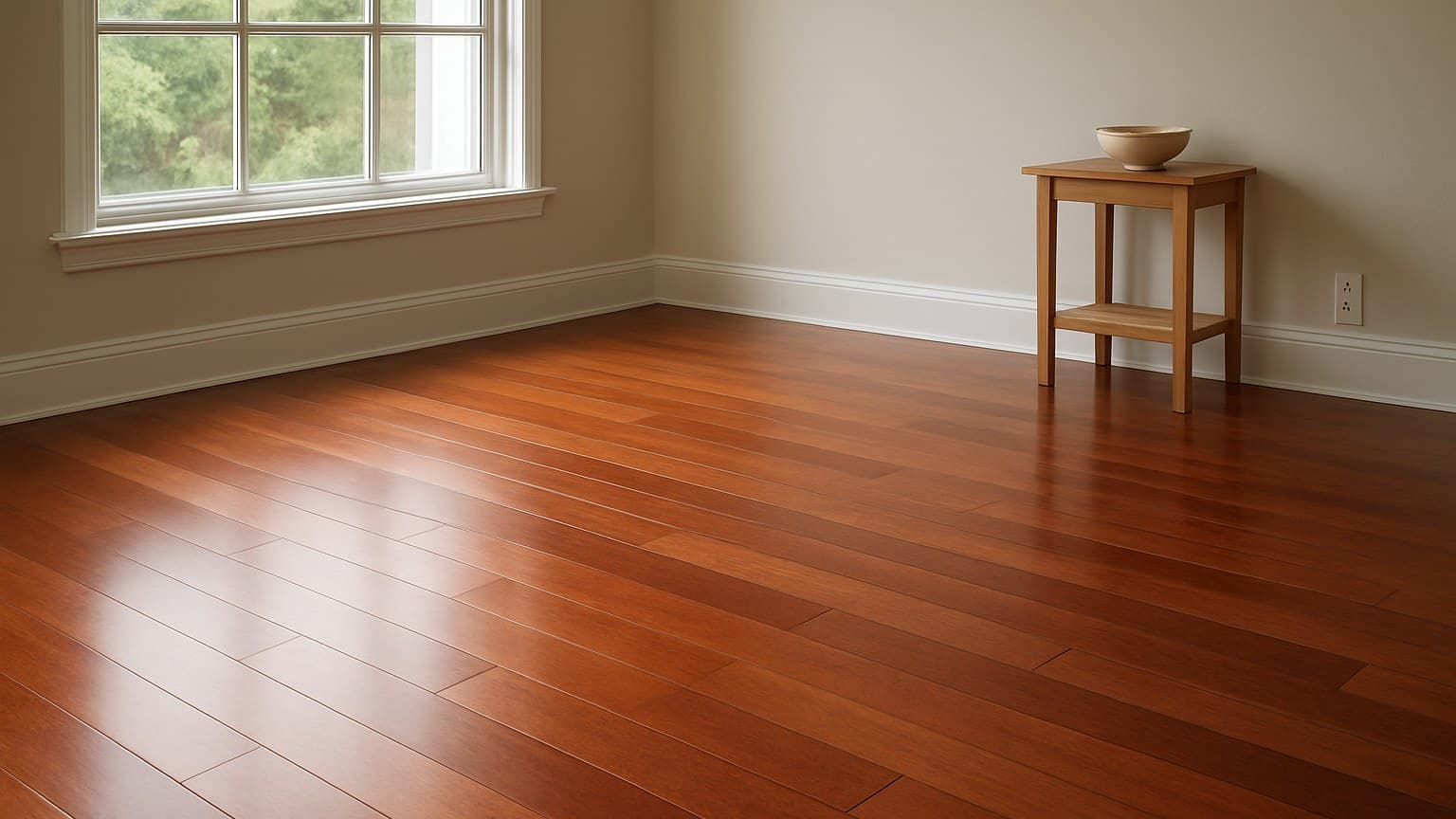
Renee, a homeowner in Tulsa, called me confused after two boxes of "Dusk Cherry Lifeproof" for the same kitchen repair showed up looking nothing alike. The color chip looks identical in every listing, but the plank underneath changes. One name covers thin and thick wear layers, click-lock and glue-down. Buy the wrong build and it fails in the wrong room.
Key takeaways
- Dusk Cherry is one color name sold in several Lifeproof builds (6, 12, 22, and 30 MIL, click-lock and glue-down); read the SKU on the box, not just the color chip.
- The mil number is the thickness of the clear wear layer on top; 12 MIL suits bedrooms while 22 MIL handles kitchens and pets, and each rating applies only to that specific SKU.
- A rigid core resists water, but water still gets in at the seams and edges, so bathrooms and basements need glue-down plus a moisture test first.
- Budget roughly $3-6 per sq ft for materials plus $2-4 per sq ft labor for floating click-lock; glue-down, basements, and stairs all cost more.
- Click-lock Dusk Cherry is a realistic DIY; glue-down, stairs, and below-grade moisture transitions are where hiring out usually pays off.
What Dusk Cherry Lifeproof Actually Is (One Name, Several Floors)
Dusk Cherry is a single Lifeproof color, a warm reddish-brown cherry wood look, sold across several different vinyl builds. It's not one product. It's a paint chip printed onto more than one floor.
All of them are LVP, short for luxury vinyl plank. That means a printed wood-look photo layer sitting on top of a rigid plastic core, sealed under a clear coat. According to a chemical composition filing for this class of rigid-core vinyl plank in the EPA's ChemExpo database, that core layer is a PVC-based composite bonded beneath the printed wood-look design and clear wear coat. The word "cherry" describes the picture on top, not what the plank is made of. There's no cherry wood in it. If you actually want the real material underfoot, solid cherry behaves nothing like the printed version, and I lay out what to expect in how cherry flooring performs.
Most Dusk Cherry builds ride on a rigid SPC core. SPC stands for stone-plastic composite, a dense core that doesn't swell up when it gets wet. That core is why you see the floor called waterproof. Here's the honest part: the core resists water, but water still sneaks in at the seams and the edges, and that's where floors fail. So the waterproof claim belongs to the core of that specific rigid SKU, not to every plank that carries the Dusk Cherry name, and not to the joints between planks. That moisture-at-the-seams issue is actually the deciding factor a lot of shoppers weigh when they're stuck choosing between engineered wood and vinyl in the first place, a question I break down in engineered hardwood versus LVP comparison.
That's the whole problem in one line. The plank looks the same in every photo, but the build underneath decides how it wears and which room it belongs in.
A reddish-brown cherry LVP: reading the actual tone
Dusk Cherry reads dark and warm. It's a brown-red that turns almost espresso in a dim room and warms up toward red under lamps or afternoon sun. In a bright kitchen it looks rich. In a north-facing basement it can read nearly black. If you'd rather get that same reddish-brown warmth in real wood grain instead of a printed layer, hickory hardwood flooring delivers a close tone with far more natural texture and movement.
If your room is cool and gray, know that going in. A warm reddish floor fights icy gray walls. It sits much better with cream, white, sage, or navy. Acacia brings that same warm reddish range in solid wood if vinyl isn't what you're after, and I walk through what to know before buying acacia flooring.
What long-term owners actually report
Search Houzz project threads, flooring Facebook groups, and r/HomeImprovement for "Lifeproof Dusk Cherry" and the complaints repeat themselves: fine scratches showing up in the clear coat within the first year of normal foot traffic and pet nails, color fading or drift in planks that sit in direct sun for a season or two, and seams that open up at doorways and exterior walls once a house goes through its first full heating season. None of that is unique to this color, it's the honest long-term pattern for rigid-core LVP in general, and it lines up with what's already in this guide: thinner wear layers scratch faster, printed layers don't age like real wood under UV, and floating floors that don't get their expansion gap move at the seams when the house dries out in winter. The households that report the fewest complaints after a year or two are the ones who matched the wear layer to the traffic the way the table below lays out, rather than buying on the color chip alone.
Decoding the Variants: 6, 12, 22, and 30 MIL, Click-Lock or Glue-Down
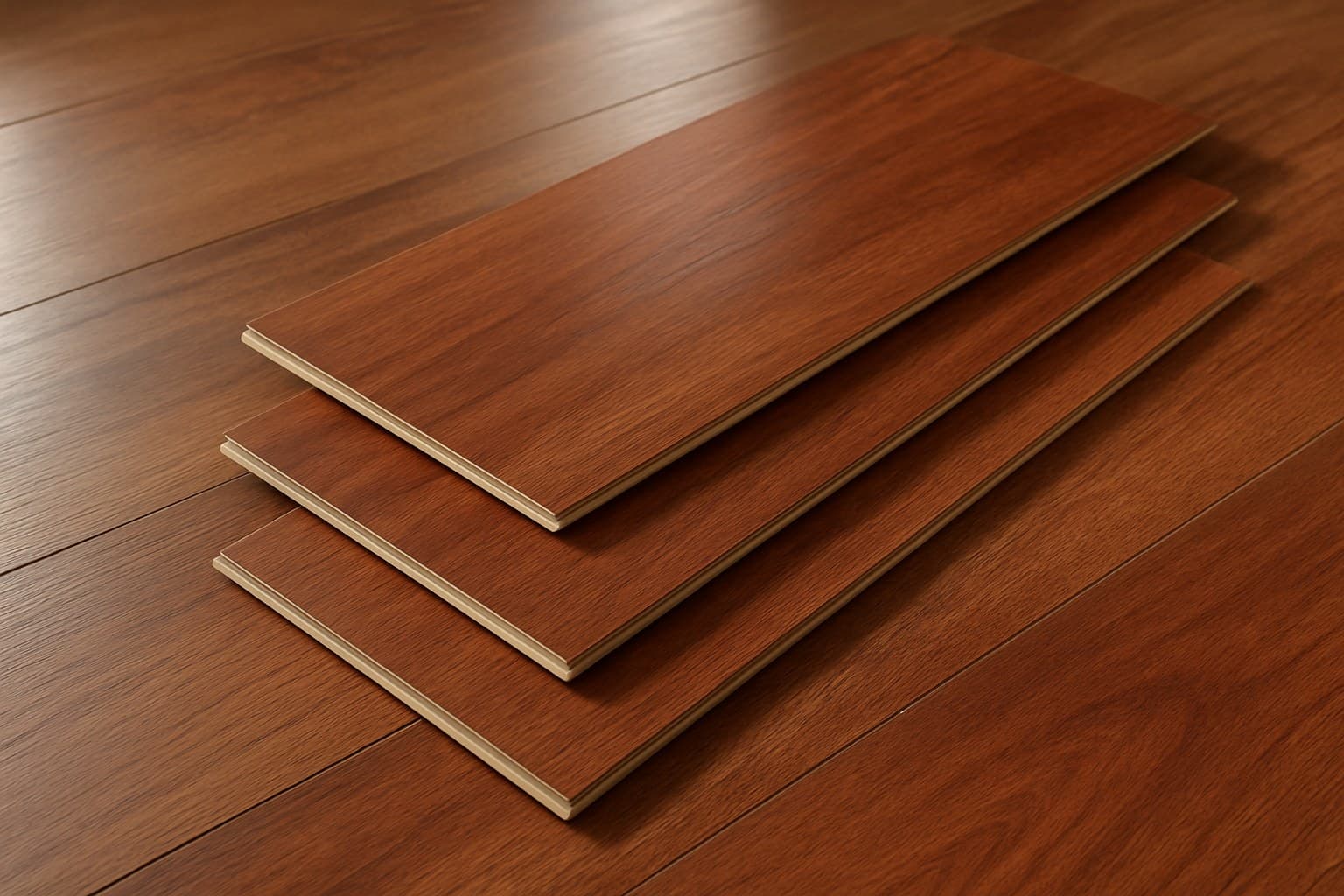
The two things that change under the Dusk Cherry name are the wear layer and the install type. Get those two right and the color takes care of itself.
What the mil number really buys you
The wear layer is the clear top coat that takes the scratches, measured in mils, which are thousandths of an inch. More mils means more scratch protection between you and the printed image. A 12 mil top holds up fine in a bedroom, and a 22 mil top is what I want under a dog's nails or a kitchen chair.
One rule you can't skip: each mil number belongs only to its own SKU. A 22 mil Dusk Cherry box tells you nothing about the 12 mil box sitting next to it. The warranty and the waterproof rating are printed per product, so read the spec sheet on the box you're actually buying.
Click-lock vs glue-down: which install you're getting
Click-lock planks snap together at the edges and float over the subfloor, held down by nothing but their own weight and the trim. That's the DIY-friendly one. Glue-down planks get stuck flat to the slab with adhesive. Glue-down handles wide open rooms and rolling loads better because nothing shifts, but it's harder to install and far less forgiving of a bad subfloor. Real hardwood runs into the same fork in the road, which is why choosing solid vs engineered hardwood flooring comes down to a lot of the same room-by-room reasoning.
| Build (SKU family) | Wear layer | Install | Best for |
|---|---|---|---|
| Dusk Cherry 6 MIL | 6 mil | Glue-down | Light-use rooms over a very flat slab |
| Dusk Cherry 12 MIL | 12 mil | Click-lock (floating) | Everyday bedrooms and living rooms |
| Dusk Cherry 22 MIL | 22 mil | Click-lock (floating) | Kitchens, pets, busy households |
| Dusk Cherry 30 MIL | 30 mil | Glue-down | Toughest wear; confirm the color is still stocked in this build |
Source: the current Home Depot spec sheets I pull up for each Dusk Cherry SKU before I order
The build families sold under the Dusk Cherry color, with the wear layer and install each one uses.
Don't assume the thick build's rating covers the thin one. If the 30 mil glue-down carries a longer warranty, that warranty stays on the 30 mil box. Match the SKU on your receipt to its own spec sheet, every time.
Which Dusk Cherry Build for Which Room
Pick the build by traffic and moisture, not by looks, since the look is the same in every box. Here's how I match them on real jobs.
| Room | Traffic & moisture | Build I'd pick | Watch for |
|---|---|---|---|
| Kitchen | High traffic, occasional spills | 22 MIL click-lock | Flat slab; wipe spills before they sit at seams |
| Full bath / laundry | Low traffic, high moisture | Glue-down, edges sealed | Seams and edges are the weak point, not the plank face |
| Living room / bedroom | Medium traffic | 12 MIL click-lock | Plenty of wear layer for the use |
| Entry / hallway / stairs | Heavy traffic, tracked grit | 22 MIL with matching stair nose | Stairs are worth hiring out |
| Basement (below grade) | Moisture risk | Glue-down after a passing moisture test | Test the slab first; expect it to cost more than an open room |
Source: the Dusk Cherry floors I've laid in kitchens, a laundry, and one below-grade basement
Which Dusk Cherry build I reach for by room, based on the floors I have laid.
Before any of these goes down, two checks come first. Is the slab or subfloor flat, and is it dry? I run a flat straightedge across the floor and I run a moisture test, especially over concrete and especially in a basement. I once let a homeowner in Dayton talk me out of the moisture test on her basement rec room to save an afternoon. The floor cupped before the season was out, and I relaid it on my own dime. That test isn't optional anymore.
Leave the expansion gap the SKU's own instructions call for around the perimeter, since a floating floor needs room to move. The exact gap size is a look-it-up number on the install sheet, not a figure to guess.
Basements below grade cost more than open rooms and need a passing moisture reading before either build goes down. Glue-down often wins down there, but only after the test clears. Kitchens, entries, and homes with pets want the thicker wear layer. Bedrooms do fine on the thinner build.
Radiant heat: the question the spec sheets skip
This is one of the first questions anyone installing SPC or rigid-core vinyl over a heated slab asks, and it's worth saying plainly: Lifeproof's spec sheets for the Dusk Cherry builds don't publish a radiant-heat rating the way they publish wear layer thickness and install type, so don't assume any particular SKU is cleared for it just because it's rigid-core. As a general rule for this category, floating click-lock builds tolerate a buffered radiant system better than glue-down, but only up to a maximum surface temperature the manufacturer sets, and glue-down adds the extra variable of adhesive compatibility with a heated slab. Before you run radiant heat under any Dusk Cherry build, get written confirmation from the specific SKU's spec sheet or from Home Depot's Lifeproof support, and bring the system up gradually per the installer's instructions rather than assuming the color box answers the question.
What Dusk Cherry Lifeproof Really Costs to Install
There's no single national number worth quoting, so split it in two: materials run one range and labor runs another. Materials for Dusk Cherry land around $3 to $6 per square foot. Labor depends heavily on the install and the room.
For floating click-lock in an open room, labor runs about $2 to $4 per square foot. Glue-down takes more time and skill, so it runs higher. Below-grade basement work runs higher still, because of the moisture prep and the slower, fussier install.
| Cost line | $ per sq ft |
|---|---|
| Labor: click-lock, open room | $2 - $4 |
| Materials | $3 - $6 |
| Labor: glue-down | $3 - $6 |
| Labor: basement / below grade | $4 - $7 |
Estimated total cost for a 200 square foot room, adding materials to labor for each install scenario. The drawing is not to scale.
A few things move the material total on top of the plank price. Stair nose pieces and transition strips add up fast, so count those into the job, not as an afterthought.
Doing click-lock yourself removes the labor line entirely, and that's the honest DIY win. Glue-down, stairs, and below-grade transitions are where paying an installer earns its keep, because rushing those jobs is what leads to bubbled seams and cupped planks within a season.
Dusk Cherry vs Fresh Oak (and When to Look Past Lifeproof)
Dusk Cherry reads warm, reddish, and traditional. Fresh Oak reads light, neutral, and modern. They suit different rooms and different resale plans, so this is the comparison most shoppers are really weighing.
| Feature | Dusk Cherry | Fresh Oak |
|---|---|---|
| Tone | Warm reddish-brown, traditional | Light neutral oak, modern |
| Room feel | Cozy, darker, richer | Airy, brighter, feels bigger |
| Hides scratches and dust | Shows dust and pet hair more | Hides both better |
| Pairs with | White or cream cabinets, sage, navy, brass | Gray, greige, black, most palettes |
| Resale risk | Warmer look, can read dated in cool rooms | Neutral, wide buyer appeal |
Source: Dusk Cherry and Fresh Oak sample boards I've set side by side in clients' rooms
Dusk Cherry and Fresh Oak compared on tone, room feel, upkeep, and resale.
If you want the darker, warmer floor and your palette leans creamy and traditional, Dusk Cherry is the pick. If you want a floor that hides dog hair and brightens a small room, Fresh Oak does that job better. Neither is "better." They're two different looks.
There are good reasons to look past Lifeproof, too. Other rigid-core LVP brands are worth a look before you commit, and it's worth seeing which lines actually hold up by room in the COREtec flooring guide since that's the other rigid-core category this floor competes with. And if you think you'll want to sand and refinish the floor later instead of replacing it, that's the moment to consider real wood. A solid species like maple or pine can be refinished down the road, which no vinyl can.
One last buying tip: grab an extra box up front. Home Depot rotates its private-label vinyl lines often, so a later dye lot or a swapped-out build won't match what's already on your floor, and you'll want spare planks on hand for repairs before that happens.
For your next read, the COREtec flooring guide is the useful one if you're cross-shopping rigid-core brands, because it lines up which COREtec lines hold up in which rooms the same way this page does for Dusk Cherry.