
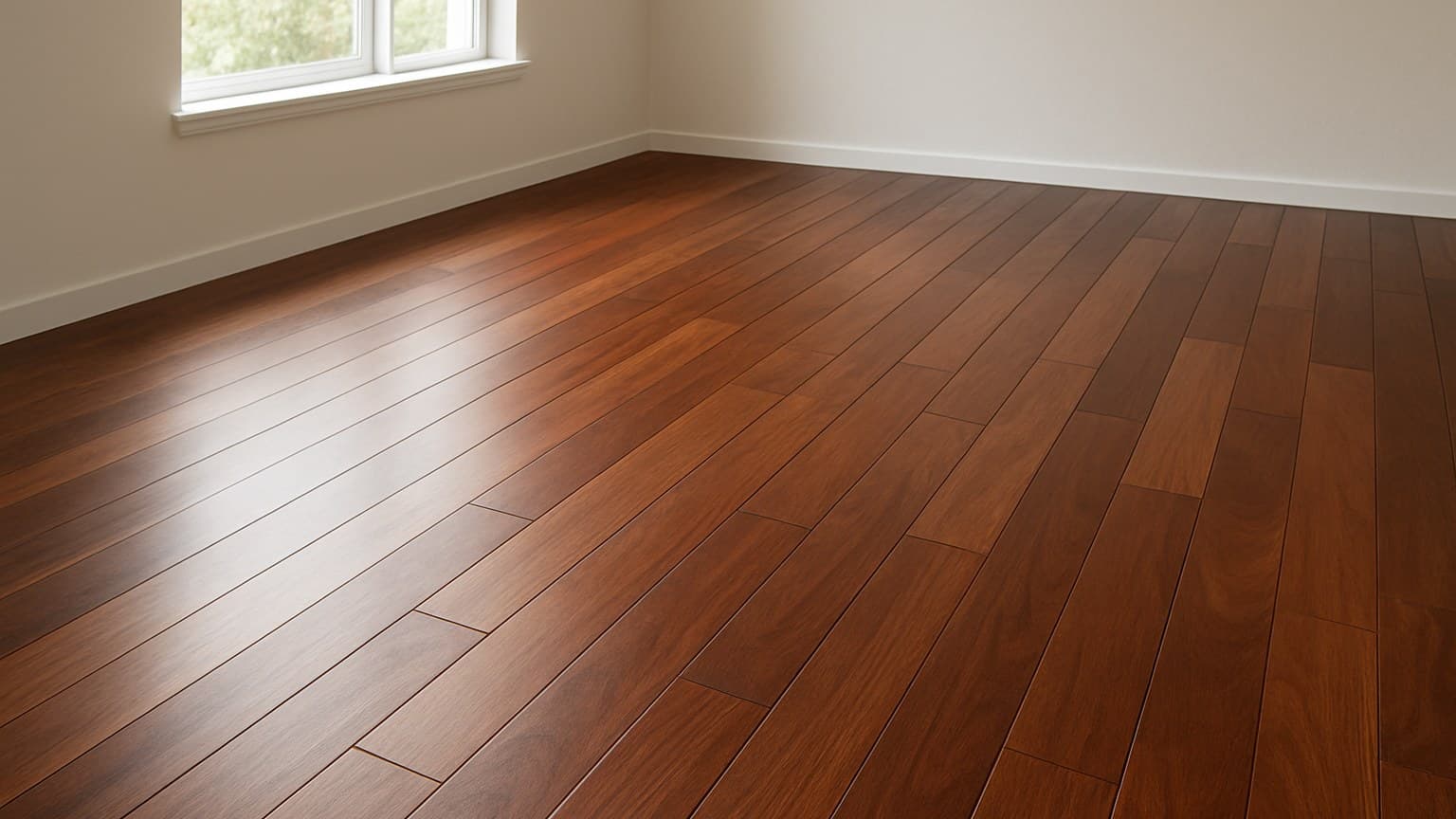
A homeowner in Tulsa named Dana called me last month right after her Brazilian walnut order showed up, she'd pictured soft, chocolate-brown boards and instead got a wood so hard it chewed through two saw blades before lunch. Brazilian walnut isn't walnut at all, it's Ipe, a South American hardwood with no botanical link to the walnut tree. Getting that mixed up costs real money: the wrong blades, extra labor, and boards you can't send back.
Key takeaways
- "Brazilian Walnut" is a trade name for Ipe, a dense South American species with no botanical link to true American black walnut (Juglans nigra).
- Ipe rates about 3680 on the Janka hardness scale, over three times harder than American black walnut (~1010) and well past red oak (1290).
- The extreme hardness means carbide-tipped saw blades and pre-drilling every fastener; because it usually ships solid and unfinished, most homeowners are better off hiring a pro.
- Expect material around $5-9 per sq ft and install labor around $3-6 per sq ft, with site sand-and-finish adding roughly $2-4, and stairs or basements costing more than open rooms (confirm with local quotes).
- Ipe sourcing raises real sustainability flags, so look for FSC-certified stock or documented legal harvest before you buy.
So It's Not Really Walnut? What Brazilian Walnut Actually Is
Brazilian walnut is a trade name for Ipe, a very dense hardwood that grows in South America. It has no botanical link to true walnut, the softer North American wood known as Juglans nigra. Same word on the label, completely different floor under your feet.
The name exists because Ipe gets sold on looks and marketing, not on species. A buyer hears "walnut" and pictures warm, easy-to-work boards. What shows up is one of the hardest floors you can order, with a color that only loosely resembles the real thing. Acacia flooring gets marketed with that same looks-first approach, so it helps to know what to ask before buying acacia flooring before you commit to it.
Up close, Ipe reads deep brown with reddish and even olive-green streaks, and a tight, fine grain. It shifts tone as the light moves across it. True black walnut hardwood flooring is a softer, more even chocolate brown, without that color swing. If you want the classic walnut look, that guide is the floor you're actually after, not Ipe.
Keep that distinction straight before you shop: "Brazilian walnut" on a label means Ipe, a dense South American species, while true walnut is a different, much softer wood. Confusing the two is why buyers end up with the wrong blades, the wrong finish plan, and a floor that doesn't match what they pictured. Brazilian teak carries a similarly misleading name, and it's worth finding out what Brazilian teak flooring actually is before you buy it.
How Brazilian walnut hardwood flooring is usually sold
You'll almost always find it as solid tongue-and-groove boards, kiln-dried, and often unfinished. That means the boards go down bare and get sanded and sealed on site. Some sellers stock it prefinished, but unfinished solid is the common form, so plan for a finishing step in most cases. Domestic species built around that same rich, warm tone follow the same pattern, and choosing the right cherry flooring usually means planning for that same on-site finish step.
Why Brazilian Walnut Is One of the Hardest Floors You Can Buy
Ipe sits near the very top of the Janka scale, the industry test for how much force it takes to press a small steel ball halfway into a wood sample, the higher the number, the harder and more dent-resistant the floor. According to the NWFA's Homeowners Handbook to Real Wood Floors, Ipe (Brazilian walnut) rates 3680 lbf on the Janka scale, placing it among the hardest species used in residential flooring. The table below shows exactly where it lands next to woods you already know. Hickory is one of the domestic species you'll see in that comparison, and if you're weighing it instead of an exotic import, how to pick hickory flooring walks through choosing boards that won't cup, gap, or look wrong over time.
Here's how that stacks up against woods people actually know:
| Wood | Janka hardness (lbf) |
|---|---|
| American Black Walnut | 1010 |
| Red Oak | 1290 |
| Hard Maple | 1450 |
| Hickory | 1820 |
| Brazilian Cherry (Jatoba) | 2350 |
| Brazilian Teak (Cumaru) | 3540 |
| Brazilian Walnut (Ipe) | 3680 |
Janka hardness by species, lowest to highest, in pounds-force.
The trade-off is simple: that hardness shrugs off dents, dog claws, dropped pans, and years of heavy traffic, but the same density that fights a dent also fights your saw, your nail gun, and your sander later on. If you want most of that toughness without the exotic-wood headache, hard maple flooring is a solid mid-range domestic pick, and strand-woven bamboo flooring is the other ultra-hard option worth a look.
One myth to correct: Ipe is among the hardest floors you can buy, but it's not the single hardest wood on earth. A few species, like Australian buloke, test even higher. For a house floor, though, 3680 is about as hard as you'll ever practically need.
Solid, Unfinished, Clear Grade: What You're Actually Buying
Most Brazilian walnut ships as solid 3/4-inch tongue-and-groove, kiln-dried, and often unfinished. Boards commonly run 3 to 5 inches wide. Because it usually arrives bare, you're buying a floor plus a sand-and-seal job, not a finished product.
Solid vs engineered Brazilian walnut
Solid Ipe is one thick piece of the hardwood all the way through. Engineered Ipe is a thin real-Ipe veneer glued over a plywood-style core. The engineered version is more stable over concrete and below grade, where solid wood tends to move. The catch: the veneer thickness caps how many times you can sand and refinish it, if ever. A thin wear layer might allow one light sanding, or none. On solid stock, refinishing is only limited by how much wood sits above the tongue. That same solid-versus-engineered trade-off applies well beyond Ipe, and our broader guide on choosing solid vs engineered hardwood floors breaks down how to pick the right construction and species for any room in the house.
What NWFA 'Clear' grade actually means
Grade tells you how uniform the boards look. Under the NWFA-NOFMA Unfinished Wood Flooring Standard, the wood flooring trade's official grading rules, "Clear" grade means near-uniform color, all heartwood, minimal knots and marks, and longer average board lengths. Character or Common grade costs less and shows more knots, streaks, and color swing.
| Grade | Wood | Marks | Board length | Look | Cost |
|---|---|---|---|---|---|
| Clear | All heartwood | Minimal knots/color streaks | Longer average | Uniform color | Highest |
| Character/Common | Heartwood with some sapwood | Visible knots, streaks, color swing | Shorter average | Rustic variation | Lower |
Source: the NWFA/NOFMA grading rules for solid strip
Clear vs Character grade for solid strip flooring, at a glance.
Herringbone and other patterns are available too, but they add both material waste and labor. You cut more angles, throw away more offcuts, and pay more per hour to lay them. On a wood this expensive and this hard to cut, that waste adds up fast.
Installing a Floor This Hard Is Where the Trouble Starts
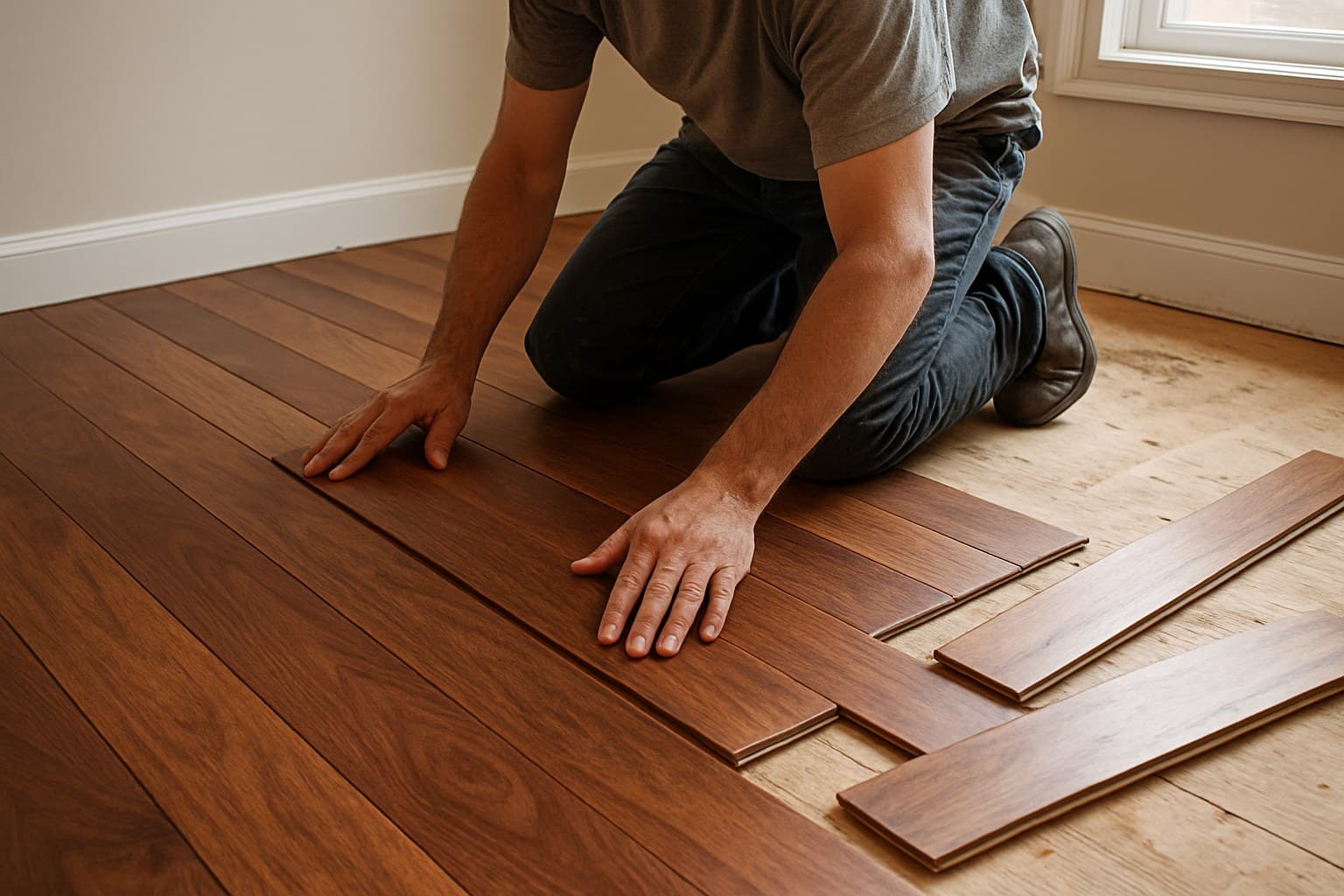
The density that resists dents also dulls ordinary steel saw blades quickly. You cut Ipe with carbide-tipped blades, and you pre-drill a pilot hole for every fastener. Skip the pre-drill and the boards split right at the tongue. That's the single biggest surprise for anyone treating it like oak.
Before any board goes down, check the subfloor first. Confirm it's flat, and run a moisture meter over it, a tool that reads how much moisture is sitting in the subfloor. A dense exotic laid over a damp or wavy subfloor will cup, crown, or leave gaps once it settles in. Skip that check and you'll be pulling boards back up within the year.
Because most stock is unfinished, you also have on-site sanding and sealing to manage. That brings dust through the house, dry time between coats, and real skill in laying the finish down even. Rushing the finish is a classic reason an installer gets called back.
So be honest with yourself on DIY versus hiring out. This is not a click-together beginner floor. Pre-drilling every fastener, nailing or gluing solid boards, cutting with carbide, and finishing on site push most homeowners toward a pro. Stairs and basements run more than an open room, because the cuts, transitions, and moisture control get trickier in both.
What Brazilian Walnut Flooring Really Costs
There's no single national price for this floor. It's imported exotic stock, so the number swings by region and grade. Treat these as rough starting ranges and confirm with two or three local quotes.
For solid, unfinished, clear grade, material typically runs roughly $5 to $9 per square foot. Character grade sits lower, and engineered pricing varies a lot by brand. Install labor typically runs roughly $3 to $6 per square foot. Because it usually ships unfinished, on-site sand-and-seal adds roughly $2 to $4 per square foot on top of that.
| Cost piece | Low ($/sq ft) | High ($/sq ft) |
|---|---|---|
| Material (solid, clear) | 5 | 9 |
| Install labor | 3 | 6 |
| Site sand & finish | 2 | 4 |
Typical per-square-foot ranges, split by material versus labor versus finishing.
What moves the number: grade, board width, herringbone or other patterns, your finish choice, how much subfloor prep the job needs, and your region. Add the stair and basement premium on top when the job isn't a simple open room. Stack the full ranges and a finished solid Ipe floor commonly lands somewhere around $10 to $19 per square foot installed and finished, though local quotes are the only way to know your actual number.
Is Brazilian Walnut a Responsible Choice?
Here's the downside most sellers skip. Ipe grows slowly in tropical forests, and unverified or illegal logging is a real concern with this species. That doesn't make it off-limits, but it does mean where your boards came from matters as much as how they look.
Before you buy, ask the seller a few plain questions. Is there an FSC certificate, meaning the wood was certified by the Forest Stewardship Council as responsibly harvested? Can they show the country of origin and legal-harvest paperwork, the chain-of-custody documents that prove the wood was cut and traded legally? If a seller can't answer, that's your answer.
Engineered planks are worth a mention here too. They use far less of the exotic species per board, since it's a thin veneer over a domestic plywood core. That's a lower-impact way to get the same look. Some manufacturers also publish an Environmental Product Declaration (EPD), a standardized, third-party-reviewed report of a product's environmental footprint. NWFA publishes an industry-wide Engineered Wood Flooring EPD covering factors like raw material sourcing and manufacturing impact, which is worth asking a seller about if sustainability data matters to your decision.
A well-sourced Ipe floor can last decades, and that longevity is part of its environmental case. Just source it carefully instead of grabbing the cheapest unlabeled stock on the rack.