
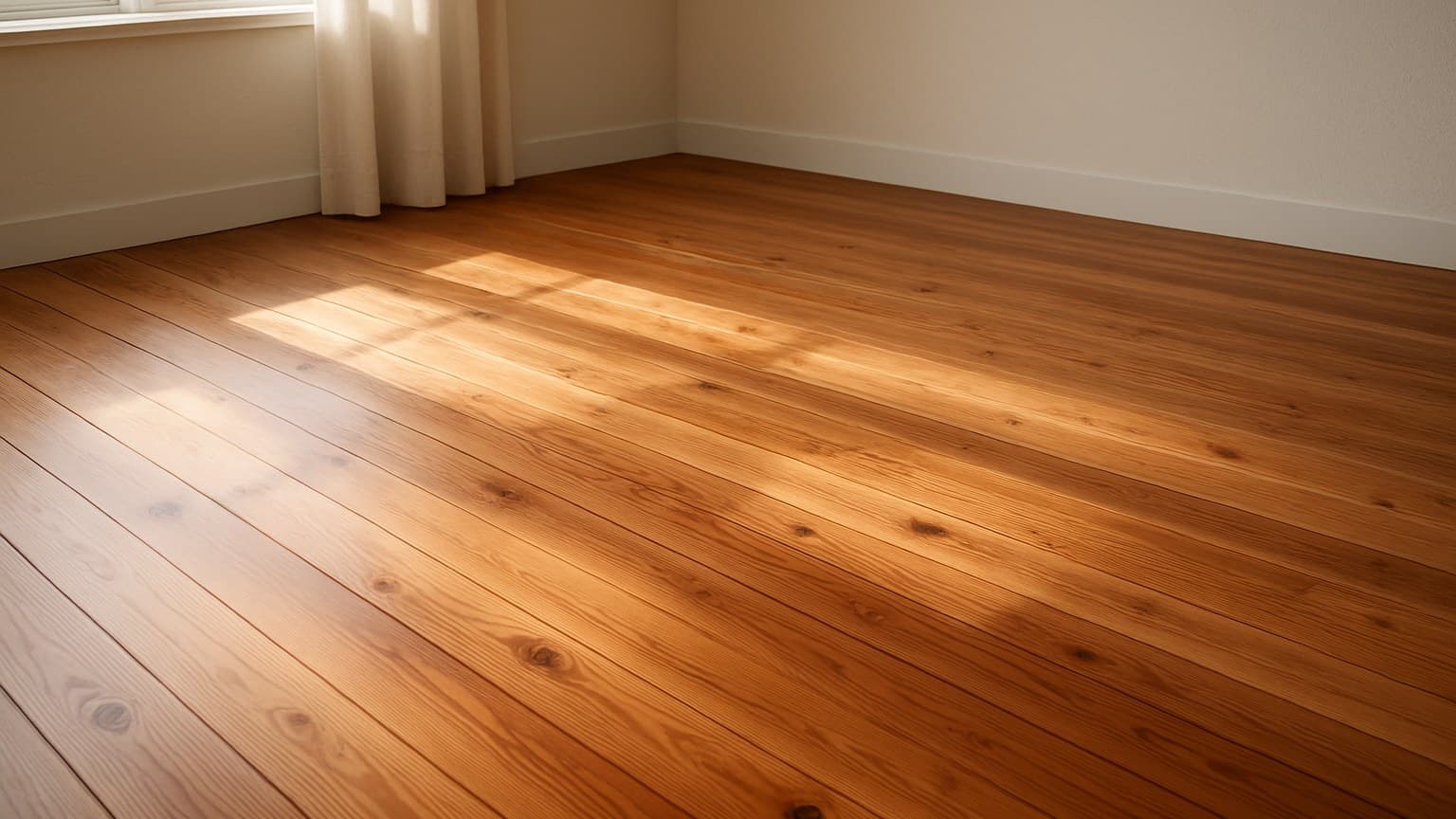
Denise, a homeowner in Asheville, NC, called me after her contractor quoted "cedar hardwood" for her bedroom floor and wanted to know if that was even real. It isn't, cedar is a softwood, not a hardwood, no matter what the flooring aisle calls it. That naming mix-up costs you when the boards land in the wrong room. Here's where cedar actually earns its keep.
Key takeaways
- Cedar is botanically a softwood (a conifer), not a hardwood, no matter what the listing calls it, and that softness is real, not a technicality.
- Aromatic red cedar rates about 900 on the Janka hardness scale versus roughly 1290 for red oak and 1450 for hard maple, so it dents and scratches far more easily.
- Expect aromatic cedar material around $5.29-$7.99 per square foot (Carroll Hardwood pricing), plus roughly $3-$6 per square foot for nail-down labor, with basement and stair jobs costing more than open rooms.
- Cedar earns its place in low-traffic, dry spots like bedrooms and closets, not kitchens, entries, or bathrooms where water and foot traffic punish it.
- Check subfloor flatness and moisture before install, and give cedar a durable topcoat plus room to move, since tight-fit boards buckle and wet cedar swells then cups.
Is Cedar Actually a Hardwood? The Botanical Truth
No. Cedar is a softwood, a conifer that grows needles and cones, not a hardwood. According to the National Wood Flooring Association (NWFA), the hardwood/softwood split is a matter of tree type, not toughness: hardwoods come from broad-leaved trees that drop their leaves in fall (oak, maple, walnut), while softwoods come from evergreen conifers like cedar, pine, and fir. Walnut sits at the pricier end of that broad-leaved lineup, so if you're weighing a true hardwood against cedar's softwood price tag, it helps to know what walnut hardwood flooring actually costs first.
Here's the part that trips people up. "Hardwood" and "softwood" name the kind of tree, not how hard the wood feels underfoot. So when a flooring listing tags cedar as hardwood, it's botanically wrong, even if the marketing sounds right. It's the same kind of labeling confusion that leaves shoppers wondering whether Pergo hardwood is genuine solid wood before they buy it.
That naming mix-up is exactly why folks worry cedar is too soft to be a floor. The rest of this article tests that worry with real numbers instead of vibes. Softwood does not automatically mean fragile, Douglas fir floors have held up in old houses for a century. But with cedar, soft really does mean softer than the oak most floors are built from.
Cedar is a softwood no matter what the flooring aisle calls it, and with cedar that label happens to be a fair warning, not just botany trivia.
Which Cedars End Up on Floors
Two cedars show up in flooring, and they are not equals. Aromatic red cedar (also called Eastern red cedar) is the reddish, knotty, strong-smelling one, and it's the more floor-worthy of the pair because it's denser. Western red cedar is softer, warmer in tone, and shows up far more often as siding and closet lining than as a walked-on floor.
If someone hands you a "cedar floor," it's almost always the aromatic kind. Western red cedar is genuinely too soft for most floors, and I'd steer you off it for anything but a closet.
That famous cedar smell, the one that keeps moths out of a chest, is real but fades over years. It's strongest in a sealed closet and weakest in an open, ventilated room. Cedar does resist rot and insects better than a lot of woods, but that's a wood trait, not a promise the floor stays new looking.
One more thing if you're choosing cedar for green reasons: don't assume it's automatically eco-friendly. Where and how the wood is harvested matters more than the species name, and it's worth reading up on what an eco label on the box actually tells you before you pay a premium for it.
| Species | Janka | Look | Aroma | Floor verdict |
|---|---|---|---|---|
| Aromatic/Eastern Red Cedar | ~900 | Reddish with pale streaks, heavy knots | Strong, long-lasting | The usual choice; softer than oak but usable in low-traffic rooms |
| Western Red Cedar | ~350 | Warm reddish-brown, straighter grain | Milder | Very soft; better as siding or closet lining than a walked-on floor |
Source: the NWFA wood species guide
Aromatic red cedar versus western red cedar, compared for use as flooring.
How Hard Is Cedar, Really? The Janka Numbers
The Janka test measures the force it takes to press a small steel ball halfway into the wood. Higher number, better the floor resists dents and scratches. It's the single most useful number when you're asking "will this floor survive my house."
Aromatic red cedar sits around 900 lbf. Red oak, the benchmark floor most homes use, is about 1290. Hard maple is roughly 1450. Western red cedar is way down at about 350, softer than white pine. Cedar isn't a little softer than oak. It's in a different weight class.
What that means in a real room: a dropped pan, a dog's claws, a dragged chair leg all leave marks in cedar that oak would barely notice. That's not a defect, it's physics. If you want a light-colored floor that still shrugs off traffic, a harder species or a tough look-alike is worth pricing before you commit, which is why folks cross-shop bamboo against hardwood when they want light and hard at once.
| Wood | Janka (lbf) | Note |
|---|---|---|
| Western Red Cedar | 350 | Softer than most pine |
| Eastern White Pine | 380 | Common soft floor |
| Southern Yellow Pine | 690 | Harder pine |
| Aromatic/Eastern Red Cedar | 900 | The floor-grade cedar |
| Red Oak | 1290 | The benchmark hardwood floor |
| Hard (Sugar) Maple | 1450 | Among the harder common floors |
Source: the USDA Forest Products Laboratory's Janka hardness figures
The Real Pros and Cons of a Cedar Floor
Cedar is a looks-and-character floor, not a toughness floor. That's the honest one-line verdict, and everything below flows from it.
On the plus side, cedar brings a warm reddish color, deep knots, and a rustic look that a clean oak floor can't fake. It carries that cedar smell, it's cheap compared to most hardwoods, and it's DIY-friendly, some people even rip floor boards out of fence pickets. It also resists rot and insects better than a lot of woods, which is a genuine point in its favor. If rustic is the whole reason you're here, cedar delivers a character that some people chase with pricey hand-scraped hardwood instead.
The cons are the flip side of soft. Cedar dents and scratches easily at Janka ~900, it splits when you nail too close to the ends of a board, and it shows traffic wear fast in a busy room. Be clear on the moisture claim: rot resistance is not the same as waterproof. Cedar still swells when it gets wet and still dents under a heel. It resists bugs. It doesn't resist your kitchen. That fast-showing wear is worth weighing against color choice too, since light hardwood floors hide scuffs differently than a dark stain does.
What Cedar Flooring Costs, Split by Materials and Labor
Budget for two numbers, not one: the wood and the install. Aromatic red cedar material runs about $5.29 to $7.99 per square foot at Carroll Hardwood's listed pricing, with knotty character grade landing cheaper than clean clear grade. Treat that as one retailer's snapshot rather than a fixed national price, cedar pricing varies by region, grade, and supplier.
Labor sits on top of that. Figure roughly $3 to $6 per square foot for a pro to nail it down in an open room, plus another $2 to $4 per square foot if you sand and topcoat it on site instead of buying prefinished. A 200 square foot bedroom, installed and finished, tends to land somewhere around $2,100 to $3,600 all in.
Two things push that higher. Basement jobs cost more than open rooms because of moisture prep and slower going over concrete, and stairs cost more still because every tread is cut and fit by hand. The DIY fence-picket route can gut the material cost, but it eats hours in ripping, planing, and squaring boards that were never milled to be a floor.
| Line item | Range per sq ft |
|---|---|
| Aromatic cedar material (character to clear) | $5.29 - $7.99 |
| Nail-down labor (pro, open room) | $3 - $6 |
| Site-applied finish (sand + topcoat) | $2 - $4 |
| Worked example, 200 sq ft installed + finished | ~$2,100 - $3,600 total |
Source: Carroll Hardwood's listed aromatic red cedar pricing
"Character Grade" and Why Cedar Is All Knots
If your cedar floor looks like a knotty patchwork, that's the grade, not a flaw. Wood grading, run by groups like the NWFA and NOFMA (National Oak Flooring Manufacturers Association), sorts boards by how clean or busy they look. Per the NWFA/NOFMA unfinished flooring grading standard, clear grade has few knots and even color and costs the most, while character or rustic grade is loaded with knots, streaks, and color swings, and it's cheaper.
Cedar is sold mostly in the busy grades because that's how the tree grows: aromatic red cedar is naturally knotty, with tight pin knots and swirls all through it. Trying to buy long, clear, knot-free cedar is a losing game, and paying up for it defeats the point of choosing cedar in the first place.
The practical read: if you hate knots, cedar is the wrong wood, full stop. If you want knots, buy character grade, expect some boards you'll cut around, and order 10 to 15 percent extra to cover waste from splits and short pieces.
Where a Cedar Floor Actually Belongs
Cedar earns its spot in low-traffic, dry rooms, and nowhere else. Bedrooms, closets, a reading nook, a guest room, a low-use den. Those are the places where cedar's softness never gets tested and its warm color and smell get to do their thing. That same room-by-room logic applies well beyond cedar, which is why it's worth working through how to choose solid vs. engineered hardwood floors for every other space in the house.
Keep it out of kitchens, entryways, and mudrooms. Those rooms eat soft floors alive with grit, dropped pans, and constant foot traffic. Keep cedar out of bathrooms and laundry rooms entirely: standing water and a soft, absorbent softwood are a bad match no matter how rot-resistant the species is.
The closet is cedar's home-field advantage. It's low traffic, it's dry, and the sealed space actually holds that moth-repelling smell instead of letting it drift off. If you only cedar one space in the house, make it a closet.
Installing Cedar: Subfloor, Moisture, and the Finish
Before a single board goes down, check two things: is the subfloor flat, and is it dry. NWFA installation guidelines call for confirming both subfloor flatness and moisture content before any wood floor goes down, and cedar's softness makes a bad subfloor show through faster than it would under a harder species. Run a straightedge across the floor to find high and low spots, and use a moisture meter (a handheld tool that reads how wet the wood or slab is) on both the subfloor and the cedar itself.
I don't treat that moisture check as optional anymore, and it's from being burned. A customer in Greenville, SC, I'll call her Renee, talked me out of a moisture test on her bedroom job to save an afternoon, and I let her. The floor cupped before the season was out, and I relaid it on my own dime. Skipping the reading never saves time, it just moves the cost to later.
Give cedar room to move. Every board expands and contracts with humidity, so leave the perimeter expansion gap that NWFA installation guidelines and the manufacturer's instructions call for, hidden under the baseboard. Tight-fit boards with no gap will buckle, and wet cedar swells and then cups. What sits under the wood matters too, from the underlayment to the vapor control, so it's worth knowing what actually goes under a wood floor before you commit to a method.
Finish is where you buy back some durability. A soft wood like cedar needs a tough topcoat, a good polyurethane or hardwax oil, and it needs recoating sooner than oak would. It won't make cedar as hard as maple, but it's the difference between a floor that patinas gracefully and one that looks beat in a year.