A homeowner in Fenton asked me mid-quote whether sanding her wire brushed hardwood flooring would erase the texture she paid extra for. Fair worry, the grooves that hide scratches are cut into the wood itself, not sprayed on top. Get that one fact wrong and you can sand the look away for good.
Key takeaways
- The wire-brushed texture is milled into the top wear layer, so a full drum sanding flattens it back to smooth; a screen-and-recoat or light re-brush keeps the look.
- On engineered planks you can only refinish as far as the veneer allows, so check the wear-layer thickness on the spec sheet before you buy, not after.
- Oak and hickory take a brush far better than maple; harder, more open grain holds the texture and hides scratches and pet hair.
- Expect materials around $4-9 per square foot and installer labor around $3-6 per square foot, with stairs and basements costing more than open rooms.
- Vet quality with NWFA/NOFMA grade names on the box, and clean the grooves with a vacuum brush head and a pH-neutral cleaner, never a soaking wet mop.
What Is Wire-Brushed Hardwood Flooring?
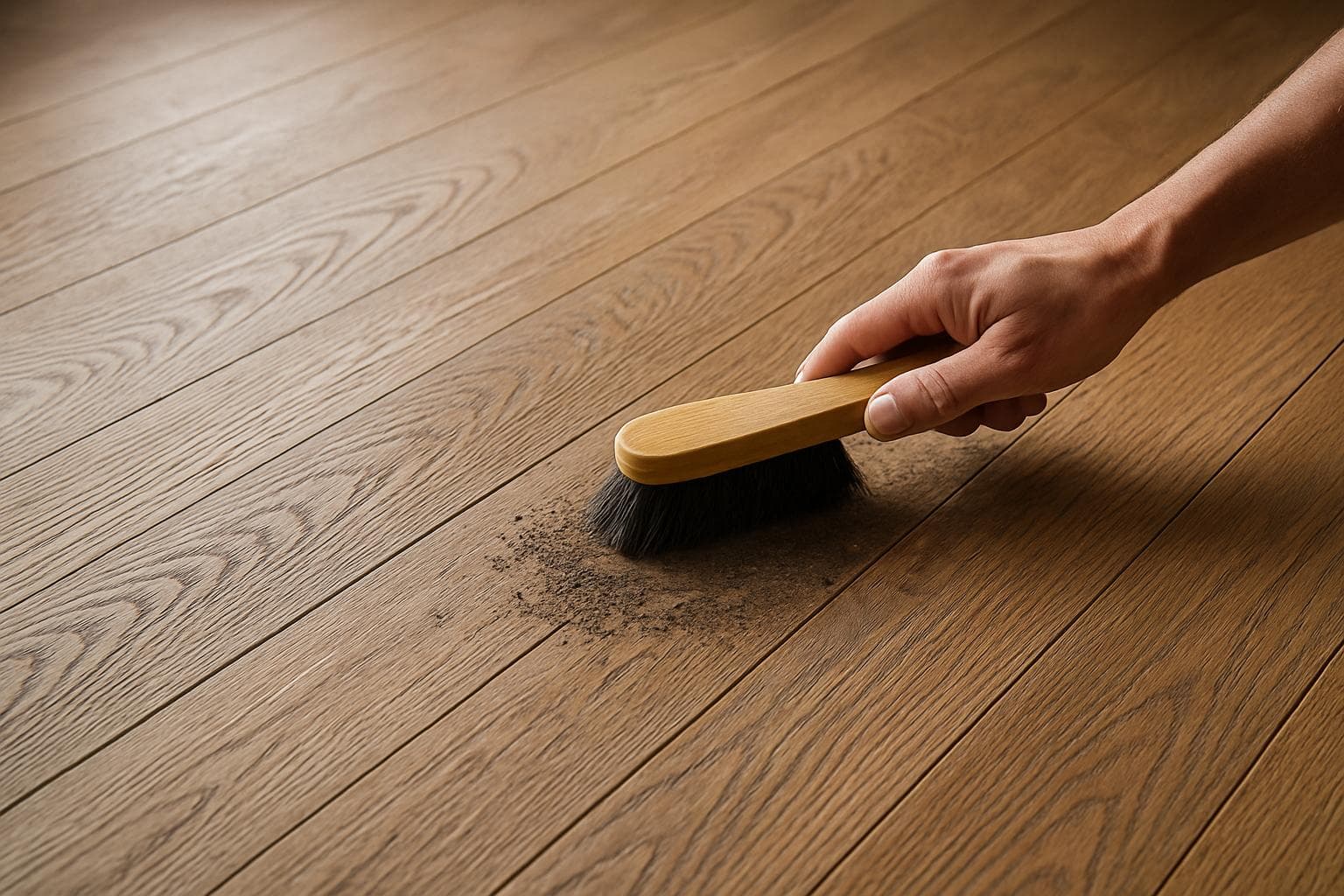
Wire-brushed hardwood is real wood that gets dragged past a stiff steel-bristle brush at the factory. That brush scrapes out the soft, light-colored fibers sitting between the harder grain lines. What's left is a lightly textured board where the tough grain stands up a little and the soft wood dips down.
People buy it for one practical reason: it hides everyday scratches and dust better than a smooth floor does. The low spots catch light unevenly, so a small scratch, a dropped toy, or a day's worth of dust blends in instead of jumping out at you. On a glossy smooth floor every one of those shows. On a brushed floor they mostly disappear. Weighed against the tradeoffs it brings elsewhere, that forgiveness is one line item in the larger hardwood flooring pros and cons that I map out separately.
Here's the fact that drives this whole article: that texture is milled into the wood, not painted on. It lives inside the top wear layer, the same layer you would sand if you ever refinished. So the brushing isn't a coating you can renew. It's part of the board.
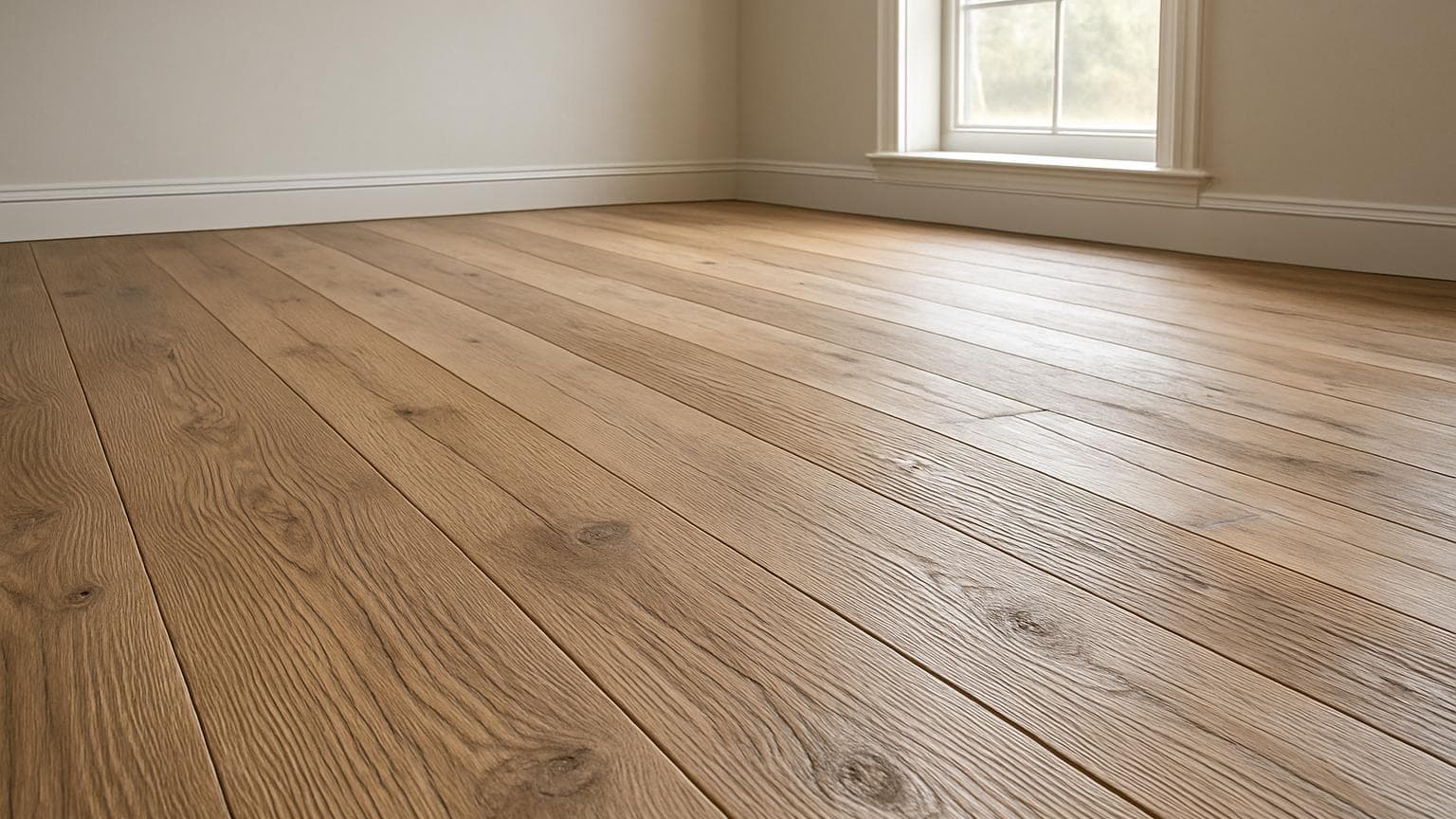
You'll almost always see it paired with a matte or satin finish, meaning low-shine rather than mirror-bright. That combination reads farmhouse, rustic, or transitional. If you want a slick high-gloss modern look, wire-brushed is the wrong tool.
Can You Refinish Wire-Brushed Hardwood? The Straight Answer
Yes, you can refinish it. But a full drum sanding grinds off the raised grain and leaves you with a smooth floor, because the brushing only lives in the top sliver of the wear layer. Sand deep enough to erase scratches and you erase the texture right along with them.
Refinishing is one of solid hardwood's signature advantages, according to the National Wood Flooring Association's feature on refinishable flooring, sanding and recoating is what lets a hardwood floor outlast flooring types that have to be replaced instead of renewed. That advantage still applies to a wire-brushed floor, but only within whatever wear layer is left once the brushing has already thinned it. That same longevity is also the strongest sustainability argument solid hardwood has going for it, a case I make in full in the guide on sustainable hardwood flooring.
That's the part most guides skip. You have three real options, and each does something different to the look.
Full Sand vs. Screen-and-Recoat
A full sand-and-refinish takes several passes down into the wood. It's what you do for deep gouges or when you've decided you actually want a smooth floor now. The texture does not survive it.
A screen-and-recoat, sometimes called a buff and coat, is gentler. It scuffs up only the old finish with a screen pad, then lays down fresh finish on top. It never touches the wood, so the grooves stay. This is the move for a floor whose finish looks tired but whose grain is still intact.
There's also pro re-brushing. A skilled crew can run a brush tool over a sanded floor to cut the fiber back out and bring the texture back. It costs more and not every installer offers it, but it's real.
| Method | What it removes | Texture result | When it makes sense |
|---|---|---|---|
| Full sand & refinish | Several passes into the wear layer | Flattened to smooth; brushing is gone | Deep gouges, or you want a smooth floor now |
| Screen & recoat (buff and coat) | Only the old finish, not the wood | Texture preserved | Finish looks tired but grain is intact |
| Pro re-brushing | Light fiber only, redone with a brush tool | Texture restored or deepened | You sanded once and want the look back |
Source: the wear-layer depths I measure at the plank edges before I quote any re-sand
Refinishing paths for a wire-brushed floor and what each one does to the raised grain.
Why the Texture Survives Most Wear
The texture is what hides wear in the first place, so a brushed floor looks presentable years longer than a smooth glossy one. A recoat every several years does the job for a lot of owners.
Before I ever quote a re-sand, I measure the remaining wear layer at the plank edges. I've caught solid oak that a previous owner had refinished four or five times, sanded so close to the tongue in one corner that there was almost nothing left to take off. The top looked fine. The math didn't. That check saves people from paying for a sanding the floor can't survive.
Wire-Brushed vs. Hand-Scraped vs. Distressed vs. Smooth
These four textures get lumped together, but they don't look or wear the same. Wire-brushed is a fine, even texture that follows the grain. Hand-scraped shows longer gouges and gentle waves, like someone worked the board by hand. Distressed adds dents, marks, and fake aging. Smooth is flat, with nothing to catch light.
The practical difference is how each one hides wear and which room it suits. Wire-brushed and hand-scraped both hide scratches well. Distressed hides them too, since it already looks beat up on purpose. Smooth, especially in high gloss, shows footprints and scratches, that's why texture sells in homes with kids and dogs. That deliberately beat-up look is exactly what cabin grade boards trade on, and I cover how that grade holds up in the guide on cabin grade hardwood flooring.
| Texture | Look | Hides wear | Best for |
|---|---|---|---|
| Wire-brushed | Fine texture along the grain | Very well | Farmhouse, transitional, busy family rooms |
| Hand-scraped | Long gouges and gentle waves | Very well | Rustic, character-heavy spaces |
| Distressed | Added dents, marks, aging | Well | Reclaimed and old-world styles |
| Smooth | Flat, clean, uniform | Poorly on high gloss | Modern, minimalist, low-shine matte |
Source: floors I've installed and later pulled up across all four textures
Four common hardwood surface textures and where each one earns its keep.
Wire-brushed and hand-scraped are the two people cross-shop most. If that's you, the details that separate a real hand-scraped floor from a machine-stamped fake matter a lot, and I break those down in the guide on how to tell real hand scraped hardwood from fake.
Best Species for Wire Brushing: Oak, Hickory, and Maple
Oak and hickory take a brush beautifully. Their grain is open and hard, so the brush pulls out plenty of soft fiber and leaves a texture with real depth. Maple has tight, subtle grain, so a brush barely bites and the result looks shallow and flat. If you want brushed character, maple fights you. If oak and hickory still feel too common for what you want, some of the more dramatic-grained species get their own tradeoffs in the guide on exotic hardwood flooring.
Hardness matters too, and the standard yardstick is the Janka score, a test of how much force a wood takes before it dents. Higher Janka means the floor shrugs off more abuse. That's why hickory is my pick for heavy-traffic rooms and entries.
| Species | Grain | Brushing | Notes |
|---|---|---|---|
| White/Red Oak | Open, prominent | Excellent, deep texture | The safe all-rounder |
| Hickory | Bold, high contrast | Excellent, very durable | Best for heavy traffic |
| Maple | Tight, subtle | Shallow, low character | Less suited to brushing |
| Walnut | Softer, rich color | Good but softer underfoot | Better in low-traffic rooms |
Source: how oak, hickory, and maple have taken a brush on the jobs I've run
How four species respond to a wire brush, based on floors I've installed.
There's a real tradeoff on brush depth, too. A deeper brush hides more but leaves deeper grooves to clean. A light brush on oak is the low-regret middle ground for most homes: enough texture to hide wear, shallow enough to wipe out easily.
Walnut is softer and pricier, and it brushes fine, but I'd keep it to low-traffic rooms like a formal sitting room or a bedroom. If you're weighing that species, the numbers in the walnut hardwood flooring cost guide will tell you fast whether it fits your budget.
Solid vs. Engineered: What Your Wear Layer Lets You Refinish
This choice decides how many times you can ever refinish, so it matters more than the finish name. Solid boards are one piece of wood, so they can usually be sanded several times over their life. An engineered plank is a thin real-wood veneer glued over a plywood-style core, and you can only refinish as far as that veneer allows. The maker publishes that thickness.
That's the trap with wire-brushed engineered. A thin veneer plus a brushed texture already sitting in the top of it means one aggressive sanding could blow right through to the core. Read the spec sheet for veneer thickness before you buy, not after. A veneer thick enough for a future sanding is worth paying up for if you plan to keep the floor a long time.
Where each belongs comes down to what's under the floor. Engineered's plywood core stays stable over concrete and below grade, like a basement, where solid wood generally isn't recommended because it swells and shrinks with moisture. Solid is happiest on a wood subfloor above ground. NWFA installation guidelines call for testing slab moisture before installing over concrete, since excess moisture can undermine the adhesive and, over time, the finish, one more reason to get that check done before wire-brushed boards go down in a basement.
Whichever you pick, the layer under it and the moisture check come first. What you install over slab, and the vapor and underlayment choices that go with it, are covered in the guide on what to put under hardwood flooring. And if you're leaning engineered for a basement, click-together planks change the install a lot, which I get into in the guide on whether click hardwood flooring is worth it. For the fuller solid-versus-engineered breakdown by room, see how to pick solid vs. engineered hardwood.
What Wire-Brushed Hardwood Actually Costs
Wire-brushed hardwood runs a little more than the same board with a plain smooth finish, because that extra factory step gets built into the price. As a rough, regionally variable range, materials often land somewhere around $4 to $9 per square foot and installer labor around $3 to $6 per square foot. That puts a typical installed floor very roughly in the $7 to $15 per square foot range before extras, treat these as ballpark figures rather than a quote.
Two things move labor. Room shape is the big one. An open living room lays fast, so it prices at the low end. Stairs are slow, fiddly, hand-cut work and cost noticeably more per step. Basements cost more than open rooms too, because the slab needs moisture testing, sometimes a vapor barrier, and often more floor prep before a single board goes down.
| Cost part | Per square foot | What moves it |
|---|---|---|
| Materials (brushed oak or hickory) | $4 - $9 | Species, veneer thickness, grade |
| Labor (open rooms) | $3 - $6 | Room shape, subfloor prep |
| Stairs and basements | Higher than open rooms | Hand-cut steps, moisture prep on slab |
Installed cost ranges for wire-brushed hardwood, split into materials and labor. Confirm against local quotes, since species and prep swing the number.
I stopped quoting a flat rate by the square foot years ago. A job packed with closets, doorways, and a bay window once ate a full extra day, so now I count the cut-heavy areas separately. The open middle of a room is never where the time goes.
Cleaning the Grooves and Vetting Quality Before You Buy
Brushed floors aren't hard to clean, but the grooves change your method. Dry first: run a vacuum with a soft brush head, or a microfiber dust mop, and let it pull dust out of the low spots. Skip the beater-bar vacuum meant for carpet. Then damp-mop with a pH-neutral cleaner, meaning one that's balanced, not acidic or harsh, and made for wood. Wring it out well. A soaking wet mop is the fastest way to ruin any wood floor, textured or not.
To vet quality before you buy, look at the grade printed on the box. Reputable brands grade their wood against standards from the National Wood Flooring Association (NWFA) and its old milling arm, NOFMA, short for the National Oak Flooring Manufacturers Association. Per the NWFA/NOFMA grading rules for unfinished and factory-finished flooring, terms like "clear," "select," and "#1 common" are formally defined by how much color variation, knots, and mineral streak each grade allows; some brands layer their own marketing terms, like "character," on top of those official grades. A cheap floor with no grade listed anywhere is a floor that doesn't want you asking.
One more buying check: match the brush depth to your life. A light brush is easy to keep clean and still hides plenty. A deep, heavily brushed board looks dramatic in the showroom but asks for more vacuuming at home. On oak or hickory, a moderate brush is the sweet spot I steer most families toward.