
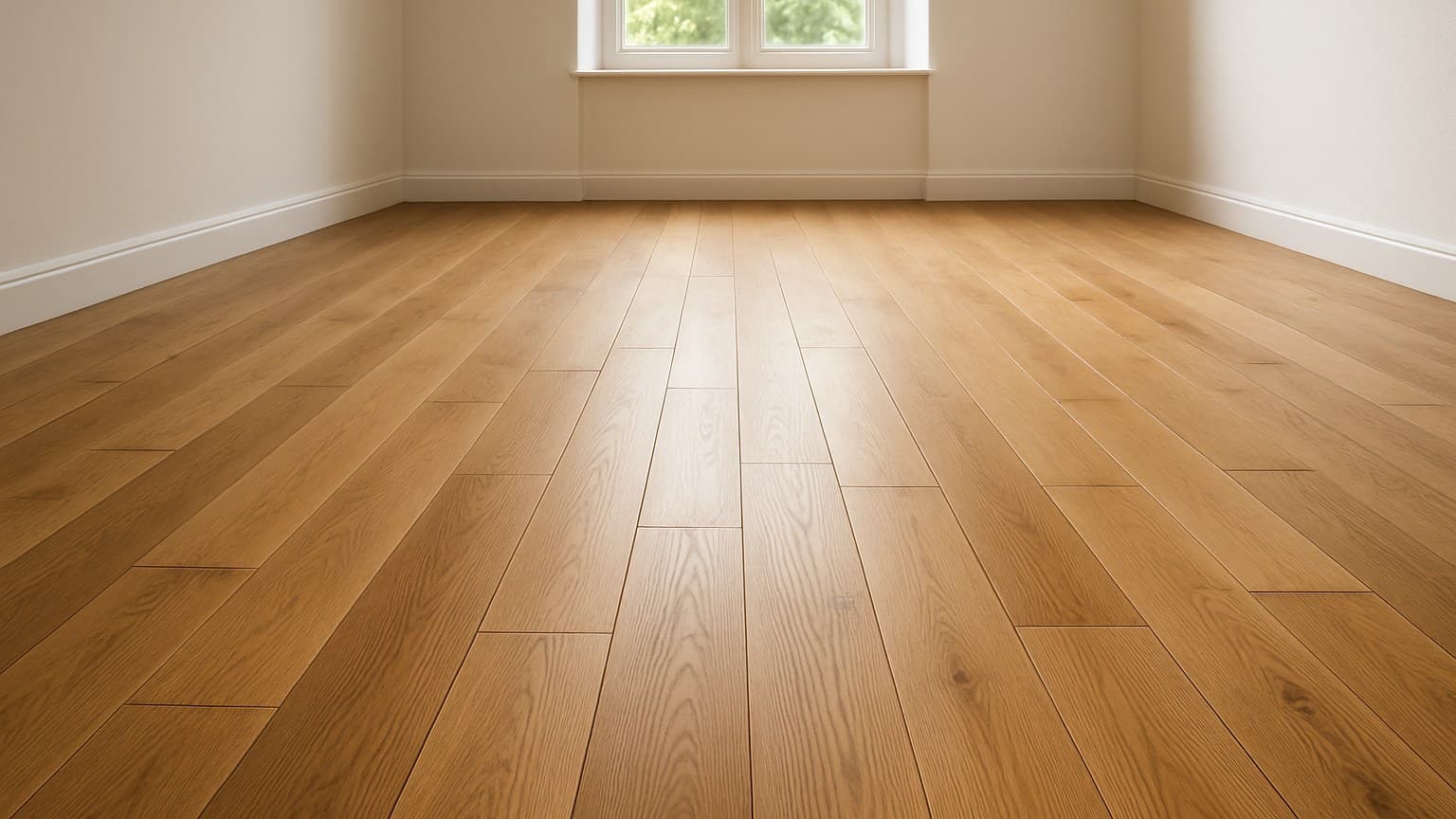
The trouble with weighing hardwood flooring pros and cons is that half the floors sold as "wood" aren't wood at all, and one skipped moisture test can cup a whole room. I relaid a cupped white oak floor for a homeowner in Tulsa after she waved off a moisture check to save an afternoon. Here's the honest math instead.
Key takeaways
- Solid and engineered are real wood; laminate and LVT just print a wood photo on a core, so they are not hardwood by the NWFA's definition.
- Hardness varies a lot: hickory rates about 1820 on the Janka scale, red oak about 1290, and black walnut only about 1010, so walnut dents far easier in busy rooms.
- Installed hardwood typically runs about $6-22 per sq ft (materials plus labor), and stairs or basement jobs cost more than open rooms.
- Because you can refinish it for decades, hardwood's cost per year drops low, but it warps in wet or humid rooms and is not waterproof.
- Skip solid hardwood in bathrooms and basements; test the slab for moisture and use engineered over concrete.
Step 1: Sort Out What Actually Counts as Hardwood
Before you can judge hardwood, you have to know which floors even qualify. According to the National Wood Flooring Association's (NWFA) Homeowners' Handbook to Real Wood Floors, only two products meet the industry's definition of "real wood": solid and engineered.
Solid hardwood is one single piece of wood, top to bottom. Engineered hardwood is a thin layer of real wood, called a veneer, glued over a plywood-style core. That core moves less than a solid plank, so engineered handles concrete and below-grade rooms better, where solid is not recommended. If you're still weighing the two against each other and trying to match a species to your room, this guide to choosing solid versus engineered hardwood floors walks through the tradeoffs in more depth.
Laminate and luxury vinyl (LVT or LVP) get lumped in as "wood floors" all the time, but they contain no real wood layer. Laminate is a printed photo of wood pressed under hard plastic. LVT is that same photo on a vinyl core. They can look great, but they are their own category, not hardwood. If you're specifically eyeing a branded engineered line, this look at whether Pergo hardwood counts as real wood breaks down what's actually layered inside those planks.
One catch with engineered: the veneer thickness the maker publishes sets how many times, if ever, you can sand it back. A thin veneer may only take one light refinish, or none. If you're looking at the floating, snap-together kind, my rundown on click hardwood flooring covers how those systems hold up. That veneer is bonded to its core with adhesives, so if indoor air quality matters to you, it helps to know what a formaldehyde-free label really means before you shop by that claim alone.
Step 2: Weigh the Pros of Hardwood
The biggest pro is that you can refinish real wood instead of ripping it out. Solid hardwood can be sanded several times, so one floor can outlive its first finish and keep going for decades. If a distressed, hand-scraped finish is part of the look you're after, it's worth learning how to tell real hand-scraped flooring from fake before you pay a premium for it.
Advantages That Actually Hold Up
Resale is a real one. Buyers see hardwood and expect to pay more, and the look doesn't date the way a trendy vinyl color does five years on.
It's easy to keep clean, too. There are no fibers to trap dust, dander, or pet hair, which matters to anyone in the house who fights allergies.
Sourcing is a pro too, and it's the one manmade floors genuinely can't match: wood is a renewable resource, regrown over decades, while vinyl and laminate cores are petroleum- and resin-based and don't renew at all. Lumber sold in the U.S. also falls under the Lacey Act, which makes it illegal to trade timber harvested in violation of the laws where it was cut. If responsible sourcing matters to your purchase, look for Forest Stewardship Council (FSC) certification on the product, it tracks a board back to a forest managed under independently audited sustainability standards, and most major hardwood brands carry at least one FSC-certified line.
Kept dry, solid hardwood commonly lasts several decades, industry lifespan estimates, including the figures behind the NWFA's Life Cycle Cost Analysis, range from roughly 50 to 100-plus years depending on species, finish, and care. That long life is a big part of why the cost math works in its favor, which I'll show you the numbers on below.
Step 3: Weigh the Cons of Hardwood
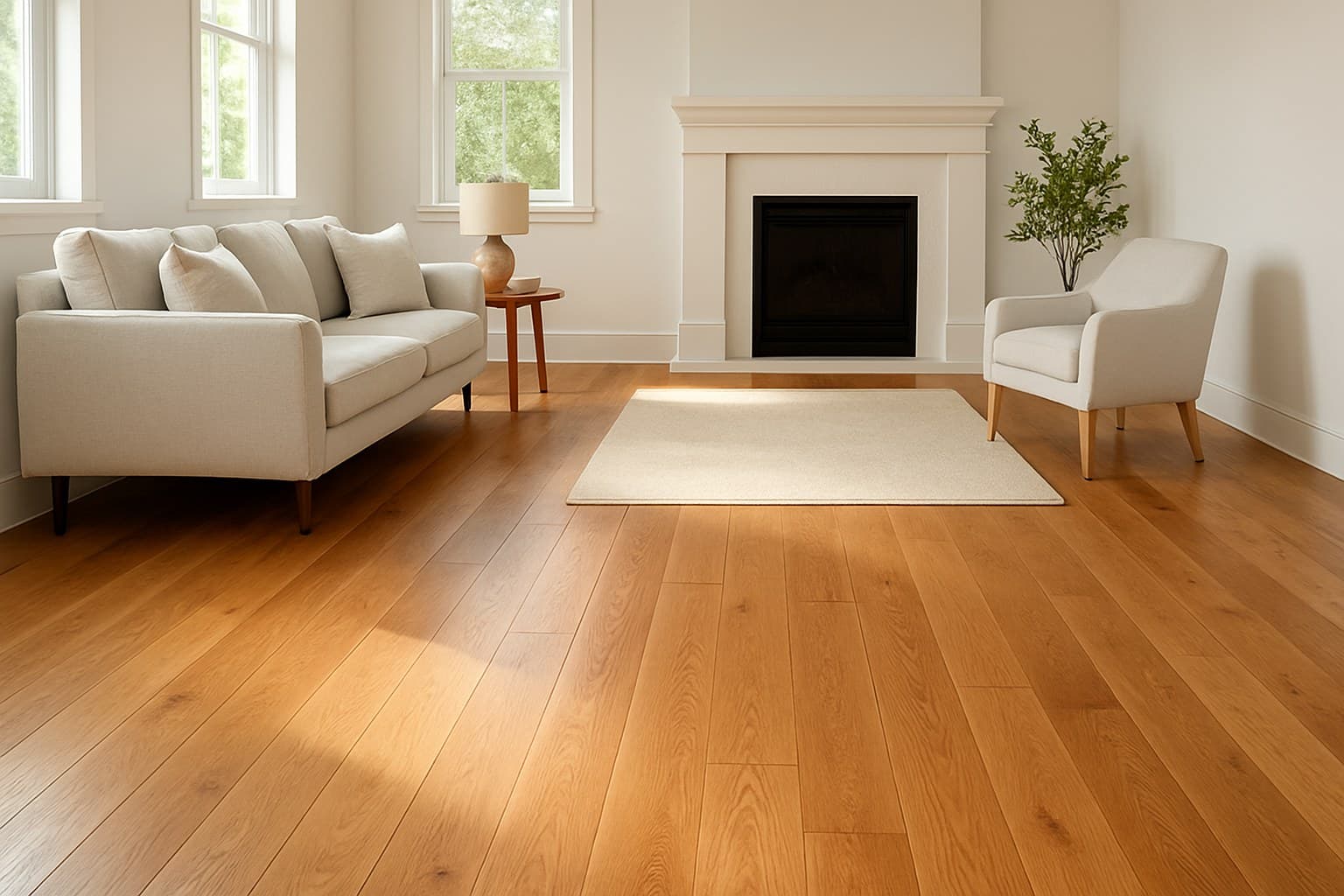
Moisture is the enemy, full stop. Wood cups, crowns, and warps in wet or humid rooms, and no hardwood is waterproof. The board edges and seams swell first, long before the face of the plank shows trouble.
I learned that the expensive way, on a job for a homeowner in Tulsa. She talked me out of a moisture test to save an afternoon, and I let her. The floor cupped before the season was out, and I relaid it on my own dime rather than argue over whose call it was. Now the test is never optional on my jobs.
The other cons are simpler. Hardwood scratches and dents from grit, high heels, and dog claws. A harder species helps, but nothing is dent-proof. The upfront cost runs higher than laminate or LVT. And without a decent underlayment, a wood floor can sound hollow and loud underfoot, which is a complaint a lot of guides skip.
Before any install, the subfloor has to be flat and dry, the wood usually needs to acclimate to the home's temperature and humidity, per NWFA acclimation guidelines, before it goes down, and in some regions termites are a real risk. Budget for the prep, not just the planks.
Hardness by Species: The Janka Table
Janka is just a dent test: a machine presses a steel ball into the wood, and the force it takes to sink it halfway becomes the rating. A higher number means a harder, more dent-resistant floor.
Here's how the species people actually ask about stack up.
| Species | Janka rating (lbf) | What it means |
|---|---|---|
| Hickory | 1820 | Very hard, best for high-traffic rooms and pets |
| Hard (sugar) maple | 1450 | Tough and tight-grained, good all-rounder |
| White oak | 1360 | Durable and steadier against moisture than red oak |
| White ash | 1320 | Springy and hard, holds up well |
| Red oak | 1290 | The common benchmark, plenty durable |
| Black walnut | 1010 | Softer, dents easier in busy rooms |
Source: the standard Janka hardness ratings published for each wood species
Janka hardness ratings for the wood species homeowners ask about most.
In real life, hickory shrugs off dog claws in a busy hallway, while black walnut is soft enough to mark under a chair leg dragged the wrong way. But harder isn't automatically better. The very hard species are tougher to sand and refinish, and they cost more to work. If you love the color anyway, see what walnut hardwood flooring actually costs before you commit.
The Real Cost Over Time
Split the price honestly and it's two numbers, not one. Materials run roughly $5-15 per square foot depending on species and grade. Labor runs about $3-8 per square foot in an open room, and more where the work gets fiddly. Stairs and basement jobs cost the most, because stairs are slow hand-work and a basement slab needs extra moisture prep.
The number the vague "it's expensive" pages never run is cost per year: installed cost divided by lifespan. Say a solid oak floor installs at $11 per square foot and lasts 60 years. That's about $0.18 per square foot each year. (That $0.18 is my own arithmetic, installed cost divided by lifespan, not a line item pulled from NWFA's PDF; I can't attribute specific dollar figures to that report that aren't actually in it. What I can point to is that the NWFA's own 2023 Life Cycle Cost Analysis uses this same installed-cost-over-lifespan logic and reaches the same directional result.) Because you refinish instead of replacing, hardwood drops below laminate or LVT over a few decades, even though day one it costs more. The NWFA reached a similar conclusion in its 2023 Life Cycle Cost Analysis, which modeled annualized costs across 18 flooring types in a commercial building setting and found that longer-lived materials like wood carry a lower cost per year despite a higher installed price.
| Floor type | Installed $/sq ft | Typical lifespan | Cost per year/sq ft |
|---|---|---|---|
| Solid oak hardwood | $8-15 | 50-100 yrs | about $0.10-0.30 |
| Engineered hardwood | $7-14 | 25-40 yrs | about $0.20-0.55 |
| Laminate | $3-7 | 15-25 yrs | about $0.15-0.45 |
| LVT / LVP | $3-8 | 15-25 yrs | about $0.15-0.50 |
Source: the installed quotes I write and the per-year math I run across a floor's lifespan
Installed price and the cost-per-year figure that price works out to over each floor's lifespan.
Here's where the day-one dollars actually go, and why the room matters:
| Cost component | $/sq ft |
|---|---|
| Labor, open room | $3-8 |
| Labor, stairs or basement | $6-12 |
| Materials | $5-15 |
Where do the savings hide? Mostly in the material line. Buying clearance and closeout hardwood can knock that $5-15 down hard if you can live with the color and quantity on offer.
Hardwood vs Engineered vs Laminate vs LVT
Lay the four side by side on what buyers actually weigh, and no single one wins every room.
| Type | Real wood? | Water tolerance | Refinish? | Cost tier | Best use |
|---|---|---|---|---|---|
| Solid hardwood | Yes | Low, hates moisture | Yes, many times | High | Bedrooms, living rooms, above grade |
| Engineered | Yes (veneer) | Low-medium | Sometimes, veneer-limited | Mid-high | Over concrete, below grade, radiant heat |
| Laminate | No | Medium, varies by line | No | Low | Budget bedrooms and living rooms |
| LVT / LVP | No | High core, seams still vulnerable | No | Low-mid | Kitchens, baths, basements |
The four floors compared on real-wood status, water tolerance, refinishing, cost, and where each fits best.
The laminate-versus-vinyl choice is a straight tradeoff, not a winner. Laminate usually gives a better, lower-cost wood look. LVT and LVP tolerate water far better, though remember that "waterproof core" isn't the same as waterproof seams, and standing water can still creep in at the edges.
Engineered earns its spot over concrete, below grade, and over radiant heat, where solid moves too much. In a basement, what decides the call for me is the moisture reading I take off the slab itself, not any brand's waterproof claim. If that reading comes back high, I've steered people off solid, off engineered, and onto vinyl more than once.
So pick by room and budget: solid in dry living areas you'll keep for decades, engineered over concrete or heat, and vinyl where water is a daily fact of life.