
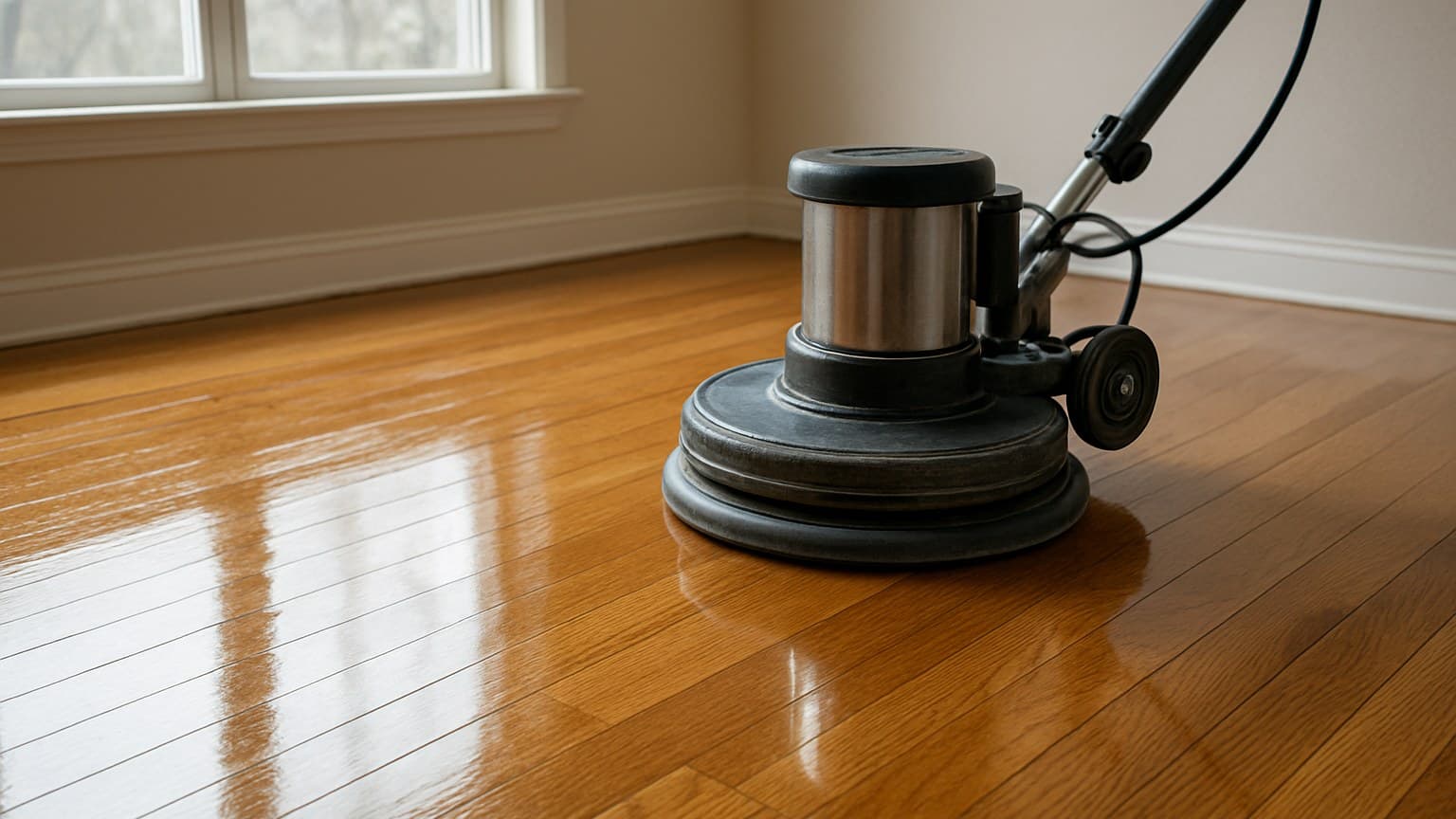
Plenty of folks grab Weiman hardwood polish and restorer the moment a floor looks tired, then get annoyed when a deep scratch still stares back. Here's the real split: it brings back shine and hides fine surface scuffs on a polyurethane-finished floor, but it can't fill a gouge or rebuild finish that's worn down to bare wood. Use it on the wrong floor and it just leaves streaks.
Key takeaways
- Polish and restorer brings back shine and hides fine surface scuffs on polyurethane-finished floors, but it cannot fill gouges or rebuild worn-through finish.
- Run the fingernail test: if your nail glides over the mark, polish can mask it; if it catches hard or hits bare wood, you need a repair kit or a recoat.
- Weiman suggests polishing roughly every 4 months, and high-traffic lanes dull faster from grit, so those paths often need it sooner.
- Safety-sheet data classifies this type of product as a 'wood polish / synthetic oil emulsion' that coats the finish on top, not the wood underneath.
- Only use it on a sealed polyurethane floor; on waxed, oiled, or bare wood it can't bond and will streak or stay tacky.
What a Bottle of Polish Can Actually Fix (and What It Can't)
To spell it out: polish and restorer brings back shine and hides fine surface scuffs on a polyurethane-finished floor. It cannot fill gouges or rebuild finish that's worn down to bare wood.
The reason is simple once you see where it goes. Polish rides on top of the existing finish. It never soaks into the wood. So anything that reaches below the finish is out of its reach, no matter how many coats you put down.
What it genuinely helps: a floor that's gone dull all over, the cloudy haze that builds in walking paths, and hairline scuffs that your fingernail glides right over. Rustic hardwood flooring, with its heavier graining and distressed character marks, tends to hide this kind of everyday dulling even better than a smooth-grained floor, something worth exploring in a guide to rustic hardwood flooring.
What it won't touch: deep scratches that expose raw wood, cupped boards (planks that curl up at the edges while the center stays low, usually from moisture getting under the wood), white or dark water stains, and any floor that's waxed, oiled, or unfinished. On those last three it has nothing to bond to, so it stays tacky or streaks. Wide plank floors move more with humidity swings than narrow strips, which is exactly why white oak wide plank flooring is especially prone to this kind of cupping.
Clean, Polish, or Repair? Run the Fingernail Test First
Before you buy anything, drag a fingernail across the mark. That one move tells you which lane you're in.
If your nail glides over it, the mark is on the surface and a clean or a polish will handle it. If it lightly catches, you're in the finish and polish may still mask it. If it catches hard or you see bare wood, polish is done helping you. That's filler or a recoat.
Below is how the common cases sort out:
| Damage | Fingernail test | Right fix |
|---|---|---|
| Dull floor, no real scratch | Nail glides | Clean, then polish |
| Fine surface scuff | Nail doesn't catch | Polish hides it |
| Light scratch in the finish | Nail lightly catches | Cleaner plus polish may mask it; filler if still visible |
| Deep scratch or gouge to wood | Nail catches hard | Repair kit: filler stick or touch-up marker |
| Worn-through or grey wood | Nail catches, color is gone | Spot recoat or refinish |
Source: the fingernail check I run before quoting any scratch repair
How the right fix tracks with scratch depth, from a dull sheen down to bare wood.
A cleaner alone is enough when the floor is just dirty. If a good mopping brings the look back, polish adds nothing but a thin film you'll have to maintain. Polish earns its place only when the floor is clean and still looks flat or scuffed.
Know when to stop, too. Finish worn through to bare or grey wood means a spot recoat or a full sand and refinish, not a bottle of anything. And if yours is an engineered floor, how many times you can refinish is capped by the thin wood veneer on top, something worth checking in a guide to engineered hardwood before you sand.
How to Apply Weiman Hardwood Polish and Restorer, Step by Step
Start by confirming the finish. This product is made for sealed polyurethane. If your floor is waxed, oiled, or bare, stop here, polish can't bond to those surfaces and will streak or stay sticky.
Then get it truly clean. Vacuum and dust-mop first so loose grit doesn't get dragged around under your pad. Next, clean with a hardwood floor cleaner and let it dry all the way. Polishing a damp or dirty floor just seals the dirt in, and you'll see every speck under the new shine.
Now spread it thin. Work small sections with the grain using a microfiber mop or applicator, and keep the coat even. A heavy pour doesn't shine more; it pools and dries cloudy. Buff to one consistent sheen, then keep everyone off the floor until it's fully dry.
| Step | Do |
|---|---|
| 1. Check the finish | Confirm sealed polyurethane; skip polish on wax, oil, or bare wood |
| 2. Dry-clean | Vacuum and dust-mop to lift loose grit |
| 3. Wet-clean | Clean with a hardwood floor cleaner, let it dry fully |
| 4. Apply | Thin coat, small sections, with the grain |
| 5. Buff | Even out the sheen with a dry microfiber pad |
| 6. Dry | Keep traffic off until fully dry per the label |
The full-floor sequence from checking the finish through final dry time.
One habit from my own jobs: never let another wet job share the room. I once watched trim overspray settle into a fresh floor coat as a haze, and it cost a full extra day to fix. Polish is no different. Clear the floor and the air before you lay it down.
How Often to Polish, and Why High-Traffic Lanes Dull First
Weiman recommends polishing roughly every four months. Treat that as Weiman's figure, not a law of the universe, your floor's pace depends on who walks it.
Busy paths dull faster, and the cause is physical. Grit tracked in on shoes acts like fine sandpaper underfoot, scuffing the finish in the lanes you use most. The strip inside the front door, the run through the kitchen, and the path in front of the couch all go flat long before the corners do.
So a smart middle ground is to spot-polish just those worn lanes between full-floor passes. There's no rule that says the whole room has to get a coat every time.
Watch the other direction, though. Reapply too often and a hardwood floor polish layer builds up into a hazy, cloudy film. A homeowner in a Dayton suburb once called me out to look at a floor she was sure was ruined. It wasn't. It was four or five coats of polish stacked up with no cleaning between them, and it took a stripping to get it back. More isn't better here.
What's Actually in the Bottle: Synthetic Oil Emulsion vs Almond Oil
Manufacturer safety data sheets (SDS), the standard chemical ID sheet every maker has to publish for a cleaning product, are the real place to check what's in a bottle like this. The EPA's ChemExpo database compiles these filings, and they're a rare source of real ingredient detail in a category where brand pages mostly stay quiet on chemistry.
In plain words, a synthetic oil emulsion is man-made oils suspended in water. They spread out thin, and as the water flashes off they leave a shine layer sitting on the finish. That's the coat doing the work you see. According to an EPA ChemExpo safety data sheet filed for Restor-It, a comparable wood-polish product, this category is classified as a "Wood Polish/Synthetic Oil Emulsion", a useful stand-in for how this type of formula is built, though it isn't a guarantee that Weiman's own bottle is identical.
A competing formula, Pledge's clean and restore line, is built on natural almond oil instead. Per EPA ChemExpo's SDS data for Pledge, it's categorized as a wood cleaner with almond oil. That's a real difference in what's actually shining your floor, not just a label change.
| Product | Safety-sheet category | Oil type |
|---|---|---|
| Synthetic oil emulsion polish (e.g., Restor-It) | Wood polish / synthetic oil emulsion | Synthetic oil in a water emulsion |
| Pledge clean and restore | Wood cleaner with almond oil | Natural almond oil |
Source: the EPA's ChemExpo safety-sheet database
How the two restorer formulas are categorized and what oil each one uses.
Why care? Oil-based polishes can build up over time, and that buildup can interfere with a future recoat by keeping the new finish from gripping. So if a refinish is anywhere on your horizon, don't polish right before it. You'll just make the floor guy sand harder. And just how much sanding your particular floor can take comes down to whether it's solid or engineered, which is exactly the kind of thing to sort out in a guide to picking solid vs. engineered hardwood.
How It Stacks Up Against Bona, Pledge, and a Repair Kit
These products get compared as rivals, but they do different jobs. "Best" depends on whether you want shine, a clean, or an actual fix.
Weiman's polish and restorer is aimed at shine and hiding fine scuffs. Bona is best known for its cleaner, with polish sold as a separate product, so reaching for Bona usually means you want a clean floor more than a shiny one. Pledge's almond-oil clean and restore is the oil-based alternative covered above.
None of those fills damage. A repair kit with filler sticks and touch-up markers is the only one on this list that fills a real gouge, because it adds material where polish only coats.
And when even a repair kit isn't enough, worn-through finish means a recoat or refinish, full stop. If you're simply tired of babysitting wood with cleaners and coats, that's a fair point to weigh a lower-maintenance floor, which is worth reading about in a straight LVP versus hardwood comparison before you spend another Saturday polishing. For the look and care of real wood itself, a broader wooden floor guide covers more ground than one bottle ever will.