
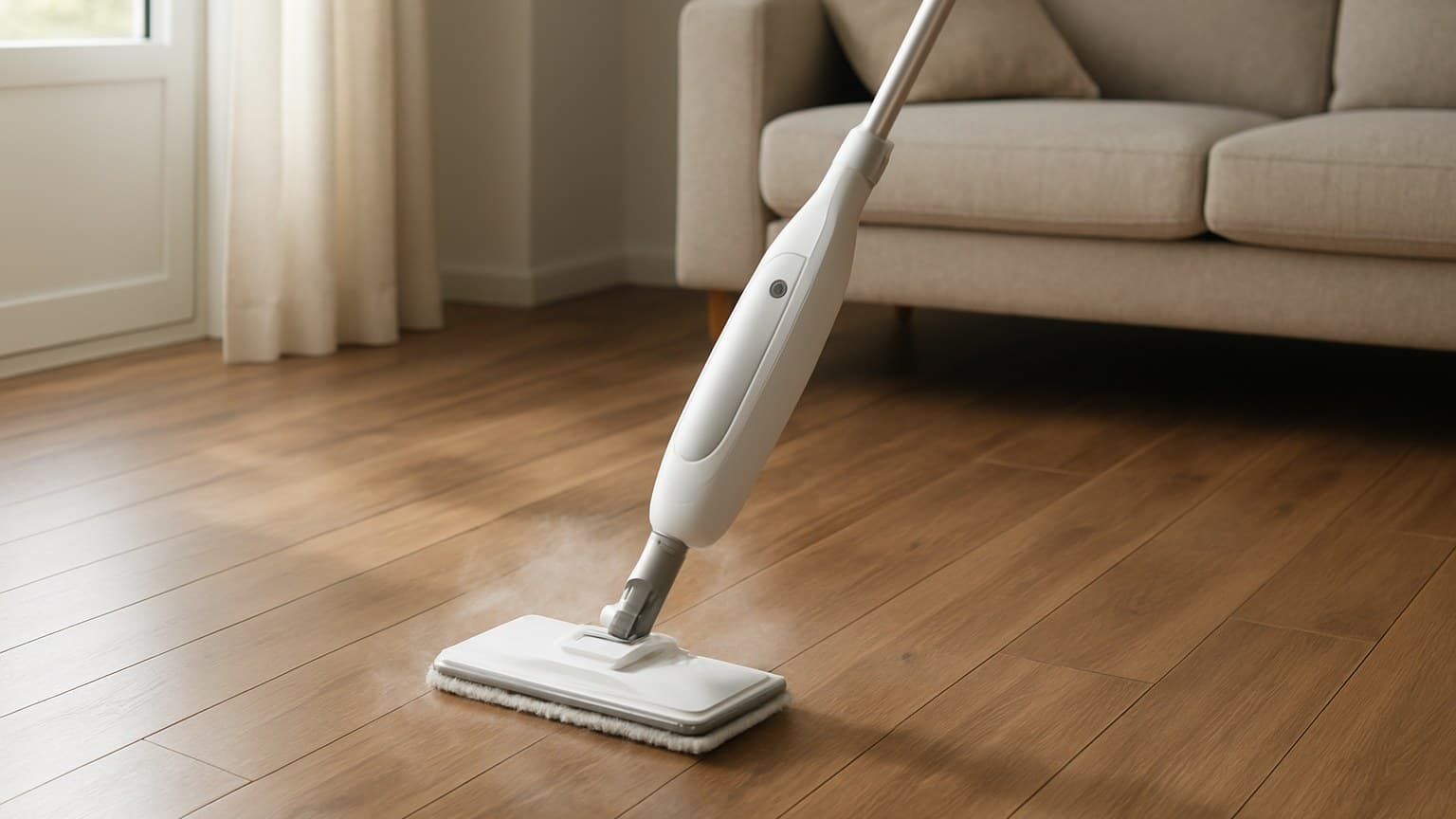
Laminate wipes clean so easily that steam feels like a safe upgrade. That assumption is exactly what shows up as peaked, ruined seams on the floors I get called out to replace. I still think about a kitchen floor in Beavercreek, the homeowner, Linda, had run her steam mop over it twice before the seams along the sink run started lifting, and swapping out that run of planks ended up costing her close to $600 once labor was added in. The answer is no, a steam mop will ruin a laminate floor, and here's what to use instead. That kind of repair bill is also a good argument for comparing the best flooring for a kitchen before you ever install anything, rather than finding out the hard way like Linda did.
Key takeaways
- No, don't run a steam mop on laminate. Hot moisture swells the pressed-wood core at the seams, and that peaking can't be sanded out.
- Clean with a dry or barely-damp microfiber mop wrung near dry. Spray cleaner on the pad, never pour water on the floor.
- Deep clean every 2-3 months with a cleaner actually labeled for laminate, not vinegar, ammonia, bleach, or wax.
- If you already steamed it, stop, dry it fast, and watch the seams for raised or peaked edges over the next few days.
- The Lysol/Conair steam cleaning mop was recalled by the CPSC for burn and laceration risk from a ruptured housing, so steam is a personal-safety issue too, not just a floor one.
Can You Use a Steam Mop on Laminate Floors? The Short Answer
No. Don't run a steam mop on laminate, whether you're asking "can you" or "can I use a steam mop on laminate flooring." Steam drives hot moisture down into the seams and swells the core underneath, and once an edge peaks up, you can't sand or buff it back flat the way you can with a solid wood floor.
The confusion starts with water resistance. Laminate is water-resistant on the surface, so a drop of water beads up and a quick wipe leaves no mark. People read that as waterproof and assume steam is just a faster clean. But the printed top coat doesn't seal the cut edges at every joint, and that's where steam gets in.
Laminate makers list steam cleaning as a flat no in their own care sheets, and using it can void your coverage. Before you trust any mop that makes heat, pull the care sheet for your specific plank and read what it actually allows.
Why Steam and Water Wreck Laminate
A laminate plank is mostly HDF, which stands for high-density fiberboard. That's wood fiber pressed into a dense board, and like any wood, it swells when it soaks up water. According to the National Wood Flooring Association's installation guidelines, wood-based flooring materials need to be protected from standing water and excess moisture exposure because the wood-fiber core can swell and distort at the seams. The thin top coat and the printed photo layer sit on top of that core, but they don't make it waterproof.
Steam is worse than a damp mop for one reason: heat pushes moisture into the seams fast. A barely-damp pad might dry before much soaks in, but pressurized steam forces water past the top coat and into the bare core at the joint. The fiber swells, the edges rise, and those peaked seams never settle back down.
This is the part homeowners miss. The surface of laminate is water-resistant, but the cut edges at every joint are raw fiberboard. The laminate failures I see tend to start at a seam, not in the middle of a plank.
Laminate isn't the only floor steam ruins. Solid and engineered hardwood react the same way, the heat and moisture swell the wood and can leave boards cupped or the finish clouded, so steam mops are off-limits there too. Unsealed natural stone, like unsealed travertine or limestone, is porous enough that steam can push moisture into the stone and the subfloor beneath it, which can show up later as staining or cracking. If a floor isn't specifically rated by its maker for steam, treat it the same way you'd treat laminate: skip the steam. Vinyl plank raises its own version of this question, and it's worth checking whether a steam mop is safe on LVP flooring before you reach for one.
If you're still deciding where laminate belongs in your home, which rooms laminate flooring actually works in covers where its water limits bite and where it holds up fine.
Already Steam-Mopped Your Laminate? What to Check
Stop and dry it right now. Pull up any mats, point a fan at the floor, and wipe up standing moisture so less of it soaks into the joints. The faster you dry it, the better your odds.
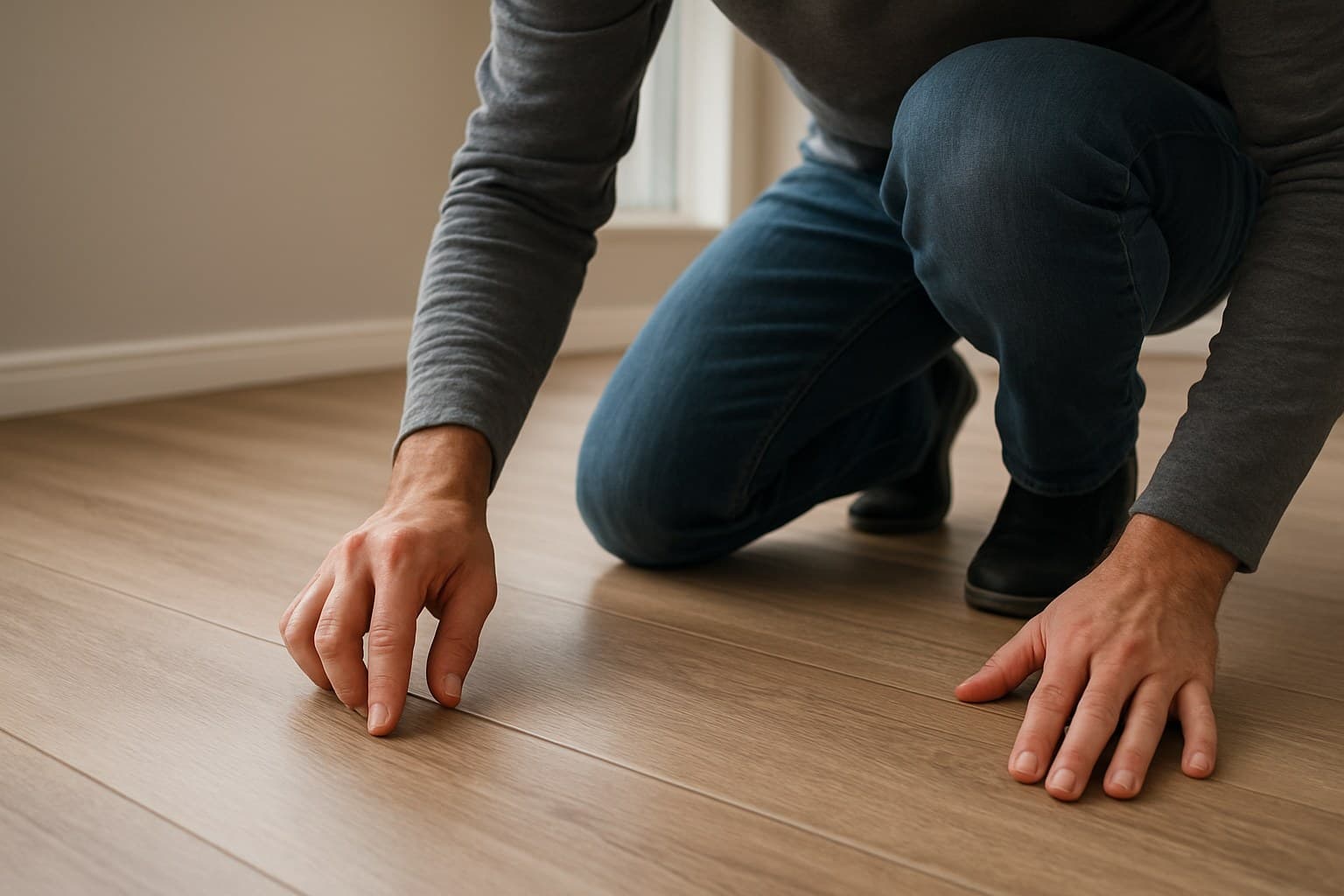
Then watch the floor over the next few days. Run your hand and eye along the seams and look for raised or peaked edges, a rough or fuzzy feel where two planks meet, a plank that flexes or feels spongy underfoot, a corner that lifts or won't sit flat, or a cloudy white haze along the joints. Any of those is the core reacting to the water.
Light dampness sometimes settles as the floor dries out, and you get lucky. But real peaking is permanent. You can't sand laminate, so swollen planks get replaced, not refinished.
How hard that replacement is depends on how the floor went down. A click-lock floor lets you pull and swap single boards, which is easy if you kept spares from the original install. Glue-down laminate is a tougher repair, and that one is usually worth hiring out.
What to Use Instead: Daily and Deep Cleaning
The safe default is a microfiber mop wrung out near dry, with the cleaner sprayed onto the pad instead of the floor. A wet multi-surface cleaning machine is only okay if its maker specifically labels it laminate-safe and it never leaves standing water behind. When in doubt, go drier.
Daily and weekly: dry to barely damp
Most days, you're just managing grit. Dry-dust with a microfiber pad or vacuum on a hard-floor setting with the beater bar off, since that spinning brush scatters grit and can scuff the print. Sweeping up sand and dirt before it gets ground in does more for the floor's life than any mopping.
Once a week, follow the vacuum with a barely-damp microfiber pass. Spray a light mist on the pad, work a section, and you're done.
Every few months: deep clean for buildup
Over time you get a dull film from foot traffic and light cleaner residue. To cut it, spray a cleaner that's actually labeled for laminate onto the mop pad, not the floor, and work in small sections, drying behind you as you go so no water sits on a seam.
If you want to disinfect, reach for an EPA-registered cleaner, which just means the US Environmental Protection Agency has approved it to kill germs, and one that's labeled for laminate on the bottle, such as Bona's EPA-registered disinfecting cleaner, whose registered label specifically lists laminate flooring as an approved surface. Don't pour on a homemade mix and hope.
| When | Task |
|---|---|
| Daily / as needed | Dry microfiber dust or sweep to lift grit |
| Weekly | Vacuum on hard-floor mode, then a barely-damp microfiber pass |
| Every few months | Deep clean with a laminate-labeled cleaner sprayed on the pad |
| Right away | Blot any spill the moment it happens, before it reaches a seam |
A safe cleaning routine for laminate, from daily grit control to spill response.
Cleaners and Tools to Avoid on Laminate
Some of the cleaning tips still floating around online will slowly wreck a laminate floor. Vinegar and other acids top the list. That DIY vinegar-and-water mix dulls and slowly etches the wear layer, the clear protective coating sealed over the printed design, so skip it no matter how many sites push it.
Ammonia and bleach both streak the finish, and the two should never be mixed with each other in any room. Rubbing alcohol strips the protective top coat. Wax and polish are another trap: laminate can't absorb them, so they just leave a haze and make buildup worse over time.
On the tool side, keep steel wool and abrasive scrub pads far away. They scratch straight through the printed layer, and that mark is permanent since there's nothing to sand back.
| Avoid | Why |
|---|---|
| Vinegar / acidic cleaners | Etch and dull the wear layer over time |
| Ammonia | Streaks and can degrade the finish |
| Bleach | Damages finish; never mix with ammonia |
| Rubbing alcohol | Strips the protective top coat |
| Wax / polish | Leaves a haze laminate can't absorb |
| Steel wool / abrasive pads | Permanently scratch the printed layer |
Cleaners and tools that damage laminate, and what each one does to the floor.
The Safety Risk Steam Mops Add Beyond the Floor
It isn't only your floor on the line here. Steam mops carry a safety risk of their own, separate from what steam does to a laminate floor: a cracked or failing water tank can send hot water and sharp plastic flying and hurt whoever's holding the mop.
The mechanism is simple. A steam mop holds pressurized hot water inside it to make the steam. If that housing cracks or ruptures, hot water and sharp pieces are how people end up burned or cut. This isn't a hypothetical risk: the U.S. Consumer Product Safety Commission recalled the Lysol Steam Cleaning Mop, made by Conair Corp., specifically because its housing could rupture and expose users to burn and laceration hazards.
So the bottom line cuts both ways. Skipping steam on laminate protects the floor and the person holding the mop.
Preventing Future Water Damage
A lot of the water damage I see was avoidable with a mat and a quick wipe. Put mats at your entries and in front of the sink to catch grit and spills before they reach a seam, and wipe up spills the second they land rather than letting them sit. If you're picking flooring for a kitchen from scratch, it's worth weighing those spill risks before you install anything, which is exactly what how to choose the right kitchen flooring walks through.
Stick felt pads under furniture legs, and lift pieces to move them instead of dragging them across the planks. Dragging grinds grit into the print and can gouge the edge.
Keep standing water off laminate in kitchens and baths, since those are rooms where seams are prone to failing first. If you're weighing laminate for a space that sees real water, read through the kitchen flooring options that actually handle spills before you commit, because a more water-tolerant material may serve that room better. Bathrooms carry their own zone-by-zone quirks too, and a closer look at the best flooring for bathrooms by zone can help you match the right material to each spot before water finds its way in.
One more thing worth watching: indoor humidity through the seasons. Laminate expands and contracts as the air changes, so keeping the room reasonably stable helps the joints stay tight.