
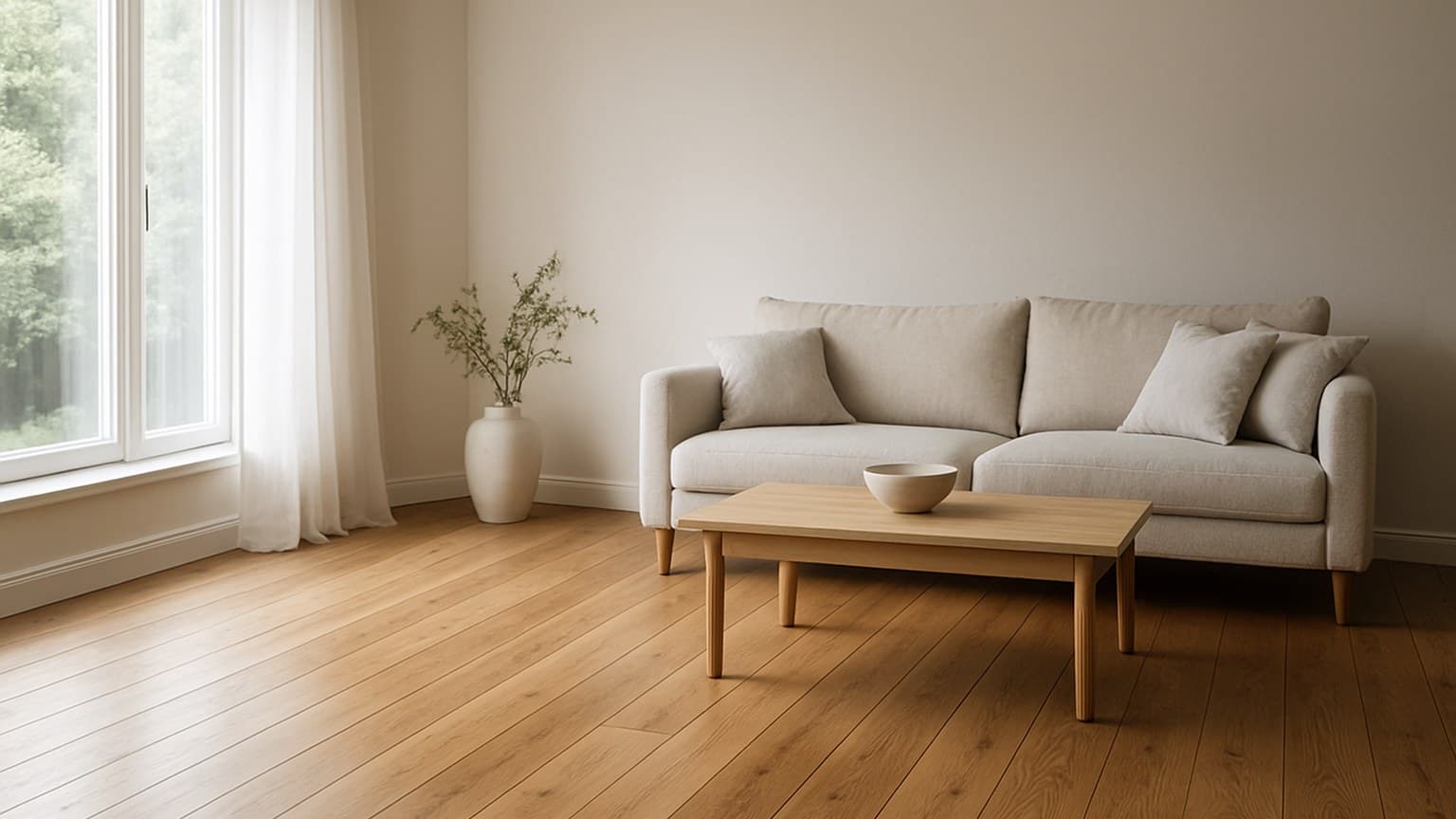
Walk into the flooring aisle and the living room is the room people freeze over, because one floor has to take daily traffic, pet claws, spills and movie nights all at once. The real tradeoff: a heavy-duty LVP (luxury vinyl plank) is the toughest all-around pick for kids and dogs at $4 to $10 a square foot installed, carpet wins on quiet comfort for adults-only rooms at $3 to $7, and hardwood costs more, $9 to $18, but pays off at resale. Which one is right for your room depends on how it actually gets used, so instead of crowning one winner, this guide walks you through choosing by household.
Key takeaways
- There is no single best living-room floor; the right pick depends on your traffic, pets, kids and budget, which is why we give you a matching matrix instead of one winner.
- Carpet and LVP are the comfort and value picks; solid hardwood and tile cost the most to install (roughly $8-$22 per sq ft, materials plus labor) but can last decades.
- For homes with large dogs or heavy traffic, choose a vinyl plank with a 20-mil wear layer, not a 12-mil one; 12 mil is fine for steady adult-only use.
- Installed cost splits roughly: carpet and laminate $3-$8, LVP/LVT $4-$10, wood $7-$18, tile/stone $9-$22 per sq ft; open living rooms are the cheap case and stairs or finished basements cost more.
- Click-lock LVP and laminate in an open rectangular room are realistic DIY; glue-down, tile, stairs and big open-plan moisture transitions are worth hiring out.
Step 1: Match the Floor to How Your Living Room Really Gets Used
Before you look at a single color, name the four things that actually decide your floor: daily foot traffic, pets and claws, kids and spills, and direct sun from big or west-facing windows. Style comes after those, not before.
That last one trips people up. I once put a floating floor in a sunroom outside Dayton that baked every afternoon, and the homeowner never mentioned how hot that room got. The planks started separating at the joints within a season. Now I ask about west-facing glass and three-season rooms first. A floating floor that moves with heat will pull apart at the seams no matter how nice it looked going in.
Take a quick look at your subfloor too. A concrete slab and a wood subfloor open different doors, and a wavy floor narrows your real options before you ever pick a finish. A slab also needs a moisture check, since vapor pushing up from concrete wrecks the wrong floor fast.
The goal here is a floor that outlasts your household, not one that forces another redo in five years.
Step 2: Line Up the Five Floors Side by Side
Five floors, scored side by side on what actually matters in a living room.
| Material | Durability | Comfort underfoot | Maintenance | Cost tier | Best for |
|---|---|---|---|---|---|
| Carpet | Low-medium (shows traffic lanes) | Highest, warm and soft, best at quieting sound | Vacuum often, stains are the weak point | Low | Comfort, quiet, rooms next to bedrooms |
| Solid / engineered wood | High; solid can be sanded and refinished | Warm, firm underfoot | Scratches, needs care, refinish over time | High | Premium look and resale |
| Laminate | Medium-high surface, weak to standing water | Firm, can sound hollow without good pad | Easy wipe, don't flood it | Low | Budget wood look, low-moisture rooms |
| LVP / LVT | High; wear layer takes scratches | Firm but forgiving, warmer than tile | Very easy, water-tolerant core | Low-medium | Kids, pets, all-around workhorse |
| Tile / stone | Highest; fails at grout, not the tile | Hard and cold without radiant heat | Easy surface, grout needs sealing | High | Formal rooms, radiant heat, heavy spills |
How the five common living room floors compare on durability, comfort, upkeep and cost tier.
One thing the table can't show: if you're thinking about radiant heat under the floor, tile, stone, and many engineered wood and LVP products pair well with it, while thick carpet and a plush pad act like a blanket and fight the heat. If that's on your list, read up on what heated floors cost before you commit to a material, since it changes the math.
Keep two things straight in your head. Laminate is the budget wood-look stand-in, and it looks more like real wood than vinyl does, but it hates standing water. Tile and stone look formal and last the longest, but they run cold and hard without heat under them. That same intolerance for moisture is exactly why it's worth checking the real guidance on steam mop on laminate floors before you ever clean this one that way.
Carpet: the comfort and quiet case
Carpet is still the most comfortable floor you can stand on. According to the Carpet and Rug Institute (CRI), carpet offers warmth, cushioning, and sound absorption that hard-surface flooring can't match, which is why nothing beats it for quieting down a busy family room. Its weakness is traffic lanes and stains, so judge carpet by fiber type and face weight, face weight is just how much yarn is packed into each square yard, and a higher number means a denser, longer-wearing carpet, not just how soft it feels in the store. For adults-only rooms that stay fairly clean, it's an easy, cheap win.
Hardwood and engineered wood: the floor that can last the house
Solid hardwood is the one floor you can sand and refinish several times. According to the National Wood Flooring Association's Homeowner's Handbook to Real Wood Floors, a well-maintained solid wood floor can be refinished multiple times over its life, which is why a good oak floor can outlive the people who installed it. Engineered wood gives you a real wood top over a stable plywood core, so it handles a slab or a basement better than solid does. Both read as an upgrade to buyers, and both scratch, so a home with big dogs needs a tough finish or a different floor.
Luxury vinyl (LVP/LVT) for a living room
Luxury vinyl is the workhorse I install most in living rooms with kids and pets. A rigid-core plank is built in layers: a clear wear layer on top that takes the scratches, a printed photo layer you actually see, a stiff core in the middle, and a thin foam or cork pad on the back that quiets it down. That same rigid, layered build is also why it holds up so well in wetter rooms, and it's worth seeing how LVP flooring for bathrooms performs before you lay it there too.
The part people get wrong: a "waterproof core" means the plank itself won't swell if water sits on it. It does not mean the floor is waterproof, because water still gets down through the seams and edges and sits on your subfloor. For how the wear layer, core and seams all play together, see our guide to what makes vinyl flooring last 5 years or 20. Since steam mops force hot moisture straight into those same seams, it's worth knowing the real answer on steam mop on vinyl flooring before you make it part of your regular cleaning routine.
Step 3: Read the Wear Layer and Match It to Your Household
The number that decides how vinyl holds up is the wear layer, measured in mils, and it's printed on that specific product's box or spec sheet, not standardized across every brand. On the lines I've installed, a thinner wear layer suits steady daily use, while a thicker one earns its keep with large dogs, heavy traffic, or furniture that gets dragged around. Always check the mil number on the exact plank you're buying before you decide it's tough enough for your room.
Each material has its own version of this spec, and it's worth checking on the exact product, not assumed. Laminate uses an AC rating printed on the box, with higher numbers built for heavier use, check that number before you buy. Wood goes by species hardness and the finish on top. Carpet goes by fiber type and face weight. Tile and stone have their own version too: the PEI rating, a 1-to-5 scale that measures how a glazed surface stands up to foot traffic, with higher numbers meant for busier floors rather than walls or light-use baths. A tile rated low for wall use can look right in the showroom and still wear fast once it's underfoot in a living room that sees daily traffic, so check the PEI number on the specific tile, not just the look of it. So "which grade is tough enough" always depends on the specific product, not just the material category. That same light-use-bath distinction is exactly why bathrooms deserve their own breakdown, zone by zone, which is the whole point of flooring for bathrooms.
| Household | Pick | Why |
|---|---|---|
| Adults only, light use | LVP with a thin wear layer, engineered wood, carpet | Low traffic forgives softer, thinner options |
| Kids plus daily traffic | LVP with a thick wear layer, laminate with a high AC rating, tile | Handles spills, drops and constant walking |
| Large dogs or heavy claws | LVP with a thick wear layer, porcelain tile | Thick wear layer or hard surface resists scratching |
| Renters or budget redo | Laminate, carpet, budget LVP | Low installed cost, easy to replace later |
| Resale or premium look | Engineered or solid hardwood, large-format tile | Wood and stone read as upgrades to buyers |
| Open plan into a kitchen | One continuous LVP or tile run | Water tolerance across both rooms, no transition strip |
How to match floor type and wear layer or grade to your household.
That last row matters when your living room flows into cooking space. Running one continuous water-tolerant floor across both beats fighting a transition strip, and it's a big reason LVP and tile win open layouts. If the kitchen end is your real worry, our breakdown of kitchen flooring that works, and the one catch to each covers the wet side in detail.
Worth saying plainly: the living room floor failures I see most often happen at the seams and edges, not in the middle of a plank. A thick wear layer protects the face. It does nothing for a seam that water keeps finding.
Step 4: Price It Out, Materials vs Labor
The table below breaks down what these floors actually cost installed, split into materials and labor, so you can size up your own room.
| Material | Materials | Labor | Installed total |
|---|---|---|---|
| Carpet | $2-$4 | $1-$3 | $3-$7 |
| Laminate | $1-$4 | $2-$4 | $3-$8 |
| LVP / LVT | $2-$6 | $2-$4 | $4-$10 |
| Engineered wood | $4-$10 | $3-$6 | $7-$16 |
| Solid hardwood | $5-$12 | $4-$6 | $9-$18 |
| Tile / stone | $3-$12 | $6-$10 | $9-$22 |
Source: what these floors have run to install on my central Ohio living-room jobs
Installed cost per square foot for each living room floor, split into materials and labor.
The arithmetic is simple. Multiply your room's square footage by the installed range to get a rough window. A 15 by 20 room is 300 square feet, so LVP at $4 to $10 installed lands between $1,200 and $3,000.
Then add for the things that slow a crew down. Stairs, tricky layouts with lots of cuts, and a finished-basement living room all cost more than an open rectangle, because a basement needs the slab moisture handled first. Solid wood also carries a future cost most pages skip: refinishing every decade or two, which is also what lets it last.
Carpet and laminate come in cheapest to install. Tile and stone are the priciest, and most of that extra is labor, not the material.
Step 5: Decide What You Can DIY and What to Hire Out
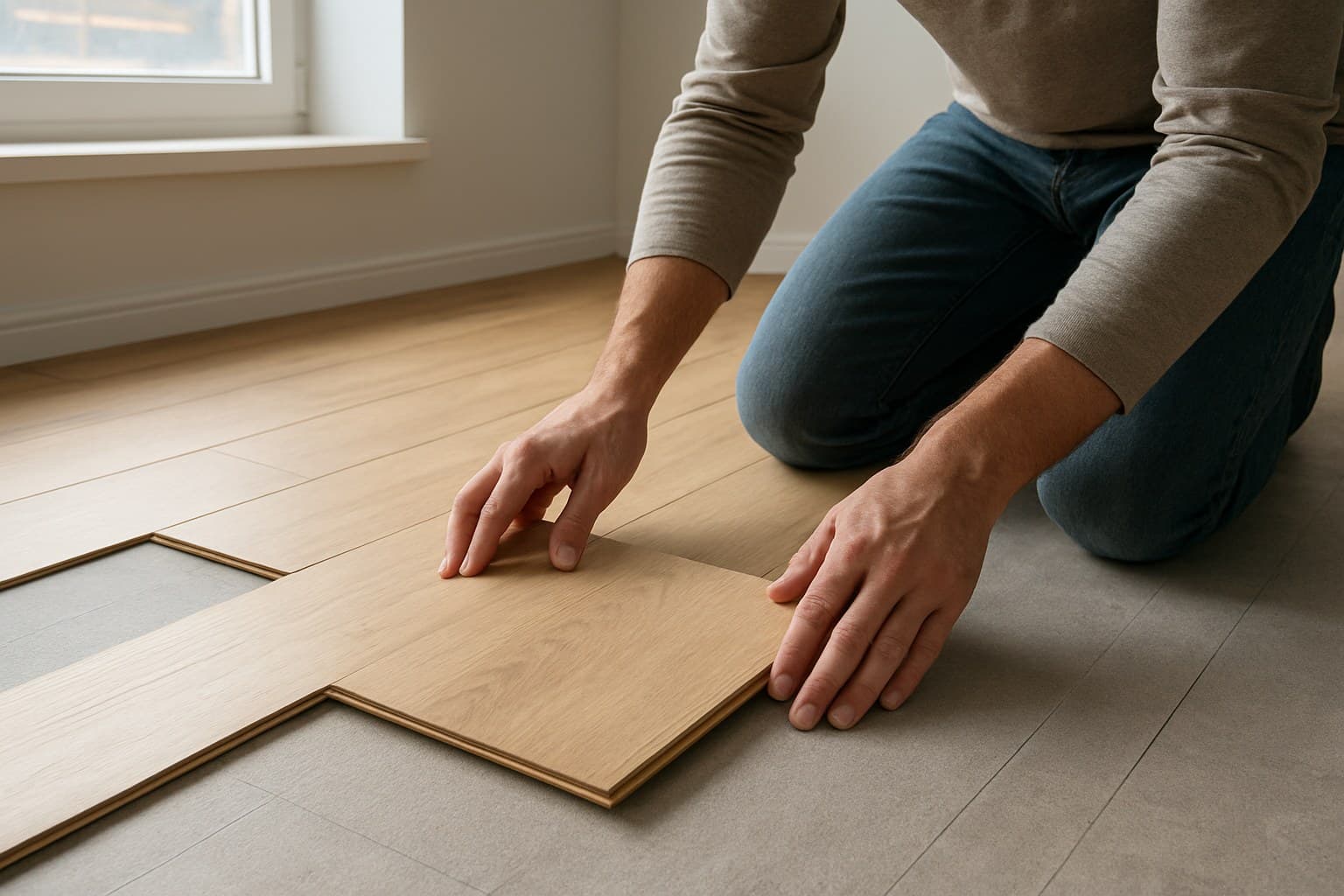
Click-lock LVP or laminate in an open, rectangular living room is a realistic weekend DIY for a patient homeowner. Glue-down vinyl, any tile, stairs, and large open-plan jobs where the floor crosses into a kitchen or down into a basement are where I'd hire a pro. Those are where small mistakes turn into standing water under the floor and cracked grout you'll end up redoing.
Whatever you lay, do two checks first and don't skip either one. Run a straightedge across the subfloor to find high and low spots, since a floating floor over a wavy base flexes and the seams pop. And test for moisture, especially on a concrete slab, because vapor coming up through concrete will lift the wrong floor right off the slab.
A homeowner named Rita near Columbus wanted to lay LVP herself over a basement slab. We checked the slab, found it was damp, and she sealed and leveled it before a single plank went down. That one hour of checking is the difference between a floor that lasts and one you tear out.
If your living room sits in a finished basement, read How Do I Install Basement Flooring That Won't Fail? first, because the slab moisture steps there come before any flooring choice you make here.
Sources
- Carpet and Rug Institute: Selecting the Right Carpet
- Carpet and Rug Institute: How to Style a Room with Carpet as the Foundation
- Carpet and Rug Institute: Benefits of Carpet
- National Wood Flooring Association: Homeowner's Handbook to Real Wood Floors (PDF)
- National Wood Flooring Association: Wood Flooring Resource Page