
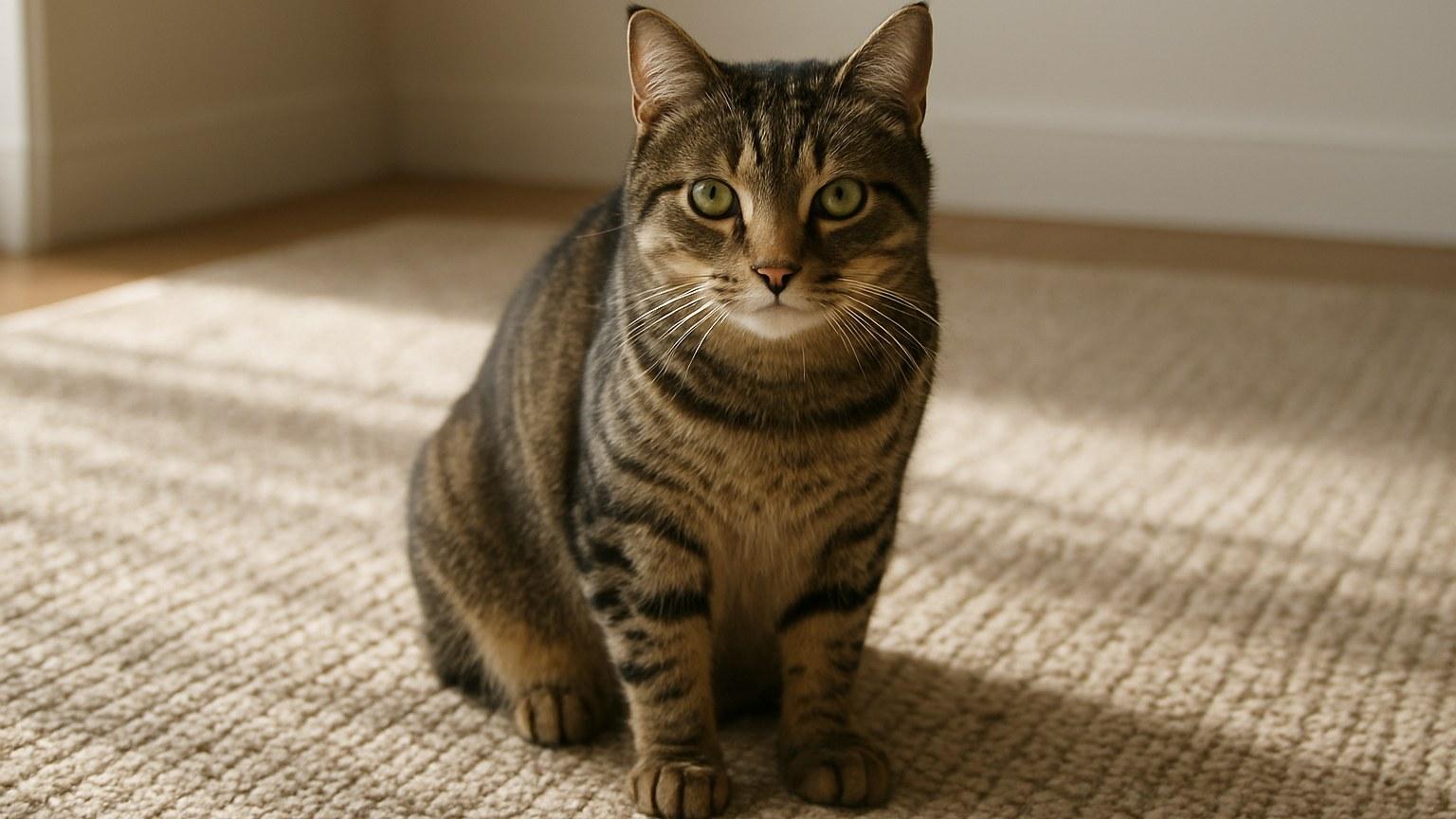
Dense cut pile is the best carpet for cats, because there are no loops for a claw to hook and drag across the room. That one choice fixes the damage most cat owners actually see. The rest comes down to matching the carpet to your cat's worst habit, which is where the guessing (and the wasted money) usually starts.
Below are six picks, each tied to one thing cats do to a floor, plus a fiber cheat sheet and what the guides and forums point to. For the broader question of matching carpet type, padding, and installation to each room in your home, the step-by-step carpet guide for every room walks through that decision beyond just the cat factor.
Key takeaways
- Skip loop pile and Berber for clawed cats; a dense cut pile gives claws nothing to hook, and that's the pick most cat owners should make.
- For litter-box accidents, a solution-dyed triexta or polyester over a moisture-barrier pad keeps urine from soaking into the subfloor.
- Medium to dark flecked colors hide hairball stains and shed fur far better than a light solid.
- Carpet installation labor runs about $0.50-$1.50 per sq ft (carpetexchange.com, costprism.com), and stairs fitted run $1-$2 per sq ft (nerdwallet.com) on top of material.
- Low, dense pile vacuums litter tracking cleanest, and density predicts wear more than how tall the pile stands.
Best Against Claw-Hooking: Dense Cut Pile, Not Loops
For a cat that scratches, choose a dense cut pile, either textured or frieze (tightly twisted strands), with no loops anywhere in it.
The guides contradict each other here, so let me sort it out. Empire Today and Carpet One warn that loop and Berber pile snags claws and can hurt paws. May River Flooring, on the other hand, calls Berber's tight weave snag-resistant. Both are partly right: a very tight, dense loop does lower the odds of a catch, but it never gets to zero. One hooked loop can still pull a strand the length of the room.
I pulled up a Berber in a Columbus condo where a cat had done exactly that. A single loop near the stair landing had run clean down the whole hallway in one long pucker. The owner thought the carpet was defective. It wasn't. The cat found the one weak edge and the loop construction did the rest.
Cut pile has no loop to start that run. A claw slides off the cut tips instead.
| Pile | Snag risk | Verdict |
|---|---|---|
| Loose or large loop (Berber) | Claws hook the loop and a pulled strand runs across the room | Avoid for clawed cats |
| Tight level loop | Lower, but one snagged loop still runs | Only if very tight and dense |
| Dense cut pile (textured or frieze) | No loops to hook; claws slide off the cut tips | Best, the safe default |
How loop and cut pile compare for homes with clawed cats.
No carpet stops a cat from scratching. It only hides and survives the damage. Keep a scratching post nearby so the cat has a better target than your floor.
Best for Litter-Box Accidents: Solution-Dyed Triexta Over a Moisture-Barrier Pad
A solution-dyed triexta or polyester over a moisture-barrier pad is what keeps litter-box accidents from reaching the subfloor. Both fibers are naturally hydrophobic, meaning they shed water instead of drinking it in.
But the fiber is only half the job. The real failure point is below it. Urine that soaks through the carpet backing into the pad and subfloor is where that lingering smell comes from. Look for a pad built for exactly this: a PUP (Pet Urine Protection) pad, SureBlok, and pads treated with Microban all block liquid from reaching the subfloor and resist the odor and mold that grow underneath. Treat the pad as part of the system, not an afterthought. If odor has already set in despite a good pad, the steps for pulling smell out of carpet pick up where the pad leaves off.
Solution-dyed means the color is locked into the fiber, so cleaning won't bleach a pale spot where you spot-treated. Some makers sell triexta under the SmartStrand name, and it holds color the same way.
For the numbers on what a moisture-barrier pad adds over a standard one, see the carpet padding cost guide. It's a small upcharge that earns its keep in a litter room. Home Depot carries several of these pet-rated pads in stock, so the Home Depot carpet padding options are worth checking before you order online.
Best for Hairball and Vomit Stains: Hydrophobic Polyester in Dark Flecks
A stain-resistant polyester or triexta in a medium-to-dark flecked tone hides hairball and vomit marks that a light solid would put on display.
Empire Today and Floors Direct NJ both land on the same color advice: medium or dark tones and flecked patterns hide stains and shed fur better than a light solid does. A cream plush shows every mark; a brown or gray fleck swallows them.
When a mess does land, blot it, never rub or scrub. Rubbing drives it deeper into the pile and frays the fiber tips. Reach for an enzyme cleaner on the organic stuff cats leave, since that breaks down the odor source instead of masking it, look for one carrying the Carpet and Rug Institute's Seal of Approval, which tests cleaning products to lift stains without damaging the fiber.
Speed beats fiber on any stain. A hairball left to dry sets into the pile and gets much harder to lift than fiber choice can save you from.
Best for Litter Tracking: Low, Dense Pile You Can Vacuum Clean
A low, dense pile lets you vacuum tracked litter back out, instead of it burying itself in a tall, soft pile.
Most carpet guides skip a problem that's specific to cats. Litter kicked out of the box migrates into the carpet right around it, and a plush or high pile hides and traps that grit down near the backing where a vacuum can't reach. Low pile keeps the litter up top where suction can grab it.
Density is the quiet factor. The density of fibers predicts both wear and how clean you can get it, more than how tall the pile stands. Makers publish face weight and density by style; a denser number is the one to chase.
A practical fix: drop a low-pile runner or a few hard tiles right at the box. Catch the grit before it hits the wall-to-wall.
Best Cat-Proof Carpet for Stairs: Dense Low-Pile Frieze
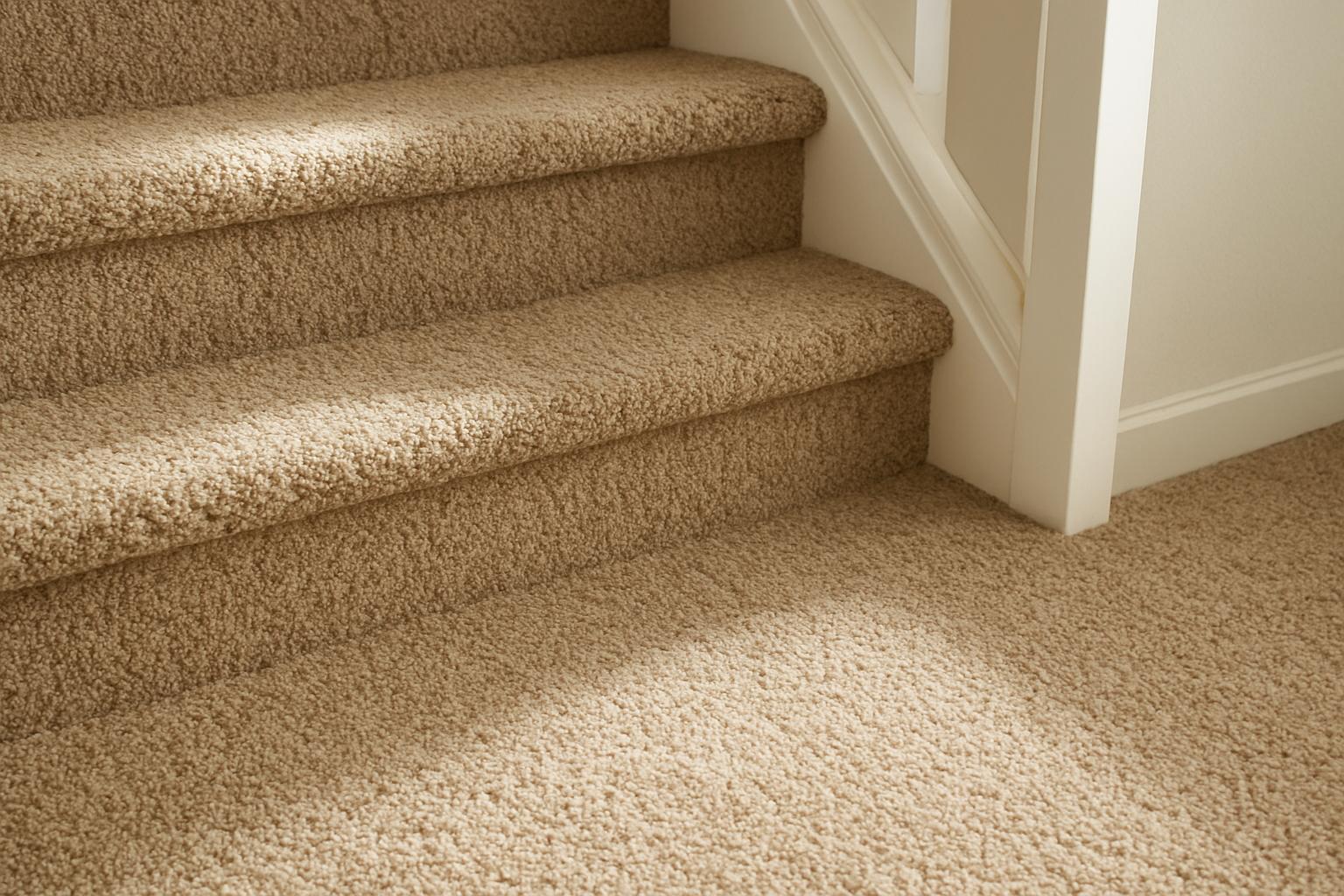
On stairs, a dense low-pile frieze wears best on the nosing, the front edge of each step where paws land and claws dig hardest.
Loops are riskier on a staircase. A cat tearing up or down catches a loop on that edge and the strand runs. A dense cut pile gives nothing to grab, and the tight twist of a frieze shrugs off the daily abuse of paws hitting the same spot.
Stairs cost more than an open room. They're fiddly, priced per step, and they eat labor. Stairs fitted run about $1-$2 per sq ft on top of material, according to nerdwallet.com. Between the fussy fit and the safety of a tight, even wrap at the nosing, stairs are usually worth hiring out rather than fighting yourself.
The nosing is the first spot to show wear on any staircase. Density there is what buys you the extra years.
Carpet Tiles: The One-Square Insurance Policy
Carpet tiles aren't really a different fiber. They're a damage-control format. When a cat ruins one square, you pull and swap that square instead of replacing the whole floor.
The catch is the seams. Every tile edge is another spot for a determined cat to pick at, so a tight-fitting low cut-pile tile suits cats better than a loop tile. Shaw, Mohawk, and Beaulieu America all make carpet tile lines in low cut-pile constructions, ask for that pile type under whichever of those brands your supplier stocks, not a looped tile. Keep the format's advantage without handing the cat loops to hook.
They shine in a litter area, a sunny windowsill perch where accidents and hairballs cluster, or a rental where you know messes are coming.
Peel-and-stick and interlocking tiles are realistic to lay yourself. Before you start, check that the subfloor is flat, high spots and dips show through thin carpet tile and keep seams from sitting tight, and confirm it's clean, dry, and free of moisture. Once that's checked, no seaming iron or stretcher is needed, just a sharp knife for trims. This is a genuine DIY job for most homeowners.
Fiber Cheat Sheet for Cat Owners
Five fibers show up in every carpet aisle. Below is what each one does for a cat.
The guides agree on a few points: nylon is resilient and bounces back from crushing, and it's the fiber Stainmaster builds its PetProtect line around for pet households; triexta and polyester are hydrophobic and stain-resistant; and denser construction beats looser construction in every fiber.
Wool is the one to be careful with. It feels luxurious, but wool and natural fibers don't withstand soaking and harsh cleaners, which is exactly what a urine accident and its cleanup throw at a floor. I'd steer a cat household away from it.
| Fiber | Resilience | Moisture/stain | Cat notes |
|---|---|---|---|
| Nylon | Highest, bounces back | Good once treated | Great all-rounder; Stainmaster's PetProtect line is built on treated nylon for pet accidents |
| Triexta (SmartStrand) | High | Naturally hydrophobic | Best for litter-box accidents |
| Polyester (PET) | Lower, softer | Hydrophobic, stain-resistant | Budget pick; crushes faster in traffic |
| Olefin | Low | Moisture-resistant | Usually sold as loop; skip for clawed cats |
| Wool | High | Reacts badly to urine and harsh cleaners | Risky with cats despite the luxury feel |
How the five common carpet fibers stack up for a home with cats.
If you're choosing a fiber for traffic and budget beyond the cat question, the best carpet guide matched to your room's traffic and budget walks through it room by room.
What Reddit and Consumer Reports Actually Point To
There's no single Consumer Reports or Reddit ranking for cat carpet, so judge what they point to rather than hunting for a list that doesn't exist. The Carpet and Rug Institute, the trade association for carpet makers, publishes a pet-shopping checklist that lines up with the same points: dense construction, a stain-resistant treated fiber, and a moisture barrier underneath.
The same Berber failure I saw in that Columbus condo shows up over and over in cat-owner posts on Reddit: a clawed loop pulls into one long run down the hall, and the thread usually ends with the poster ripping it out for a cut-pile replacement. That's a recurring story across scattered threads, not a single ranked list, but it keeps pointing the same direction this guide does, dense low cut pile and swappable tiles, with Berber flagged as the fiber to skip once a cat finds that one weak loop.
Consumer Reports tests durability and stain resistance in general, not by pet. So read its logic instead of its scorecard: dense construction and a treated fiber. That's the same recipe that survives cats.
On cost, budget separately for material and labor. Carpet installation labor runs about $0.50-$1.50 per sq ft, per carpetexchange.com and costprism.com, and that's before stairs or a moisture pad push it up. A dense cut pile in a treated fiber sits in the mid-range for material; the cat-proofing is in the construction, not an exotic price tier.
If you're pricing a full replacement rather than one room, the 2026 carpet replacement cost breakdown lays out real material-plus-labor numbers you can read your own job off of.