
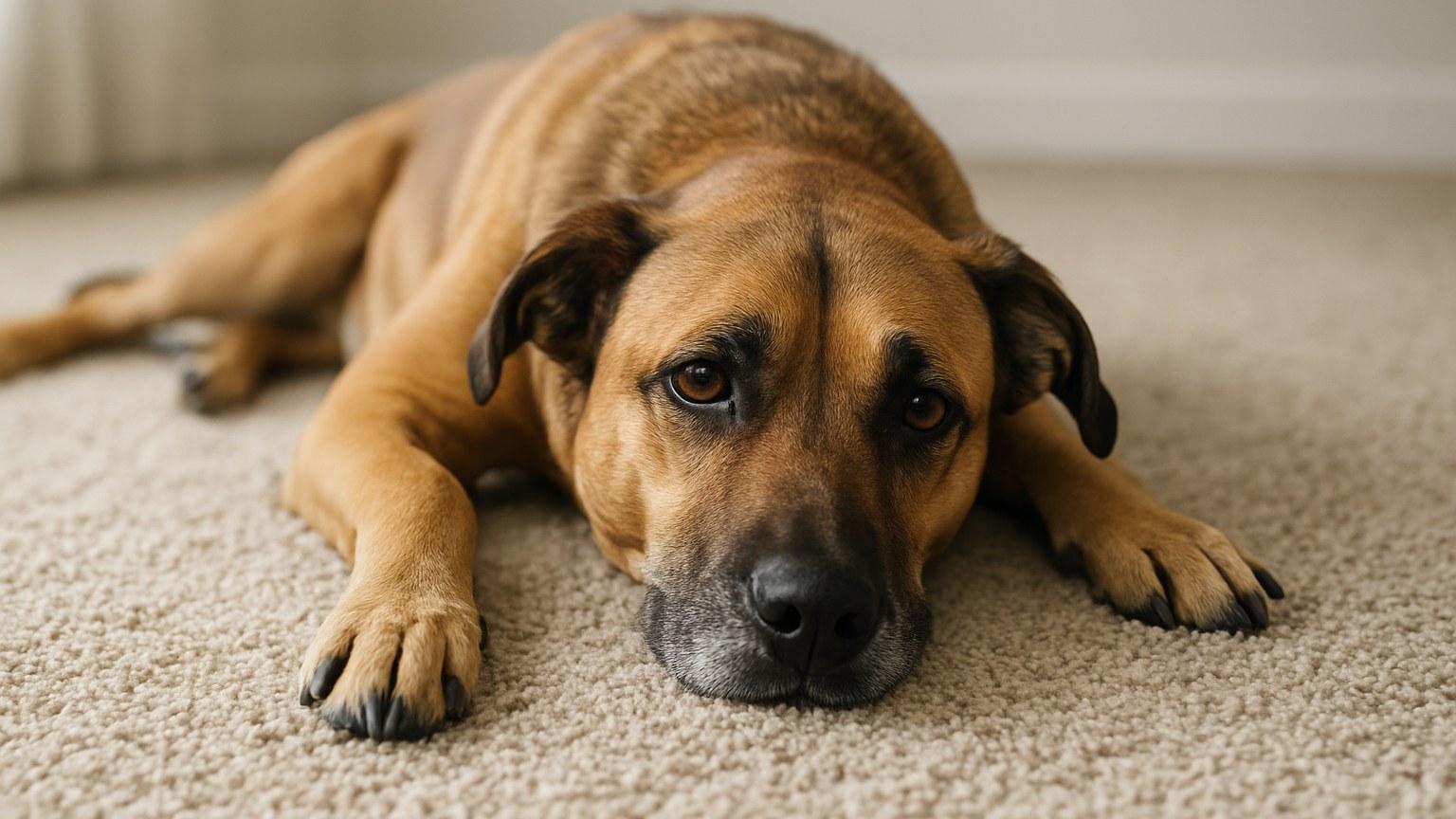
For most dog homes, the best carpet for pets is solution-dyed triexta, sold as SmartStrand, in a low, dense cut pile over a moisture-barrier pad. But a clawing cat and a leaky puppy need very different things, so the real answer depends on what your pet actually does to the floor.
Below are six picks, ranked by pet situation. Installed cost runs $3 to $7 per square foot depending on tier, per carpetnow.com, and the right color or pattern choice can hide fur and mud between vacuum sessions. If you want the bigger picture beyond pet owners, our guide to the best carpet overall rounds up the top performers across every buying scenario.
Key takeaways
- Best overall for most dog homes: solution-dyed triexta (sold as SmartStrand) in a low, dense cut pile over a moisture-barrier pad.
- Skip loop and berber carpet if you have cats; claws catch the loops and pull long runs that can't be fixed.
- Installed pet carpet runs roughly $3-7 per square foot by tier, per carpetnow.com; basements and stairs cost more.
- A waterproof backing keeps urine off the pad, but seams still leak and set-in urine still smells, so protection like Empire Today's PUP reduces damage rather than ending it.
- Budget pick is solution-dyed polyester; the splurge is premium nylon for homes with both kids and pets in heavy traffic.
1. Best Overall for Dogs: Solution-Dyed Triexta Over a Moisture-Barrier Pad
SmartStrand, the branded solution-dyed triexta carpet, holds up best when it's cut in a low, dense pile, that's the build I reach for most on rental turnovers with multiple dogs, since it has to survive renter after renter without a full tear-out. It bounces back from matting and keeps its color better than the fibers I usually see fail early.
Solution-dyed means the color runs all the way through the fiber instead of being dyed onto the surface. Paws, sun, and harsh cleaners can't strip it out. The other thing that matters is density, not pile height. Density is how tightly the yarns are packed, and it predicts wear better than how tall the carpet stands. Before consulting the marketing, examine the face weight and density figures that manufacturers provide for each style. Once density makes sense, pile height is the next variable worth sorting out room by room, which is exactly what our low pile versus high pile carpet comparison walks through.
Where it falls short: it's not truly waterproof at the seams, and it costs more than plain polyester. For a dog owner asking what the most pet-friendly carpet is, though, this is the answer.
2. Best Against Cat Claws: A Dense Cut Pile, Never Loops
For cats, you want a dense, low cut pile, textured plush or frieze, and no loop pile anywhere. This is the one point every source lines up on. carpetone.com, Empire Today, and the Carpet and Rug Institute, the trade group for carpet makers, all agree that cut pile beats loop pile for pets. Cat owners who want the full rundown beyond this list can check our dedicated guide to the best carpet for cats.
The reason is simple. In a cut pile, the yarns are cut at the tips, so there's nothing for a claw to hook. In a loop pile, the yarns bend into standing loops, and a claw catches one and pulls a run you can't repair. Solution-dyed nylon or polyester both work fine here. What to avoid is level-loop berber and multi-level loop, the classic claw-snaggers. A tight, dense cut pile also hides shed fur better than a tall, soft plush.
Cut pile has no loop for a claw to hook; loop pile catches and pulls into a run.
3. Best for Puppies and Senior Pets That Have Accidents
If your pet still has accidents, pick a carpet with a waterproof backing laid over a moisture-barrier pad, and add a urine-protection tier like Empire Today's PUP, short for Pet Urine Protection.
Here's where you have to be honest about what that buys. A waterproof backing keeps liquid off the pad and subfloor. It doesn't seal the seams and edges, and urine that sits still will still smell. On the accident-prone jobs I've examined, mostly basement rec rooms where an older dog sleeps, odor emerges where carpet materials meet and connect, while the open middle stays clear. Protection cuts the damage; it doesn't erase it, and it's no excuse to skip fast cleanup.
The pad ranks on par with the carpet here. See our carpet padding cost guide for what a moisture-barrier pad adds to the bill.
4. Best Budget Pick: Solution-Dyed Polyester
Solution-dyed polyester, also called PET, in a cut pile is the value buy. Save olefin for low-traffic spots and basements only.
Polyester resists stains well and holds its color, but it crushes faster than nylon under heavy traffic. Olefin is cheap and shrugs off moisture, but it mats down quickly in any hallway with real foot traffic. Budget-tier polyester runs roughly $3-4 per square foot installed, per carpetnow.com's Budget Smart Solutions line. It's a fit for rentals, spare rooms, and tight budgets where you'd rather replace sooner than overspend now.
5. Best Splurge for Kids and High Traffic: Premium Nylon
For a house with both kids and pets in heavy traffic, a premium branded nylon in a dense cut pile is worth the money. Think Stainmaster-treated lines, Mohawk's pet ranges, or Shaw's Pet Perfect line. If you're also sorting out what to put in the rest of that house, our guide to choosing carpet for each room walks through the room-by-room decision, including installation and padding choices.
Nylon springs back from foot and paw traffic better than polyester does. A stain treatment helps on the surface, but solution-dyed color is still what wins for fade and bleach resistance, so look for both. Premium-tier nylon runs about $5-7 per square foot installed, per carpetnow.com's Premium Performance line. The catch is the price, and it still needs regular vacuuming to earn its warranty. That price swing comes down to two numbers, face weight and density, and the nylon carpet pricing guide breaks down how they set both cost and how long the carpet lasts.
6. Best for Pets on Stairs
For pets on stairs, go even denser and lower in pile than you would for an open room. The nosing, the front edge of each step, takes the hardest wear and shows it first.
I keep clients away from fragile fringed or loosely woven rugs on stair landings. A delicate weave gets chewed up fast where feet and paws land hardest. In heavy stair traffic, a low, dense cut pile wears far better on the nose. Keep loop pile off stairs entirely, same claw-snag reason as cats. Stairs deserve their own deep dive, so treat this as the short version.
Why Pet Urine Wrecks Carpet (and What Protection Actually Stops)
Urine isn't a simple surface stain, so the fix is fiber plus backing, not one miracle treatment. The Carpet and Rug Institute's technical bulletin on pet urine notes that urine content varies and the damage it does is diverse, from color change to backing and pad soak-through to lingering odor. That's exactly why no single carpet is bulletproof.
So you fight it on three fronts. Solution-dyed fiber fights the color loss. A waterproof backing over a moisture-barrier pad fights the soak-through. And set-in urine needs an enzyme cleaner to break the odor down at the source, because a regular detergent just masks it. Check the label for the Carpet and Rug Institute's Seal of Approval (SOA), a certification that tests cleaning products for effectiveness and carpet safety, so you're not reaching for something that bleaches fiber or leaves residue behind.
Always blot, never rub, and get to it fast. Speed matters more than any protection tier, including Empire Today's PUP.
Color and Pattern Tricks to Hide Hair and Mud
Match the carpet color to your pet's coat and your typical dirt, then pick a fleck or low-contrast pattern so hair and paw prints disappear between cleanings. A multi-tone or speckled carpet hides shed fur and crushing far better than a flat solid, a point the Carpet and Rug Institute makes that most other guides skip.
Pattern also buys you time. Soil and footprints show less, so you vacuum on your own schedule instead of the carpet's.
| Your situation | Carpet color that hides it |
|---|---|
| Black or dark dog | Medium-to-dark multi-tone fleck |
| White or light-furred cat | Light cream or beige speckle |
| Muddy yard, big dog | Tan or brown fleck, mid-tone |
| Mixed-color pets | Neutral gray-brown with pattern |
| Shows every crumb now | Textured frieze over flat plush |
Pick the carpet color by your pet's coat and your usual dirt so hair and prints show less.
What Pet-Friendly Carpet Costs, and What to Ask Before You Buy
Installed pet carpet runs roughly $3-7 per square foot depending on the tier, per carpetnow.com. That number bundles the carpet, the pad, and labor into one price, carpetnow.com doesn't break out what share is material versus labor, and that split moves with your region and your installer's rates. What you can count on: stairs and basements cost more, since stairs are slow, fiddly work and basements often need extra moisture prep under the pad. Ask your installer to quote labor separately if you want to see where the money's going.
| Tier | Fiber | Installed cost (per sq ft) |
|---|---|---|
| Budget Smart Solutions | Solution-dyed polyester | $3-4 |
| Premium Performance | Premium nylon | $5-7 |
Source: carpetnow.com's carpet pricing tiers
Installed cost by tier, carpet plus pad plus labor; stairs and basements run higher.
Wall-to-wall carpet is one job I'd hire out for most people. Stretching it tight and seaming it clean takes a power stretcher and a seam iron you won't own, and a loose install bubbles and wears out early. A runner or a loose rug you can handle yourself. Before you buy, ask the seller for the face weight and density of the exact style, whether the color is solution-dyed, and what pad they're quoting. If you're weighing replacement against a deep clean, our carpet replacement cost guide lays out the real numbers.
Sources
- Carpet and Rug Institute: Paws on Carpet, What Is the Best Carpet for Pets?
- Carpet and Rug Institute: Selecting the Right Carpet
- Carpet and Rug Institute: Cleaning and Maintenance
- Carpet and Rug Institute: Technical Bulletin, Pet Urine and Carpet
- Carpet and Rug Institute: Pet Urine and Carpet (PDF)
- Carpetnow.com's carpet pricing tiers