
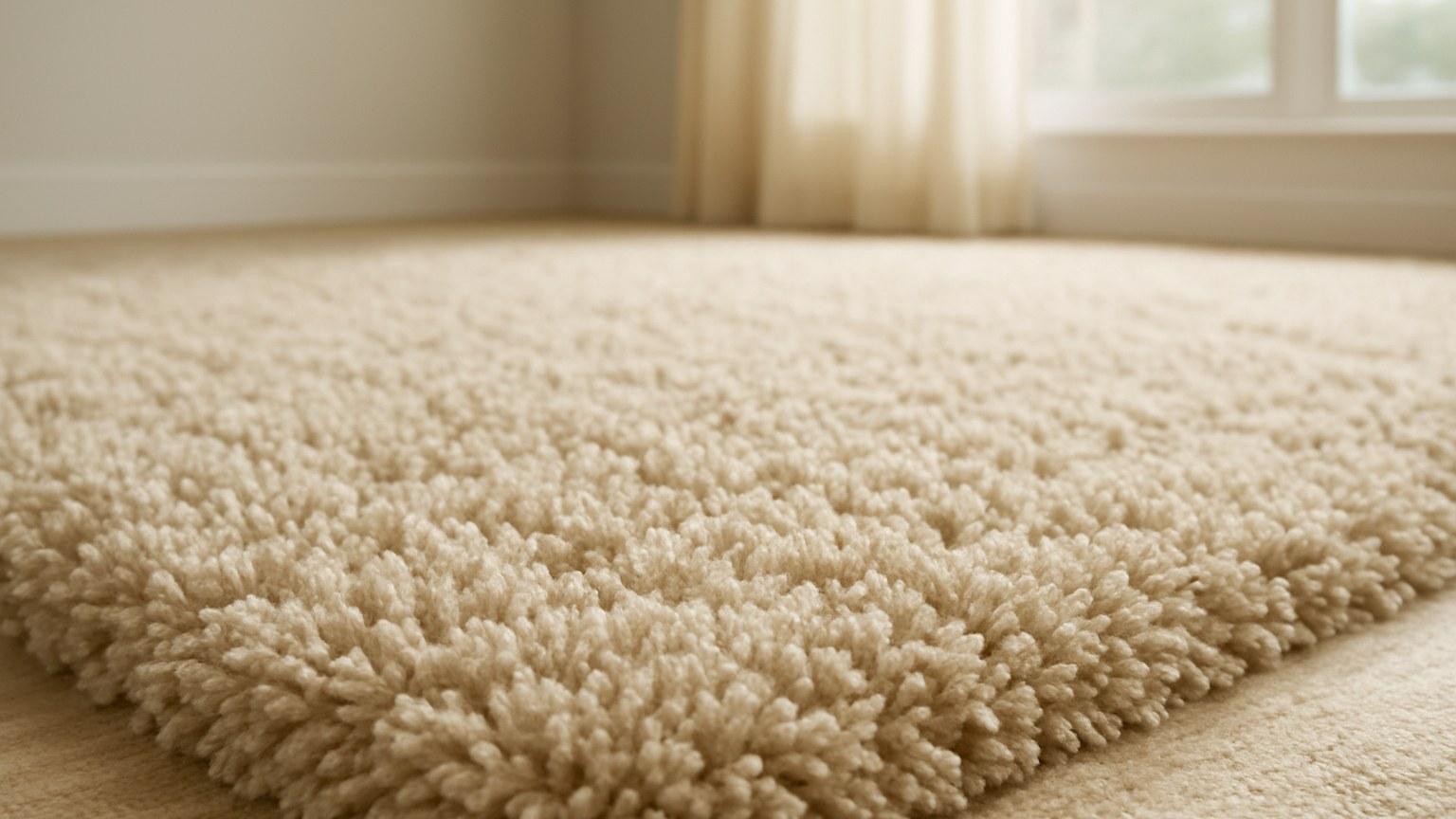
High pile carpet means fibers that stand over about half an inch tall, which is what gives it that deep, plush feel. No single rulebook sets that line, so brands label it differently. That gap is why rooms, cost, and cleaning catch so many people off guard.
I lay and pull up carpet for a living, and high pile is the stuff that looks unbeatable in the showroom and then shows up as a matted, flattened mess a year later when it's in the wrong room. So let's settle what it actually is, where it holds up, and what you'll really pay.
Key takeaways
- High pile means fibers over about 1/2 inch tall; shag is the tall end, roughly over 1 inch. Guides disagree on the exact line, so measure instead of trusting a label.
- High pile belongs in bedrooms and low-traffic lounges. It mats and flattens on stairs, in hallways, and in busy family rooms.
- Material runs about $2-8 per square foot (angi.com); wool shag hits $10-20 and nylon plush about $4-7 (dgfloors.com). Install labor adds roughly $0.50-1.50 per square foot (carpetexchange.com, costprism.com).
- Skip the spinning beater bar. Long fibers need suction or an adjustable brush roll you can raise. The Carpet and Rug Institute publishes vacuum-selection guidance for this.
- Measure at home by parting the fibers and holding a ruler straight to the backing: under 1/4 inch is low, over 1/2 inch is high.
What Does High Pile Carpet Mean?
High pile carpet is carpet whose fibers stand over about half an inch tall, measured from the backing up to the tip of the fiber. That measurement is the pile height, and it is only the fiber length, not the whole carpet.
That distinction matters more than people think. Pile height is just the yarn sticking up. Thickness is the pile plus the backing plus any attached pad underneath. A carpet can feel thick and substantial in your hand and still be low pile, because a lot of that bulk is backing, not fiber length.
Here's the part that trips shoppers up: no single group sets a legal threshold for the word "high." One maker's "high pile" tag can mean something different from the next maker's. The tag is marketing, not a measurement.
High pile is plush, soft, and warm, and it quiets a room. Whether it actually performs where you want to put it is the question the rest of this guide answers.
High Pile vs. Shag: Where One Ends and the Other Begins
Shag is the tall extreme of high pile, roughly over one inch. Put simply, all shag is high pile, but not all high pile is shag.
The guides don't agree on the exact lines, and it's worth saying so plainly. Carpetrends.com treats high pile and shag as the same thing, both over half an inch. Jaipurrugs.com calls shag its own separate tier, over one inch. Greatmats.com puts high pile at roughly half to three-quarters of an inch. The numbers overlap and contradict, which is why I tell people to measure their own carpet instead of trusting a word on a sample.
On the tag, you'll see construction names, not just heights. Frieze is tightly twisted fiber that curls over at the tip. Saxony and plush are dense cut pile. Shag is the longest cut pile. Level loop and multi-level loop, often sold as Berber, are uncut loops and usually sit lower.
The practical read is simple: the taller and looser the fiber, the more it mats, crushes, and shows every footprint. That's the whole reason room choice matters so much with this stuff.
| Tier | Height | Typical styles |
|---|---|---|
| Low pile | under ~1/4 in | level loop, Berber |
| Medium pile | ~1/4-1/2 in | Saxony, textured plush |
| High pile | over ~1/2 in | plush, frieze |
| Shag | roughly over 1 in | long-fiber shag |
Pile height tiers and where shag begins, based on common industry ranges.
High, Medium, and Low Pile Compared
High pile wins on comfort and warmth and loses on traffic tolerance and cleaning. Medium pile is the all-rounder for most of the house. Low, dense pile is the workhorse for the hard-use spots. If you're still sorting out which tier belongs where, our room-by-room walkthrough on how to choose the right carpet for each room covers installation and padding too.
The trait that decides this is traffic. High pile flattens under feet, traps more dirt deep in the fiber, and takes more work to clean. Low pile shrugs off foot traffic and vacuums easily, but it feels firm, not cushy. Medium pile splits the difference, which is why it ends up in so many living rooms. That middle tier has its own thickness ranges, room-by-room wear patterns, and pricing, which our medium pile carpet guide breaks down in detail.
| Trait | Low pile | Medium pile | High pile |
|---|---|---|---|
| Traffic tolerance | High | Medium-High | Low |
| Cleaning effort | Easy | Moderate | Hard |
| Shows footprints / matting | Little | Some | A lot |
| Comfort underfoot | Firm | Soft | Plushest |
| Best rooms | Stairs, halls, basements | Living rooms, whole home | Bedrooms, low-traffic lounges |
How the three pile tiers trade off across traffic, cleaning, comfort, and room fit.
Height is not what makes a carpet last. Construction and density do. The measure of density, published by makers as face weight, shows how concentrated the fiber is. A dense low pile outlasts a loose high pile in a busy room. Nylon is the fiber most often built this way, and the handful of specs that decide how long low pile nylon carpet lasts go well beyond pile height alone.
So if a room sees daily heavy foot traffic, fiber height is working against you no matter how good it feels when you press your hand into the sample. Pick density first, height second.
The Best Rooms for High Pile Carpet (and Where It Mats Out)
High pile earns its keep in bedrooms and formal, low-traffic lounges. It flattens, mats, and wears out fast on stairs, in hallways, at entries, and in busy family rooms. Match it to the room or you'll regret it.
Is High Pile Carpet Good for a Bedroom?
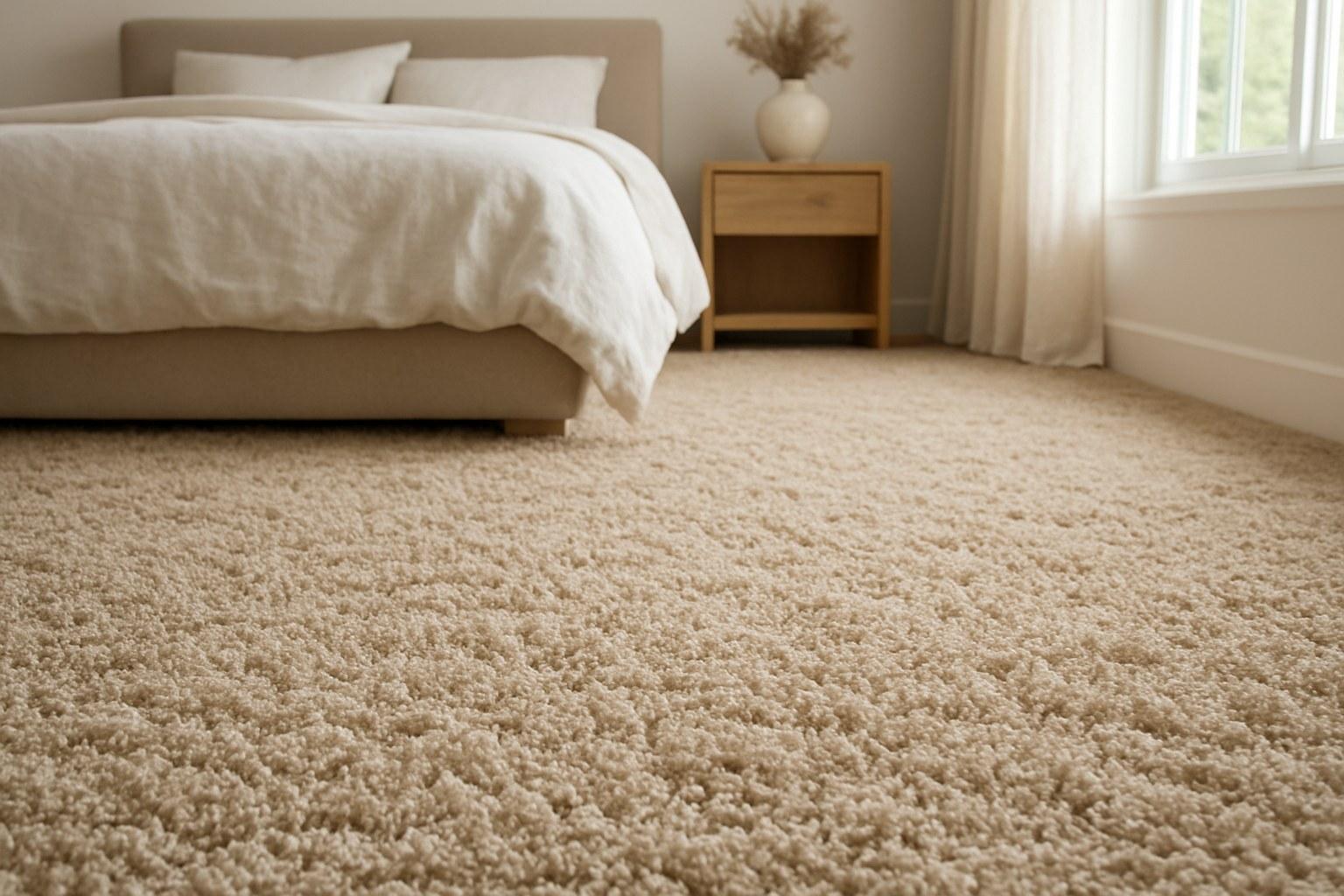
Yes. The bedroom is where high pile belongs. Traffic is light, you want it soft under bare feet, and the extra fiber adds warmth and quiets the room. A wool shag is the premium bedroom splurge if the budget's there. If you're weighing fibers and builds for each room, our pick list for the best carpet matched to your room's traffic and budget walks through the options.
Does High Pile Work in a Living Room?
It depends on the household. A formal sitting room that mostly gets looked at? High pile is fine there. A family room with kids and a dog running through it all day? No. That room needs a medium or dense cut pile that can take the beating. For the worst-case rooms, see the carpet builds that survive high traffic instead. For homes where that dog is a permanent fixture, the best carpet for pets ranks options by coat type, shedding, and accidents room by room.
Is High Pile Carpet Good for Stairs?
Skip it. Long fibers crush flat on the nosing, the front edge of each step where every foot lands hardest. Loose, tall pile is also a slip and trip concern there. A lower, denser pile wears far better on stair edges, which is why pros steer you that way. If stairs are on your list, read how to pick and install stair carpet so it won't slip or wear out.
On a bedroom job up near Westerville a few years back, the homeowner fell for a thick nylon plush and wanted it carried right down the open staircase to match. I talked her out of the stairs. The plush looked perfect in the bedroom and still does; the same carpet on those stair noses would have packed flat within a season of the family tromping up and down.
What High Pile Carpet Costs
Split the cost into material and labor, because a single flat number never fits every room. High pile material runs about $2-8 per square foot, according to angi.com. Install labor adds roughly $0.50-1.50 per square foot, per carpetexchange.com and costprism.com. Homeguide.com puts installed high pile at an average of $7-12 per square foot once it's down, which is a separate blended figure, not a straight sum of the two above.
Material cost tracks the fiber. Per dgfloors.com, for material only: polyester shag runs $3-6, nylon plush $4-7, premium nylon or triexta plush $6-10, and wool shag $10-20 per square foot. Triexta is a synthetic fiber, similar to nylon but built with extra built-in stain resistance, which is why it costs more than plain nylon. Wool is the splurge, and it shows up right away in the price.
| Item | Cost |
|---|---|
| Polyester shag (material) | $3-6 / sq ft |
| Nylon plush (material) | $4-7 / sq ft |
| Premium nylon or triexta plush (material) | $6-10 / sq ft |
| Wool shag (material) | $10-20 / sq ft |
| High pile, general (material) | $2-8 / sq ft |
| Install labor | $0.50-1.50 / sq ft |
| High pile, installed average | $7-12 / sq ft |
Material, labor, and installed cost for high pile carpet, in dollars per square foot.
Basement and stair jobs cost more than an open bedroom or living room. There are more cuts, more seams, and slower labor on anything that isn't a big square. Budget higher for those.
On the install itself: carpet gets stretched tight with a power stretcher and seamed with a hot iron, and those are not beginner tools. Most homeowners should hire the stretch and seam work out, and I'd say that goes double for stairs and basements where the cuts and transitions get fiddly. A simple area rug you roll out is a different story.
Padding is the spec that quietly decides how long any of this lasts, so don't cheap out there. See the fuller carpet replacement cost breakdown for whole-room numbers, and the carpet padding cost tables before you let anyone talk you into the thinnest pad in the warehouse.
What Carpet Do High-End Homes Use?
Wool is the classic high-end answer, and a wool shag in a bedroom is about as plush as carpet gets. At $10-20 per square foot for material alone, per dgfloors.com, it costs the most and it feels it. Premium nylon and triexta plush give you much of the look for less and handle traffic better, which is why plenty of nicer homes run those through the main floors and save the wool for bedrooms. Plush construction itself carries its own cost and durability profile worth sorting through, and our plush carpet cost and durability guide breaks it down room by room.
Sources
- Carpet and Rug Institute: Technical Bulletin on Vacuums for High Pile Carpet
- Carpet and Rug Institute: Recommended Vacuum Cleaners for High Pile Carpet (PDF)
- Carpet and Rug Institute: Selecting the Right Carpet
- Carpet and Rug Institute: Carpet FAQ
- Carpet and Rug Institute: Finding the Right Carpet for Your Business