
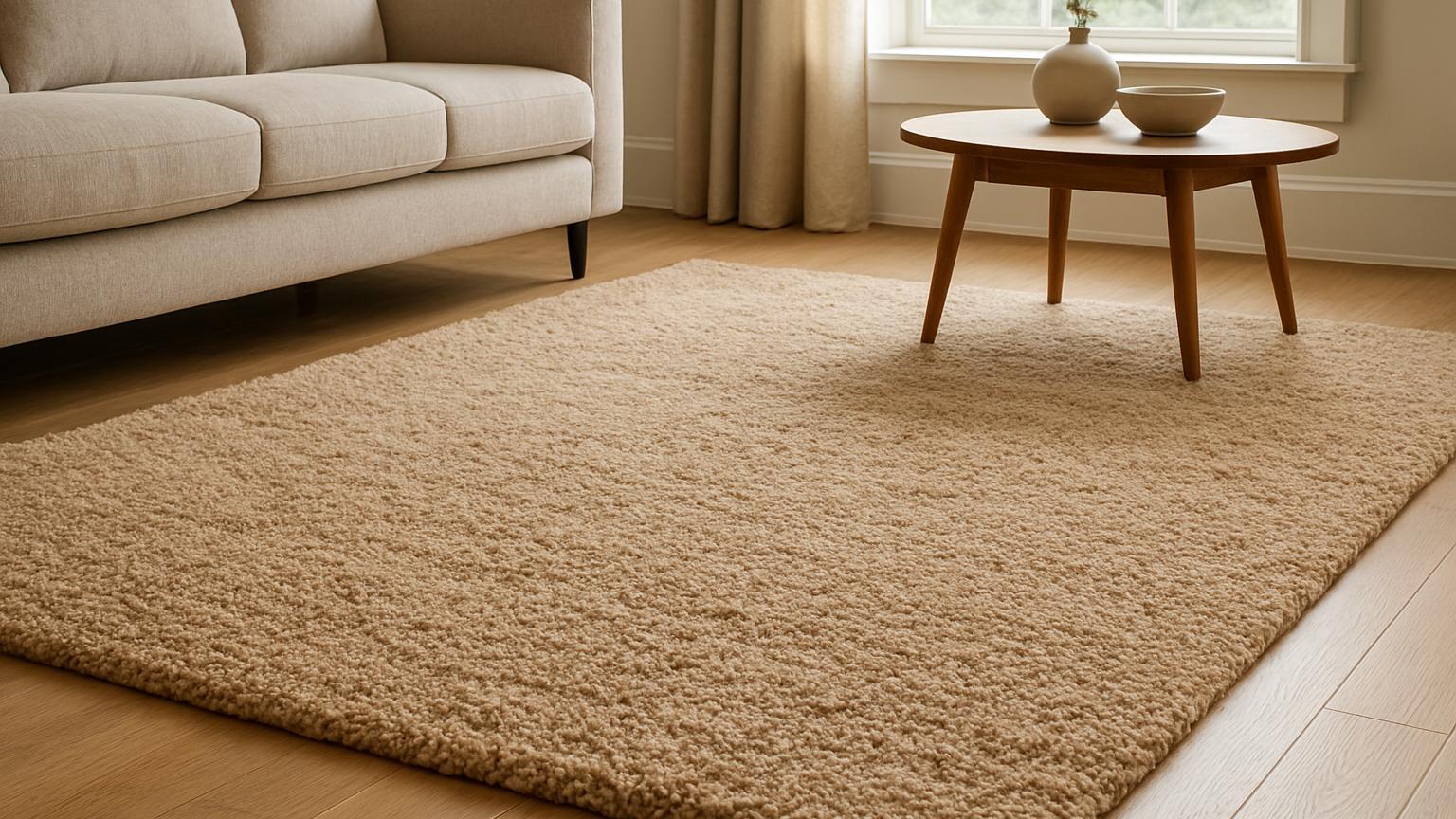
The best carpet for a home with real daily traffic is solution-dyed nylon in a dense cut pile. floorsandkitchenstoday.com ranks it the most durable, stain-resistant fiber for busy rooms. But "best carpet" changes room by room, and the wrong fiber in the wrong room mats into a worn path within months, so you match traffic first and budget second. If you want the full room-by-room method laid out in order, the step-by-step carpet guide walks through exactly that.
Key takeaways
- For heavy, whole-home traffic, solution-dyed nylon in a dense cut pile is the pick; nylon is widely regarded as a top durable fiber.
- Material prices run about $3-$6 (budget), $6-$10 (mid) and $10-$15+ (premium) per square foot per floorsandkitchenstoday.com's tiers; labor adds roughly $0.50-$1.50 per square foot (carpetexchange.com, costprism.com).
- Lifespan numbers conflict: carpetone.com says 10-15 years overall while flooringamerica.com puts quality nylon at 15-25 years. Fiber, padding and traffic drive the gap.
- Padding materials run about $0.25-$1.50 per square foot (homeguide.com, angi.com), and a denser pad under the same carpet buys you extra years of wear.
- Vacuum high-traffic lanes weekly and get professional cleaning every 12-18 months to reach the top of the lifespan range.
How to Pick the Best Carpet for Your Home: Traffic First, Then Budget
Start by ranking each room by how hard it gets used, not by how it looks. The Carpet and Rug Institute, the industry group that sets carpet standards, builds its picking questions around traffic, so I do too. Light traffic is a guest room or a formal sitting room. Medium is most bedrooms. Heavy is stairs, hallways, and the family room where everyone lands after work.
Once you know a room's traffic, you can line up fiber and pile against a price tier. Material prices run roughly $3-$6 per square foot for budget, $6-$10 for mid-grade, and $10-$15 or more for premium, per floorsandkitchenstoday.com's tiers. The matrix below maps all of that so you can read your room straight off it.
One color tip before the picks: in a busy room, a mid-tone carpet with a subtle fleck or pattern hides dirt and footprints far better than a solid light or solid dark. Solid colors show every crumb and every vacuum line.
A quick plain-word glossary, since these style names come up all through the list:
- Cut pile - yarn tufts cut at the top so they stand upright.
- Loop pile - yarn left as loops, not cut.
- Cut-and-loop - a mix of both, usually for a pattern.
- Frieze - a cut pile with a tight twist that flops over slightly and hides marks.
- Saxony and plush - smooth, even, upright cut pile with a soft look.
- Berber - a chunky, visible loop.
| Fiber + pile | Best traffic | Material price |
|---|---|---|
| Solution-dyed nylon, cut pile | Heavy / whole-home | $6-$10/sq ft |
| Polyester (PET), plush | Light (guest/formal rooms) | $3-$6/sq ft |
| Nylon or triexta, Saxony | Light-medium (bedrooms) | $6-$10/sq ft |
| Nylon, dense frieze | Heavy (stairs/halls) | $6-$10/sq ft |
| Solution-dyed triexta | Medium-heavy (pet homes) | $6-$10/sq ft |
| Wool, Saxony/pattern | Light (formal/low traffic) | $10-$15+/sq ft |
| Olefin (polypropylene), Berber loop | Light-medium (basement/rental) | $3-$6/sq ft |
Source: floorsandkitchenstoday.com's per-square-foot price tiers
How fiber and pile style line up with a room's traffic level and its material price tier.
1. Best for Heavy, Whole-Home Traffic: Solution-Dyed Nylon Cut Pile
For a floor that takes a beating every day, nylon wins. floorsandkitchenstoday.com ranks nylon as the most durable and stain-resistant fiber for busy rooms, and it's the fiber I reach for on any heavy-traffic job.
"Solution-dyed" means the color is mixed into the fiber before it's spun, not added to the surface later. Shaw's Anso nylon is built this way, and some Anso lines add a stain treatment on top for extra protection. Color built into the strand fights bleaching and stains far better than color sitting on top.
Don't buy on price alone here. Buy on density and twist. A tight cut pile with a high face weight springs back when you step off it instead of crushing flat. Ask the seller for the face weight and density numbers on the exact style, since those predict wear better than the showroom feel.
This sits in the $6-$10 per square foot material tier. Pair it with a firm pad to reach the long end of its life, and if the whole house gets pounded, read the full best carpet for high-traffic areas breakdown before you order.
2. Best Budget Carpet for Light Rooms: Polyester Plush
Polyester, often labeled PET, is the cheap-and-soft play at $3-$6 per square foot. It shrugs off water-based spills well, which is why it tempts people. The catch is that it crushes and mats under steady foot traffic.
Keep it in guest rooms, formal sitting rooms, and other spaces that never fight a daily lane. In those rooms it feels great and costs little.
I had a client in a Dayton two-story who wanted light plush down a main hallway to match a bedroom. A few months later that hallway had a matted, shiny path worn right down the middle, the exact track everyone walked. Density, which measures fiber compression, predicts wear more than the plushness you feel in the store, and low-density polyester is the version that mats fastest. Now a busy run gets a denser cut pile from me, every time.
3. Best for Bedrooms: Soft Nylon or Triexta Saxony
Bedrooms see light traffic, so comfort underfoot beats raw toughness here. This is where you can enjoy a soft, deep pile without paying for it in wear.
Triexta is soft and durable, and a nylon Saxony gives you that plush feel with a fiber that still holds up over time. Both land in the $6-$10 tier.
Because wear is low in a bedroom, you can run a taller, softer pile that you'd never risk on a staircase. Treat the bedroom as the one room where feel gets to win.
4. Best for Stairs and Hallways: Dense Low-Pile Frieze
Stairs take the hardest hit on the nosing, the front edge of each step where feet land. A lower, denser pile wears better there than anything tall.
Frieze is the pick. Its tight twist hides footprints and vacuum marks, and it holds up where plush would flatten. Skip long plush and loose loops on stairs; plush crushes on the nosing and loops can snag.
This is the $6-$10 material tier, and expect stair labor to cost more per step than an open room, since each step gets cut, wrapped, and fastened by hand. Stairs are a hire-it-out job, the tight corners and hand-wrapped nosing trip up most DIYers, even careful ones. Before you commit a run, use the low pile vs high pile carpet breakdown and the guide to picking and installing stair carpet.
5. Best for Pet Homes: Solution-Dyed Triexta (or PET Polyester)
For homes with dogs and cats, solution-dyed triexta resists pet stains well, and according to carpetexchange.com, several pet-focused lines add LifeGuard Spill-Proof backing, a moisture-barrier layer that keeps liquid from reaching the pad. floorsandkitchenstoday.com points to Dreamweaver PawPrint and PureColor, and Mohawk Pet Premier as examples that pair a stain-resistant fiber with that backing. Cat households weigh a slightly different mix of fiber grip and texture than dog households do, and the best carpet for cat owners breaks that difference down in detail.
Keep the two features separate in your head. A stain-resistant fiber fights what soaks into the yarn. A spill-blocking backing stops liquid from reaching the pad and subfloor underneath. They're different jobs, so read which one a given product actually has before you trust it against accidents.
Skip loops if your pet claws. A dense cut pile won't snag the way a Berber loop does when a cat hooks it. For the full rundown sorted by what your pet actually does, see the best carpets for pets ranked by behavior.
6. Best for High-End and Formal Homes: Wool
Wool is the premium natural fiber, and floorsandkitchenstoday.com ranks it as the best choice for look and feel in high-end homes, usually set in a Saxony or a patterned weave. Nothing synthetic quite matches how it sits and recovers.
The trade-off is maintenance. Wool reacts badly to soaking and to harsh cleaners, so it belongs in low-traffic formal rooms, not a mudroom or a kid-and-pet zone. Spot-test any cleaner in a hidden corner first and follow the care label.
Expect the top of the range here, $10-$15 or more per square foot for material.
7. Best Budget Loop for Basements and Rentals: Olefin Berber
Olefin, also called polypropylene, is cheap at $3-$6 per square foot and resists moisture and fading. That makes it a sensible pick for a basement or a rental where you want coverage without a big spend.
The downsides are real. Olefin crushes under traffic and grabs oily stains, making it suitable only for light-to-medium-traffic areas, not whole-home ones. A greasy footprint can set in and never fully lift.
A Berber loop is durable but snags, so think twice if you have pets or furniture with feet that catch. One pulled loop can run a line across the floor.
Padding: The Hidden Factor That Decides Lifespan
The pad under the carpet is what the warranty quietly hinges on. Put the wrong one down and the carpet wears out early no matter how good the fiber is.
Density matters more than thickness. A thick, soft pad in a busy room lets the carpet flex and break down from underneath, while a firmer, denser pad holds it up so the fiber keeps its shape. People reach for the plushest pad they can feel in the store, and in a hallway that's exactly the wrong move.
| Padding type | Material cost | Best for |
|---|---|---|
| Rebonded foam | $0.25-$0.80/sq ft | Most rooms; budget to mid-grade |
| Common pads overall (fiber, rubber, denser foam) | up to about $1.50/sq ft | Firmer pads for busy rooms, by density |
Carpet padding material costs across common types, per homeguide.com and angi.com; labor runs roughly $0.50-$1.00 per square foot per angi.com.
Material costs from homeguide.com and angi.com run about $0.25-$1.50 per square foot across common types, with install labor around $0.50-$1.00 per square foot per angi.com. For the exact density and thickness specs by room and the full price breakdown, see the carpet padding cost guide.
What Carpet Costs, and How Long It Really Lasts
Here's the honest spread on cost. Material runs $3-$6 (budget), $6-$10 (mid), and $10-$15 or more (premium) per square foot per floorsandkitchenstoday.com. Install labor adds roughly $0.50-$1.50 per square foot per carpetexchange.com and costprism.com. Padding and its labor add another $0.75 to $2.50 or so per square foot on top. A simple, open bedroom or living room is realistic to carpet yourself if you rent a power stretcher and knee kicker, but stairs, tricky seams, and whole-house stretch-in jobs are worth hiring a pro for, a bad stretch shows up as wrinkles within a year.
Work a real room. Say you put a mid-grade nylon at $8 material, $1 labor, a $0.75 pad, and $0.75 pad labor. That's about $10.50 per square foot installed. A 200-square-foot bedroom lands near $2,100. Swap in budget polyester and the same room drops well under half that; go premium wool and it climbs past it.
Lifespan numbers conflict, and it's worth knowing why. carpetone.com says carpet lasts 10-15 years overall, while flooringamerica.com puts quality nylon at 15-25 years. Fiber, pad, and traffic drive that whole gap, which is why a cheap pad under a good carpet is a false saving.
To hit the top of the range, vacuum your high-traffic lanes weekly and get a professional cleaning every 12-18 months. Between visits, a good carpet stain remover and quick spill cleanup do most of the work. When you're pricing a full tear-out and redo, the carpet replacement cost guide walks the real numbers room by room.
Sources
- Carpet and Rug Institute: Selecting the Right Carpet for Your Home
- Carpet and Rug Institute: Finding the Right Carpet for Your Business
- Carpet and Rug Institute: Choosing the Right Carpet for Your Home
- EPA: Identifying Greener Carpet Products
- Carpet and Rug Institute: FAQ
- Floorsandkitchenstoday.com's per-square-foot price tiers
- Floorsandkitchenstoday.com's per-square-foot price tiers