
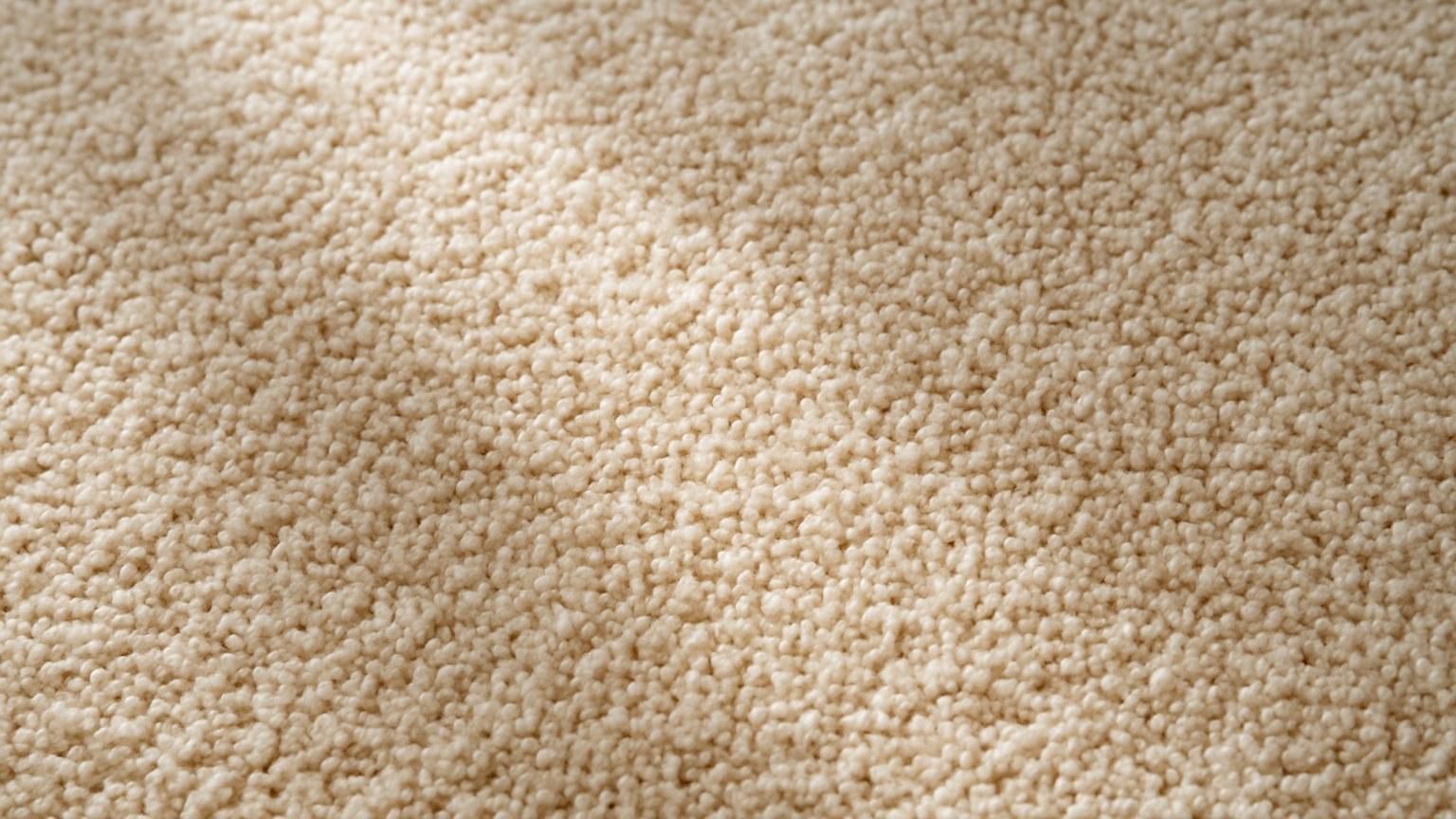
Medium pile carpet stands about 1/4 to 1/2 inch tall, the middle ground between thin low pile and plush high pile. But height alone won't tell you how long it lasts. Density and fiber decide that, and that's exactly where most buyers pick wrong.
Key takeaways
- Medium pile sits at about 1/4 to 1/2 inch (roughly 6-13 mm) of yarn height, the middle ground between low and high pile; carpetrends, jaipurrugs, and eastcoastfl agree on that range.
- Density, not just height, predicts wear. Two medium-pile carpets at the same height can wear very differently, a point the Carpet and Rug Institute makes directly.
- Medium pile holds up fine in busy home rooms when it is dense and made of nylon; for the heaviest commercial corridors, a dense low-level loop still wins.
- Installed medium pile runs about $2-$8 per square foot (HomeGuide, Today's Homeowner, Carpet Exchange); stairs and basements cost more than open rooms.
- The ADA (Americans with Disabilities Act) limits pile to 1/2 inch or less, measured from the bottom of the tuft (Carpet and Rug Institute), so medium pile sits right at that edge for accessible spaces.
What Medium Pile Carpet Is, and How Thick It Really Is
Medium pile means the yarn stands about 1/4 to 1/2 inch tall, or roughly 6-13 mm, from the backing up to the tip. That's the middle ground: taller than a flat low pile, shorter than a deep plush. The retailers carpetrends.com, jaipurrugs.com, and eastcoastfl.com all land on that same 1/4-1/2 inch range.
Here's the part people mix up. Pile height is only the standing yarn. It's measured from the backing to the tip of the yarn and nothing else, a distinction jaipurrugs.com spells out clearly. Total thickness is a different number. It counts the backing under the yarn and the pad under the carpet too. A carpet can feel thick underfoot because of a fat pad while its actual pile height is still medium.
Want to check what you already have? Press a finger into the carpet and watch how far the yarn stands back up. For a real number, peel back an edge where the carpet meets a wall and measure from the backing to the tip. Under 1/4 inch is low. In the 1/4 to 1/2 inch window, you have medium pile.
Low vs Medium vs High Pile, Side by Side
Low pile suits high traffic and easy cleaning, high pile suits quiet comfort rooms, and medium pile splits the difference. That's the shared view across carpetexchange, carpetrends.com, and jaipurrugs.com.
| Pile | Height | Feel underfoot | Best traffic | Matting risk |
|---|---|---|---|---|
| Low pile | under ~1/4 in | firm, thin | high traffic, easy to clean | low |
| Medium pile | ~1/4-1/2 in (6-13 mm) | cushioned, balanced | busy home rooms, if dense | moderate |
| High pile | over ~1/2 in | soft, plush, warm | low-traffic comfort rooms | high |
Pile height ranges, feel, and traffic fit for the three pile classes.
A high pile carpet is anything over about 1/2 inch of yarn, the plush and shag end of the scale. It feels great under bare feet but mats down and shows every footprint in a busy room. Next to it, medium pile gives you some of that cushion without crushing flat as fast. If you want the full measurement breakdown and which pile belongs in which room, the low pile vs high pile carpet comparison walks through the numbers in detail.
Is Medium Pile Tough Enough for High Traffic?
In a busy home room, a family room or a hallway, a dense medium pile holds up fine. The thing that sinks a carpet is low density, not the height by itself.
This is where guides disagree. Some push medium pile into heavy commercial corridors; others reserve low pile for those zones. For the heaviest commercial floors, an office lobby or a school hall, a dense low-level loop still wears better and I wouldn't argue it. But for the traffic a normal house throws at a floor, a dense medium pile is a fair pick.
The number that settles it is density, which is how tightly the yarn is packed into the backing. The Carpet and Rug Institute, the trade group for the carpet industry, notes that pile density predicts wear as much as height does. So two carpets both sitting at 1/4 to 1/2 inch can wear completely differently. One is packed tight and lasts; the other is sparse and mats out in a year.
Fiber matters too. Nylon and solution-dyed, stain-resistant yarns take traffic better than cheap builds, a point eastcoastfl.com makes. If you're buying for a busy room, check the density number and the fiber before you fall for a color. For the specific builds that survive the roughest home traffic, see the guide to carpet that survives high-traffic areas.
Cut, Loop, and Cut-and-Loop: The Build Under the Pile
Pile height tells you how tall the yarn is. The construction tells you how it's shaped, and that decides how it behaves day to day.
There are three builds. Cut pile has the yarn loops sheared open so the tips stand free; it feels soft and includes plush, Saxony, and the twisty frieze. Loop pile leaves the yarn as uncut loops, which makes it tough and good at hiding dirt; Berber and level loop are the common names. Cut-and-loop mixes the two, and that mix is good at hiding wear and footprints.
Tie that to how a medium pile acts. A dense loop or a tight frieze hides tracks and traffic lanes. Plush and Saxony feel wonderful under your feet but show every footprint and vacuum line. If footprints drive you up the wall, don't buy a smooth plush for the living room.
So, matching build to goal: if you want tough and dirt-hiding, go for a dense loop like a Berber or level loop. If you want soft underfoot, cut pile such as plush or Saxony delivers, but accept that it shows footprints. If you want a middle path that hides wear, reach for cut-and-loop or a multi-level style. And whatever the style name on the sample, flip to the spec sheet and read the published density number, because two styles at the same height can wear worlds apart. Households with dogs or cats have their own set of build priorities, which the best carpet for pets guide breaks down by what the pet actually does to the floor.
Vacuuming Medium Pile Carpet the Right Way
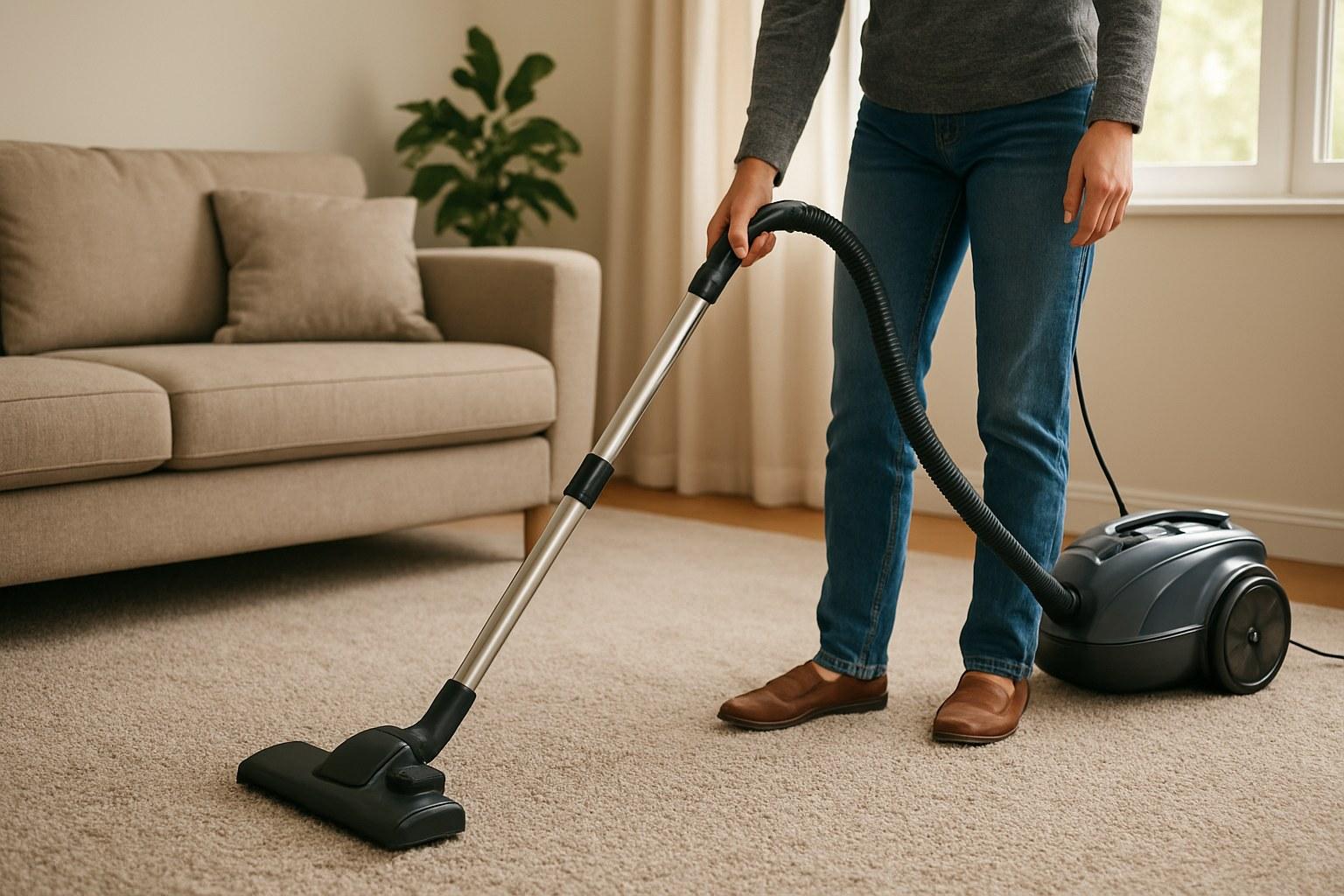
How you vacuum depends on the build under the pile, not just the height. On a cut pile medium carpet, like a plush or Saxony, run the beater bar, the rotating brush bar on the vacuum head, at a medium-to-high setting. It works the cut yarn tips loose and pulls grit up from down near the backing.
On a loop pile medium carpet, a Berber or level loop, back the beater bar off or switch to suction-only. A spinning brush can snag a loop and pull a thread, which leaves a bald spot you can't fix without cutting it out. Most upright vacuums have a height dial or a bare-floor/carpet switch for this.
Either way, slow down. Medium pile needs more passes than low pile to pull dirt up from deeper in the yarn, and rushing the vacuum just skims the surface.
Best Rooms for Medium Pile Carpet
Bedrooms are the easy win for medium pile: good comfort, low traffic, no reason to overthink it. Living and family rooms work too, as long as the pile is dense. Stairs and hallways only work with a dense, lower-medium build. And in a damp basement, check moisture before you commit to any carpet at all. For a broader look at matching carpet type, cushioning, and installation to every room in the house, the room-by-room carpet selection guide walks through the full process.
The "best medium pile carpet" question is really a density-plus-fiber call, not a brand call. A dense nylon medium pile from one maker will outlast a sparse polyester medium pile from another, no matter whose logo is on the box. For matching material to the room from the ground up, the best-carpet-by-room guide is the place to start.
On stairs, the nosing, that front edge where every foot lands, takes the hardest beating. I've found that what really holds up is a lower and denser pile, since a taller pile will fray and crush first right on that edge. If you're carpeting a staircase, the how-to guide for carpet on stairs covers picking and fitting it so it won't slip or wear thin on the nosing.
Medium Pile in Offices, Hotels, and Senior Living (the ADA Rule)
For commercial and accessible spaces there's a hard ceiling on pile height. The Americans with Disabilities Act, the federal accessibility law known as the ADA, limits carpet pile to 1/2 inch or less, measured from the bottom of the tuft, the point where each strand of yarn is anchored into the backing, as the Carpet and Rug Institute notes. That puts medium pile right at the edge of the allowed range.
In practice, offices, hotels, and senior living hallways lean toward dense low-level loop rather than a taller medium pile. A low, dense loop rolls wheelchairs and carts easily and meets that half-inch limit with room to spare. A medium pile can comply, but it has to stay on the shorter, denser side of the range to do it.
Do You Need a Chair Mat on Medium Pile Carpet?
A rolling desk chair wears a path into medium pile faster than foot traffic does, so a chair mat is worth adding under any desk that sits on this pile. Carpet chair mats are rated for a maximum pile height, so check that rating against your actual pile height, measured the same way as the carpet itself, from the backing to the tip.
On the taller end of medium pile, pick a mat rated for thicker pile or one with longer grip teeth underneath. A mat rated for a shorter pile than you actually have will slide and buckle instead of sitting flat.
What Medium Pile Carpet Costs
Medium pile runs roughly $2-$8 per square foot installed, with carpet, pad, and labor in that number, homeguide.com, todayshomeowner.com, and carpetexchange.com all put the installed range there (goflooring.com's 2025 pricing runs slightly higher, at $2-$9). Materials alone run about $2-$10 per square foot, per homeguide.com, and padding adds $0.25-$3 per square foot for materials, per angi.com and homeguide.com.
| Item | Cost per sq ft |
|---|---|
| Medium pile carpet, materials only | $2-$10 |
| Installed, all-in (carpet, pad, labor) | $2-$8 |
| Carpet padding, materials | $0.25-$3 |
Per-square-foot cost for medium pile carpet, split into materials, all-in installed, and padding.
Work the math on a real room. A 12x15 bedroom is 180 square feet. At the all-in installed range of $2-$8 per square foot, that's about $360 on the low end and $1,440 on the high end for carpet, pad, and labor together. Where you land inside that depends on the fiber and density you pick and the quality of the pad under it.
Two spots cost more than an open room. Stairs run higher because each step is a separate cut and wrap, slow hand work that eats labor. Basements cost more because of moisture prep, and you check that moisture before anything goes down. Carpet isn't a click-lock job like vinyl plank; stretching it tight takes a knee kicker and a power stretcher, so most homeowners hire a pro for a full room.
A simple bedroom stretch-in is about the only spot a confident DIYer should try; leave stairs and basement jobs to a crew. For the full project math, the carpet replacement cost breakdown lays out the real numbers, and the carpet padding cost tables break down the pad by the foot and the room.