
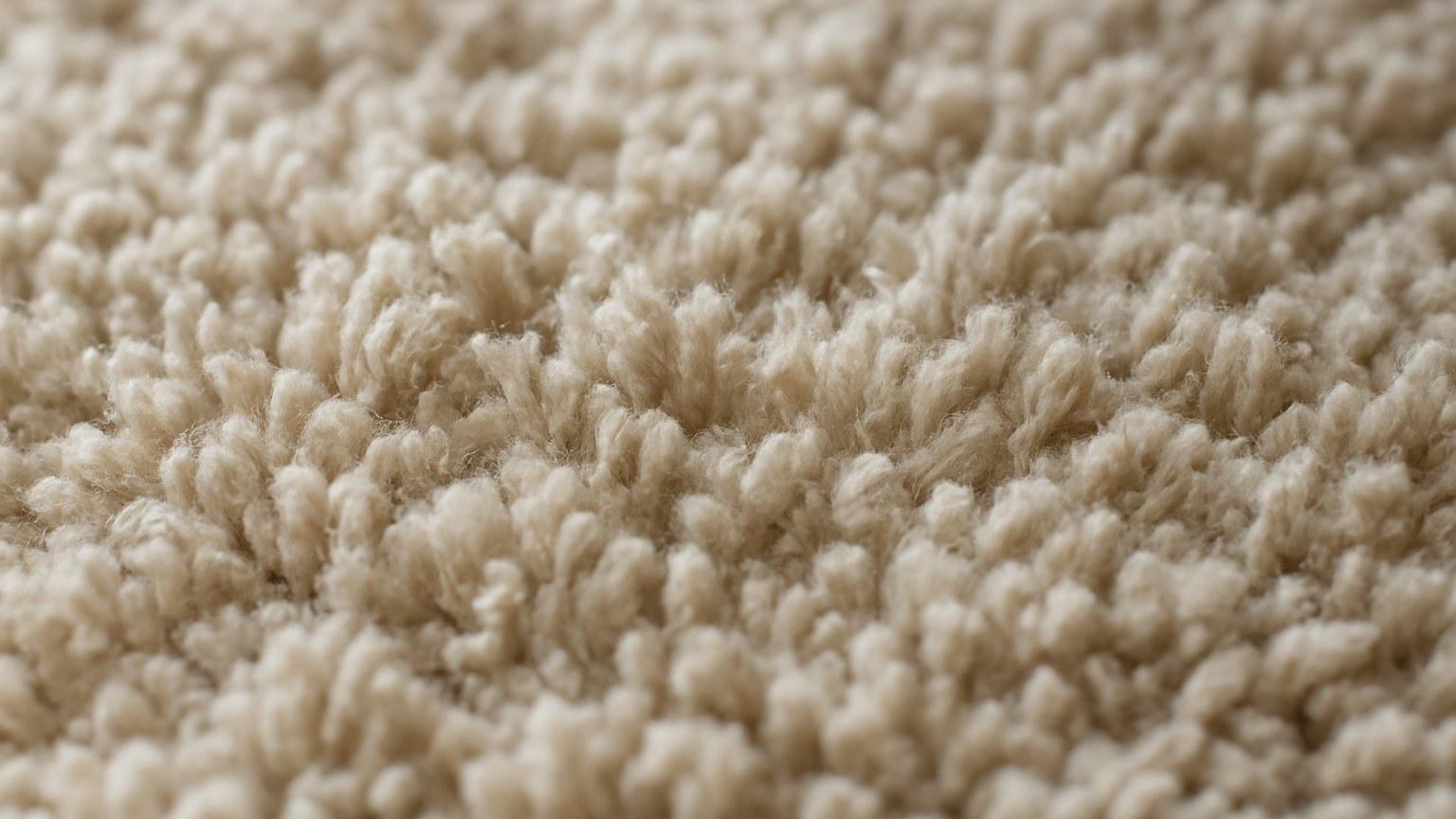
Carpet pile height is the height of the standing yarn, measured straight from the top of the backing up to the tips of the fibers, usually written in inches or millimeters. People get tangled up because makers blur it with total thickness, throw around soft words like "plush" and "luxury" that mean whatever they want, and because two guides online will draw the line between high pile and plush in two different spots. Below is one reconciled chart, in both units, plus how to check your own floor with a ruler.
Key takeaways
- Pile height is the yarn measured from the top of the backing to the fiber tips, not total carpet thickness, which also counts the backing and pad.
- Low pile runs under about 1/4 inch, medium 1/4 to 1/2 inch, high 1/2 to 3/4 inch, and shag over 3/4 inch; guides split the 'plush' tier differently.
- Density and face weight predict wear better than height alone, so two carpets at the same pile height can wear very differently.
- For wheelchair access, carpet-rug.org's ADA Technical Bulletin caps pile at 1/2 inch, measured down to the backing, cushion, or pad.
- You can check any carpet yourself by pressing a ruler flat to the backing and reading straight up to the fiber tips.
What Carpet Pile Height Is (and Why It's Not Thickness)
Pile height is the length of the yarn that stands up off the backing. Measure from the top of the backing to the fiber tips, and that number, in inches or millimeters, is the pile height.
The reason it matters: it's a real measurement you can take with a ruler. Words like "plush," "deep," and "luxury" are marketing, and every maker uses them a little differently.
Pile height is only the yarn. It tells you nothing about how long the carpet will last.
Pile height vs pile thickness
Total carpet thickness adds in the backing layers and the pad underneath. A floor that feels thick and cushy underfoot can still have a short pile, because most of that softness comes from the cushion, not the yarn. If you're pricing out that layer, the cushion you choose changes the installed cost as much as a thicker carpet would.
What predicts wear is density and face weight, not height. According to carpet-rug.org's guide to pile yarn density, density, how tightly the fibers are packed together, and face weight, how much yarn sits in a square yard, are better predictors of wear than pile height alone. The maker publishes both numbers per style, and two carpets at the same pile height can wear differently depending on them. Height is mostly about feel and look.
Carpet Pile Height Chart: Low, Medium, High, Plush, and Shag
The bands below run in both inches and millimeters, so you can match either a tape measure or a spec sheet. Low pile is under 1/4 inch, medium is 1/4 to 1/2 inch, high is 1/2 to 3/4 inch, and shag is anything over 3/4 inch.
| Category | Inches | Millimeters | Feel | Note |
|---|---|---|---|---|
| Low pile | under 1/4 in | under ~6 mm | Short, dense, flat | Most durable, easiest to clean, best for traffic |
| Medium pile | 1/4 to 1/2 in | ~6 to 13 mm | Balanced, springy | The all-rounder most living spaces land on |
| High pile | 1/2 to 3/4 in | ~13 to 19 mm | Soft, deep | Covers the plush / Saxony tier some guides split out |
| Shag | over 3/4 in | over ~19 mm | Longest, cozy | Softest but hardest to vacuum and keep clean |
Carpet pile height bands in inches and millimeters, with the feel and best use for each.
What thickness counts as low pile carpet?
Low pile is under about 1/4 inch. A quick gut check: if you can see the backing peeking between the fibers and the surface feels flat and short, you're looking at low pile.
Where high pile ends and plush begins
This is the spot where guides disagree. Some call anything over 1/2 inch "high pile" and stop there. Others carve out 1/2 to 3/4 inch as a separate "plush" or Saxony tier, Saxony being a dense cut pile where the yarn tips stand upright. That's why you'll find two different boundaries online.
I put plush and Saxony inside the high-pile band on purpose, so you've got one clean line instead of a fuzzy one. Match the feel to the number: low pile stays flat and you can see the backing, medium springs back fast when you press it, and high pile and shag let your fingers sink in.
How to Measure Carpet Pile Height at Home
You don't need a special tool. Part the fibers with your fingers, press a ruler or a thin steel rule flat down to the backing, then read straight up to the fiber tips. That reading is your pile height.
A few things to get right:
- Measure down to the backing, never to the pad. That's how pile height is defined, and it matches how ASTM D5823, the standard test method for pile height, measures it too.
- On a loop or uncut sample, measure the height of a standing loop or fiber, not the folded width across the top.
- Check a few spots and ignore any crushed walking path, since a flattened lane reads short.
A ruler is plenty for a quick check. A pile gauge or a caliper is more precise, but there's no reason to buy one just to settle a question at home.
One place the number really counts is wheelchair access. The ADA (Americans with Disabilities Act) Technical Bulletin published by carpet-rug.org caps pile at 1/2 inch, and it's measured down to the backing, cushion, or pad underneath, so it effectively limits the pile plus the cushion together. If accessibility is on your list, keep the whole stack at or under that half inch.
Best Pile Height by Room
Match pile to traffic, not to how a sample feels in your hand. Something soft and deep in a showroom can crush flat in a busy hallway within a season.
In the living room, medium pile is the balanced pick. It feels good underfoot and still handles everyday traffic. Bedrooms can go higher, since foot traffic is light and softness wins there. If you want that deep-rug feel in a living room instead, keep an area rug in the medium range rather than going shag. For a fuller room-by-room breakdown that also covers carpet cushions and installation basics, it's worth working through before you shop.
Hallways and stairs want low, dense pile. Tall yarn crushes right on the stair nosing, the front edge where every foot lands, and once it mats down it stays down. If you're carpeting steps, the how to pick and install stair carpet so it won't slip or wear out guide walks through the build that holds up there.
Dining rooms also do best with low pile, because it cleans up easier under chairs and catches fewer crumbs. Home offices want low pile too, so a desk chair's wheels actually roll instead of dragging. When spills do happen anyway, having the best carpet stain remover on hand keeps them from setting into the fibers before anyone notices.
I pulled up a plush carpet in a Columbus hallway a couple years back that the owner was thrilled with the day it went in. Two kids and a dog later, the lane down the middle was flat and gray while the edges still looked brand new. Same carpet, same install, two different floors, because traffic crushed the tall pile where feet landed. For those lanes and family rooms, look at carpet builds that survive high traffic instead of chasing softness.
Low pile or high pile: which is better?
Neither one wins everywhere. Low pile is better for traffic, cleaning, and chair wheels. High pile is better for comfort in low-traffic rooms like bedrooms. Pick by the room, not by which sample feels nicer in the store.
How Fiber Material and Pile Height Work Together
Most charts stop at the height number, but fiber is the other half of the answer. Two carpets at the same pile height wear differently depending on what the yarn is made of, so you pick the pair together.
| Fiber | Wear | Best pile height | Note |
|---|---|---|---|
| Nylon | Toughest, resists crushing | Any, strong at low to medium for traffic | The durable default for busy rooms |
| Wool | Soft, springy, resilient | Medium to high | Soaks water; spot-test cleaners first |
| Polyester (PET) | Soft, stain-resistant, less resilient | Medium | Mats and crushes in heavy traffic |
| Olefin (polypropylene) | Cheap, moisture and fade resistant | Low pile or loop (Berber) | Flattens fast in tall cut pile |
How common carpet fibers hold up and the pile heights that suit each one.
Nylon is the toughest fiber and springs back from crushing, so it can carry a higher pile and still look right in a busy room. Polyester is soft and resists stains, but it mats sooner under traffic, so keep it to medium pile. Wool is soft, springy, and resilient, but it drinks up water, so always spot-test any cleaner or deodorizer in a hidden corner before you go near a stain.
Olefin, also called polypropylene, is cheap and shrugs off moisture and fading, but it goes flat fast in tall cut pile, so it belongs in low pile or a loop like Berber, which is a looped-fiber carpet with no cut tips. That same moisture resistance is why olefin tends to top any list of the best carpet for cats prone to litter box misses.
One thing to keep straight on budget: fiber and overall quality drive the price far more than the pile category does. A dense low-pile nylon can cost more than a taller polyester. For help picking the whole build, see the best carpets matched to your room's traffic and budget, and for what a finished job runs, the real numbers on carpet replacement cost break it down by material and labor.
What Thickness Is Considered Low Pile Carpet?
Low pile carpet runs under about 1/4 inch, or under roughly 6 mm, measured straight from the backing up to the yarn tips. That puts it at the short end of the pile height chart above, below both the medium and high pile bands.
At that height, the yarn stands short and tight, so the floor feels flat and dense underfoot instead of soft and sinking. You can often see flecks of the backing peeking between the fibers, which is the fastest way to spot low pile without pulling out a ruler.
This is the band to reach for in hallways, stairs, dining rooms, and home offices, anywhere foot traffic is heavy or a chair's wheels need to roll smoothly. Short yarn resists crushing and matting, and it's easier to keep clean because dirt and crumbs can't sink down into long fibers.
Low pile doesn't mean low quality. A dense, low-pile nylon loop can outlast a taller, looser weave twice its height, because fiber type and density matter just as much as the height measurement itself.
Which is better, low pile or high pile carpet?
Low pile wins for durability and easy cleaning, while high pile wins for comfort in rooms with light foot traffic, neither one is the better choice everywhere in the house.
Low pile holds up because the short yarn resists crushing and matting, which is why it works in hallways, stairs, dining rooms, and home offices. It's also faster to vacuum, since dirt and crumbs sit on top of the fibers instead of sinking down into them.
High pile feels softer and warmer underfoot, which makes it a good fit for bedrooms and other rooms where few feet cross it in a day. The tradeoff is that tall yarn flattens and mats once real foot traffic hits it, and it holds onto dirt and pet hair longer because the fibers run deeper.
Fiber matters as much as height here. A dense low-pile nylon will usually outlast a loose high-pile polyester, so weigh both numbers before you buy, not just the pile height.