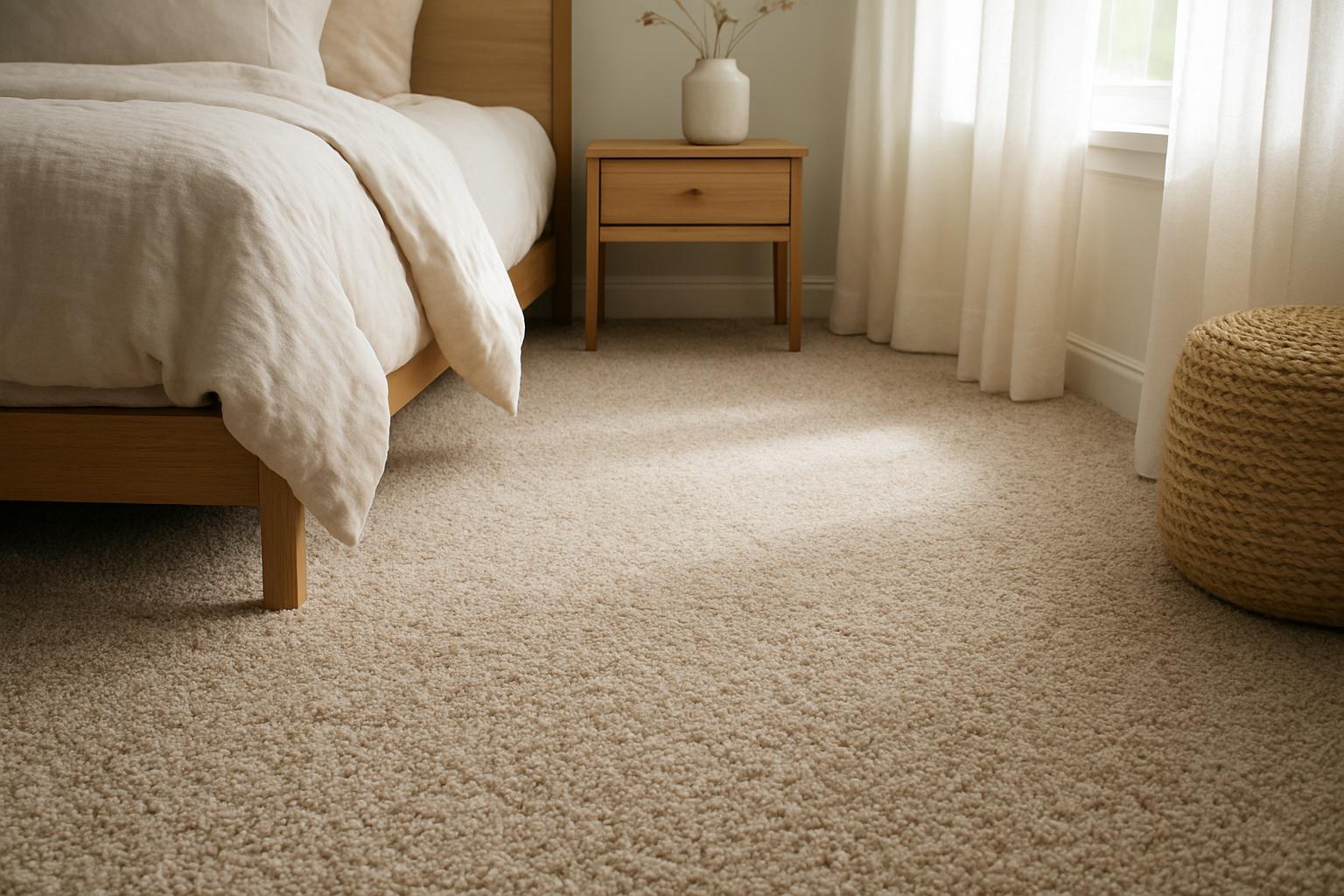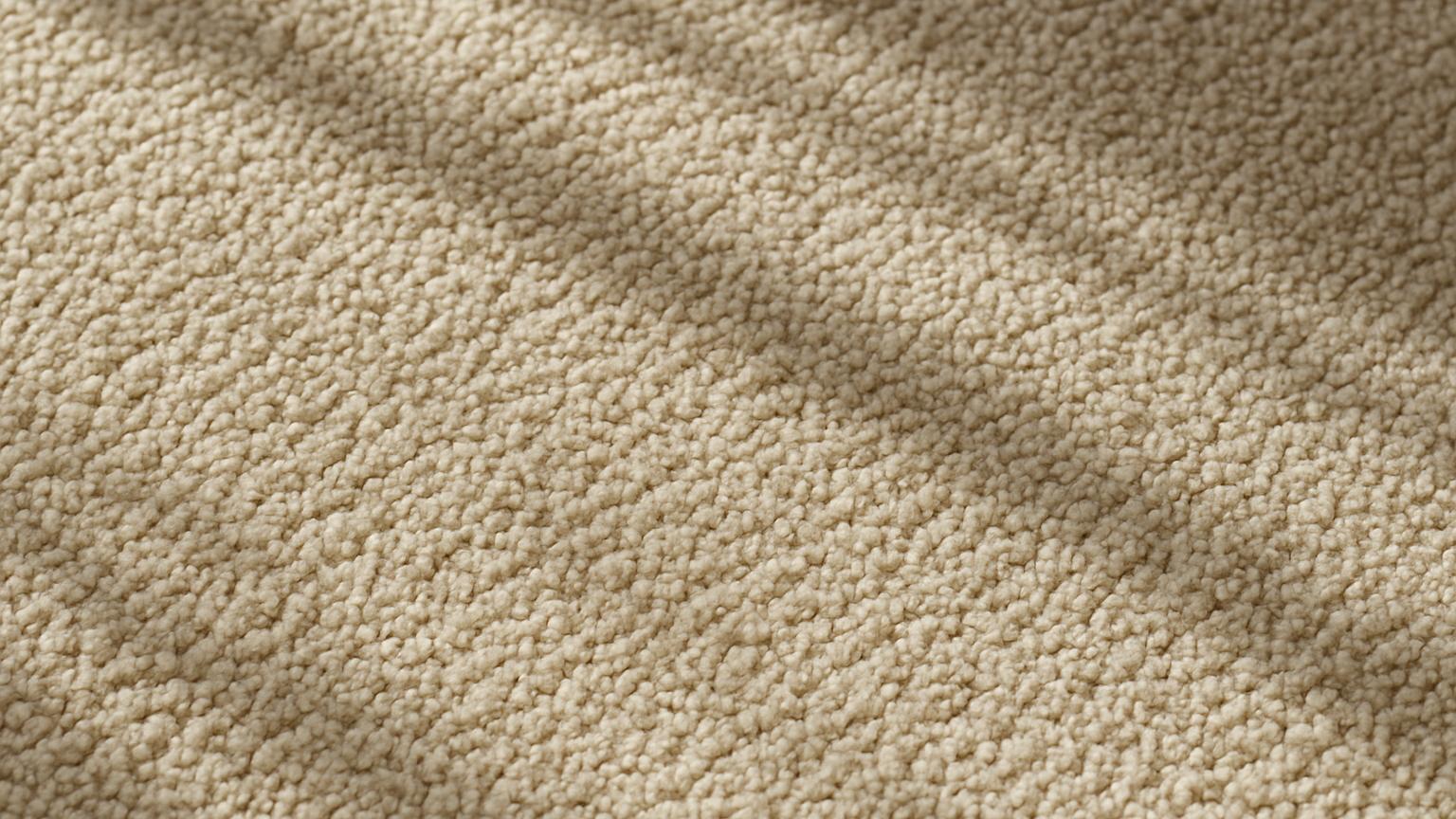
A nylon carpet's price and how long it lasts come down to two lines on the spec sheet: face weight and dye method. Everything else, including the brand name on the sample, matters far less than those two numbers. Most shoppers never find them, so they end up paying for a sticker instead of the floor under their feet.
Key takeaways
- Two spec lines decide a nylon carpet's price and lifespan: face weight (ounces of pile per square yard) and dye method (solution-dyed vs topcoat-treated).
- Solution-dyed nylon carries color all the way through the fiber, so it resists fading and bleach far better than a surface topcoat that wears off.
- Closeout nylon runs about $9.99 to $11.97 per square yard at daltoncarpet.com; installation adds $8 to $45 per square yard (floorcritics.com) and padding $2.25 to $9 (homeguide.com).
- Match weight to traffic: lighter ounce tiers for bedrooms, heavier dense low-pile for hallways, stairs, and pet homes.
- Nylon costs more than polyester or olefin but holds its texture longer under heavy foot traffic, so it's often wasted on a light-use room.
What Nylon Carpet Is, and the Two Numbers That Matter
Nylon is a man-made carpet fiber that springs back under heavy foot traffic. That resilience is why it's a common pick for whole-home jobs and busy rooms, and why I recommend it when a client wants one carpet to survive the whole first floor.
You'll see it sold under lines from Shaw, Mohawk, and Stainmaster. The brand on the sample tells you almost nothing about how the carpet will hold up. Two spec lines do that work.
The first is face weight, the ounces of pile per square yard. The second is dye method, whether the color is built into the fiber or sprayed on top. A third number, density, tells you how tightly the tufts pack, and I trust it more than weight alone to predict wear.
Some nylon now uses recycled content, like reclaimed fishing nets or factory waste spun back into fiber. That's a nice feature for a greener buy, but treat it as a feature, not a durability promise. The face weight and dye method still decide how the floor wears.
How to Read a Nylon Carpet Spec Sheet
Find the face weight and the dye method first. Those two lines sort the good buys from the overpriced ones.
Face Weight and Why Density Matters More
Face weight is the headline number, and higher usually means tougher. But it can fool you. Face weight only weighs the pile, so a tall, loose pile can post a big number and still crush flat in a year.
Density tells the real story. It measures how tightly the tufts are packed, and in the floors I've pulled up, a dense 30-ounce carpet outlasts a loose 40-ounce every time. The maker publishes density right alongside face weight; read both, and lean on density when they disagree.
Dye Method: Solution-Dyed vs Topcoat
Solution-dyed means the color is mixed into the nylon before the fiber is even made, so the color runs all the way through the strand. Cut it in half and the center is the same shade. That carpet resists fading and holds up to bleach and harsh spot cleaners, because there's no surface coat to wear away. That resistance also makes solution-dyed nylon worth considering when picking the best carpet for cats.
Topcoat or piece-dyed nylon has its color and stain-guard sitting on the surface. That layer wears off in the traffic lanes, and bleach or a strong cleaner leaves pale spots. For stairs, pet homes, and anywhere you'll scrub, solution-dyed is worth the premium.
A few construction terms in plain words: plush and Saxony are smooth cut pile that show every footprint. Frieze is twisted cut pile that hides traffic. Berber and level loop are tight uncut loops, tough but able to snag. Cut-and-loop mixes both for a pattern. For stairs and hallway lanes where feet land hardest, a low, dense pile wears best. Pile choice is only one piece of the puzzle, though, edge binding, padding thickness, and tread grip all need deciding before installers show up, which is why I walk clients through the things to settle before you carpet your stairs.
| Face-weight tier | Typical construction | Best for |
|---|---|---|
| Light (~20-30 oz/sq yd) | Thin plush or cut pile | Bedrooms, closets, guest rooms, light traffic |
| Mid (~32-40 oz/sq yd) | Dense cut pile or frieze | Living rooms, family rooms, everyday use |
| Heavy (40+ oz/sq yd, dense low pile) | Low-pile level loop or tight frieze | Hallways, stairs, pet and kid homes |
Nylon face-weight tiers matched to the rooms they realistically fit.
Nylon vs Polyester, Olefin, and Wool
Nylon holds its texture longest under traffic among the synthetics, which is part of why it costs more than the others. If the room sees heavy, daily foot traffic, that extra money buys years.
Polyester (PET) is softer and cheaper and resists stains by nature, but it mats and crushes faster. It belongs in a low-traffic bedroom, not a hallway.
Olefin, also called polypropylene, is the cheapest. It's bleach-cleanable and shrugs off moisture, which makes it a sensible pick for basements and Berber loop, but it crushes under heavy traffic.
Wool is the natural premium. It looks and feels the best and costs the most. It also reacts badly to soaking and harsh cleaners. I warn clients off natural fibers in wet rooms for this reason: I've seen a wool piece near a kitchen sink stain and stiffen because it got soaked and scrubbed the way a synthetic would shrug off. Keep wool out of wet rooms.
| Fiber | Resilience | Stains | Moisture | Relative cost | Best use |
|---|---|---|---|---|---|
| Nylon | Best texture retention | Good if solution-dyed, needs topcoat otherwise | Tolerates damp, don't soak | Highest synthetic | High-traffic whole-home, stairs, pets |
| Polyester (PET) | Mats and crushes faster | Naturally stain-resistant | Fine | Low | Bedrooms, light-traffic rooms |
| Olefin | Crushes under traffic | Bleach-cleanable, resists water stains | Excellent | Lowest | Basements, Berber loop, rentals |
| Wool | Excellent, natural | Moderate, hates harsh cleaners | Poor, reacts to soaking | Highest overall | Formal and high-end rooms |
How nylon stacks up against the other common carpet fibers by wear, stains, moisture, and cost.
Nylon wins for high-traffic, whole-home use. The others win on budget, moisture tolerance, or luxury feel, not on toughness.
What Nylon Carpet Costs
Nylon carpet cost breaks into four pieces: the carpet itself, the padding underneath, the labor to lay it, and hauling away the old carpet. Closeout and overstock nylon at daltoncarpet.com runs about $9.99 to $11.97 per square yard, which works out to roughly $1.11 to $1.33 per square foot. Their Woodland 32 lists at $9.99 and Circuit 30 at $10.98. Full retail nylon runs higher, so treat those as the floor, not the ceiling. For a wider look at total project pricing, see our carpet replacement cost breakdown.
Installation adds $8 to $45 per square yard, according to floorcritics.com, with stairs and small, cut-up rooms landing at the high end. Padding runs $2.25 to $9 per square yard in materials, per homeguide.com, and skimping there shortens the whole floor's life. Our carpet padding cost guide walks through which cushion to buy. Pulling and hauling the old carpet adds about $0.50 to $5 per square yard, per angi.com.
| Item | Range (per sq yd) | Split | Note |
|---|---|---|---|
| Nylon carpet (closeout/overstock) | $9.99-$11.97 | Materials | Dalton examples: Woodland 32 at $9.99, Circuit 30 at $10.98 |
| Padding / cushion | $2.25-$9 | Materials | Rebonded foam is the budget default |
| Installation | $8-$45 | Labor | Stairs and tight rooms cost more than open floors |
| Old carpet removal & disposal | $0.50-$5 | Labor | 2026 range |
Nylon carpet cost split into materials and labor, per square yard.
Here's the arithmetic for a real room. A 12-by-15 bedroom is 180 square feet, or 20 square yards. Multiply each line by 20: carpet runs $200 to $239, padding $45 to $180, installation $160 to $900, and removal $10 to $100. Add the low ends and you get about $415; add the highs and you reach about $1,419 for that one room. The install number swings widest, and stairs push it toward that top figure.
DIY versus hire: wall-to-wall nylon needs a power stretcher, a knee kicker, and clean seams to lie flat and stay flat. This is not click-lock vinyl plank you can snap together over a weekend. Open rooms are doable if you rent the tools and take your time, but stairs are fussy, unforgiving work. Carpeting stairs so it won't slip or wear out is usually worth hiring a pro for.
Which Nylon Tier Fits Your Room, and Where to Buy It
Match the weight to the traffic, not to your budget line. A light 20-30 ounce nylon is plenty for a bedroom or closet, and spending up on a heavy tier there just wastes money. Save the dense, low-pile 40-ounce-plus builds for hallways, stairs, and anywhere kids and pets rack up miles. If you're still sorting out which fiber and weight fit which room overall, our room-by-room carpet guide walks through the choice step by step.
In a pet home, dye method is the bigger lever. Solution-dyed nylon takes a bleach-based cleaner without spotting, which matters when accidents happen. Our guide to the best carpet for pets goes deeper on the fiber-and-dye combos that survive animals.
Where to buy comes down to the tier you want. Big-box stores like Lowe's stock mid-tier retail nylon with install packages attached, which is the easy path if you want one company to measure, sell, and lay it. Closeout and overstock sellers like daltoncarpet.com undercut that on price, but you take the roll that's in stock and arrange your own installer.
Before any of it goes down, the subfloor has to be flat and dry. A floating floor forgives a little; stretched-in carpet over a cupped or damp subfloor telegraphs every flaw and can grow problems underneath. Check flatness with a straightedge and confirm the slab or wood subfloor is dry before you order a stitch of carpet.
Still weighing nylon against the other fibers for a specific room? 7 Best Carpets, Matched to Your Room's Traffic and Budget names the pick for each traffic level.