
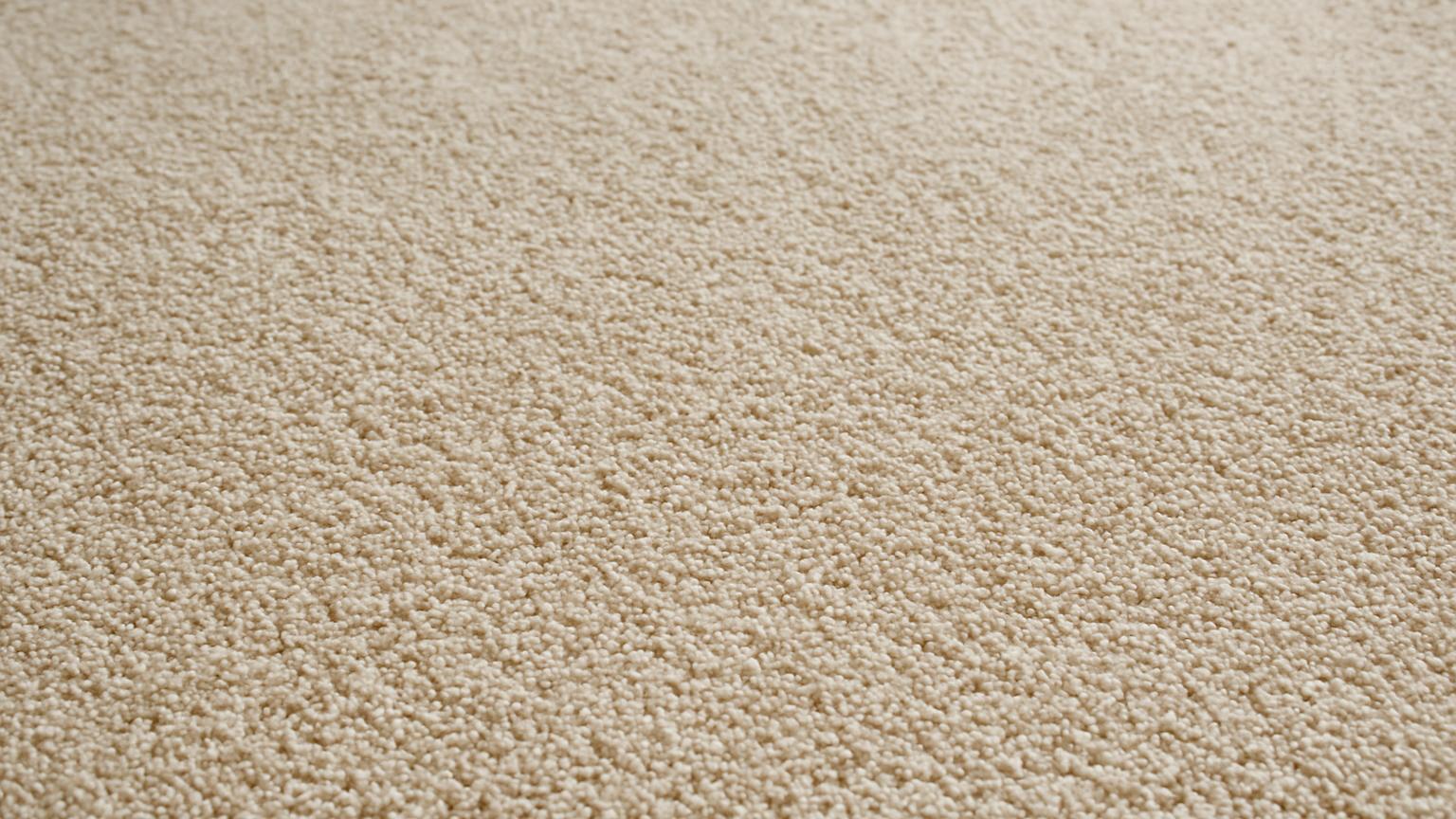
Low pile nylon carpet lasts on density, not the label: how tightly the fibers pack in decides wear far more than the words "low pile" or "nylon." The sample in your hand shows you height and feel, not the five specs that actually matter, so it's easy to buy a floor that mats out in a few years.
Key takeaways
- Density, not pile height, predicts wear best: tightly packed fibers resist crushing far longer than any 'low pile' label promises.
- Solution-dyed nylon has color locked through the fiber, so you can clean spills with diluted bleach without fading the carpet.
- A dense low pile nylon can cost more than a cheap plush, so low pile is not automatically cheaper.
- Rebonded foam pad runs about $2.25-$7.20 per square yard for materials, per HomeGuide, and the wrong pad can void a carpet's warranty.
- Tight-twist cut pile is the safer all-around busy-floor pick; level loop (Berber) hides traffic but can snag on pet claws.
What "Low Pile" and "Nylon" Really Tell You (and What They Don't)
"Low pile" tells you the fiber stands short above the backing, and "nylon" tells you what that fiber is made of. Neither word says anything about how long the floor will hold up.
Low pile also gets sold as short pile nylon. It feels firm underfoot and sits close to the backing, which is why it drags less under a chair and shows fewer footprints. But I've pulled up two carpets with that same label where one looked new and the other was crushed flat in the walkways.
The label names height and fiber. It does not name wear. Wear comes from five specs on the maker's spec sheet: density, twist level, whether it's loop or cut, whether the color is solution-dyed, and the pad you lay it over.
On every floor I've torn out across Dayton and the towns around it, the tightly packed carpets held their shape and the airy ones didn't, no matter what the sticker said. The label never told me which carpet would last, only the density, twist, and pad underneath ever did.
Density: The Spec That Predicts Wear Best
Density is how tightly the fibers are packed into the backing. Packed tight, the tufts hold each other up and resist crushing. Spread thin, they fold over under traffic and never spring back. I've consistently found density to outperform pile height as a wear predictor.
Face weight is the number people quote instead, and it only tells half the story. Face weight counts the ounces of fiber per square yard. A high face weight spread thin can wear worse than a lower face weight packed dense, because the ounces are doing you no good if they're standing loose.
So is low pile carpet more durable, and is 100% nylon carpet good? A dense, true 100% nylon low pile is one of the toughest floors you can buy. A loose one disappoints no matter how good the fiber is. The fiber sets the ceiling; the density decides whether you ever reach it.
I put a dense low loop in a rental kitchen off a hallway in Columbus years back. Last I saw it, the walkway still looked like the day we laid it. The plush I'd done in a bedroom the same month was matted in the doorway inside two seasons. Same house, same feet, different build under the surface.
Twist Level: Why Tight Tufts Keep Their Look
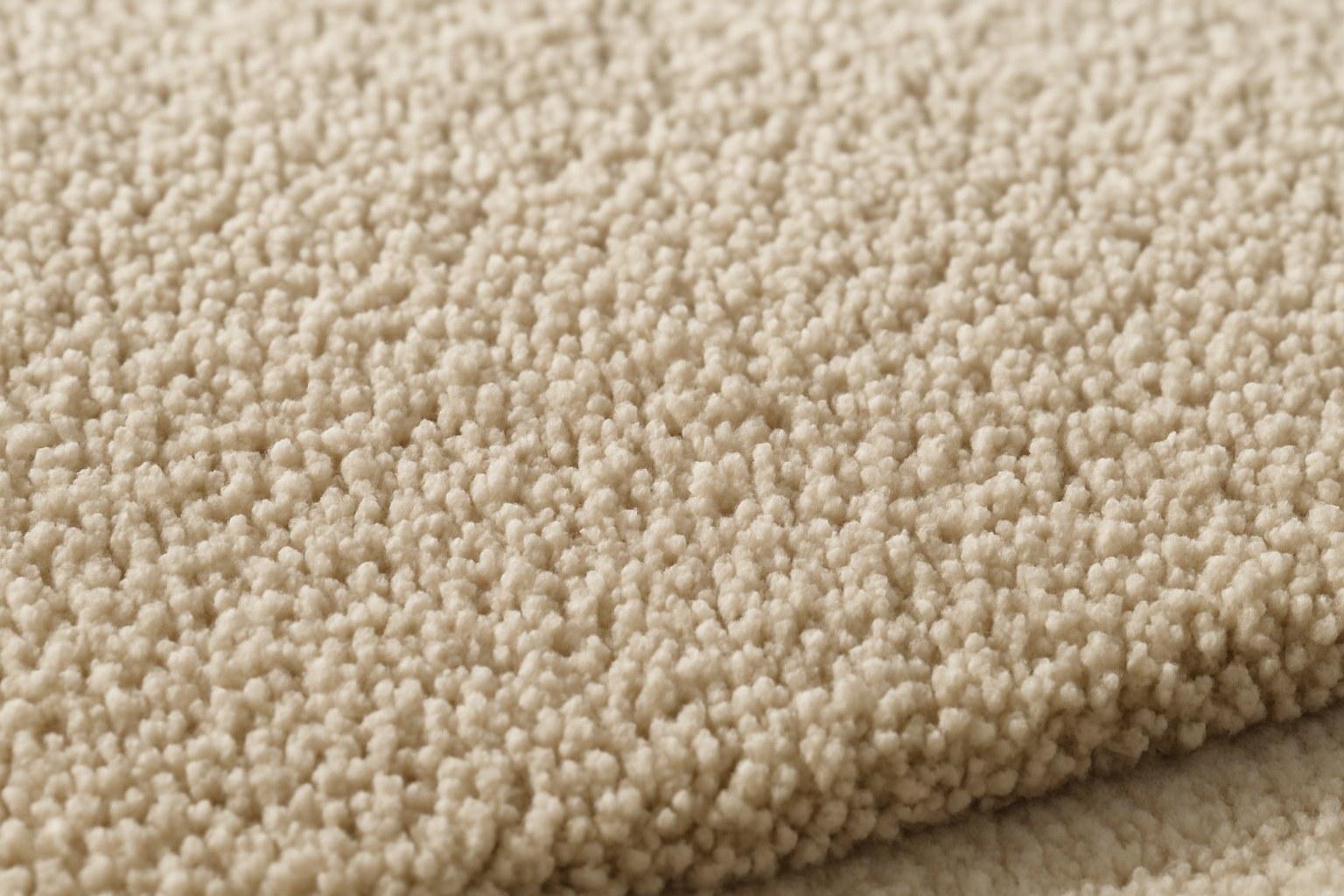
Twist is how many times the yarn is twisted per inch before it's set. A tighter twist resists untwisting at the tips, which is exactly where feet land and where carpet starts to look worn and fuzzy first.
You can see this in the styles. Frieze is a high-twist cut pile, so it hides traffic and footprints well. Saxony and plush use a looser twist, which feels smooth and formal but shows every footprint and crushes sooner in a busy room.
When you're holding a sample, bend it back over your fingers and look at the cut ends. You want tufts that stay bundled and tight. If they splay open and fan out, that yarn will go fuzzy in a hallway fast. A good heat-set tight twist is what keeps a cut pile from fraying where it gets walked on.
Loop vs Cut Pile: How the Build Changes Wear
There are two builds. Loop pile leaves the yarn as uncut loops (level loop and Berber are the common names). Cut pile slices those loops open so each tuft stands as a single strand (plush, Saxony, and frieze). Cut-and-loop mixes both in one carpet for a pattern.
The trade-off is straightforward. Level loop hides traffic and cleans up easily, which makes it great for busy floors. But those loops can catch on a pet's claw and pull, and one snag turns into a run. A tight-twist cut pile is the safer all-around pick for a busy house with animals. If pets are your main worry, it's worth matching the build to what your animal actually does to a floor, which is the whole point of picking a carpet around your pet's habits.
Match it to the room, too. Loop shines in halls, offices, and high-traffic rooms where crush resistance matters most. Cut pile feels softer underfoot in living rooms and bedrooms. On stairs, a lower, denser pile wears best on the nosing, the front edge where every foot lands.
Solution-Dyed Nylon: Color Locked Through the Fiber
Solution-dyed nylon has the pigment mixed into the fiber before the strand is even made. The color runs all the way through, like a carrot. Piece-dyed yarn gets the color added to the surface later, like a radish.
That difference matters in a busy home. Because the color is locked in, you can clean many spills on solution-dyed nylon with diluted bleach without washing the color out, and it holds up against sun fading far better than piece-dyed yarn near a big window.
Anso and Stainmaster are two nylon names you'll see that often run solution-dyed or treated fiber. Don't buy the name on the sample, though. Check the spec sheet to confirm the specific style is solution-dyed, because not every line under a brand is.
One limit to keep clear: solution-dyed fights fading and bleaching, but it is not stain-proof at the seams and edges. Liquid still finds the gaps where pieces meet, and that's where carpet trouble tends to start, not out in the open field of the floor.
The Pad Underneath: The Spec That Never Makes the Sample
The pad carries the carpet's life, and nobody puts it in the showroom sample. Lay a dense nylon over a too-soft pad and it breaks down early, because the pad flexes under every step and the backing works itself loose.
Pad types vary widely in material cost per square yard.
| Pad type | Cost per sq yd (materials) |
|---|---|
| Rebonded foam | $2.25-$7.20 |
| Prime foam | $2.25-$13.50 |
| Fiber / jute / felt | $3.15-$11.25 |
| Memory foam | $4.50-$9.00 |
| Waffle rubber | $4.50-$9.00 |
| Frothed foam | $4.50-$18.00 |
| Flat rubber | $6.75-$27.00 |
Source: HomeGuide's carpet padding cost estimates
Two things most people miss. First, the carpet maker's warranty usually names a maximum pad thickness and density, and the wrong pad can void it. Thicker and softer is not better here. Second, a basement needs a moisture-aware pad, because concrete gives off water vapor and a plain foam pad traps it. The pad is a small line next to the carpet, but it's one worth getting right. For a full breakdown by the foot and by the room, see the carpet padding cost guide.
Nylon vs Polyester, Wool, and Olefin
Nylon holds up best for traffic and longevity. The other fibers trade that away for a lower price, a softer hand, or stain resistance straight out of the box. One name worth defining before the table: triexta is a synthetic fiber, like nylon and polyester, but it's made from a different base plastic that has stain resistance built into the fiber itself during manufacturing, instead of sprayed on afterward. Here's how they line up.
| Fiber | Resilience | Stain resistance | Relative cost | Best use |
|---|---|---|---|---|
| Nylon | Highest, springs back | Good when solution-dyed or treated | Higher | High traffic, stairs, pets |
| Polyester | Lower, crushes sooner | High out of box | Lower | Bedrooms, light traffic |
| Triexta | Good, better than polyester | High, built in | Mid | Family rooms, spills |
| Wool | Good, natural spring | Low, stains easily | Highest | Formal, low traffic |
| Olefin | Low, mats flat | Fades less, stains more | Lowest | Basements, loop Berber |
How carpet fibers compare on resilience, stain resistance, relative cost, and best room.
The common swaps sort out like this. Polyester and triexta resist stains well and cost less, but they crush faster under steady traffic. Wool feels wonderful and is premium, but it stains easily and asks for careful cleaning. Olefin is cheap and nearly fade-proof, which is why it shows up in basement Berber, but it mats and flattens under feet.
My take: if you've got kids, pets, and a floor that gets walked all day, a dense nylon earns its higher price. You pay more once instead of replacing a crushed polyester sooner. If you want help matching that density and fiber choice to the specific room you're carpeting, the step-by-step guide to choosing carpet by room walks through installation and padding along with it.
What Low Pile Nylon Carpet Actually Costs
The installed price splits into two buckets, and neither has one flat national number. Materials cover the carpet itself plus the pad; labor covers tearing out the old floor, laying tack strips, seaming, and stretching the new carpet tight. On the materials side, a dense, tight-twist nylon costs more than a loose, low-density roll, so "low pile" is not automatically the cheap option. On the labor side, a crew charges more for seaming, stair wraps, and basement moisture prep than for stretching one open room. Exactly where your job lands on each side depends on the carpet tier you choose and your local labor market, not on a single national average.
For the real per-square-foot numbers on both sides, the carpet replacement cost guide lays them out, and the pad table above gives you that line separately.
On DIY versus hiring out: stretch-in carpet is one job I'd tell most people to pay for. Doing it right takes a power stretcher and a knee kicker, clean seams at the right spots, and a pad cut to fit. Loose carpet buckles within a year, and bad seams show. Stairs and basement transitions are harder still, so that's where the labor money is well spent.
Expect to pay more for stairs and basements than for one open room. Stairs are slow, fiddly work with a wrap on every step, and basements add the moisture-aware pad and sometimes extra floor prep. An open bedroom is the cheap end; a finished basement with a staircase is the expensive end. If you're still choosing the carpet itself, the best carpet matched to your room's traffic and budget is the piece to read next, because it ties fiber and build to the exact room before you ever price labor.
Sources
- Carpet and Rug Institute: Finding the Right Carpet for Business
- Carpet and Rug Institute: Carpet and Heated Floors
- Carpet and Rug Institute: Selecting the Right Carpet for Homes
- Carpet and Rug Institute: The Benefits of Carpet for Seniors
- Carpet and Rug Institute: Facility-Specific Considerations for Business
- HomeGuide's carpet padding cost estimates