
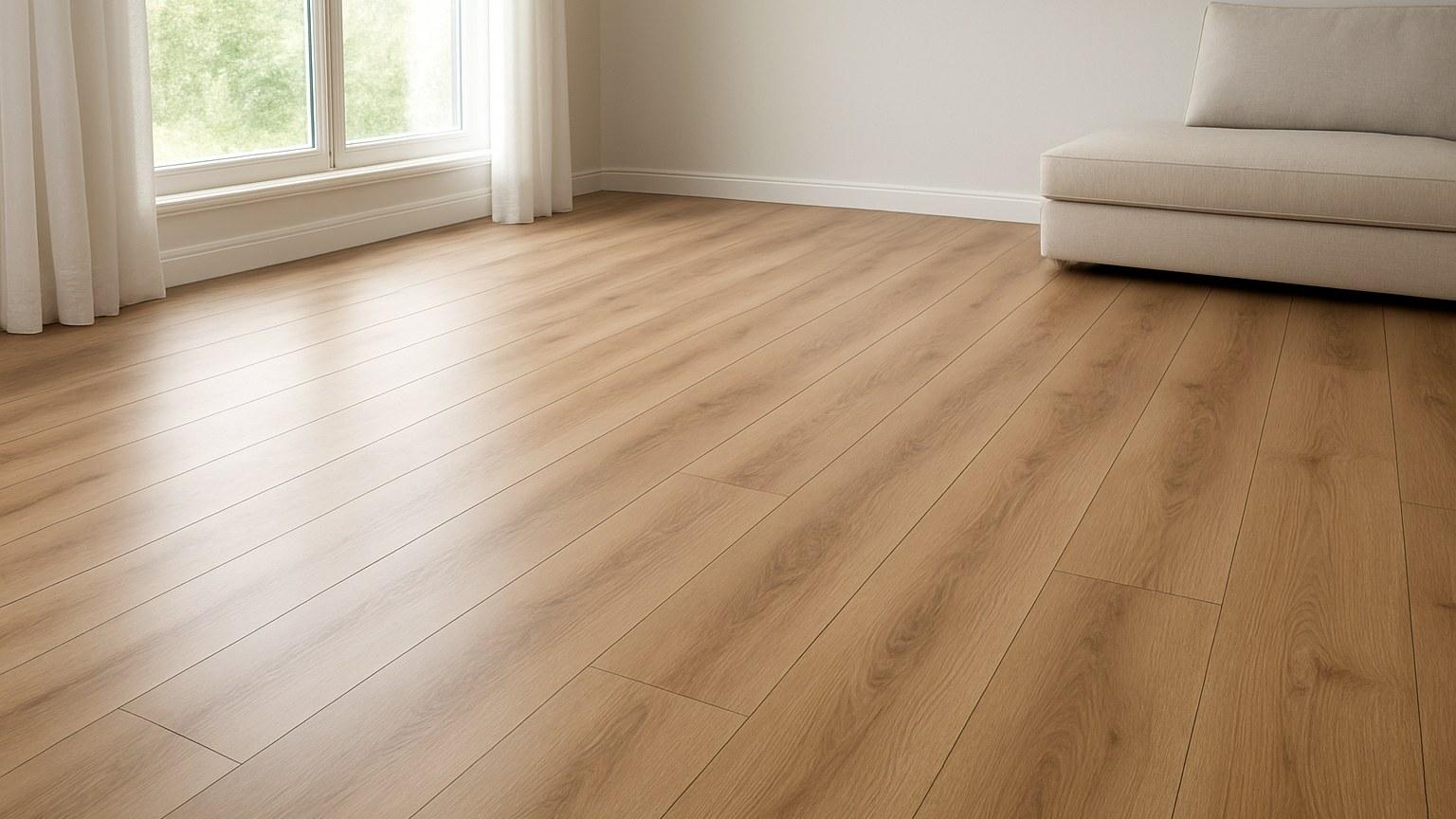
Pergo laminate flooring is a solid mid-tier floor for dry rooms like bedrooms, living areas, and hallways, but keep it away from anywhere water sits and pools. The confusion comes from ads that blur Pergo's three separate product ranges and toss around "waterproof" talk that applies to one line, not all of it. Judge it by the room it's going in, not the box front.
Key takeaways
- Pergo laminate is a solid mid-tier floor for dry living areas and bedrooms; its durability comes from laminate being a proven category for 30-plus years, per NALFA (North American Laminate Flooring Association), not from brand magic.
- NALFA advises against bathrooms, saunas, and high-moisture rooms unless the specific product is rated for them; most laminate failures start at the seams and edges, not the plank face.
- Labor is the bigger cost: professional installation runs about $2-$5 per sq ft (manasotaonline.com), while homewyse.com puts basic install labor at $6.91-$11.81 per sq ft for 2026; underlayment adds $0.25-$1 per sq ft (thebestlaminateflooring.com).
- Click-lock Pergo is realistic for a confident DIYer in a square room; hire out stairs, big open-plan floors, and any glue-down job.
- StayClean+ is a Pergo wood-range claim, not a blanket feature of every Pergo laminate, so don't assume it carries to the laminate you're buying.
Is Pergo Laminate Flooring Actually Good Quality?
Yes. Pergo is a dependable mid-tier laminate for living rooms, bedrooms, offices, and hallways. The trick is judging it by the room, not the ad.
First, know what you're actually buying. Pergo sells three ranges: laminate, engineered wood, and vinyl. This guide is about the laminate. The nice-sounding features printed on a wood-range box do not automatically carry over to the laminate plank in your cart, so don't let a wood-range claim sell you on a laminate. If you're weighing the vinyl side of the market instead, our breakdown of which COREtec flooring line holds up covers that category the same way this guide covers Pergo laminate.
The durability isn't a Pergo-only story, either. The North American Laminate Flooring Association (NALFA), a neutral industry group, points out that laminate has been a proven floor for more than 30 years. A good laminate from Pergo is riding a category that already works, not some secret brand sauce.
Here's a habit I lean on every week. Customers walk in asking for a floor by the name they had encountered in advertisements, and I pull the actual spec sheet on the spot, every time. I check the wear rating (the AC rating, which scores how well the surface takes scuffs and wear), the core, and the warranty terms. A big-box exclusive line and an independent brand can roll off the same plant line. The name on the box tells you less than the sheet behind it.
What Owners Say in Pergo Laminate Reviews
Owner reviews for Pergo laminate mostly line up with what I see on the job: people are happy in dry rooms and frustrated when water got in. The common praise is scratch resistance and an easy click-lock install. The common complaint is swelling or lifting at the seams after a spill sat too long, or a hollow sound underfoot when the subfloor prep was skipped. That split is the whole story with laminate: the plank face holds up, the edges are the weak point.
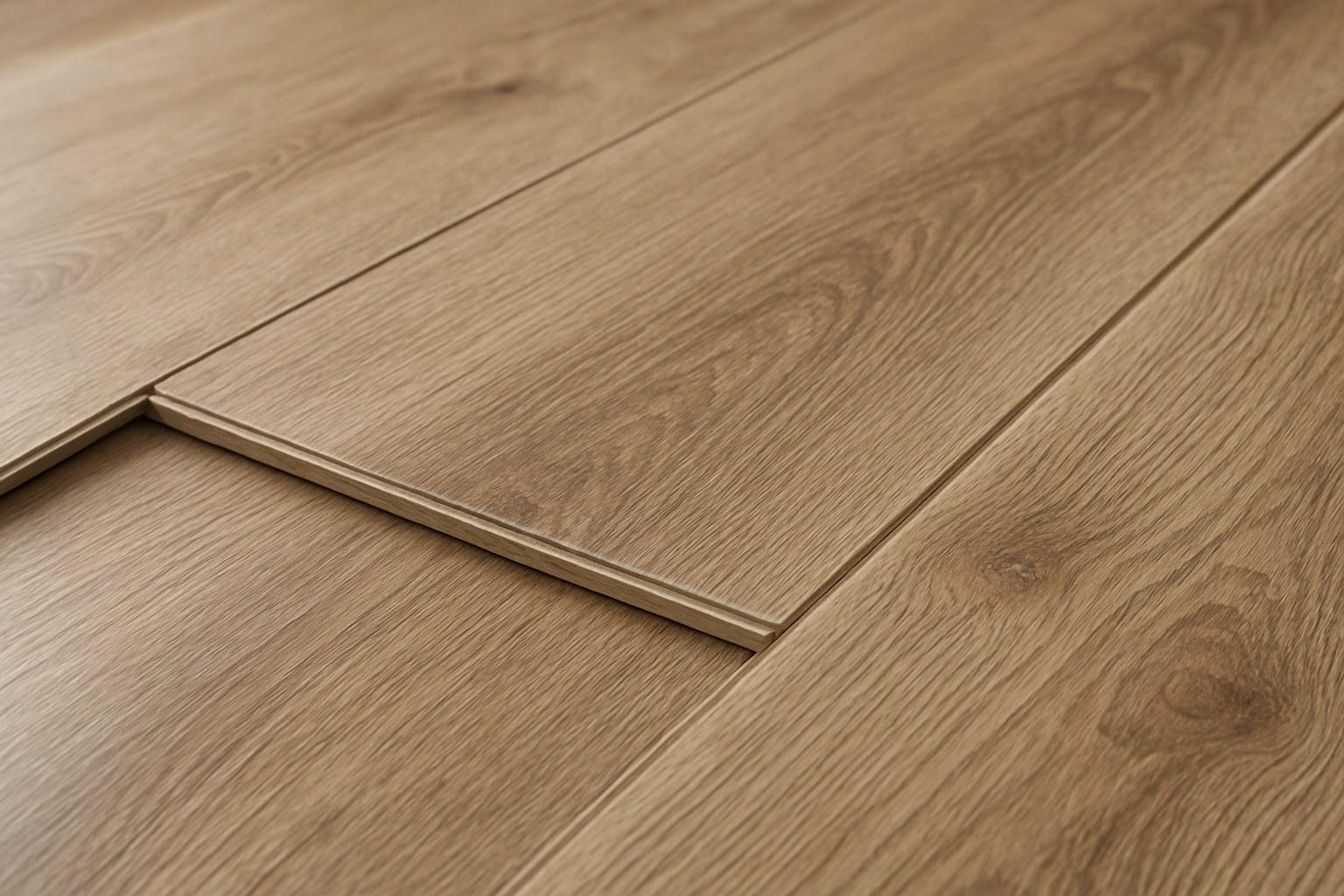
Where Pergo Laminate Works and Where It Doesn't
Most rooms are fine. Living areas, bedrooms, offices, and hallways are all good fits. NALFA advises against bathrooms, saunas, and high-moisture areas unless the specific product is rated for them. For those wet rooms, a stone-look vinyl plank like Lifeproof's Overlook Slate collection is a more realistic choice.
The key is to separate the core from the seams. A waterproof core keeps the plank itself from falling apart, but most laminate failures start where water sits at the edges and the joints. Any "waterproof" claim has to name the exact Pergo line it belongs to, not laminate as a whole. A waterproof core and water-resistant seams are two different promises.
Basements are possible, but only after you moisture-test the slab, because below-grade concrete is a high-moisture spot. A lot of people go vinyl plank down there instead for the extra water tolerance, and if that's your room, our write-up on Lifeproof vinyl flooring's real costs and downsides is a fair comparison.
Kitchens and entries can work with mats and quick wipe-ups. Standing water left to sit is what kills a laminate floor, not the occasional splash you catch. If you're weighing laminate across your whole house, our guide to which rooms laminate flooring actually works in covers the category beyond just Pergo.
Where Pergo laminate fits, room by room, from a good dry-room fit to rooms it should stay out of.
Pergo Laminate Collections, Colors, and Herringbone
Pergo laminate comes in a wide spread of wood-look colors, from light oaks through dark walnut tones, in different plank widths and lengths. There are also herringbone collections if you want a dressier, angled layout instead of straight planks. Pergo's own FloorFinder and FloorLab tools let you upload a photo of your room and preview different collections on your actual floor before you buy, which beats guessing from a small sample chip.
On color, match the tone to the room's light and traffic. Lighter, matte boards hide dust and scuffs better than dark, glossy ones in a busy house with kids and dogs. A dark high-gloss floor looks great the day it goes in and shows every crumb by dinner.
One thing I check before any big order: store-only and exclusive collections can be harder to source matching lots for later. A dye lot is the batch of planks made and colored together in one production run, so boxes from a different lot can be a shade off even under the same product name. If you're doing the house in phases, or you might need a few extra boxes down the road, confirm the lot is available before you commit. A mismatched dye lot on a repair stands out.
Set your expectation straight on the look. The printed wood image on laminate has gotten genuinely good. But the pattern still repeats across a large floor if you stand there and look for it, which is true of most printed floors, not just Pergo.
Understanding Pergo's Protection and "Worry-Free" Claims
StayClean+ is marketed on Pergo's wood range, not a blanket feature of every Pergo laminate. Don't assume that claim rides along with the laminate box you're buying. Check the laminate's own sheet.
"Worry-free" durability is brand copy, and no third party has verified it. I lean on NALFA's category facts and the specific product's warranty document instead of the front of the box. Those tell you something you can hold the maker to.
A warranty lives or dies by its conditions. Most of them require a documented install on an approved subfloor, incorporating the maker's own underlayment. If you skip the underlayment they specify, or lay it over a subfloor that's out of tolerance, you can void the coverage without knowing it. Read the warranty terms, not the headline number.
On the kid-and-pet-proof angle, let me be square with you. Laminate takes scratches and claw traffic well, and that part of the pitch is mostly fair. The real risk isn't the surface. It's a spill or an accident left to sit at the seams, where water wicks into the core and the edge swells.
Is Pergo Laminate GreenGuard Certified?
GreenGuard is an indoor-air certification. A product that carries it has been tested to give off low levels of chemicals into your home's air, and GreenGuard Gold is the stricter version aimed at schools and homes. Flooring makers across laminate, vinyl, and carpet carry it on at least some of their products.
The important part: GreenGuard applies to a specific product, not a whole brand. Don't assume every item under a name is certified because one is. Pull up the exact product you're buying and look for its certification listing, the same way you'd check its wear rating. If low emissions matter to you, that's the only way to know for sure.
What Brands Are GreenGuard Certified?
No single brand can claim a blanket GreenGuard certification, it's handed out product by product, not brand-wide. So the honest answer is "it depends on the exact item," not a tidy list of brand names. Pergo and other major laminate, vinyl, and carpet makers each have some products that carry GreenGuard or GreenGuard Gold, and other products in that same lineup that don't.
That's why I stop customers when they ask "is this brand certified" and point them at the one question that matters: is this exact product certified. You check that the same way you'd check an AC wear rating, on the product's own spec sheet or its certification listing, not on what a salesperson claims about the whole line.
If indoor air quality is a real concern in your house, allergies, a nursery, anyone sensitive to fumes, fold that check into the same store visit where you compare wear ratings and warranty terms, instead of trusting a brand name to cover it.
What Pergo Laminate Costs: Materials vs Labor
Labor is where the money goes, and the published numbers vary a lot depending on what each source is measuring. manasotaonline.com lists professional installation at $2-$5 per square foot, while homewyse.com puts basic install labor at $6.91-$11.81 per square foot for 2026. The gap usually comes down to what's bundled into the quote and where you live, so get a couple of local bids rather than trusting one number.
The Pergo planks themselves vary by collection, thickness, and retailer. The sources I trust don't publish one flat Pergo price, so don't anchor on a single made-up figure for materials. Price the exact collection you want at the exact store. The same logic applies if you're pricing a budget option like Titan Flooring's vinyl plank lineup instead.
Then there are the extras that quietly add up: underlayment at $0.25-$1 per square foot (thebestlaminateflooring.com), and pulling up an old floating laminate floor at $1-$1.50 per square foot (dropcurb.com).
| Cost piece | Range | Notes |
|---|---|---|
| Professional installation | $2-$5 per sq ft | manasotaonline.com |
| Installation labor, basic (2026) | $6.91-$11.81 per sq ft | homewyse.com |
| Underlayment material | $0.25-$1 per sq ft | thebestlaminateflooring.com |
| Old floating-laminate removal | $1-$1.50 per sq ft | dropcurb.com |
| Pergo planks (materials) | Varies by collection, thickness, retailer | not published as one figure |
The cost pieces of a Pergo laminate job, split into labor and materials.
Basements and stairs cost more than an open rectangular room. More cuts, more transitions, and more prep push the labor up, so don't price a stairwell like you'd price a bedroom. If you're cross-shopping against premium vinyl, our breakdown of what COREtec LVP's (luxury vinyl plank) premium actually buys you shows where the extra money goes on that side.
Where to Buy Pergo Laminate Flooring (Lowe's, Near Me, Cheapest)
Pergo laminate is widely stocked at big-box home centers, Lowe's included, and the collections often differ by retailer. "Cheapest" isn't one answer. Before you chase the lowest sticker, compare the AC wear rating and plank thickness between the collections you're looking at, because a cheaper box with a lower AC rating is a different floor, not a deal. If cheap vinyl plank is more your goal, LL Flooring's budget LVP lineup tends to be worth a look too.
Two things to check at the counter: whether your target collection is a store-exclusive line (those can be harder to match later for repairs), and whether enough of your dye lot is in stock for the whole job plus a spare box. For a phased project, confirming lot availability up front saves you a mismatched patch down the line. Chelsea Plank Flooring's store-exclusive collections face that same lot-matching risk when you're planning a phased install.
For the "near me" search, skip the drive-and-hope approach. Call the flooring desk at your nearest store and ask two things: is your exact collection name on the shelf right now, and how many boxes are actually in stock versus on back order. I've had customers drive to one store with three boxes left on the shelf, then find a location on the other side of town with thirty sitting there. A two-minute call before you load up the truck beats a wasted trip and a floor that's short a box. The same two-minute call saves you a trip if you're cross-shopping Max Plank Flooring at a different store.
Installing Pergo Laminate: DIY or Hire It Out?
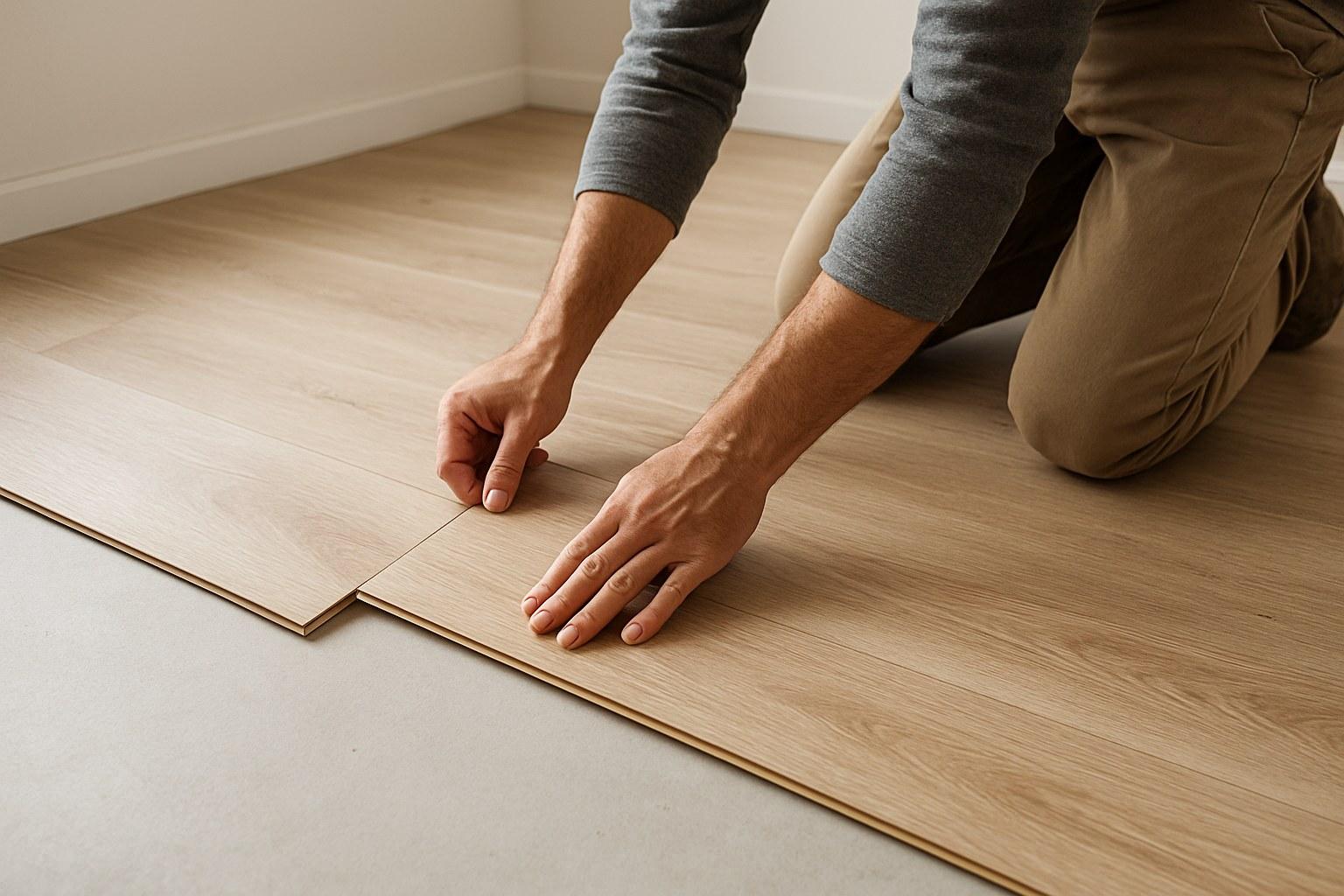
Click-lock Pergo is realistic for a confident DIYer in a square, dry room. Hire out stairs, big open-plan floors, moisture transitions between rooms, and any glue-down job. Those are where a small mistake turns into a floor that fails.
Before a single plank goes down, do two checks. Run a straightedge across the subfloor to find high and low spots, and test the subfloor for moisture. A floating floor only lasts as long as the prep beneath it, and the maker's warranty quietly hinges on that same prep.
Then follow the box, not the internet. Size the perimeter expansion gap according to Pergo's own instructions carefully, since the exact amount is a per-product number, not a universal one. Same with acclimation: some products want the planks to sit in the room first, some say it's not needed, so the box sheet governs, not a rule of thumb. If that room transitions into vinyl plank at a doorway, a trim piece like COREtec's baby threshold handles the height change cleanly.
I had a job near Dayton where the homeowner wanted me to skip the straightedge pass and just lay it, because the old floor "looked flat." There was a dip under the dining area you couldn't see by eye. Over a dip, the planks flex every time someone steps on that spot, and the locking edges work themselves loose. We pulled it, patched the low area with leveler, and relaid it, and it's been tight since. The hour I "saved" by not checking would have cost a full re-do.
Sources
- NALFA: What Is Laminate?
- NALFA Laminate Flooring FAQs
- NALFA Active Member Directory
- EPA document (NEPIS archive)