
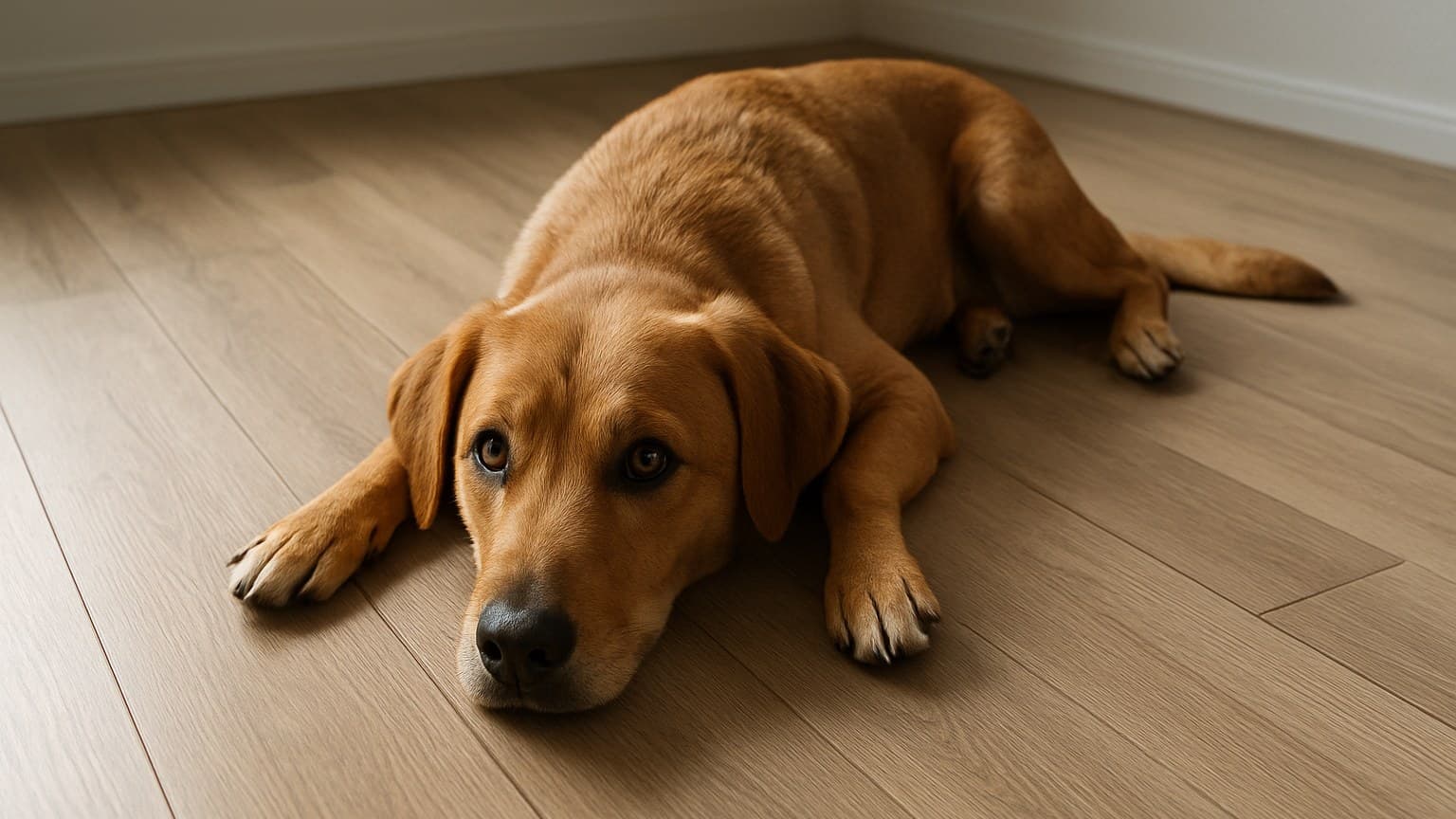
The best pet-proof flooring for most homes is rigid-core (SPC) vinyl plank with a wear layer of 20 mil or thicker. Its core won't swell from water, and that thick top coat hides claw marks. The hard part is that no floor is truly pet-proof, and the two things pets wreck, claws and accidents, each live in a different part of the plank, so below I score seven materials on both.
Key takeaways
- Best pick for most pet homes: rigid-core (SPC) vinyl plank with a 20 mil or thicker wear layer. Waterproof core, claw marks hide well, and the click-lock version is DIY-friendly.
- Score every floor on two separate fronts: claws (scratch, tied to wear-layer mil and finish type) and accidents (urine and standing water, tied to how seams and backing hold up, not the plank core).
- Porcelain tile is the only truly urine-proof surface, but the grout lines still soak up odor unless you seal them.
- Carpet can work for pets only with solution-dyed fiber plus a waterproof backing. On standard carpet, the Carpet and Rug Institute warns urine salts reach the pad and subfloor and the smell comes back.
- Specs to check on any label: 20 mil or thicker wear layer on vinyl, AC4 or higher on laminate, and an aluminum-oxide factory finish on wood or bamboo.
What "Pet-Proof" Flooring Really Means (Two Separate Enemies)
No floor is 100% pet-proof. So instead of chasing one magic product, you judge every floor on two separate fronts and match it to your own pet's size and habits.
Enemy one is claws. That comes down to scratch resistance, and it's decided by two things together: the wear layer (the clear top coat) and the surface finish cured onto that top coat, not just what the box promises. Wear layer is measured in mil, and one mil is a thousandth of an inch. A thicker wear layer takes more scratching before claw marks show, but the finish matters just as much, a urethane or PUR (polyurethane) coating is what actually resists a claw dragging across the surface. Two planks with the same mil number can hold up very differently if one has a better finish than the other.
Enemy two is accidents: urine and standing water. This is where most people get fooled. A plank can have a waterproof core and still fail, because liquid doesn't attack the middle of the plank. It finds the seams, the edges, and the backing. Over the last several years, I've torn out more than a dozen vinyl and laminate floors in pet homes around the Dayton and Columbus area, and in every one of them the swelling and the smell started at a joint, not in the center of a board.
When you shop, weigh all five of these: durability, water resistance, comfort underfoot, maintenance, and safety. On safety, look for low-VOC finishes. VOCs (volatile organic compounds) are the fumes some finishes give off, and pets spend their whole day nose-down on the floor.
The Best Pet-Proof Floors, Ranked at a Glance
For most pet homes the order runs: 1) rigid-core vinyl plank, 2) porcelain tile, 3) sheet vinyl, 4) waterproof laminate, 5) engineered hardwood, 6) bamboo, then 7) rubber for play rooms, with cork and carpet as niche picks.
The table below scores each material on cost, water resistance, scratch resistance, and comfort, so you can match a row to your own pet's size and habits.
| Material | Materials cost | Water resistance | Scratch resistance | Comfort |
|---|---|---|---|---|
| Rigid-core (SPC) vinyl plank | $2-7/sq ft | High (core waterproof; seams weaker) | High at 20 mil+ | Medium |
| Porcelain / ceramic tile | $2-8/sq ft | Highest (grout is the weak point) | Highest | Low (hard, cold) |
| Sheet vinyl | $1-4/sq ft | High (few seams) | Medium (thin wear layer) | Medium |
| Waterproof laminate | $2-5/sq ft | Medium (seams swell if urine sits) | High at AC4+ | Medium |
| Engineered hardwood | $4-10/sq ft | Low-Medium | Medium-High with aluminum-oxide finish | Medium |
| Bamboo (strand-woven) | $3-8/sq ft | Low-Medium | High | Medium |
| Rubber | $3-8/sq ft | Medium (seams weaker) | High | High |
| Cork | $3-8/sq ft | Low-Medium (needs sealing) | Low (dents) | High |
| Carpet (solution-dyed + waterproof backing) | $1-5/sq ft | Low-Medium | N/A (snags) | High |
Pet-proof flooring compared on materials cost, water resistance, scratch resistance, and comfort.
Those costs are materials only. Labor runs roughly $2-4/sq ft for click-lock vinyl and laminate and more like $7-14/sq ft for tile. Basements and stairs cost more than an open room, because the cuts, the transitions, and the moisture prep take longer.
Materials-only cost range per square foot, low to high; labor is extra, and basements and stairs cost more.
Rubber earns a spot here even though nobody wants it in a living room. In a play or exercise space it holds up well, which is why it shows up in the best home gym flooring picks. Choosing the right material for that living room in the first place comes down to more than foot feel, which is the whole focus of our living room flooring guide.
Rigid-Core (SPC) Vinyl Plank: The Best All-Around Pet Floor
Rigid-core vinyl plank tops the list because it fights both enemies at once. SPC stands for stone-plastic composite, a dense core that won't swell when it gets wet, and a wear layer of 20 mil or thicker hides claw marks instead of showing every scratch. That same water resistance is also why it's a go-to pick for busy kitchens, a topic the kitchen flooring guide covers in more depth.
The honest weak spot is the same one every plank floor has. The core is waterproof, but standing urine still finds the seams and the perimeter. So treat "waterproof" as a description of the plank, not the installed floor, and wipe accidents fast. Bathrooms see this exact failure pattern around the tub and toilet base, which is the core issue covered in our guide to LVP (luxury vinyl plank) bathroom flooring.
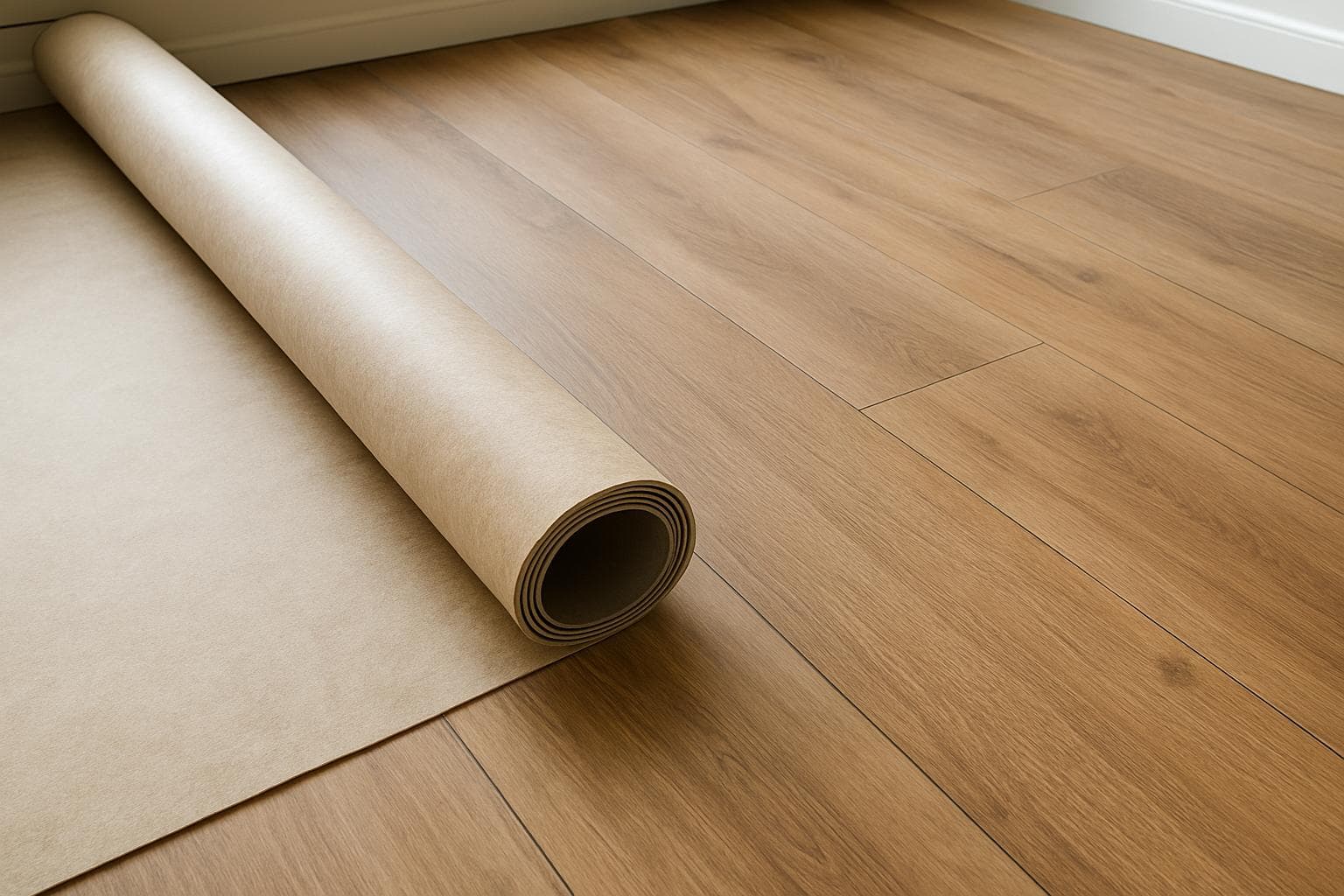
Click-lock SPC is realistic for most people to install themselves. The planks snap together and float over the subfloor. Where I'd tell you to hire out is glue-down vinyl and big open-plan rooms with moisture transitions, because getting the slab flat and the adhesive right is where DIY jobs go sideways.
A lot of lines marketed as "pet-friendly," including Lifeproof and similar store brands, are this same SPC construction. Don't buy the name, buy the spec sheet. Check that the wear layer reads 20 mil or more, and check what the top coat is, a urethane or PUR (polyurethane) finish is what actually stands up to claws. A thick wear layer under a weak finish still scratches more than it should. How you clean that finish matters too, since running a steam mop on vinyl flooring can push heat and moisture into the same seams you're trying to protect.
Whatever you pick, two checks come before the first plank goes down: the subfloor has to be flat within the maker's tolerance, and a moisture test on the slab or wood subfloor has to pass. Skip either one and the warranty quietly stops covering you.
Porcelain and Ceramic Tile: The Only Truly Urine-Proof Surface
Glazed porcelain is as close to urine-proof as flooring gets. The fired glaze doesn't absorb liquid, and a dog's nails can't scratch it. On the claws-and-accidents scorecard, tile wins both fronts outright. That same moisture resistance is why porcelain keeps coming up zone by zone in guides to flooring for bathrooms.
The weak point is the grout. Those lines between tiles are porous and will hold odor if urine sits in them. Seal the grout, and reseal it once a year in heavy pet zones, and the smell problem goes away.
The tradeoff is comfort. Tile is hard and cold, and older dogs or nap-prone cats don't love lying on it. Plan on washable rugs or mats in the spots they claim.
Tile is a natural fit around water bowls and feeding stations. If you want to see where that cost actually pays off against spills, the best flooring for a kitchen guide breaks it down.
Of everything on this list, tile is the one most worth hiring out. The layout, the cutting, and getting a dead-flat substrate make it a slow, fussy job, and labor at $7-14/sq ft reflects that.
Sheet Vinyl and Waterproof Laminate: Budget Picks With Opposite Strengths
These two are the cheapest real contenders, and they win on opposite fronts.
Sheet vinyl rolls out in one big piece, so urine has almost nowhere to sneak under it. That near-seamless surface makes it a forgiving, low-cost choice for laundry rooms and mudrooms. The catch is the wear layer is thinner than a rigid plank, so a big dog's nails scratch and gouge it more easily.
Waterproof laminate flips the scorecard. Laminate scratches best of this pair when you buy an AC4 rating or higher. AC rating is a wear scale printed on the box, and AC4 handles heavy residential and light commercial traffic. Laminate also gives a more realistic wood look than vinyl for the money. But its core is wood-based, so if urine sits in a seam it swells and lifts. Standing water is laminate's one real enemy.
That is the real LVP-versus-laminate trade for a pet home: laminate looks more like wood and resists claws at AC4, while vinyl tolerates water and accidents better. Pick by whether your bigger worry is scratches or puddles.
Both are click-lock and friendly to a careful DIYer, as long as you handle that flatness and moisture check first.
Engineered Hardwood and Bamboo: Real-Material Looks for Lower-Accident Homes
If you want real wood underfoot, engineered hardwood and strand-woven bamboo can live with pets, but only in homes where accidents are rare. Both rate low-to-medium on water, because wood swells and stains when urine soaks in and sits.
Where they hold up is claws, if you buy the right finish. According to the National Wood Flooring Association's Homeowner's Handbook to Real Wood Floors, an aluminum-oxide factory finish, a tough clear coating baked onto the boards, resists scratching far better than a site-applied finish. Strand-woven bamboo is denser than most hardwoods, which is why it scores high on scratch resistance.
I steer pet owners toward a tougher floor at the entry points even when they want one wood look throughout the house. A few years back, a client of mine near Dayton, Linda, carried the same hardwood into a mudroom off the garage for her two dogs, a big 75-pound Lab mix and a smaller terrier. Within about two years, the grit and snowmelt had chewed through the finish right there, long before the rest of the house showed any wear. Claws and wet paws do the same thing to wood over time.
Rubber, Cork, and Carpet: The Niche Picks
Rubber holds up well in a dedicated dog room, basement play space, or home gym. It's slip-resistant, soft on joints, and claws don't bother it. The weak spot is the seams between tiles or rolls, where liquid can creep through. If you're flooring a below-grade space, pair it with a slab moisture test and a product rated for below-grade use, which the guide on basement flooring that won't fail walks through.
Cork is warm and easy on old joints, which pets love. But it's soft, so claws and heavy furniture dent it, and it needs sealing to handle moisture. I'd only put it where accidents are unlikely and comfort matters most.
Carpet is the hardest sell for pets, and it only works in one specific build. The Carpet and Rug Institute's pet-carpet shopping checklist calls for solution-dyed fiber, where the color is locked into the strand so cleaning and urine won't bleach it, plus a waterproof backing. On standard carpet, the Carpet and Rug Institute's Pet Urine and Carpet technical bulletin warns that urine salts pass through to the pad and subfloor, and the smell keeps coming back no matter how often you clean the surface.
Sources
- Carpet and Rug Institute: Paws on Carpet, best carpet for pets
- Carpet and Rug Institute: Pet Urine and Carpet technical bulletin (PDF)
- Carpet and Rug Institute: Carpet cleaning and maintenance guide
- Carpet and Rug Institute: Selecting the right carpet
- NWFA: Homeowner's Handbook to Real Wood Floors (PDF)