See how real slate stacks up against porcelain and other stone on cost and cracking, so you know which one fits your room before you buy.
Real slate is a good floor for the right room, but most of its bad reputation comes from the install, not the stone. Slate is worth it for entryways, mudrooms, and hearths where you want natural character and will keep up the sealing; for wet rooms and basements, slate-look porcelain almost always wins. The hard part is that slate's uneven back hides the labor and the cracking risk until it's too late to change your mind. Where that slate entryway meets hardwood in the next room, picking a tile-to-hardwood transition matched to the height gap keeps the seam from becoming a trip hazard.
Key takeaways
- Real slate's cleft (naturally split, uneven) back is what drives its higher labor cost and the cracks that come back, not a flaw in the stone itself.
- Slate-look porcelain costs less to install, needs no stone sealing, and handles wet areas and basements better than real slate.
- Installed real slate commonly runs about $10-22 per sq ft (materials plus labor); stairs and basements run higher than open rooms.
- Good slate can last decades with a reseal every 1-2 years; a non-slip sealer matters in kitchens, baths, and showers.
- Click-lock floors suit DIY; slate's cutting, back-buttering, and weight make it a hire-out job for most homeowners.
Slate Tile vs. Porcelain, Travertine, and Flagstone: The Scorecard
Real slate is the pick when you want stone character in a room you'll actually maintain. Slate-look porcelain is the smarter call for most wet or busy rooms, and travertine or flagstone each fit a narrow look rather than a do-everything floor.
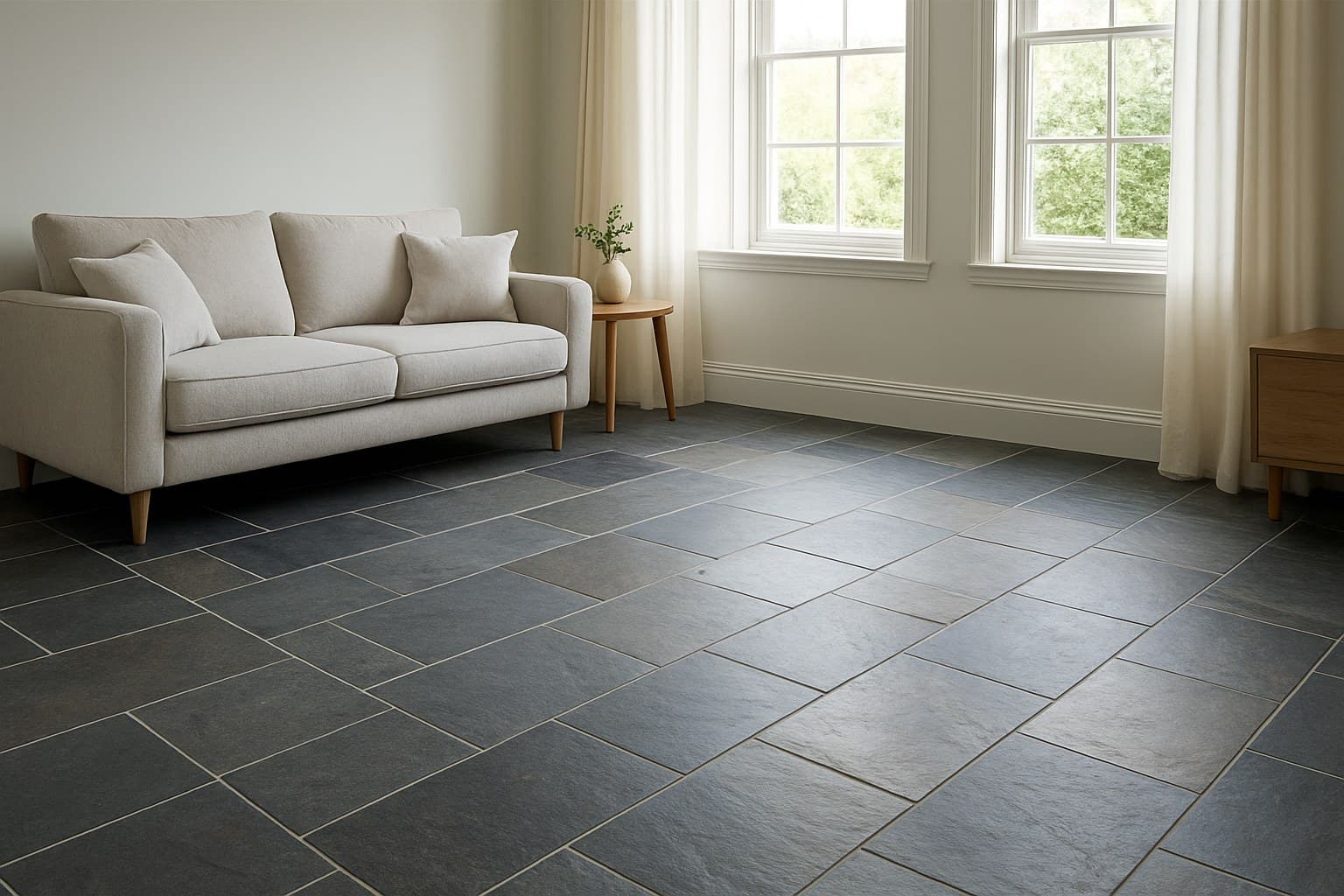
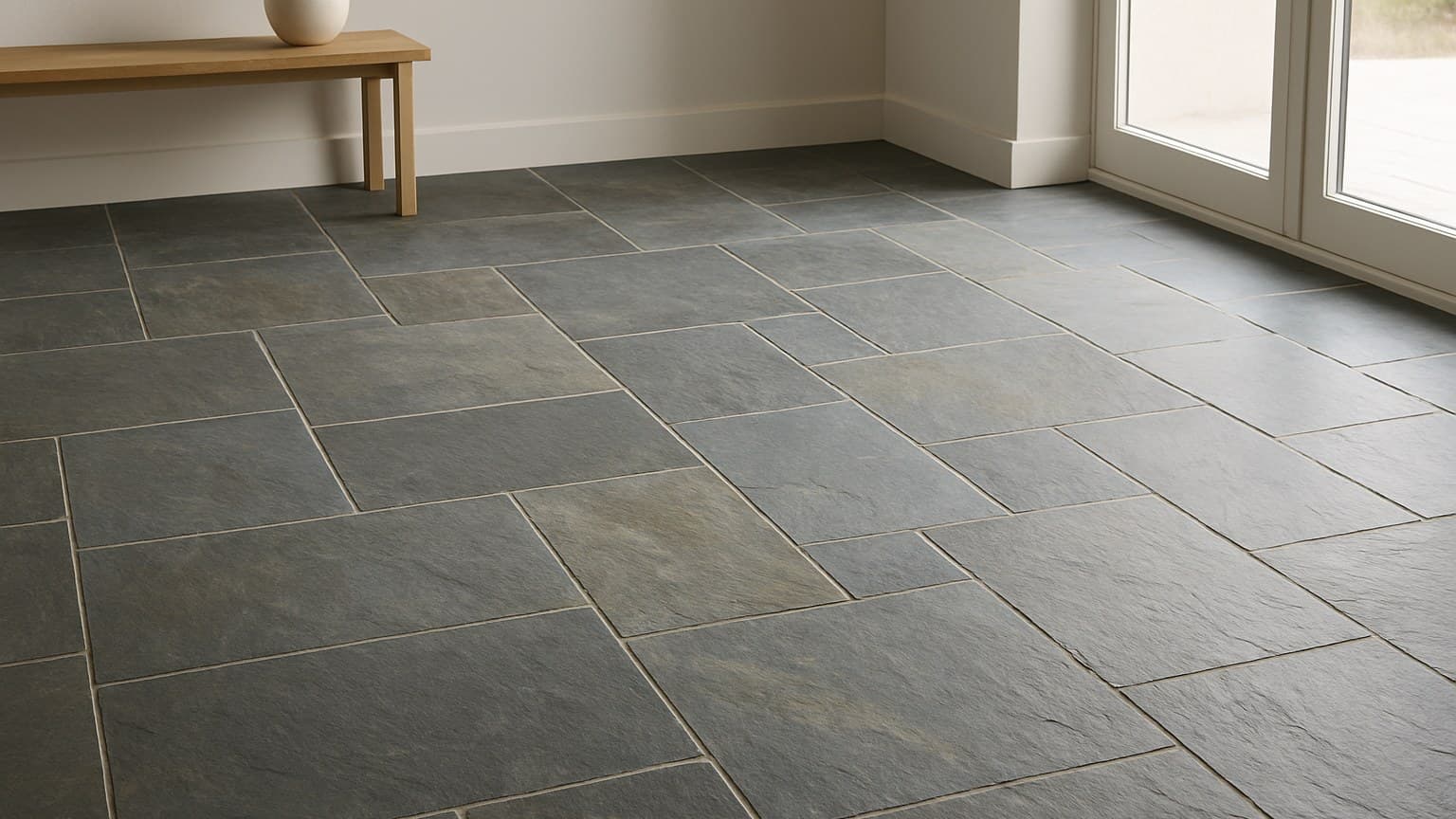
Real slate is natural stone split along its layers. That split face is called the cleft texture, and it gives you the rough, bumpy surface people buy slate for. It comes in greys and blacks but also greens, purple-reds, and multi-color blends, sold as small slate tile and larger slate floor tile.
Stack the four options side by side and you can see what actually decides whether you'll be happy with the floor in five years.
| Option | Cost | Crack resistance | Slip (dry) | Sealing load | Wet-area fit |
|---|---|---|---|---|---|
| Real slate | $$$ | Fair - voids under cleft tiles crack | Good - natural grip | High - reseal every 1-2 yrs | OK sealed; seams are the weak point |
| Slate-look porcelain | $$ | Excellent | Depends on finish/slip rating | None in the body; grout only | Best - no stone sealing, low porosity |
| Travertine | $$ | Fair - soft, chips | Fair-good when filled and honed | High - porous, stains easily | OK sealed; stains fast |
| Flagstone | $$-$$$ | Good outdoors | Very good - rough face | Medium | Great for patios; heavy and uneven indoors |
How slate compares with its look-alikes and other stone on the factors that decide the floor.
If you love the stone look but dread the upkeep, don't force real slate. A limestone-look porcelain tile that mimics natural stone gives you a similar feel with none of the sealing.
The Real Downsides: Why Slate's Cleft Texture Cracks Come Back
The real downsides are cracking from hollow spots under uneven tiles, flaking on cheaper slate, a cold and hard feel underfoot, and dark tiles that show every speck of dust. None of those are the stone being bad. Most trace back to the install or the grade you bought.
The cleft texture is what drives the cracking. The back of a slate tile is just as uneven as the face, so you can't press it onto ridged thinset and call it done. Each tile has to be back-buttered, meaning you spread mortar on the back of the tile too and fully bed it. Skip that and you leave air pockets under the tile. The first time real weight lands on a hollow spot, the slate cracks.
I pulled up a cracked slate floor in a Dayton mudroom a while back. The owner figured she'd bought junk stone. She hadn't. The tiles were set on ridged thinset with open hollows underneath, and every crack lined up with an air pocket. Good stone, bad bedding.
Most slate complaints are install complaints and grade complaints. Lower-grade slate flakes and sheds thin layers off the top. Set it right, on a flat floor, with full coverage under every tile, and slate holds up fine.
What Does Slate Flooring Cost?
Slate isn't the cheapest stone and isn't the priciest. Installed, it commonly lands around $10-22 per square foot once you add materials and labor. Weighing LVP against tile on cost alone misses the point, since the two hold up differently under water and heavy traffic.
Slate labor runs high for real reasons. Back-buttering every tile takes time. The stone is dense and slow to cut. The pieces are heavy and uneven, so a setter can't move as fast as he does across flat porcelain. All of that is time, and time is labor cost.
| Option | Materials | Labor | Installed |
|---|---|---|---|
| Real slate | $4-10/sq ft | $6-12/sq ft | $10-22/sq ft |
| Slate-look porcelain | $3-8/sq ft | $5-10/sq ft | $8-18/sq ft |
| Travertine | $3-9/sq ft | $5-11/sq ft | $8-20/sq ft |
Materials, labor, and installed cost per square foot for slate and two stone options.
Installed cost per square foot, bars run from the low to the high end of each range. Not to scale is not a worry here; these are the actual dollar figures.
Basement and stair jobs cost more than an open room. Stairs add cut-and-fit time on every tread. Basements add moisture prep before a single tile goes down. Budget above the open-room number for either.
On the value side, slate pays back over a long life. MSI Surfaces says slate can last 100-plus years with upkeep, so even the top of that installed range spreads over decades. That tracks with the broader pattern the National Wood Flooring Association found in its life-cycle cost research on flooring materials: longer-lasting floors spread their installed cost over far more years of service, which lowers the effective cost-per-year even when the upfront price is higher. If the up-front cost is your sticking point, it's worth seeing how vinyl tile compares with tile on cost before you commit.
Is Slate Safe for Kitchens, Bathrooms, and Showers?
Natural cleft slate grips well when dry, but don't assume it's safe wet. Check the product's slip rating before you buy. The R-rating is the European ramp scale; DCOF is the US wet-slip number. Both are published per tile, so read them instead of trusting the rough look.
Sealer can actually make slate slicker, which surprises people. In a wet room, use a non-slip sealer, not a glossy one. Smaller tiles help too, because more tiles mean more grout lines, and grout lines add grip on a shower floor where bare feet are wet. Mosaic tile sheets push that small-tile grip even further, though laying mosaic tile without crooked grout lines takes its own technique.
Here's the part that trips homeowners up: the stone body doesn't keep water out of your floor. The waterproof membrane under the tile and the grout between tiles do that work. Most wet-area failures show up at the seams, not on the face of the tile.
That's also why "waterproof" and "water-resistant" aren't the same word for slate. The slab can be dense, but unsealed slate and open grout still soak up spills. A dense tile sitting over a leaky seam is not a waterproof floor.
Before you put slate in a wet room, do four things: check the tile's slip rating instead of guessing, use a non-slip sealer rather than a shiny one, pick smaller tiles to add grout lines and grip on shower floors, and trust the membrane and grout for the waterproofing rather than the stone.
Kitchen Slate Flooring: What Holds Up and What Doesn't
Slate holds up well to a kitchen's foot traffic, and the cleft texture hides crumbs and wear better than a polished floor. What doesn't hold up is a dropped glass. Slate is hard and unforgiving underfoot, so anything that falls tends to break, and the floor itself can chip at an edge.
The other kitchen reality is the cold. Slate stays cool, which is why it pairs well with in-floor heat if you're already going that route. Keep up the sealing near the sink and stove, because grease and standing water are what stain a kitchen slate floor first.
Installing and Sealing Slate: Subfloor, Thinset, and Timing
Before any tile goes down, confirm two things: the subfloor is flat and the subfloor is dry. Slate telegraphs every dip, so a floor that's out of level shows in the finished tile, and a floating floor isn't your fallback with stone. Run a moisture check on concrete and over any slab, especially in a basement.
Then back-butter every tile. The cleft back is uneven, and full thinset coverage under each tile is the only thing that stops the hollows that crack. This is the step the Dayton mudroom I mentioned earlier skipped, and it's a common reason slate fails.
Seal the slate before you grout. The surface is porous, and a pre-seal keeps grout haze out of it. Then respect the cure times.
| Step | When | Note |
|---|---|---|
| Check subfloor is flat and dry | Before any tile goes down | Flatness and a moisture check, both |
| Back-butter each tile | As you set | Fills the uneven cleft back so there's no hollow |
| Pre-seal the slate | Before grouting | Keeps grout haze out of the porous surface |
| Sealer dry to touch | ~4 hours | Light handling only |
| Full sealer cure | ~24 hours | Before foot traffic and furniture |
| Reseal | Every 1-2 years | Keeps stain and water resistance up |
Source: MSI Surfaces' slate care page
Install and sealing timeline for a real slate floor, with the reseal interval per MSI Surfaces.
On DIY versus hire: a click-lock LVP (luxury vinyl plank) floor is realistic for most handy homeowners. Slate is not. The dense stone cutting, the back-buttering on every tile, and the sheer weight of the pieces push it into hire-out territory for almost everyone, and stairs especially. If you want a stone look you can set yourself, that's an argument for porcelain plank, not real slate. If you already have old tile down and just want the vinyl plank look, putting LVP over tile is often simpler than removing it first.
Which One Belongs in Your Room: The Verdict
Real slate earns its keep in entryways, mudrooms, and hearths. Those are rooms where you want the natural character, the traffic isn't constantly wet, and you'll keep up the reseal every year or two. Set right on a flat, dry floor, slate there lasts for decades.
Pick slate-look porcelain for bathrooms, showers, laundry rooms, kitchens, and basements. It costs less to install, needs no stone sealing, and its low-porosity body shrugs off water the way real slate can't. You give up a little of the true stone feel underfoot, and you gain a floor that doesn't punish you for a missed sealing.
Travertine is for a specific warm, creamy look, not a worry-free floor; it's soft, chips, and stains fast. Flagstone belongs on a patio or walkway, where its rough face and outdoor toughness shine, but it's too heavy and uneven to enjoy indoors.
If you like the planks-on-a-floor look rather than square stone, compare the numbers on plank tile flooring and how to order it before you decide, since it slots into most of the same wet and busy rooms where I'd steer you away from real slate. That plank format is also sold as wood tile that mimics hardwood planks, for people who want the wood look without real wood's water problems.