
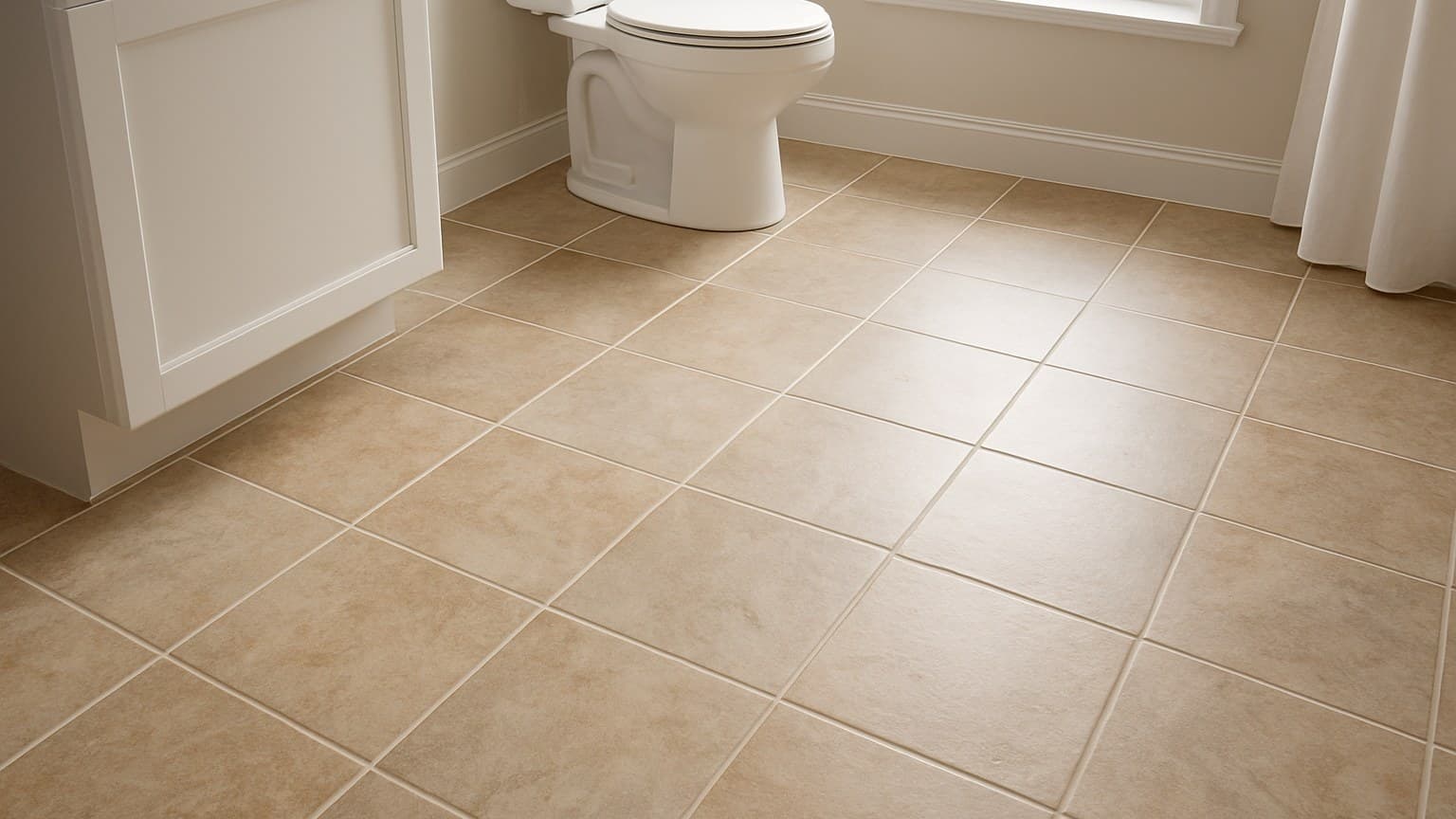
For LVP vs tile in a bathroom, the call comes down to water: tile goes anywhere water pools, a shower especially, while luxury vinyl plank belongs on a secondary, powder, or basement bath floor. Both get sold as "waterproof," but only one survives a soaked, sloped surface. Pick wrong and water quietly finds the seams while the floor still looks fine on top.
Key takeaways
- LVP (luxury vinyl plank) is fine on a secondary or powder-room floor but never inside a shower; tile handles the whole wet zone, shower included.
- LVP's core is waterproof, but its seams and edges are only water-resistant, and that's where water sneaks under; tile's real protection is the membrane and sealed grout beneath it, not the tile face.
- Expect LVP to last 10-25 years and tile 25 to 75+ years, and that gap comes mostly from install quality, not the material you picked.
- On a bathroom floor, LVP runs roughly $3-8.50/sq ft installed vs $10-20/sq ft for tile; a tiled shower runs $12-25+/sq ft.
- Click-lock LVP is realistic DIY once the subfloor is flat and dry; tile and any shower waterproofing are worth hiring a pro for.
LVP or Tile in a Bathroom? The Short Answer
Tile for any shower and for a main bath you want lasting 30 years or more. LVP for a secondary bath, a powder room, or a basement bath where warmth, budget, and doing it yourself matter more than squeezing out another two decades of life.
Here's how I think about it on a job. It's not which one looks better. It's where water gets in and whether the install controls it. A bathroom floor doesn't fail because the plank or the tile is bad. It fails at the joint, the edge, or the layer underneath that somebody skipped.
So "should I put LVP or tile" really comes down to one question: is this a shower, or is it a floor?
| Factor | LVP | Tile |
|---|---|---|
| Water handling | Waterproof core, water-resistant seams | System-level: membrane plus sealed grout |
| Best use | Secondary/powder bath floors, not inside showers | Any wet zone, including showers |
| Lifespan | 10-25 years | 25-75+ years |
| Installed cost (floor) | $3-8.50/sq ft | $10-20/sq ft |
| Underfoot | Warmer, softer, quieter | Cold and hard, best with radiant heat |
| DIY-friendly | Yes, click-lock | Usually hire a pro |
| Upkeep | Wipe clean, no grout | Reseal grout periodically |
Head-to-head comparison of LVP and tile for a residential bathroom.
Where Each Floor Actually Fails
Both floors fail at a weak point, not across the whole surface, and knowing that point is how you choose right.
With LVP, the plank core can be genuinely waterproof. Water sitting on top of a solid vinyl plank goes nowhere. The trouble is the seams where planks lock together and the expansion gap around the edge of the room. Those joints are only water-resistant, not waterproof. Standing water, the kind you get from an overflowed tub or a toilet supply line that lets go overnight, works its way into those seams and gets under the floor. Waterproof core, water-resistant joints. The joints are where it starts.
Tile is the opposite. The glazed face sheds water all day, but the face isn't what's protecting your house. The real barrier is the waterproofing membrane and the sealed grout underneath. Grout is porous. Unsealed grout joints wick water straight down into the structure, which is why a tile floor that was never sealed can leak even though the tile itself is fine.
Most bathroom floor failures I get called back to are a detail failure, not a material failure. A moisture reading nobody took. A membrane somebody left out to save a day. Grout that never got its first coat of sealer. Before any floor goes down, you check two things: that the subfloor is flat within the maker's spec, and that it's dry enough to install over. Skip either and the best plank or tile on the market still fails. Those same flatness and bond checks are what decide whether tiling straight over an existing vinyl floor is actually safe, a shortcut I cover in my guide to tiling over an existing vinyl floor.
That's the system you're actually paying a tile crew for. The tile and grout are just the top layer sitting on thinset mortar, over the waterproofing membrane, over cement backer board, over the structural subfloor. The water barrier is buried in the middle, where you never see it, and that's exactly why it works.
Shower Floor vs Bathroom Floor: Two Different Calls
LVP is a fine choice on a bathroom floor, even a main bath. It does not belong inside a shower.
This is where most of the confusion lives. There's no floating-vinyl shower pan that holds up to constant water and the slope every shower floor needs to drain. A shower means standing water, a pitched floor, and wall transitions that all have to stay sealed. That's membrane-and-tile territory, and nothing else does it reliably.
On the open bathroom floor it's a different story. There the floor only sees splashes, drips off a towel, and the rare overflow. LVP's seams can handle that daily life without issue. So you can tile the shower and run LVP across the rest of the room, and plenty of my customers do exactly that.
If you want a wood look in a wet area, you don't have to settle for real wood that can't take moisture. Porcelain now comes in convincing wood-look planks, which I cover in my guide to plank tile flooring. And pick any floor tile by its slip grip and wear rating, not just the photo. My breakdown of tile types walks through porcelain versus ceramic and how the PEI wear scale, a 1-to-5 rating from the Porcelain Enamel Institute that grades how much foot traffic a tile's glaze can take, and slip ratings sort out which tile belongs on a floor. Porcelain pulls off a convincing stone look the same way, if limestone or travertine is more your style than wood, which I cover in my limestone-look porcelain tile guide.
Lifespan: Why One Guide Says 10 Years and Another Says 75
The spread is real: LVP lands around 10-25 years, tile anywhere from 25 to 75-plus. Guides disagree so wildly because install quality drives these numbers far more than the product does.
A tile floor bedded over a flat, waterproofed base can outlive the house. The same tile set over a bouncy, flexing subfloor can crack within five years. It's the prep, not the tile. On most floating-floor jobs, including LVP, the finished floor only lasts as long as the work underneath it, and the manufacturer's warranty quietly hinges on that prep more than on the plank.
The long end of tile's range isn't marketing. An independent Life Cycle Cost Analysis, published by the National Wood Flooring Association (NWFA) and modeling lifespans across 18 flooring types over a 75-year horizon, put ceramic and porcelain tile at the far long end of the range.
| Floor | Realistic lifespan (years) |
|---|---|
| LVP | 10-25 |
| Tile | 25-75 |
Realistic lifespan range in years for a bathroom LVP floor versus a tile floor. Not to scale.
What LVP and Tile Cost in a Bathroom
On a bathroom floor, installed, LVP runs about $3-8.50/sq ft and tile about $10-20/sq ft. A tiled shower floor and walls climb to $12-25+/sq ft because of the membrane, the pan, and all the cuts. LVP material alone is roughly $1.50-7/sq ft, and the rest of that number is labor. Tile tilts even harder toward labor: thinset, backer board, the waterproofing membrane, and all the small cuts around fixtures eat far more hours than the tile itself costs, which is why two jobs with the same material price can still land several dollars apart per square foot once installed. A basement bath floor, tile or LVP, almost always costs more than the same floor in an open room upstairs, since crews deal with extra moisture prep and a less predictable slab.
Small bathrooms cost more per square foot than open rooms. All the cuts around the toilet flange, the vanity, and the thresholds eat labor that an open bedroom never charges you for. A shower build is the priciest piece of any bathroom, so if you're pricing a full wet-room job, budget for that first.
Prices online swing so hard for two reasons: material tier and region. A builder-grade LVP and a 22-mil commercial plank are not the same number, and a dollar-a-square ceramic and a twenty-dollar porcelain aren't either. That same spread shows up again when you compare tile against laminate elsewhere in the house, a comparison I work through in my tile vs laminate flooring guide.
| Floor and area | Installed cost ($/sq ft) |
|---|---|
| LVP, bathroom floor | 3-8.50 |
| Tile, bathroom floor | 10-20 |
| Tile, shower floor and walls | 12-25 |
Installed cost per square foot in a bathroom, materials plus labor. Not to scale.
On the DIY question, click-lock LVP on a flat, dry bathroom floor is realistic for a confident homeowner. Tile, and anything involving shower waterproofing, is where I'd hire out. One missed membrane detail inside a shower costs far more to fix than the crew would have charged to do it right. For the line items that balloon the second demo starts, see my tile installation cost guide.
Comfort, Warmth, and Radiant Heat
Tile is cold and hard underfoot, and it stays that way. LVP is warmer, softer, and quieter, which is a real difference in a bath you walk barefoot every morning.
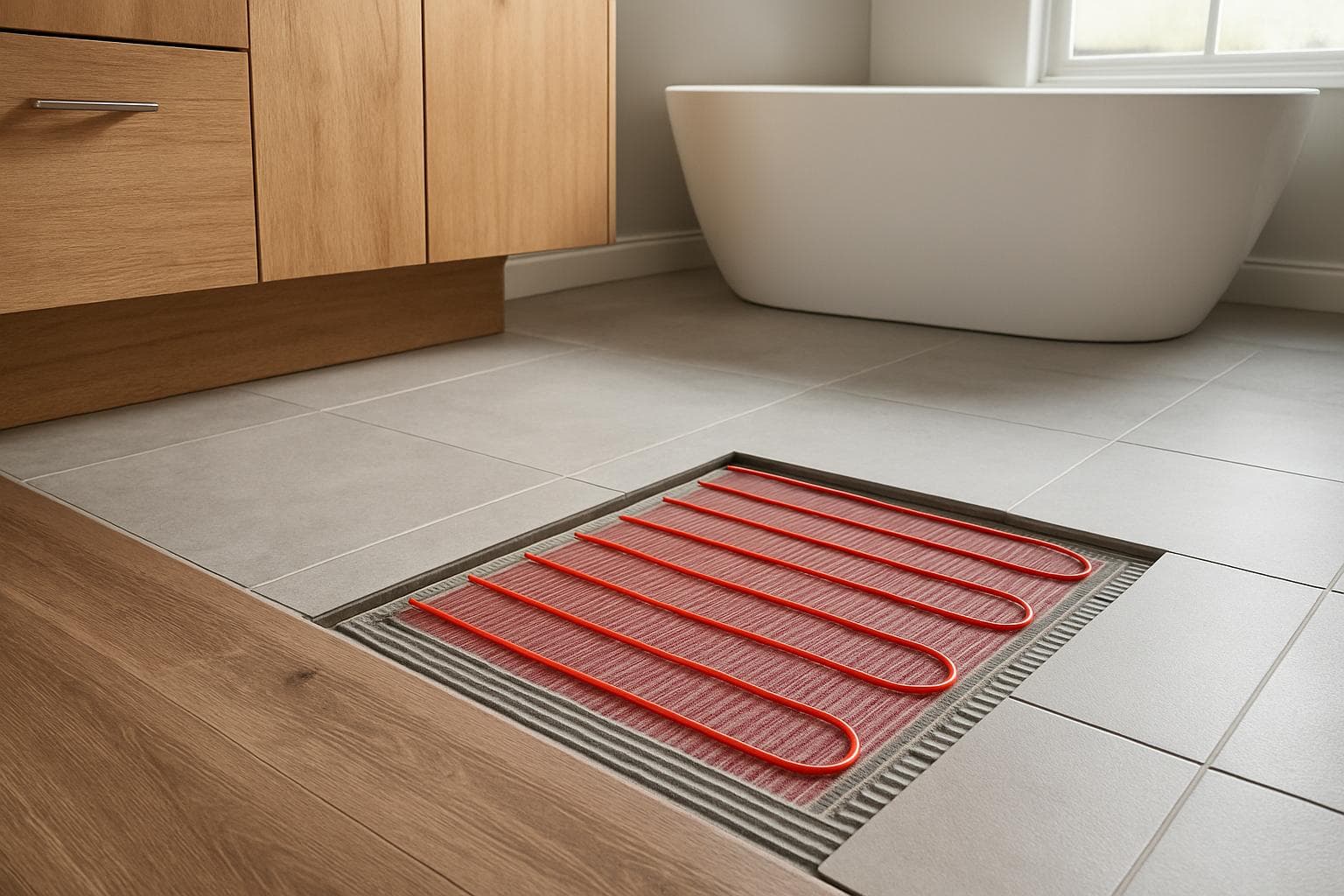
That hardness is also tile's strength when you heat it. Radiant floor heat and tile are a classic pairing because tile transfers heat beautifully and holds it. If you're already tiling a main bath, electric radiant under it turns the coldest floor into the coziest one.
LVP can go over radiant heat too, but only up to the maximum surface temperature that specific plank allows. That limit varies by product, so read the box's own sheet instead of assuming. Run it too hot and you can cup or gap the planks.
For a kid's bath or an older person's bath, the warmth and softer footing of LVP can tip the whole decision, even in a room where tile would technically last longer. Comfort every day is worth something too.
SPC vs WPC and Wear Layer: Picking LVP That Survives a Bathroom
If you go LVP in a bath, pick an SPC (stone plastic composite) plank with a thick wear layer. That combination handles moisture and traffic better than a soft, thin builder-grade product. Knowing what those acronyms and wear-layer numbers actually mean is worth it before you buy, since my guide to decoding LVP labels breaks down which specs separate a plank built to last from one that'll fail early.
SPC stands for stone-plastic composite. The core is dense and dimensionally stable, so it barely moves when the room's temperature and humidity swing, which happens a lot in a bathroom. WPC, wood-plastic composite, has a softer, slightly warmer core that feels nicer underfoot but moves a touch more. In a wet, temperature-swinging room, I lean SPC.
The wear layer is the clear top coat that takes the abuse, measured in mils. Builder-grade planks often carry a thin wear layer that scuffs fast, while heavy-duty residential and commercial planks run up toward 20-22 mil. Thicker wears longer and shrugs off grit tracked in from the shower. Don't guess at it. Check the actual mil rating on the product you're buying, because it's listed per plank, not per brand. I break the tiers down by what each wear layer actually survives in my LVP tile guide.
Whatever you pick, the install rules still decide the outcome. Leave the expansion gap the maker specifies around the whole perimeter, check that the subfloor is flat and dry first, and follow the product's own acclimation sheet. Those three steps protect the floor more than the plank's spec sheet ever will. Those same rules apply even when the subfloor underneath is old tile instead of bare plywood or concrete, which I walk through in my guide to installing LVP over existing tile.
Sources
- NWFA Life Cycle Cost Analysis (2023 report, PDF)
- NWFA Life Cycle Cost Analysis overview
- TCNA: Tile Over Other Flooring FAQ
- TCNA (Tile Council of North America): Tiling Over Vinyl, Helpful Hints (PDF)
- ASTM International Technical Committee Work Item (WK94994)